1,000+ Floors Installed & Restored Across Washington
Searching for floor repair near me in Mill Creek? Most damaged floors in Mill Creek need a few planks replaced, not a whole new floor. We repair engineered hardwood, laminate, vinyl plank and solid oak — matching the plank first, then blending the finish so the fix stops being the thing you notice from the doorway. Call (425) 595-1079 for a free in-home estimate anywhere in Mill Creek and the surrounding 98012 area.




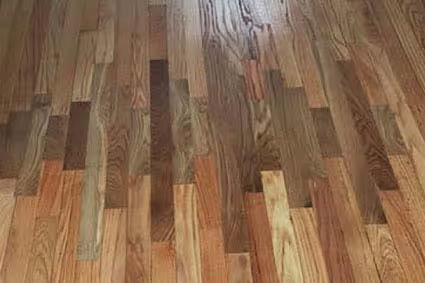
A patch that announces itself. The wood is close but not right, and the grain runs the wrong way. Matching properly is most of the skill in a board repair.
Before anything gets cut we work out how the floor is held down, because that decides how much of it has to move. Laminate from the early 2000s and rigid-core LVP from about 2015 on are locked to each other rather than to the house, floating on a thin underlayment with only the trim holding the edges down. Red oak strip in the older divisions is nailed, and engineered plank here turns up all three ways: nailed, glued or floated. A floating plank can be released at its locks, while a fastened one has to be cut out where it lies and the replacement dropped in from above.
The most common wood floor in Mill Creek is engineered, and its real-wood wear layer is usually too thin to sand a gouge out of. So the damaged plank gets cut free and a match goes in — species, width, bevel and sheen — with the joint blended into the boards around it. If there are leftover planks in the garage rafters from the original install, dig them out before we arrive; the match gets much easier.
Late-90s and 2000s laminate swells at the joints as soon as water sits on a seam, and its printed surface cannot be sanded or filled convincingly. On a click-lock floor we unlock the run from the nearest wall, take out only the ruined planks, and lock the floor back down. The hard part is almost never the carpentry — it is finding a discontinued decor that still matches.
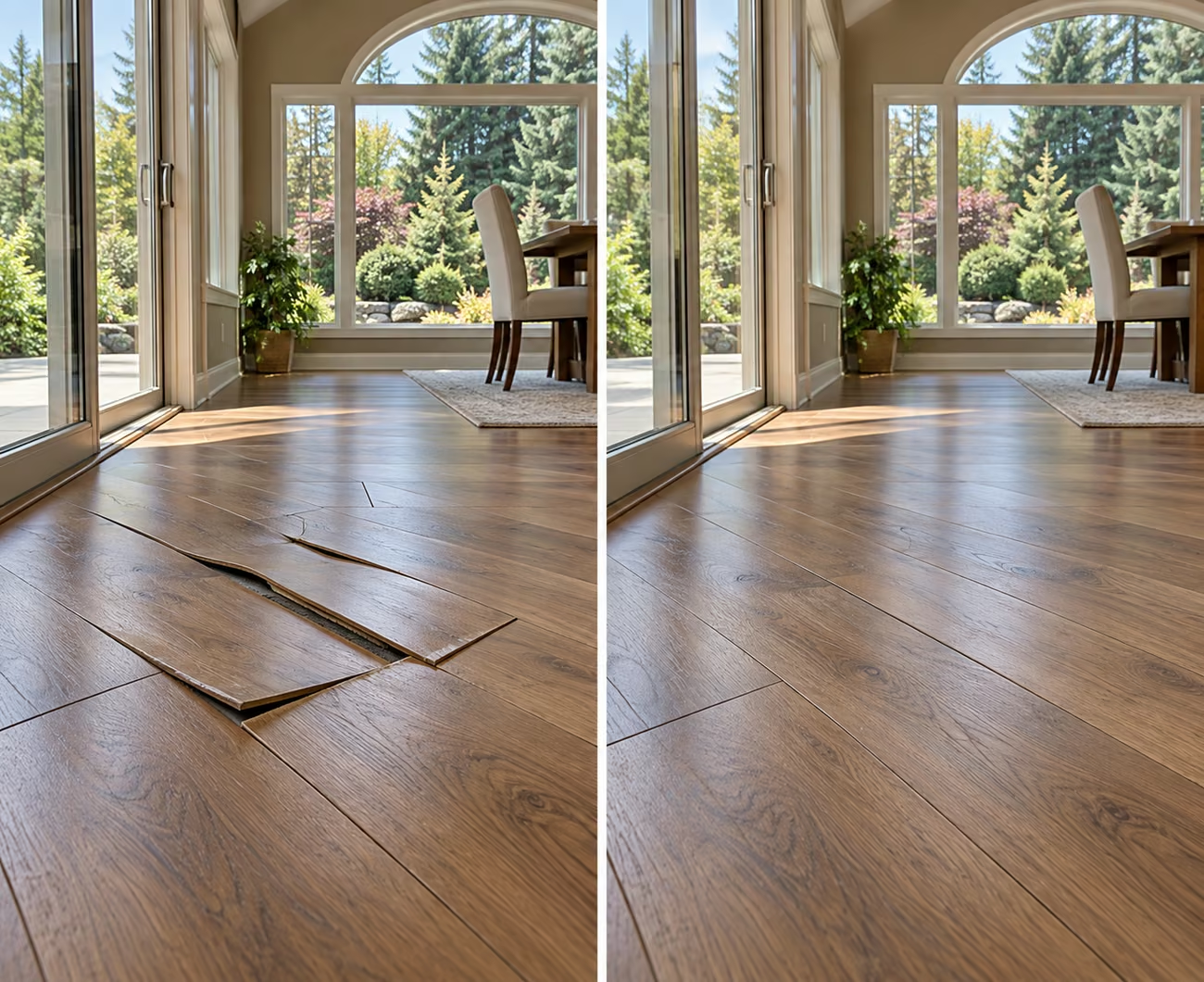
Rigid-core LVP moves when something traps it: a heavy island pinning the field, trim nailed straight through the planks, or a run baking in front of a south-facing slider all afternoon. We work out the cause first, because replacing planks over the same problem only buys a season. Then the deformed pieces come out and the seams close back up.
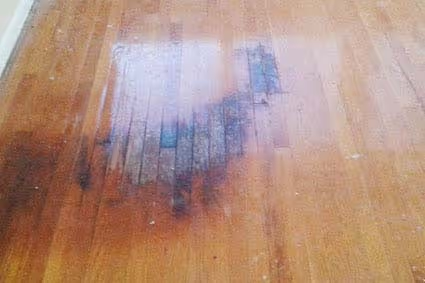
Dark urine stains live in the wood rather than the finish, which is why cleaning never lifts them and those boards have to come out. Claw scratching along a hallway can often be buffed and recoated instead. A weeping dishwasher or fridge line in a house built in the 1990s gets a moisture reading before we quote anything — covering wood that is still damp is how a repair fails by the following winter.
Two-story Mill Creek houses route every trip through the same staircase, and the nosings wear thin along the front edge long before the treads show anything. The other reliable trouble spot is the plank just inside the door from the attached garage, which takes wet shoes, groceries and dog paws every single day. Both are usually one-visit repairs.
Most of the hard surface in Mill Creek is a factory-finished plank with a micro-bevel at every edge, and that groove walks a spill sideways into the seam instead of leaving it on top where a towel can reach it. Under the seam is either a fiberboard core that swells and never comes back down, or a wear layer thin enough that dog urine is into the glue line overnight. Because so much of it floats on underlayment, whatever gets underneath sits there in the dark with nowhere to dry, which is why a plank can cup weeks after the spill that caused it.
 1
1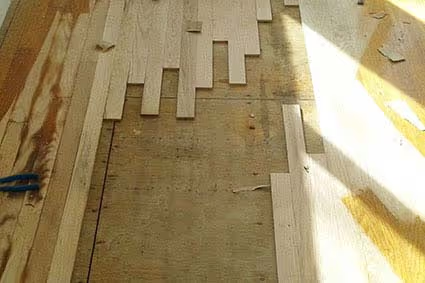 2
2 3
3 4
4Most pet-stain and water-damage repairs are finished in 1–2 days.
The material decides this one, not the size of the damage. Solid red oak strip in the older divisions is young enough that it usually has sandings left in it, so a scratched hallway can be repaired and the whole floor brought back at the same time. Engineered comes down to how much real wood sits over the core, which we measure at a heat register or a threshold before saying anything, and on laminate or vinyl plank the decision is made for you: the plank comes out.
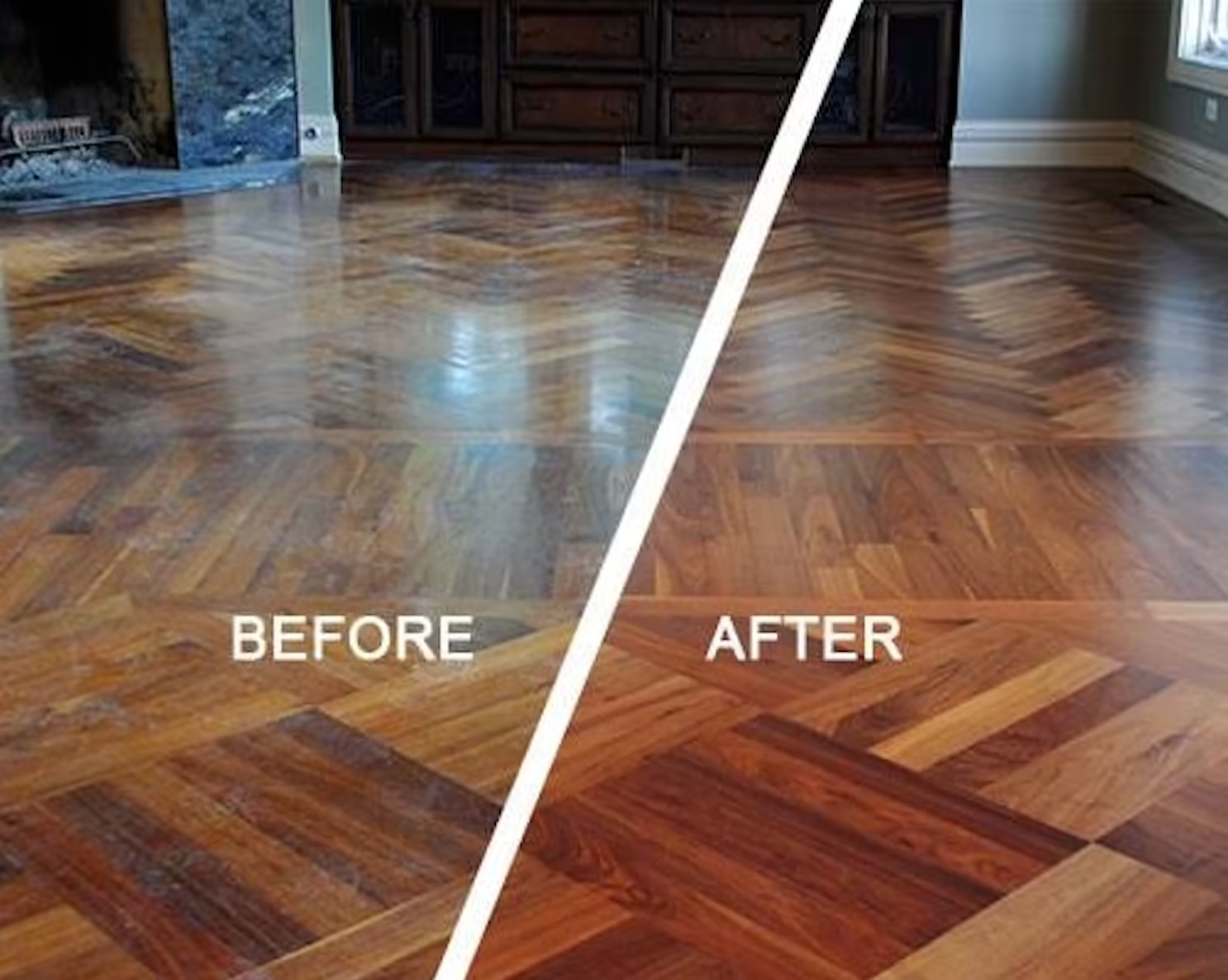
The same floor, split down the middle. Left: the finish is cloudy and worn through in the traffic path — no amount of patching fixes that. Right: sanded back and refinished.
Typically $200–$1,000 · most finished in 1–2 days
Board replacement is done first, so the whole floor is finished together
Water on the worn patch. If the drop sits up and beads, your finish still works and patching is sensible. If it sinks in and darkens the wood within a minute, that room needs sanding and refinishing, not a patch.
Look under the rug. Wood that is markedly darker beneath a rug than beside it has faded in the light. Fade runs across a whole zone, so swapping single boards there makes the mismatch worse, not better.
Still not sure? Send us a few photos of the floor and we will tell you which one you need, even when it is the cheaper answer.
Nothing in Mill Creek is old. The whole place was drawn up as a master-planned community by Tokyu Land Development, ground broke on the golf course in 1975, the first houses followed the year after at around $65,000 apiece, and the city did not incorporate until September 1983 with roughly 3,500 residents. Census figures put the median build year in the early-to-mid 1990s, and local building permits peaked in 1997. Practically, that means there is no old-growth fir under Mill Creek carpet and no century-old boards to salvage-match. What we find instead is red oak strip in the entries and dining rooms of the older divisions, and prefinished engineered plank across nearly everything built or remodeled from the mid-90s onward.
The second thing worth knowing is that the floor you are standing on is usually not the floor the builder laid. Original wall-to-wall carpet and sheet vinyl came out in waves — laminate through the early 2000s, engineered hardwood after that, and rigid-core LVP from roughly 2015 on. A single house in Heatherstone, Spring Tree, Vine Maple, Swordfern, Huckleberry, Cottonwood or Fairway can easily hold three generations of hard surface at once, and each one takes a different repair. Laminate cannot be sanded. Engineered wear layers are usually too thin to touch. LVP has to be unlocked and swapped. Anyone quoting all three the same way has not looked closely.
Mill Creek also leans far more attached than most of Snohomish County. The community association covers 51 residential divisions, and only about half of them are detached houses — there are six townhouse complexes and thirteen condominium associations on top of the apartments, places like Amberleigh, Pembrook, The Pointe, Mill Run, Miller's Village, Stratford Greens, Country Club Estates and The Masters. In those buildings the logistics matter as much as the floor: guest parking, association quiet hours, somebody living directly below, and hard surface that has to go back over the same acoustic underlayment the association required in the first place. We plan for all of it before the first plank comes up.
Then there is water, which arrives here two ways. The city's own figure is about 36 inches of rain a year, and Mill Creek is built around 11 parks and a trail network running the North Creek greenway and Penny Creek — so dogs and boots come home wet, and the boards inside the front door and the garage door pay for it. The slower version is plumbing: dishwasher and refrigerator lines installed in the 1990s are now nearing thirty years old, and they tend to weep quietly into a kitchen floor for months before anyone notices a cupped plank.
One last thing. A Mill Creek mailing address covers a great deal more ground than the 1.92 square miles the city started with. The 98012 area reaches out into Mill Creek East and Silver Firs, both unincorporated and both largely 1990s and 2000s single-family development, plus Murphy's Corner, annexed in 1995, and the Thomas Lake area, annexed in 2005. If your mail says Mill Creek, we repair floors there — whether or not the city limits agree.
Most repairs land between $200 and $1,000. What moves that number is how many planks have to come out, whether your product can still be bought or has to be tracked down, and whether the repaired area needs sanding and finishing to blend with everything around it. Water that has been sitting adds cost, because the area has to be dried properly before new material goes down. You get a written price at the free in-home visit rather than a guess over the phone.
Yes, and in Mill Creek that is the usual case rather than the exception. What changes is the method. An engineered wear layer can be as thin as a business card, so sanding a gouge out is rarely realistic — we replace the plank instead. Glue-down engineered comes out with a plunge cut and goes back down in adhesive; a floating engineered floor is unlocked from the nearest wall and re-locked afterward. Either way, the rest of your floor never moves.
It depends entirely on how far down it went. If the stain is still sitting in the finish, sanding that area back and recoating it clears the mark. Once it has soaked into the grain — the black ring you see in bedrooms and beside patio doors — sanding will never reach the bottom of it and those boards need replacing. Smell is the reliable tell: if you can still smell it, it is in the wood, and no surface cleaning is going to change that.
That is the single most common reason a laminate or LVP repair gets complicated, and there are three ways around it. Leftover planks stored in the garage or crawlspace are ideal, so it is worth looking before we come out. Failing that, we can borrow planks from inside a closet or from under an appliance and patch the donor spot where nobody will ever look at it. If neither option exists, we will tell you plainly that the closest current decor is a near-match, not a disappearing act.
Not at all — a large share of the housing here is attached, and we work in townhomes and condominiums regularly. A repair is quiet hand-tool work compared with a full installation, and we schedule around association quiet hours, guest parking and building access wherever they apply. If your association required an acoustic underlayment beneath hard surfaces, the repaired section goes back over the same rating it had originally.
Almost never. Buckling in a floating vinyl floor nearly always means its movement is being blocked somewhere — an expansion gap closed up tight against a wall or door casing, trim nailed through the planks, or a stretch of floor in direct afternoon sun that expands and never quite returns. Releasing the floor at the right point usually lets most of it settle back down on its own, and only the planks that actually deformed get replaced.
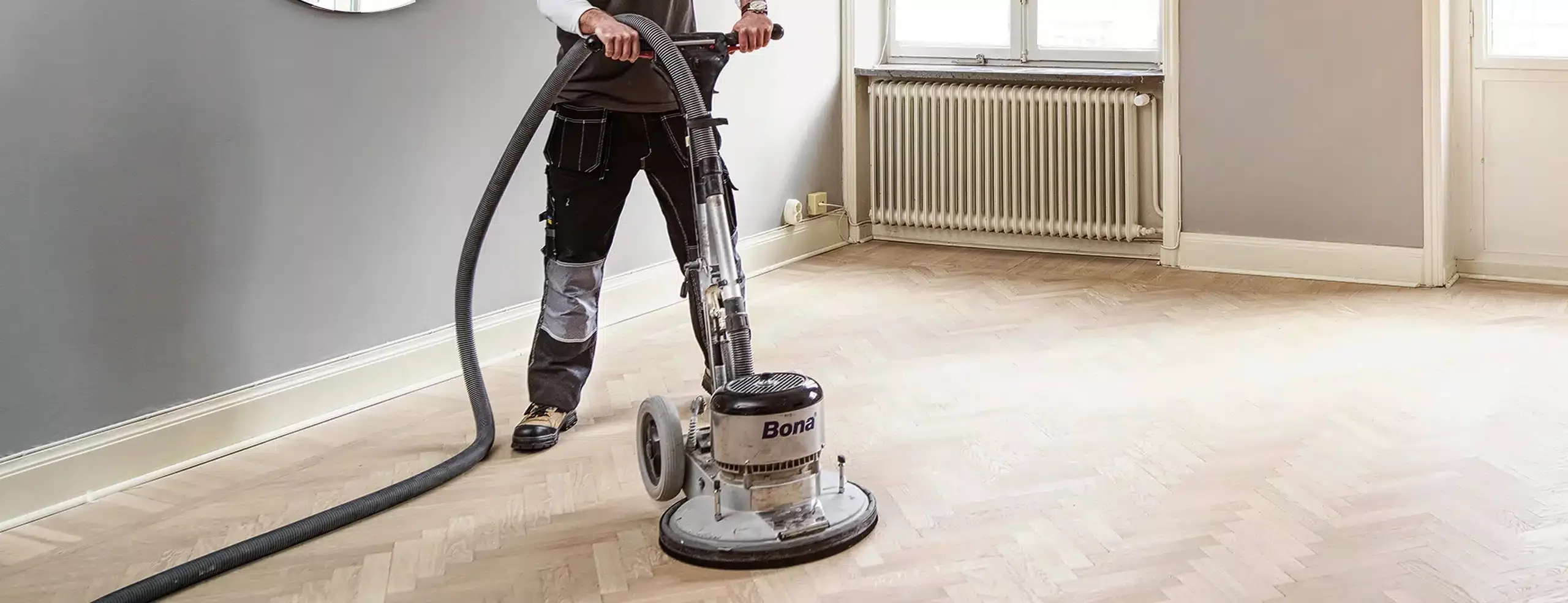
Where solid wood does turn up, it keeps a reserve. A solid red oak board carries enough thickness to sand a problem out completely — which is why deep damage in a Mill Creek entry or dining room is often repaired in place instead of replaced.
Most of what we open up here is engineered or laminate, and neither one has margin to give. But the entries and dining rooms in the older divisions were floored in solid red oak strip, and that board is the exception: nothing in this city is old enough to have been sanded thin, so a 1980s oak floor in Heatherstone or Fairway usually has every one of its sandings still in front of it. Before we quote a plank swap on wood, we check which of the two you actually have.
When a floor develops a soft spot or a gap, the boards you see are rarely the ones at fault. The problem lives underneath — a fastener that has let go of its joist, a subfloor panel rubbing its neighbor, or framing that has dried and shrunk a hair since the house went up. Mill Creek framing mostly dates from the late 1970s through a permit peak in 1997, which is exactly the age when those fasteners start letting go. We chase the problem to its source instead of patching the symptom.
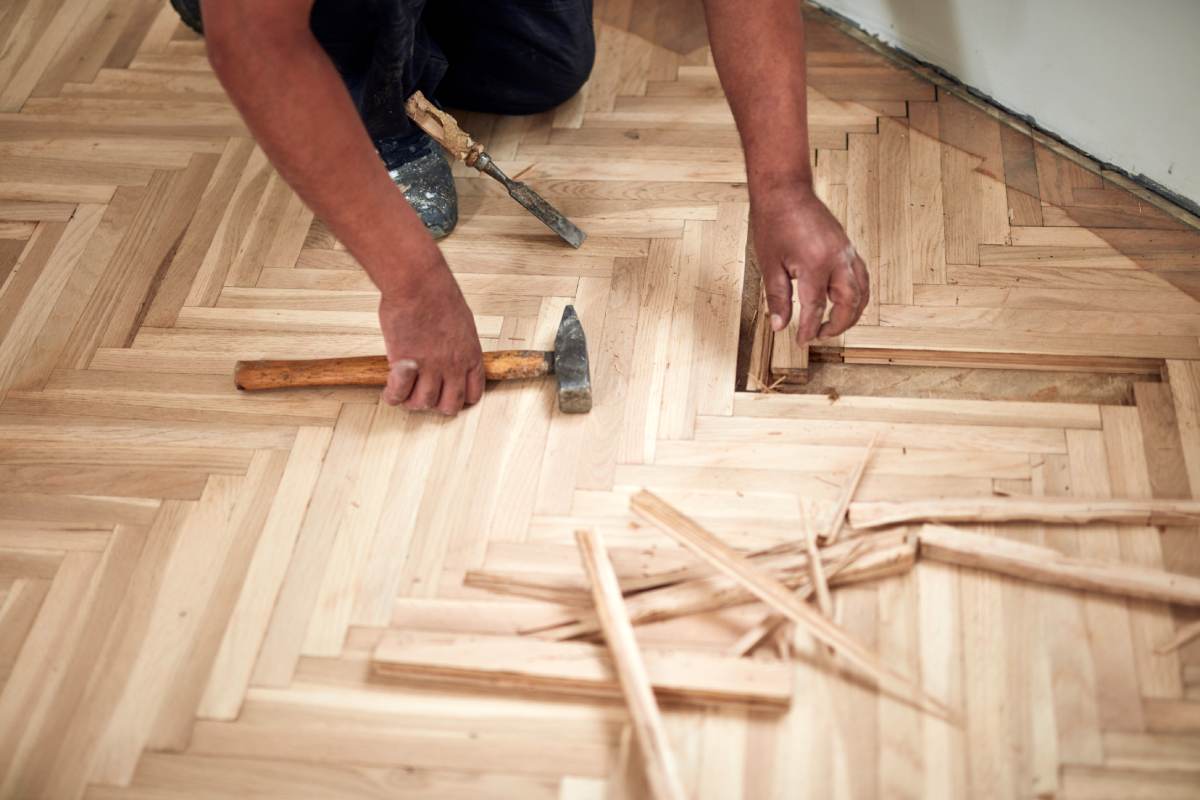
The fix starts under the boards. Loose pieces come up, the substrate gets fastened flat, and only then does the surface go back together.
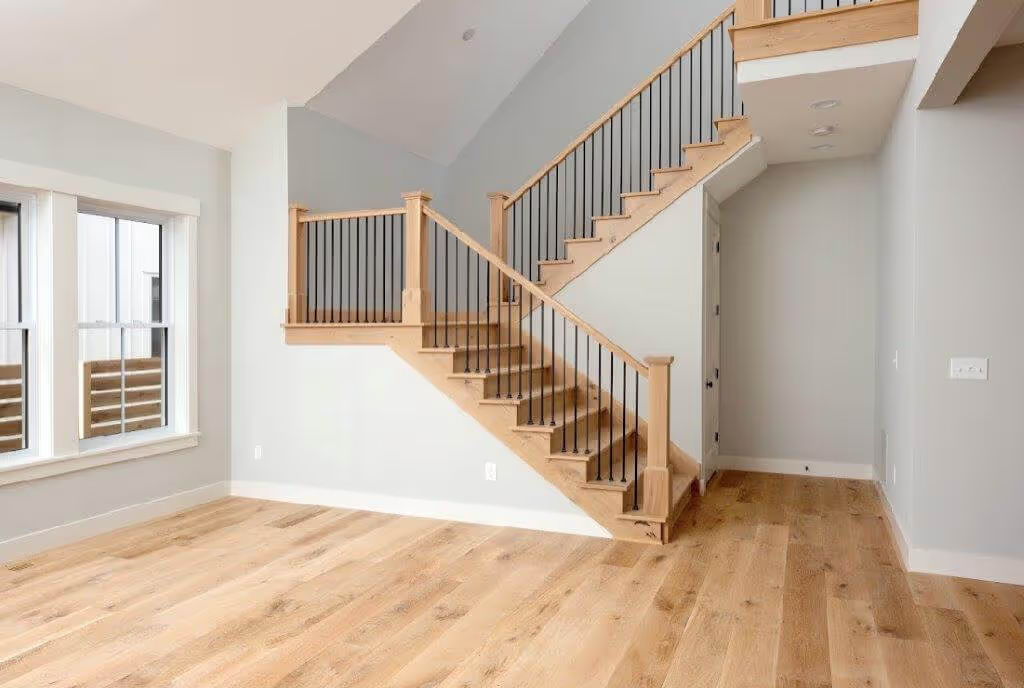
Stairs take the traffic of a hallway on a tenth of the wood. Treads, nosings and thresholds wear out years before the rooms around them — and they can be repaired one piece at a time.
Every school run, every trip in from the attached garage, every wet dog coming back off the North Creek trail lands on the same few square feet of wood. In a two-story Mill Creek house the staircase is the busiest floor in the home, and the nosing on each tread takes the full strike of every step — which is why nosings here go thin along the front edge years before the treads show anything. These are the repairs people put up with because they assume the whole staircase has to come apart. It does not.
Photograph the damage on your phone — a close-up of the worst spot, one from a few feet back, and one of the whole room. One of our estimators looks at every photo personally and emails you a written price the same business day. No visit, no sales call, no obligation.