1,000+ Floors Installed & Restored Across Washington
Searching for floor repair near me in Lynnwood? Most of what we get called for in Lynnwood is one bad section: a run of water-stained oak beside the dishwasher, a few gouged planks in a rental hallway, LVP that has lifted along a sunny slider. We take out the damaged part, match what surrounds it, and leave the rest of your floor alone. Free estimate and no charge to look — call (425) 595-1079.



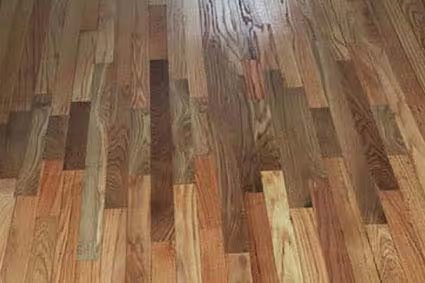
This is what we are hired to avoid. New boards dropped in without matching species or grain direction. It never blends in later; it just stays the first thing you notice.
The median Lynnwood house went up around 1979, so we almost never find the old-growth fir that turns up in Ballard or Wallingford. A typical repair here starts with three-quarter-inch red oak strip from the sixties and seventies, or with whatever a later owner laid on top of it.
Dishwasher lines, refrigerator feeds and washer hoses cause most of the hardwood damage we see in Lynnwood, and the boards that cup or crown are usually a tight radius around the source. We pull the affected run, take moisture readings on what sits underneath, and let it dry before any new wood goes down — covering damp material is how the same repair comes back in six months. The replacement boards get woven into the existing field so the seam does not read as a patch.
Most Lynnwood hardwood is red oak strip from the postwar building waves, and it is often narrower than what is stacked at a big-box store today. We source to the width and grade you actually have, sand the repair flush with the surrounding floor, and blend the sheen so the new wood is not a bright rectangle in the middle of the room. When a board can be saved instead of swapped, we save it.
Click-lock floors are everywhere in Lynnwood's rentals, condos and newer townhomes. They peak when the expansion gap gets pinched by baseboard, trim or a heavy island; they swell at the seams when water sits in a joint long enough to reach the core. We open the run, replace the damaged planks, and re-set the perimeter clearance so the floor can move the way it was designed to move.
Surface scratching from claws will often sand and re-coat out. A dark stain that has gone through the finish and down into the grain usually will not, and the honest answer there is board replacement with a blended finish around it. We tell you which one you have before you pay for the wrong fix, not after.
The strip where hardwood meets tile, or where an upper hallway drops to a stair nosing, takes the most traffic in the house and gives out first. We replace split or lifting transitions, re-secure loose reducers at doorways, and clean up the edge where flooring meets baseboard so the repair finishes properly instead of trailing off.
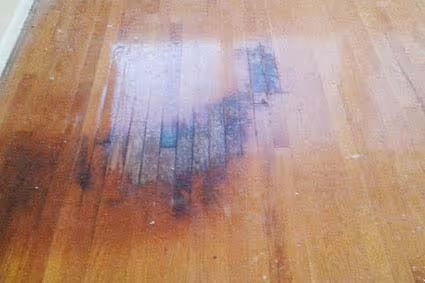
A dark ring under a plant pot or a black patch where the dog slept sits in the wood, not on it — which is why cleaners never touch it. Here is the sequence we run to take it out, photographed on our own jobs.
 1
1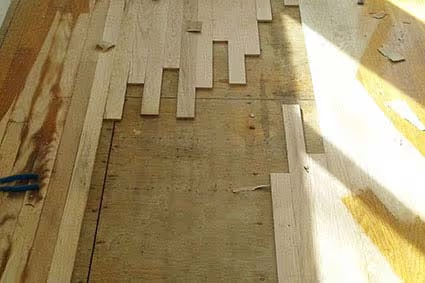 2
2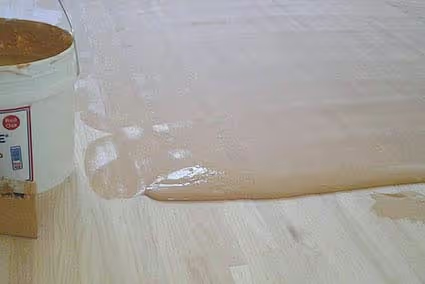 3
3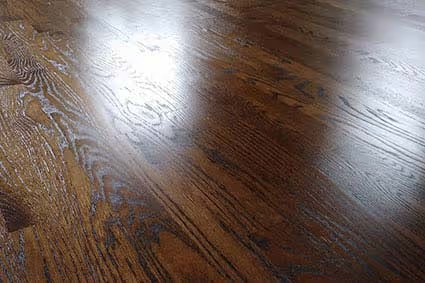 4
4Most pet-stain and water-damage repairs are finished in 1–2 days.
Because most Lynnwood oak is solid three-quarter-inch, both options are usually still on the table. Here is how to work out which one your floor actually needs.
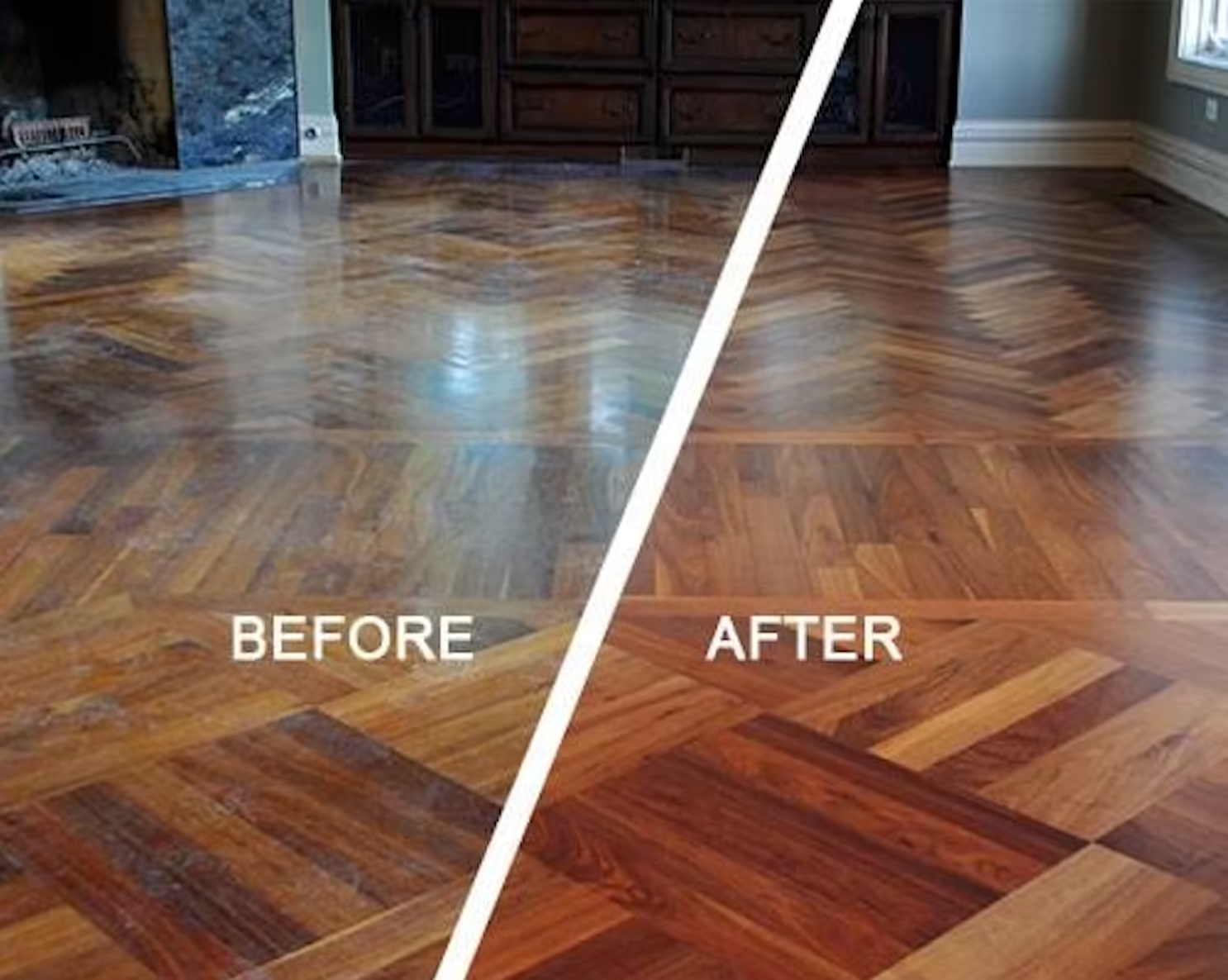
The same floor, split down the middle. Left: the finish is cloudy and worn through in the traffic path — no amount of patching fixes that. Right: sanded back and refinished.
Typically $200–$1,000 · most finished in 1–2 days
Board replacement is done first, so the whole floor is finished together
The bead test. Drip a little water onto the tired-looking area. Beading means the coating is intact and a spot repair will hold. If it darkens and soaks in, the finish has worn through and the room wants refinishing.
The furniture test. Slide a rug or a side table aside. A clear color step between the covered wood and the exposed wood is sun fade, and replacing individual boards there only adds a third shade.
Still not sure? Send us a few photos of the floor and we will tell you which one you need, even when it is the cheaper answer.
Lynnwood barely existed before World War II. Roughly one percent of the housing here predates 1940, and the city itself was not incorporated until April 1959, carved out of the old Alderwood Manor area that the Puget Mill Company had platted back in 1917 and marketed to city families as small poultry acreage. What that means underfoot is straightforward: we almost never find the old-growth fir that turns up in Ballard or Wallingford. The median Lynnwood home went up around 1979, and the two biggest building waves were the 1960s and the 1970s — the decades right after Interstate 5 was finished and right around the year Alderwood Mall opened.
So a typical repair here starts with three-quarter-inch red oak strip, or with whatever went over the top of it later. Split-entries and ramblers through Cedar Valley, North Lynnwood and the streets around Scriber Lake usually have oak on the upper level and something else downstairs, because the lower half of a split sits at or just below grade. That lower level is where a large share of our Lynnwood calls come from.
There is a drainage reason for that. Lynnwood sits on a plateau three hundred to six hundred feet above Puget Sound — no saltwater bluff, no beach-level crawl spaces — but the plateau is cut by eighteen drainage basins and threaded with Scriber Creek, Swamp Creek and Hall Lake, and a lot of the ground underneath is dense glacial till that water simply will not soak into. The city has run its own flood-reduction study on the Scriber Creek basin. Water that cannot go down goes sideways, and it eventually finds a lower-level slab, a garden-level unit, or the base of a wall where flooring meets drywall. We take moisture readings under the boards before anything goes back down, because sealing in a damp slab in October is how a small repair becomes a large one by February.
The second thing that sets Lynnwood apart is how much of it is rented. Close to half the occupied housing in the city is renter-occupied, and most of the apartment stock is low-rise, garden-style buildings rather than towers. That produces a steady run of turnover damage you see far less of on a street of long-held owner-occupied houses: a washer overflow caught a day late, claw marks down a hallway, a chunk knocked out of a plank on moving day. Those are small, defined, one-room repairs, and they should be quoted that way.
Then there is the newest layer. Light rail reached Lynnwood City Center on August 30, 2024, and the blocks around the station are filling with townhomes and apartments, with thousands of units planned or already under construction. Nearly all of it is LVP or laminate, click-lock and floating, over slab or a flat subfloor. Floating floors fail in specific ways: they peak when the expansion gap gets buried, they swell at the seams when a leak sits, and they will do it again if the spot underneath is not flat when the planks go back down. Knowing which of those you have is the whole job. Nobody in Lynnwood needs a new floor because of a six-plank problem.
Moisture readings come first. In a Lynnwood split, the lower floor sits at or near grade, and the glacial till under much of this city drains slowly, so the material beneath your flooring can stay wet well after the surface looks dry. We measure, we let it dry down to a normal reading, and only then do we cut in new boards or planks. If we find the floor is still wet, we tell you to wait — putting a finished surface over damp material is the single most common way a repair fails a few months later.
Usually yes. The strip oak that went into Lynnwood's 1960s and 1970s houses is commonly narrower than the plank widths sold for new installs today, and we source to the width, species and grade already on your floor rather than to whatever is convenient. Grain and color take some sorting, and old red oak has ambered over fifty-odd years, so we sand the repair flush and blend the finish outward until the patch stops announcing itself.
If the damage is spread across the whole room and the wood itself is sound, that is a refinishing question, not a repair one — sanding and re-coating will address the entire surface at once, and patching individual scratches would cost more and look worse. Repair is the right call when the damage is localized: a stained run, a broken board, a gouged section. We will look at it and say which one you actually have, and we will not sell you a repair to avoid saying the word refinish.
Peaking is almost always a movement problem rather than a bad plank. Floating floors need clearance at every fixed edge, and when that gap gets buried under baseboard, pinched by a door casing, or pinned down by something heavy like a cabinet run, the floor has nowhere to expand except upward. We find where it is bound, free the perimeter, replace anything that got damaged while it was under stress, and check that the surface underneath is flat enough for the planks to lie back down.
Price follows the size of the damaged area, the material, and how hard the match is — a few planks in a hallway is a very different job from a stained run through a kitchen, and we quote it in writing before we start anything. The estimate itself is free. Small, contained repairs in the Lynnwood area are usually short jobs, and we will tell you honestly at the estimate whether it can be done inside your turnover window rather than promising it and then calling you on Thursday.
If the discoloration is sitting in the finish, sanding and re-coating that area often clears it. Once a stain has gone through the finish and into the grain, it is generally in the wood for good, and the fix is to replace those boards and blend the finish into the surrounding floor. We can tell which situation you have by sanding a small test area. Guessing costs you money, so we do not guess.
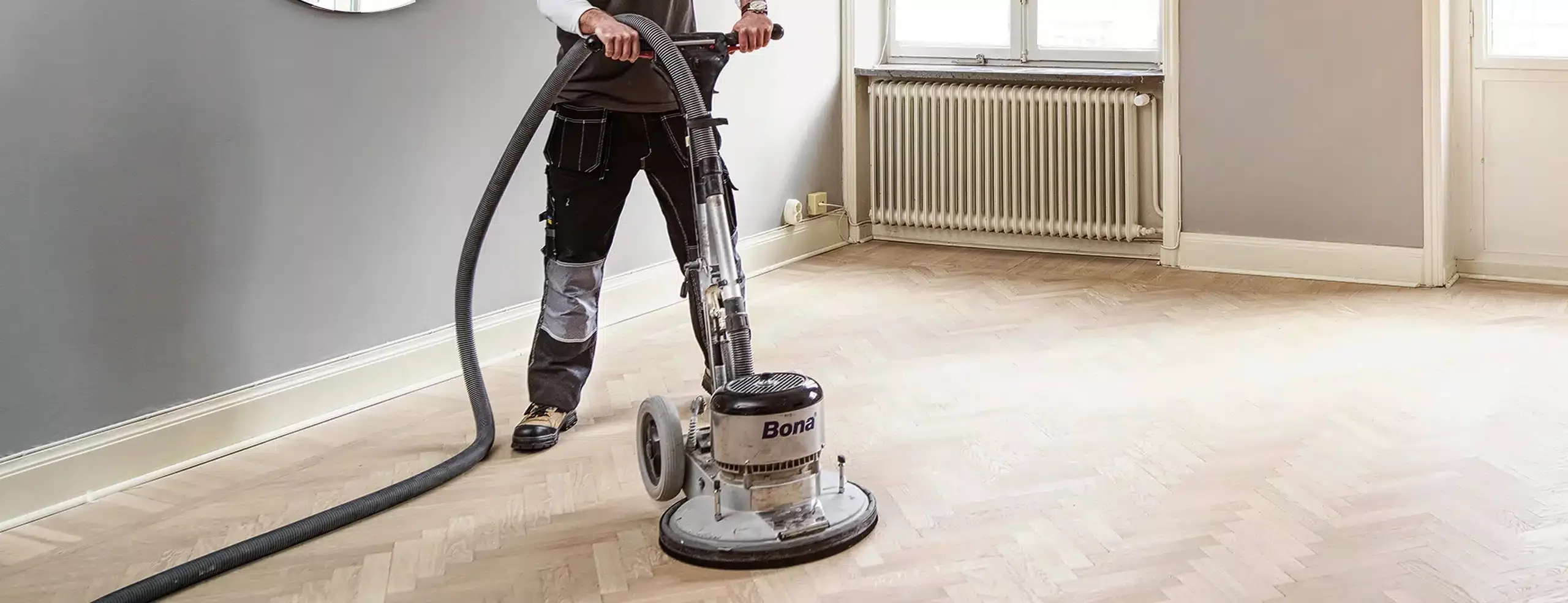
Solid wood keeps a reserve. A three-quarter-inch red oak board carries enough thickness to sand a problem out completely — which is why deep damage in a Lynnwood floor is often repaired in place instead of replaced.
Solid hardwood is the one floor with margin built in. Where a click-lock plank has a printed film or a paper-thin wear layer on top, the three-quarter-inch red oak strip that went into the split-entries of Cedar Valley, North Lynnwood and the streets around Scriber Lake can give up a full pass of sanding and still have decades left. That is the single most useful fact about floors in this city, because it means a bad patch of oak is almost never a reason to replace a room. So before we quote a board swap we ask whether the damage actually goes deeper than the finish — because a surprising amount of it does not.
When a floor develops a gap or a soft spot, the boards you see are rarely the ones at fault. The problem lives underneath — a fastener that has let go of its joist, a subfloor panel rubbing its neighbor, or framing that has dried and shrunk a hair since the house went up. The median Lynnwood house went up around 1979 and the two biggest building waves were the sixties and seventies, which is exactly the age when those fasteners start letting go. We chase the problem to its source instead of patching the symptom.
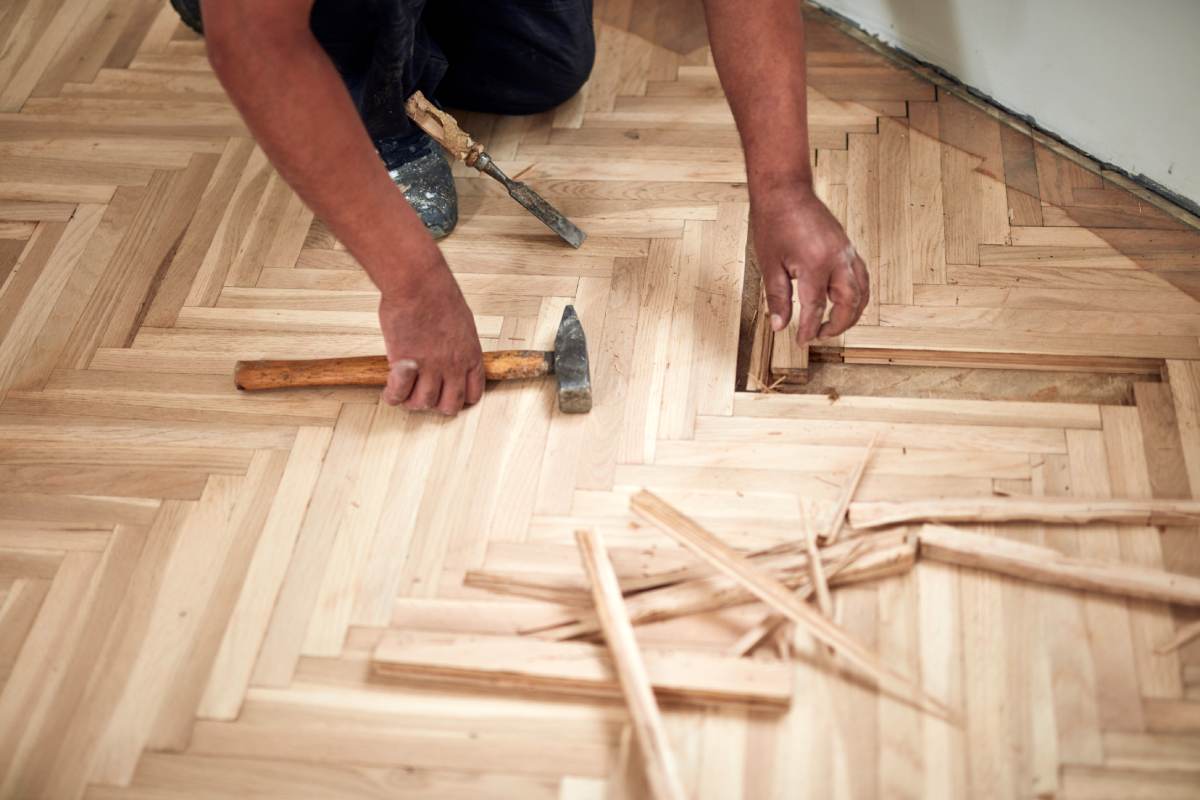
The fix starts under the boards. Loose pieces come up, the substrate gets fastened flat, and only then does the surface go back together.
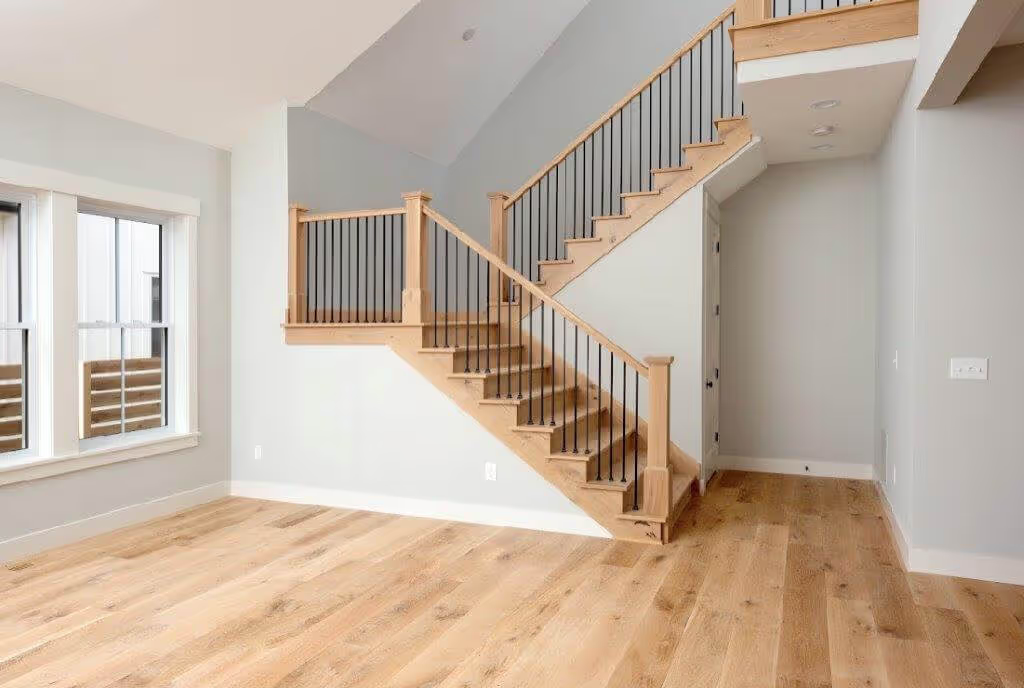
Stairs take the traffic of a hallway on a tenth of the wood. Treads, nosings and thresholds wear out years before the rooms around them — and they can be repaired one piece at a time.
In a Lynnwood split-entry nobody gets anywhere without using the stairs. Every grocery run in from the garage, every trip down to the laundry, every commute home from the light rail station, every wet dog — all of it lands on the same short flight and the same few square feet of wood. The nosing on each tread takes the full strike of every step, and the upper hallway drops straight onto it. These are the repairs people put up with for years because they assume the whole staircase has to come apart. It does not.
Photograph the damage on your phone — a close-up of the worst spot, one from a few feet back, and one of the whole room. One of our estimators looks at every photo personally and emails you a written price the same business day. No visit, no sales call, no obligation.