1,000+ Floors Installed & Restored Across Washington
Searching for floor repair near me in Kenmore? We repair hardwood, laminate, and vinyl plank throughout Kenmore, replacing only damaged areas whenever possible. Call (425) 595-1079 for a free in-home estimate.




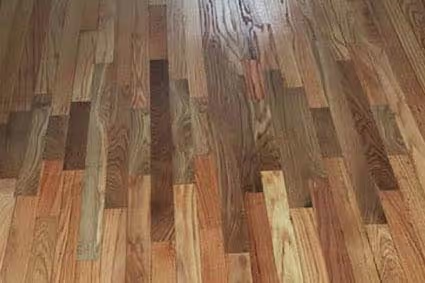
This is what we are hired to avoid. New boards dropped in without matching species or grain direction. It never blends in later; it just stays the first thing you notice.
A Kenmore house rarely holds just one kind of floor. The stock runs from 1950s rambler oak strip through 1990s engineered plank and 2000s kitchen laminate to the click LVP laid since the mid-2010s, and one address often carries three of the four at once — strip oak down a bedroom hall, engineered in the living room, laminate or plank in the kitchen. Each of the four comes up a different way, nailed or glued or clicked and floating, and only the oak will take a sander. Pull the wrong way on the wrong floor and you damage boards nobody was going to replace, so the plan changes room by room.
Vinyl plank is the newest floor in most Kenmore houses and the one we get called about most. Planks rise near a slider, ends curl in a bright south-facing room, a seam opens and never closes again. Floating LVP is built to move, so when something pins it — a heavy island, a threshold screwed straight through it, a run laid tight to the drywall — the movement has to come out somewhere. We find what is holding it, release that, level a high spot underneath if that is what the planks are riding over, then swap the damaged planks and close the seams. Glue-down plank gets cut out and re-bonded instead of unlocked.
The older ramblers and split-levels around Kenmore usually have narrow oak strip, and a lot of it has spent thirty years under carpet. Once a board splits along the grain or cups after a leak, filler is money wasted — the board has to come out. We identify what you actually have, species, width, thickness and milling, then source stock that matches, including salvage when the profile is no longer made. New boards get woven into the existing runs so the end seams do not line up, then stained and coated to the sheen around them. Engineered boards from the 1990s and 2000s remodels are handled the same way, except they cannot be sanded, which makes matching the entire job.
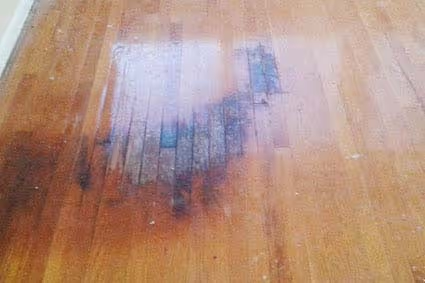
A dog shut in one room, a dishwasher that dripped for a week, a planter left on the floor all winter. If the mark is still amber and sits in the finish, it usually sands out. If it has gone black, the liquid is down in the grain and that board is done. We take moisture readings before quoting anything, dry the area if it is still wet, lift the ruined boards individually, then blend tinted filler and stain until you have to be shown where the damage was. Most of these are back in use in one to two days.
Kenmore's late-1990s and 2000s kitchens are full of laminate, and laminate has one real weakness: standing water at a joint. Once the core swells, the edge stays proud and nothing brings it back, because the wear layer is a printed film rather than wood. Those planks get replaced, not repaired. On a click-lock floor we unlock from the nearest wall, pull the bad planks, and lock the run back together. The part that decides the job is matching a decor that was probably discontinued a decade ago, so leftover planks in the garage are worth more than most people think.
Half-flights and landings are everywhere in Kenmore's split-level and daylight-basement houses, and that is exactly where a floor wears out first — the nosing at the top of the short stairs, the strip in the doorway between wood and tile, the two boards inside the door from the garage. Run a fingernail across the mark: if it glides, the scratch is in the finish and buffs out; if it catches, it has reached wood and gets filled and color-matched, or that board comes out. Loose and lifting thresholds are re-cut or replaced so they sit flat and nobody catches a toe on the way down.
Kenmore's split-level and daylight-basement houses put a lot of finished floor on the lowest level, close to grade and below the rooms people use every day. A spill down there does not flash off the way it would upstairs. It works into the seams between boards and reaches the wood while the finish above it still looks sound, which is why so many of these are found as a dark patch weeks after the leak itself was dealt with.
 1
1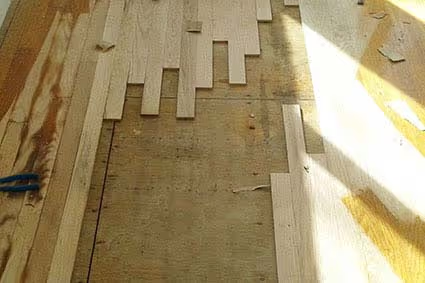 2
2 3
3 4
4Most pet-stain and water-damage repairs are finished in 1–2 days.
Solid oak strip in an older Kenmore rambler usually has at least one sanding left in it, especially where carpet kept the traffic off it for decades. The rest of what we find here does not get that option: an engineered wear layer is too thin to sand without going through it, and on laminate and vinyl there is no wood on top to cut into at all. So the material settles the question more often than the damage does, and a shallow scratch on a printed floor can mean a new plank while a deep gouge in solid oak comes out under a sander.
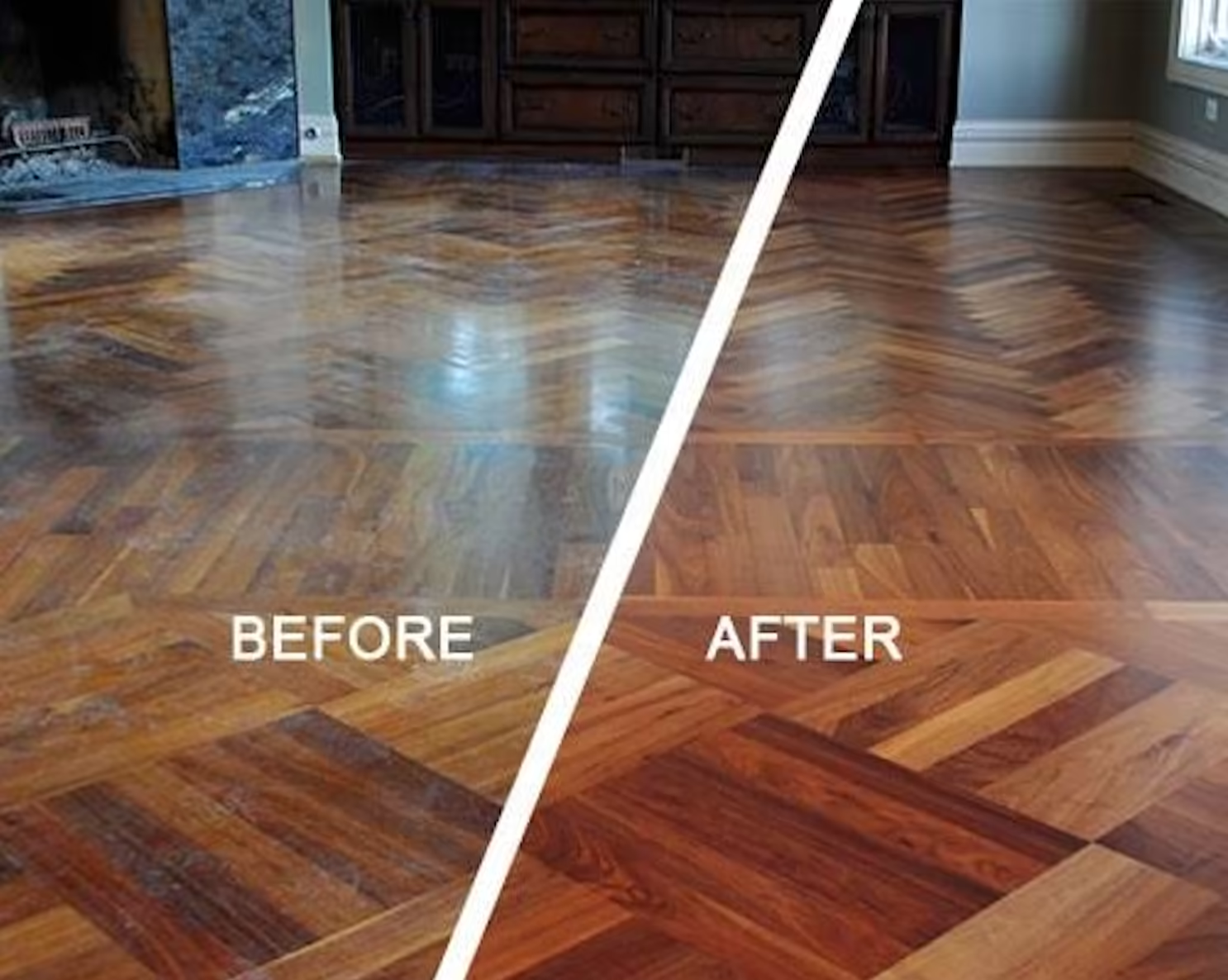
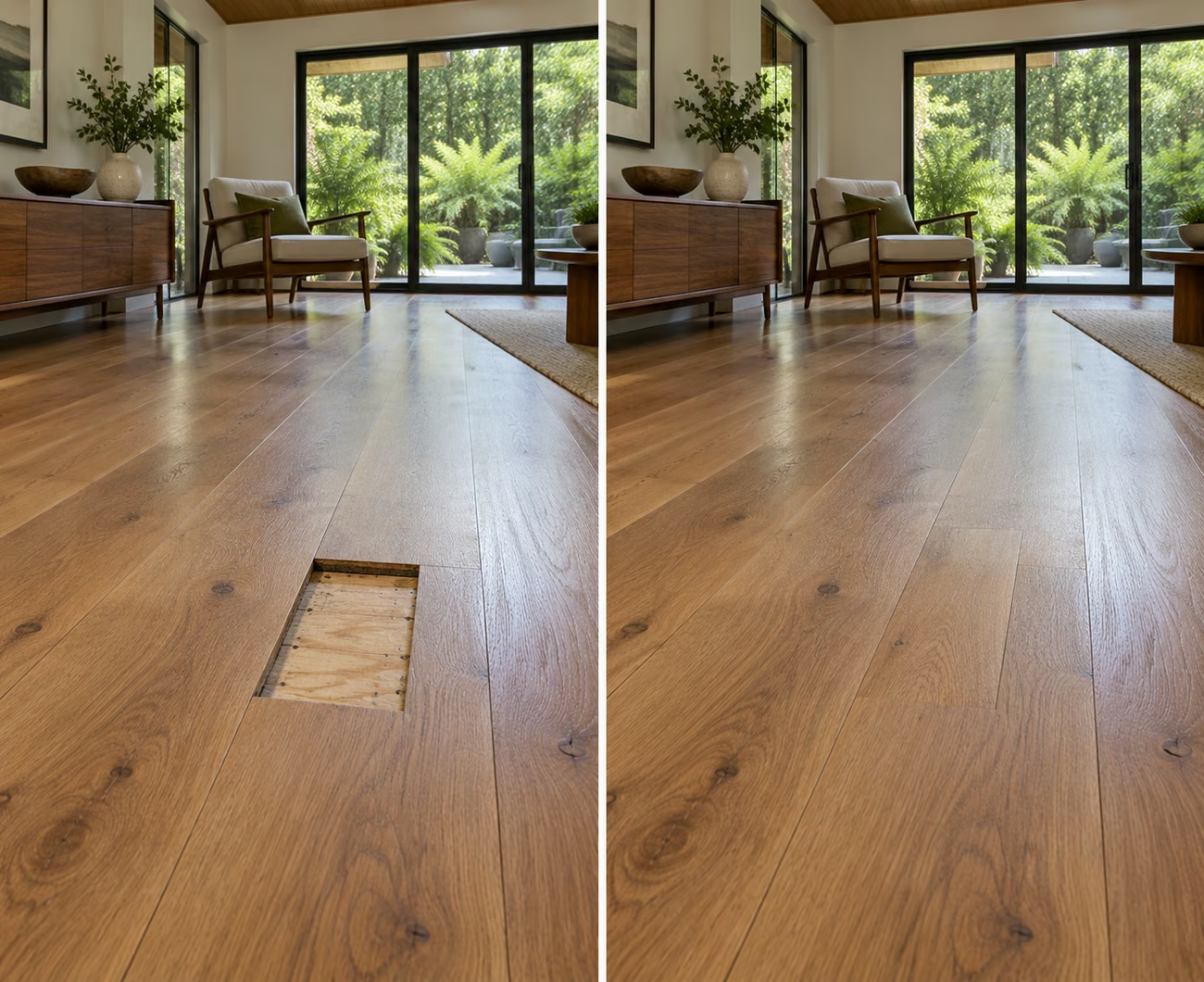
The same floor, split down the middle. Left: the finish is cloudy and worn through in the traffic path — no amount of patching fixes that. Right: sanded back and refinished.
Typically $200–$1,000 · most finished in 1–2 days
Board replacement is done first, so the whole floor is finished together
The bead test. Drip a little water onto the tired-looking area. Beading means the coating is intact and a spot repair will hold. If it darkens and soaks in, the finish has worn through and the room wants refinishing.
The furniture test. Slide a rug or a side table aside. A clear color step between the covered wood and the exposed wood is sun fade, and replacing individual boards there only adds a third shade.
Still not sure? Send us a few photos of the floor and we will tell you which one you need, even when it is the cheaper answer.
Repair work in Seattle is mostly prewar — vertical-grain fir in a Ballard bungalow, strip oak in a 1930s house. Kenmore is a different job. Apart from Arrowhead on the lake side, where the first cabin went up in 1888 and the oldest house still standing dates to 1929, and small pockets like Linwood Heights that started as Depression-era Back-to-the-Land lots, very little here is prewar. Inglewood was platted in 1953 and largely built out by 1962. Uplake Terrace also began in 1953. Upper Moorlands filled in through the mid-1950s. The median Kenmore home dates to the mid-1980s, so the floor we are usually standing on belongs to a rambler, a split-level or a daylight-basement house built somewhere between the Eisenhower years and the mid-1990s.
That history shows up as layers. Narrow oak strip in the oldest ramblers, often uncovered the week the 1980s carpet finally comes out. Parquet and carpet-over-plywood through the 1970s. Engineered hardwood from 1990s and 2000s remodels, with a wear layer far too thin to sand. Laminate in the kitchens of that same stretch. And since the mid-2010s, vinyl plank nearly everywhere — in flips, in rentals, and in the mixed-use buildings that came out of downtown Kenmore's rebuild around Town Square at Kenmore Village, the new library and the apartments off 68th Avenue NE. Roughly three in ten Kenmore households rent, so a steady share of our calls are turnover repairs where one room of LVP has to match the rest of a unit exactly.
The ground under the house matters here too. The flat land at the north end of Lake Washington, the ground beneath Log Boom Park and Squire's Landing, only exists because the lake was dropped nine feet in 1916 for the ship canal, and the Sammamish River empties right at that point. A house on that low flat ground and a house stepping down the glacial-till slope above Juanita Drive into Uplake or Arrowhead are two different repair problems.
The first is usually a lower level sitting close to grade, where we put a meter on the wood before we touch a board. The second is a floor plan broken into half-levels, where the landings and transitions take all the traffic and fail first. We work out which one we are in before we write a price. Kenmore only became a city in 1998, but its floors have been aging since long before that, and they age by neighborhood.
It can be repaired. Individual planks come out and go back in without disturbing the rest of the run, and that holds for click-together floating LVP as well as glue-down. What matters more than the plank is why it failed. A floating floor laid tight to the wall or pinned under a heavy island will keep buckling until that pressure is released. Ends curling in a bright room usually point to heat or direct sun. We deal with the cause first, then replace the damaged planks and close the seams so the repair does not walk itself open again.
Almost always. Narrow oak strip from that era is one of the easier things to source, because the species and widths were standard, and where the exact profile has been discontinued we use salvage stock. Color is the harder half of the work, since sixty years of daylight have moved the wood around the patch. We mix and test stain on your floor rather than on a sample board, then feather the repaired area into the surrounding sheen. If the carpet has only just come out and you are planning to sand the whole floor anyway, tell us up front — patching before a full sand costs less and comes out better.
The swollen planks are done; the floor probably is not. Laminate is a printed wear layer over a fiberboard core, so once that core takes on water the edge stays raised and no amount of sanding brings it back. Those planks get replaced. On a click-lock installation we unlock from the closest wall, swap the bad ones, and lock the run back down. The single thing that decides the job is whether the decor can be matched, so check the garage, the crawlspace and the top of the closet for leftover planks before you call.
Shape and color give it away, then a meter confirms it. Pet urine spreads along the grain and goes black at the center with a lighter halo where it wicked outward. A leak or a permanently wet doormat tends to cup the boards first and darken them more evenly. Either way we take moisture readings under the floor before quoting, because laying a repair over wood that is still damp buys you a second visit. Lower levels sitting close to grade in Kenmore get that check every single time.
Most repairs run $200 to $1,000, and most are finished in one to two days. The number moves with how many boards come out, whether the material is still in production, and whether the repaired area has to be stained and coated to blend into what surrounds it. One cracked plank in an LVP floor with leftovers sitting in the garage is at the bottom of that range. Water damage across a doorway that needs sourcing, staining and finishing sits at the top. Either way the price is in writing before work starts.
All of it. Inglewood and Linwood Heights up the hill, Moorlands over on the river side, Uplake and Arrowhead heading down toward the water, the newer buildings around Town Square, and the streets off Juanita Drive out past Saint Edward. We run from a shop in Bellevue and cover King and Snohomish County, so Kenmore is a short drive and we are through there constantly. Call (425) 595-1079 and we will set up a free estimate at a time that works.
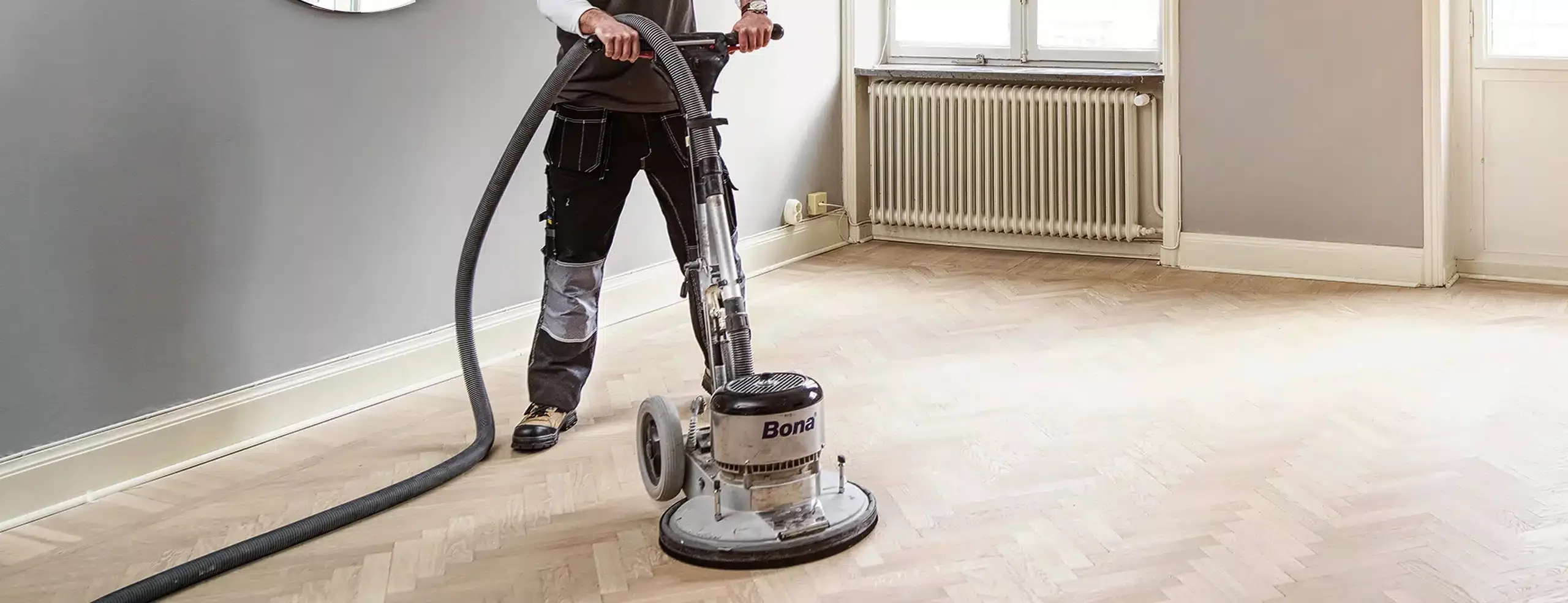
Solid wood keeps a reserve. A solid oak or fir board carries enough thickness to sand a problem out completely — which is why deep damage in an older Kenmore floor is often repaired in place instead of replaced.
Solid hardwood is the one floor with margin built in. Where an engineered plank has a millimeter or two of real wood on top, the narrow oak strip in an Inglewood rambler can give up a full pass of sanding and still have decades left — and where carpet kept the traffic off it since the 1980s, more than one. So before we quote a board swap on solid oak, we ask whether the damage actually goes deeper than the finish, because a surprising amount of it does not.
The boards you see are rarely the ones at fault. The problem lives underneath — a fastener that has let go of its joist, a subfloor panel rubbing its neighbor, or framing that has dried and shrunk a hair since the house went up. The median Kenmore home dates to the mid-1980s and the ramblers and split-levels around it run back to the 1950s, which is well past the age when those fasteners start letting go. We chase the problem to its source instead of patching the symptom.
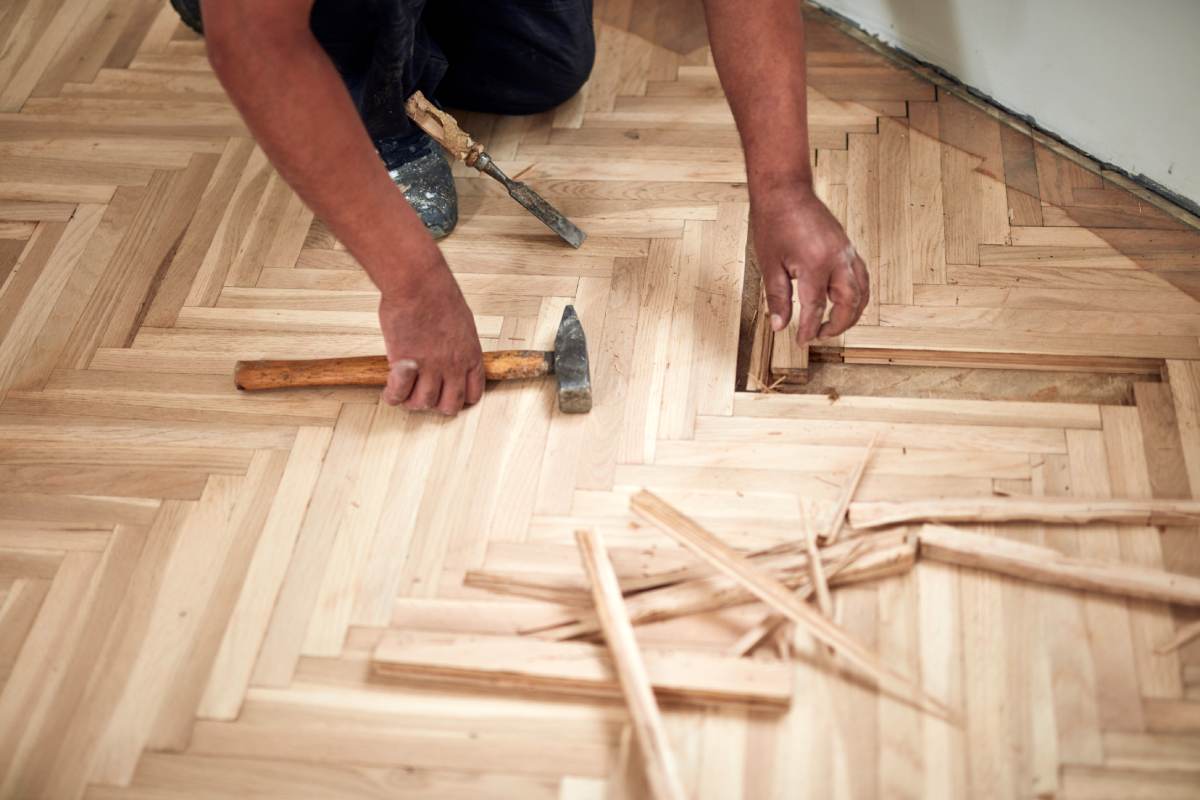
The fix starts under the boards. Loose pieces come up, the substrate gets fastened flat, and only then does the surface go back together.
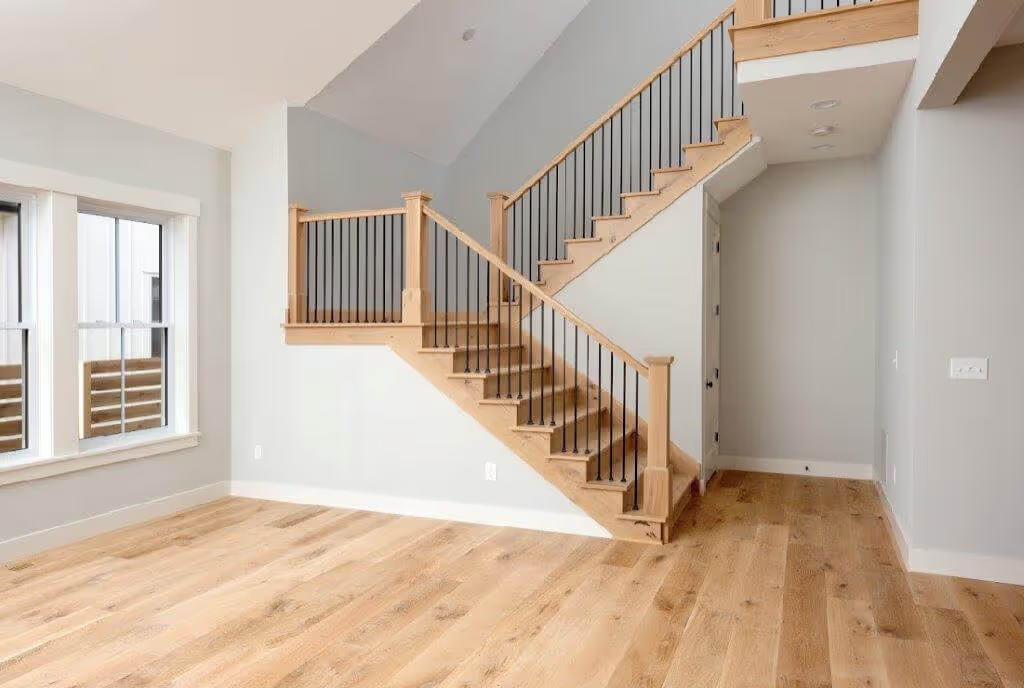
Stairs take the traffic of a hallway on a tenth of the wood. Treads, nosings and thresholds wear out years before the rooms around them — and they can be repaired one piece at a time.
Every trip in from the garage, every school run, every wet dog coming back up from the lake lands on the same few square feet of wood. In a Kenmore split-level the half-flights carry the whole house, and the nosing at the top of a short run takes the full strike of every step — which is why the landings and transitions here fail years before the rooms they connect. These are the repairs people put up with because they assume the whole staircase has to come apart. It does not.
Photograph the damage on your phone — a close-up of the worst spot, one from a few feet back, and one of the whole room. One of our estimators looks at every photo personally and emails you a written price the same business day. No visit, no sales call, no obligation.