



It depends entirely on the material: carpet lasts roughly 5–15 years, laminate 15–25, luxury vinyl plank 10–25 — but solid hardwood can last over 100 years because it's the only floor you renew instead of replace. A screen & recoat every 4–7 years and a sand-and-refinish every decade or two resets a hardwood floor for less than any replacement. The real question usually isn't "when do I replace?" — it's "am I replacing something that could be renewed?"
Half the floors we're asked to replace don't need replacing. We're OC Flooring — since 2013 we've worked on more than 1,000 floors across King and Snohomish County, and one of the most useful things we do at a free estimate is talk a homeowner out of a replacement. So here's the honest version of "how often should I replace my flooring": real lifespans by material, the signs a floor is actually done, and the renewal options that reset the clock for a fraction of replacement cost.
Flooring Lifespans: What to Actually Expect
realistic lifespan of a solid hardwood floor that gets refinished on schedule. Plenty of pre-1930 Seattle and Everett homes are still on their original boards.
how many times a ¾-inch solid hardwood floor can be fully sanded and refinished — there's roughly a quarter inch of usable wood above the tongue.
the typical service life of carpet, the shortest-lived common flooring. Matting and traffic-lane wear end most carpets long before holes do.
| Flooring | Typical lifespan | Can it be renewed? | End-of-life signs |
|---|---|---|---|
| Solid hardwood | 100+ years | Yes — recoat every 4–7 yrs, refinish 4–6× over its life | Wood worn below the tongue, deep structural damage |
| Engineered hardwood | 20–40+ years | Yes — 1–2 refinishes if the wear layer is 2mm+ | Wear layer sanded through, ply delamination |
| Luxury vinyl plank | 10–25 years | No — but single planks can be swapped | Wear layer scratched through, curling edges, faded pattern |
| Laminate | 15–25 years | No | Chipped corners, swollen seams, worn print layer |
| Carpet | 5–15 years | Cleaning helps; matting is permanent | Crushed traffic lanes, odors that survive cleaning |
| Tile | 50+ years | Regrouting | Cracked tiles from subfloor movement |
Two caveats worth knowing. First, these ranges assume decent installation and normal care — a wet crawlspace or a skipped acclimation step can end any floor early. Second, quality matters more than category: a thin builder-grade laminate from 2005 and a modern thick-plank laminate are different products wearing the same name.
The Hardwood Exception: Renew, Don't Replace
Hardwood is the only flooring with a reset button, and it has two settings. A screen & recoat ($1.99/sq ft) abrades the old finish and applies a fresh coat — done every 4–7 years, before wear breaks through the finish, it means the wood itself never takes damage and a floor can go decades between full sandings. A sand-and-refinish ($3.99/sq ft natural, $6.50/sq ft with stain) removes a thin layer of wood along with every scratch, stain, and gray patch in it — and a ¾-inch solid floor has 4–6 of those in the bank. Run the math against replacement and it's not close: refinishing costs a fraction of new hardwood installed, and the full numbers are in our refinishing cost guide.
The one hardwood floor that genuinely can't be saved: boards already sanded down to the tongue (you'll often see exposed nail heads along seams), or wood destroyed by long-term water damage or pet saturation across large areas. That's when we'll honestly tell you replacement wins.
Replace vs. Renew: How to Read Your Own Floor
- Structural movement — soft spots, bouncing, boards separating from the subfloor.
- Water damage that's soaked in — swollen laminate seams, delaminated LVP or engineered plies, black rot in wood.
- Worn through the wear surface — laminate print layer gone, LVP scratched past its wear layer, hardwood sanded to the tongue.
- Persistent odors — pet or smoke smells that survive professional cleaning live in the material and pad.
- Dull, scratched finish on hardwood — that's the finish failing, not the floor. Recoat it.
- Gray or stained patches in wood — sanding removes them with the top layer.
- Dated color — refinishing with a new stain restyles the same boards.
- A few damaged boards — individual board (or LVP plank) repairs beat whole-room replacement.
Local Notes: What "Old Floor" Means Around Here
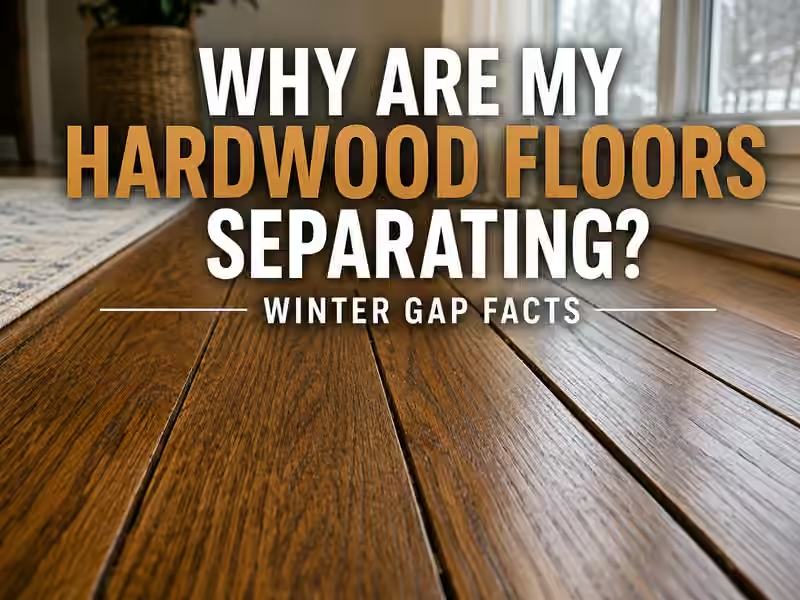
Pre-1950 Seattle, Everett, and Snohomish homes often hide old-growth Douglas fir under carpet — tight-grained wood from trees that aren't harvested anymore. Age alone is never the reason to replace it; a 90-year-old fir floor with life left in it beats most new products you can buy. 1980s–2000s Eastside, Lynnwood, and Mill Creek homes mostly have 2¼" red oak that has usually never been sanded even once — meaning it hasn't touched the first of its 4–6 refinishes. And a Western Washington-specific warning: what looks like a floor "wearing out" (cupping, seasonal gaps, finish failing early) is often a moisture problem underneath — a damp crawlspace or an indoor humidity swing — that would take out the replacement floor too. It's why every estimate we do includes a look at what's under the floor, not just on top of it.
Replacing Anyway? Time It Right
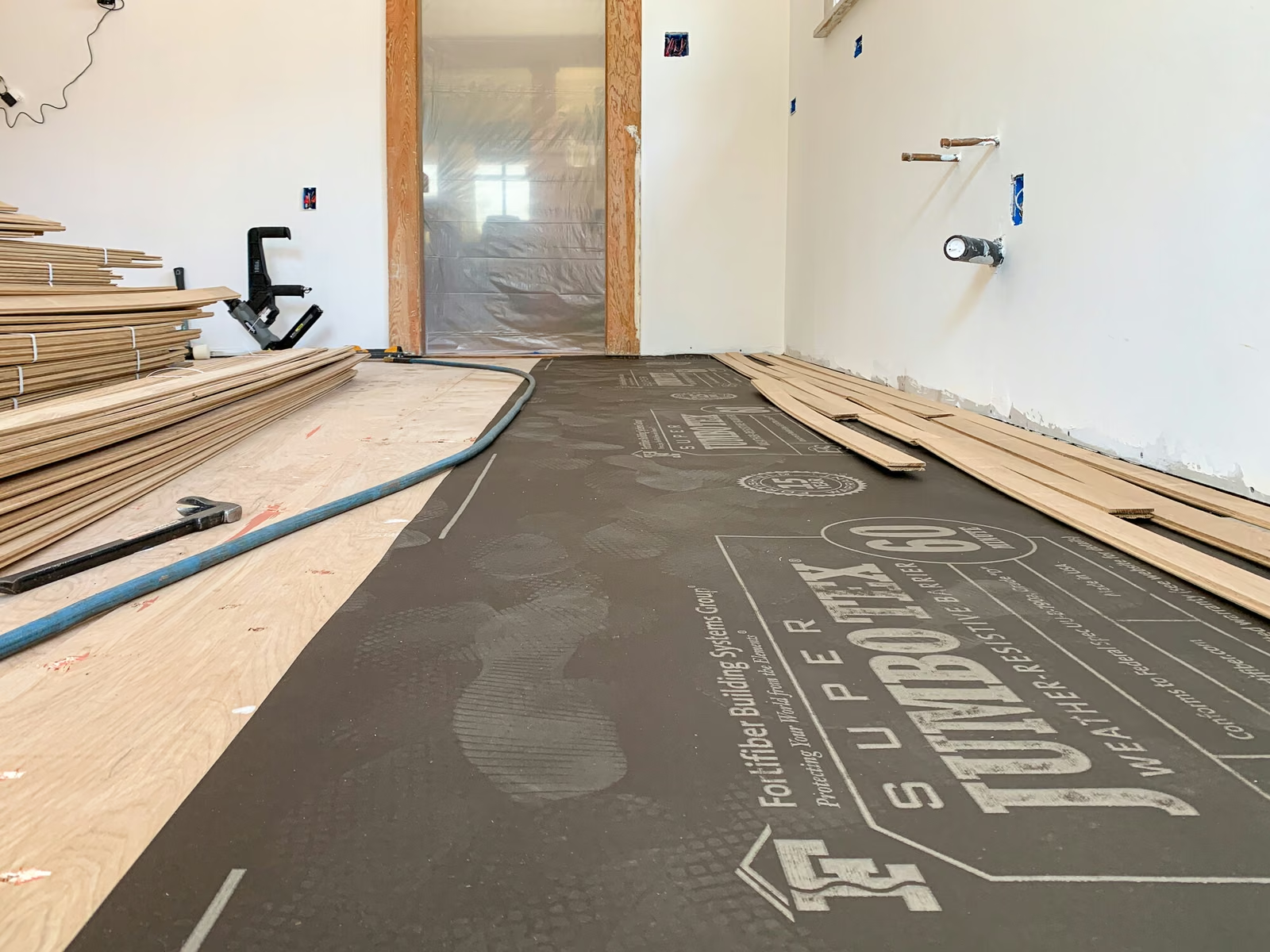
When a floor truly is done — carpet at year 14, builder laminate with swollen seams — replacement is the moment to upgrade the material, not just repeat it. Many of our King and Snohomish County clients replace worn carpet with new hardwood (installation labor runs $3–$4.25/sq ft, materials separate) or go with waterproof LVP in basements and rentals. If you're prepping a home for sale, be strategic: buyers in this market consistently reward real wood on the main level, and a refinish often returns more than it costs while full replacement rarely does.
Flooring Lifespan Questions, Answered
How do I know when carpet needs replacing?
Can a hardwood floor really last 100 years?
Is it cheaper to refinish hardwood or replace it?
How long does luxury vinyl plank last before it needs replacing?
Does laminate wear out faster than vinyl plank?
What flooring problems mean the subfloor is the real issue?
Should I replace my floors before selling my house?
What's the difference between a recoat and a refinish, and how often is each done?
How many times can engineered hardwood be refinished?
Replace or Renew? Get a Straight Answer — Free
We'll look at your floor and tell you honestly whether it needs a $1.99/sq ft recoat, a refinish, or a genuine replacement. Free in-home estimates across King & Snohomish County.
Related reading: What refinishing hardwood costs in 2026 · 5 ways to protect hardwood flooring · Screen & recoat service · Hardwood installation