1,000+ Floors Installed & Restored Across Washington
Searching for floor repair near me in Oak Harbor? Chipped laminate, lifting vinyl plank, split hardwood boards and pet damage repaired in place — in Old Town's older houses, the 1970s and '80s homes through Fair Winds and Broad View, and the newer builds out toward Fort Nugent. Everything the job needs crosses Deception Pass with the crew, so it gets matched and finished in one visit instead of stretched across two. Call (425) 595-1079 for a free in-home estimate anywhere in Oak Harbor.
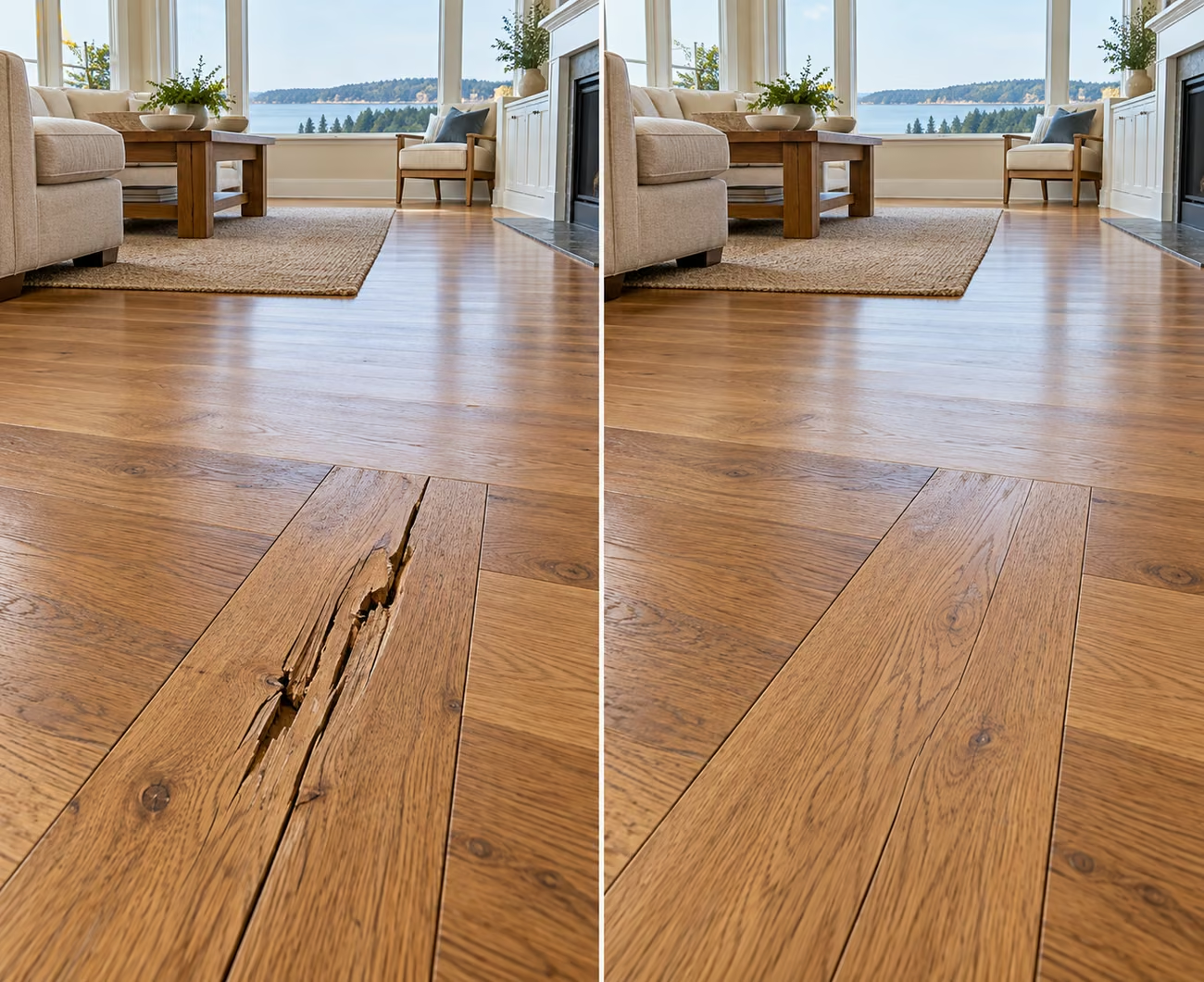




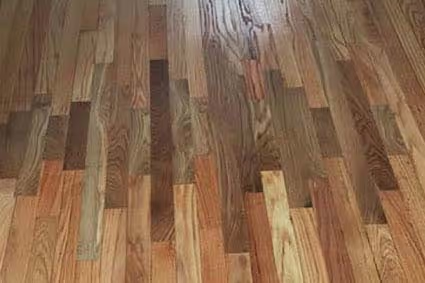
This is what we are hired to avoid. New boards dropped in without matching species or grain direction. It never blends in later; it just stays the first thing you notice.
Which of those three is under your feet is mostly a question of when the house was built, and it changes the work more than the damage does. A solid oak or parquet floor is fastened down, so a bad board comes out wherever it happens to sit and the rest of the room never moves. A floating laminate or vinyl plank floor is one connected sheet, so where the damage falls in the run matters as much as what caused it: a plank near a wall is a short job, and one in the middle of a long room means working back to it. We settle which floor we are on before we quote, because that is what sets the size of the job.
Oak Harbor built hard through the laminate years — the 1990s and 2000s are the city's two biggest construction decades — and a lot of that flooring is still down. Chipped corners, swollen edges near a dishwasher, and click-lock joints that have crept apart all get handled the same way: we release the run from the nearest wall, take out only the planks that are wrong, and lock it back together. Nothing about laminate can be sanded, so the whole trick is sourcing the right decor. Leftover boxes from the original install are the fastest route; otherwise we find the closest current match and show it to you against your floor before we commit.
Vinyl plank went into most of the newer construction here and it is the usual re-floor in rentals, so it is a large share of our repair calls. The failure is almost always movement rather than wear. A floating LVP floor that has grown in a bright south-facing room, been pinned under a heavy bookcase, or run across a high spot will buckle at the seams and curl at the ends. We work out which of those it is first, then swap the damaged planks and close the seams back up. Replacing a plank without dealing with the cause only buys a few months.
Oak strip, parquet and engineered wood through the 1950s and '60s houses that went up as the air station grew, and across the later Broad View and Fair Winds streets. Cracked, cupped, split or stained boards come out individually while the surrounding floor stays untouched, then go back matched for species, width and grain and finished to sit level and even in sheen with everything around them. Gaps that stay open in every season get shimmed with matching wood instead of packed with putty — and we will tell you when what you are looking at is just August doing its thing.
Drag marks down a hallway, dents where an appliance came out, dog claws through the finish, and doorway transitions worn or lifted enough to catch a foot. In a town where more homes are rented than owned, this is the most common call we take, and it is damage with a deadline on it. Shallow marks get abraded and recoated in place. Anything through the wear layer means the board or plank is replaced and blended in. Thresholds are re-cut or swapped so they sit flat and hold the plank edges down instead of lifting again by the next tenant.
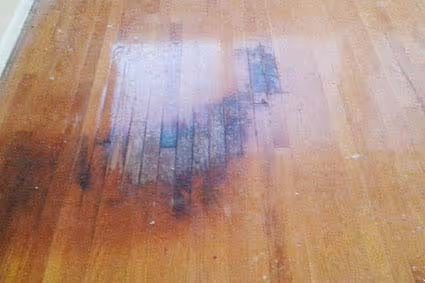
Dark urine staining that has gone past the finish into the grain, and slow leaks behind a dishwasher, fridge or toilet that surface as one soft, spongy patch. We probe the area and take a moisture reading before we quote anything, because laying new material over damp material is how a repair fails the following winter. That matters especially in manufactured homes, which are about 5% of Oak Harbor's housing stock and often have vinyl or laminate sitting on particleboard decking. We show you the reading and tell you plainly what it says, including when what you have turned out to be bigger than a flooring repair.
Finish is a film, and a film only buys time. Urine that sits works through it and into open oak grain, where it darkens the wood itself rather than the coating over it, and a few drops a day from a loose fitting do the same thing to a laminate core, which is compressed fiber and swells from the inside out. Both are slow and both are quiet, so by the time either one shows on the surface, the surface is the small end of it.
 1
1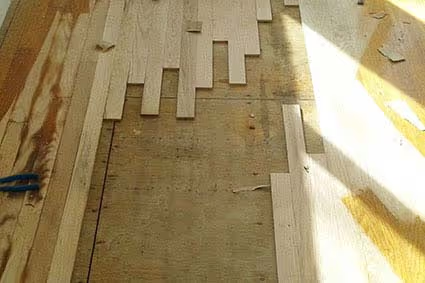 2
2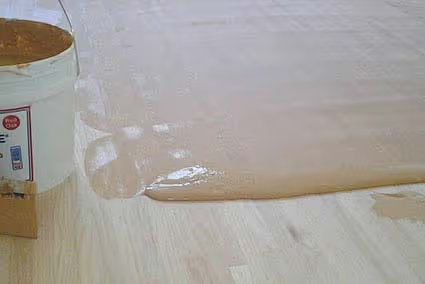 3
3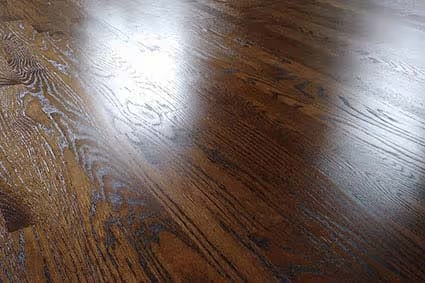 4
4Most pet-stain and water-damage repairs are finished in 1–2 days.
Refinishing is a thickness question before it is anything else. Solid oak and parquet can take another pass if enough board is left above the tongue, engineered plank can take one only if the veneer is deep enough to survive it, and on a printed or click-together floor there is no wear layer to cut into at all, so the work there is replacement and match. We check the floor before we answer, because on wood that has already been sanded once, a guess costs you the whole floor.
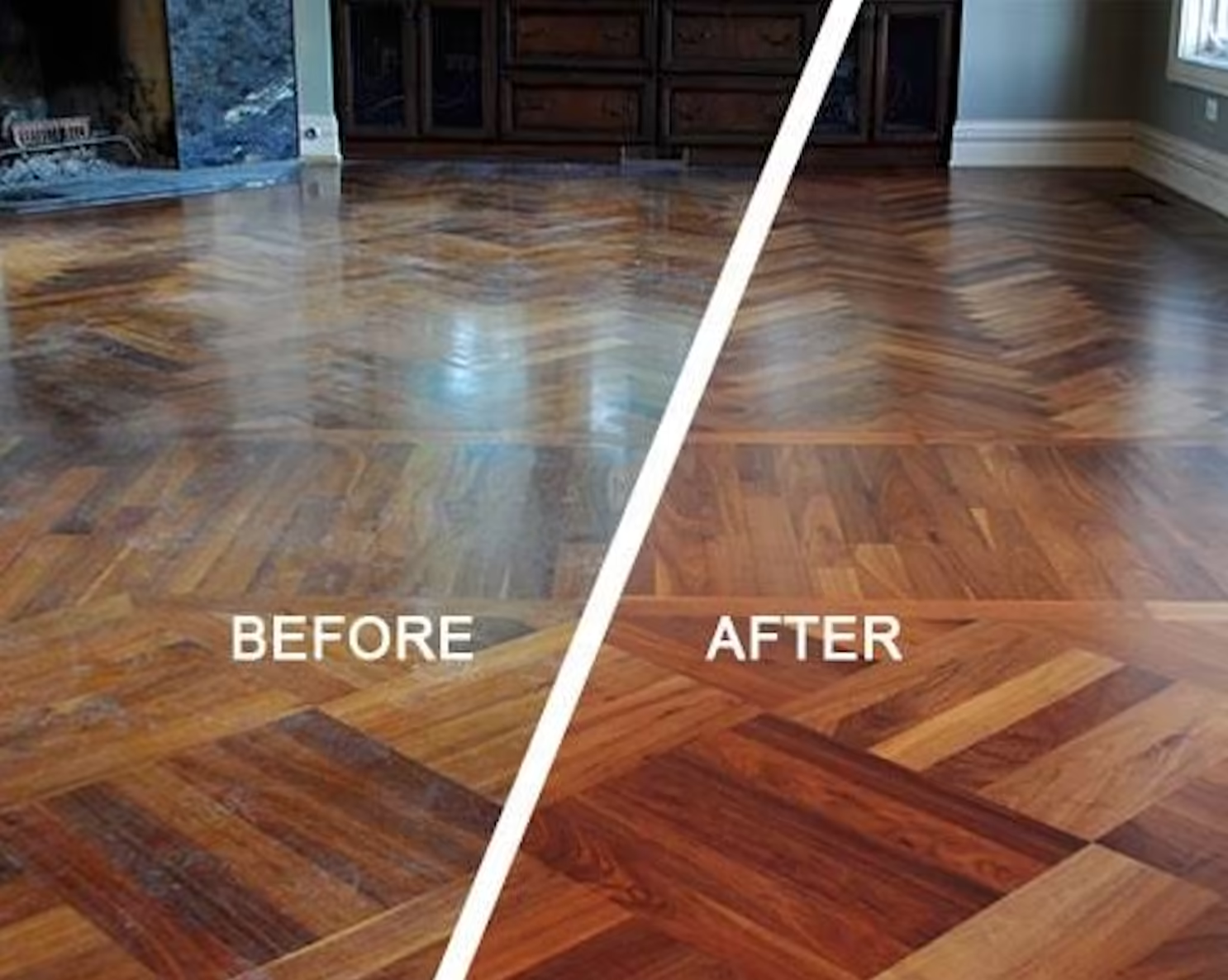
The same floor, split down the middle. Left: the finish is cloudy and worn through in the traffic path — no amount of patching fixes that. Right: sanded back and refinished.
Typically $200–$1,000 · most finished in 1–2 days
Board replacement is done first, so the whole floor is finished together
The bead test. Drip a little water onto the tired-looking area. Beading means the coating is intact and a spot repair will hold. If it darkens and soaks in, the finish has worn through and the room wants refinishing.
The furniture test. Slide a rug or a side table aside. A clear color step between the covered wood and the exposed wood is sun fade, and replacing individual boards there only adds a third shade.
Still not sure? Send us a few photos of the floor and we will tell you which one you need, even when it is the cheaper answer.
Start with the age of the housing, because it changes the whole job. The city's own 2024 Housing Needs Assessment puts just 2.2% of Oak Harbor homes at pre-1940 and another 0.6% in the 1940s, with 68.5% built between 1970 and 2009. Come here expecting the century-old vertical-grain fir that fills Seattle's older neighborhoods and you will almost never find it. What is here instead is what those five decades sold: oak strip and parquet in the 1950s and '60s houses that went up as the air station grew, carpet and sheet vinyl through the '70s and '80s across Fair Winds and Broad View, engineered hardwood and first-generation laminate through the 1990s and 2000s build-out, and vinyl plank in nearly everything finished since, out toward Fort Nugent. Those are floors you swap planks in. They are not floors you sand.
Then the tenancy. The same assessment counts 5,194 renter-occupied homes against 4,658 owner-occupied — 52.7% rented. NAS Whidbey Island is the region's largest employer, with 10,800 people between active-duty and civilian staff as of 2022, many of them living off base in town, and orders move families on a schedule nobody local sets. Census figures show 17.8% of Oak Harbor residents moved within the past year. The practical result is a repair calendar built around move-outs: a gouged laminate hallway, a corner a dog got to, a chunk out of a doorway where a couch came through on the last day of a lease, all of it needing to be right before an inspection rather than someday. Crescent Harbor housing is Navy-owned and handled through the base. Everything else — Midtown, Modern Midway, Swantown, Silverspot Valley, Scenic Heights — is ours to look at.
Then the weather, which runs opposite to what people off-island assume. North Whidbey sits in the Olympic rain shadow and takes roughly 20 inches of precipitation a year against about 37 at Sea-Tac, with July and August each coming in under an inch. Wood tracks humidity, not reputation. A dry island summer pulls solid oak tighter than a Seattle summer does, so seasonal gaps here open wider in August and close harder in December, and filling them mid-August is how you get filler crumbs by October. It also means the entry boards are not automatically the worst boards in the house the way they are in the city. Here the damage is furniture, dogs, appliances and sun — and rooms with real south and west light are where lifting LVP shows up, planks growing into a wall or a heavy piece of furniture and never quite going back.
The rest is island specifics. Manufactured homes are about 5% of the housing stock, concentrated in and around Silverspot Valley, where vinyl and laminate over particleboard decking reads fine until a supply line has been weeping behind a dishwasher for a year. Swantown runs partly outside the city limits on larger lots and older utilities. Scenic Heights holds the only waterfront bluff in town and takes the weather straight off the water. And every crew, tool and board we intend to install arrives over Deception Pass Bridge, the one road on and off the north end. That is exactly why we plan an Oak Harbor job before we drive it.
We come out. Oak Harbor and Whidbey Island are part of our service area, and the crew drives up over Deception Pass Bridge from our Bellevue shop. Because there is one road on and off the north end, we do more planning up front than a mainland job needs: the estimate settles the material and the match, and the truck leaves loaded so the repair finishes in the same visit. One thing worth knowing — Crescent Harbor housing is Navy-owned, so repairs there go through the base rather than through us. Anywhere else in town, from Old Town to Fort Nugent, call and we will book an in-home estimate.
Individual planks come out and go back in while the rest of the floor stays put. On a floating LVP or SPC floor we release from the nearest wall or trim, swap the damaged planks and lock the run back down. Glued-down planks are cut out and re-bonded. The step people skip is finding out why it moved in the first place. Sun through a big south-facing window, a heavy piece of furniture parked on a floating floor, or an uneven spot underneath will push the planks apart again if nobody addresses it, so we sort that out before the new plank goes down.
Most of these are one day on site once we have the material, and the honest bottleneck is sourcing, not labor. If there are leftover planks from the original install sitting in a closet or the garage, that removes the slowest step entirely — go look before you call, it changes the answer more than anything else. If we have to match a discontinued laminate or LVP, allow us time to find it and show you the match. Tell us your date on the phone and we will say straight away whether it works, rather than booking you and hoping.
Often, but not by guessing. We pull a plank from a closet or from under an appliance, read whatever is printed on the back, and work backward to the manufacturer and decor. Laminate and LVP patterns get discontinued on a short cycle, so a lot of matching is finding the nearest current equivalent and laying it against your floor in your own light before anyone agrees to it. Where the match will not disappear, we say so — and sometimes the better move is pulling planks from a closet or under the fridge to patch the visible run, then putting the near-match where nobody looks.
Because North Whidbey is genuinely dry, not just dry-ish. The island sits in the Olympic rain shadow and takes around 20 inches of precipitation a year, roughly half of what Sea-Tac gets, and July and August each come in under an inch. Solid wood follows indoor humidity, so boards shrink harder through an Oak Harbor summer and swell back through the wet months. Hairline gaps that close by December are the floor behaving normally, and filling them in August guarantees the filler gets crushed out by winter. Gaps that stay open in every season are the ones worth dealing with, and wide ones get a shim of matching wood rather than putty so the fix reads as floor.
Most repairs land between $200 and $1,000, and the majority are done in one to two days. What moves the number is how many boards or planks have to come out, whether the material is still sold or has to be tracked down, and whether the repaired area needs sanding and finishing to blend. Water damage runs higher because the area has to be dried and read before anything new goes in. On a rental, that range usually sits well under replacing the floor in the same room once tear-out and disposal are counted. You get a written price at the in-home visit, not a range over the phone.
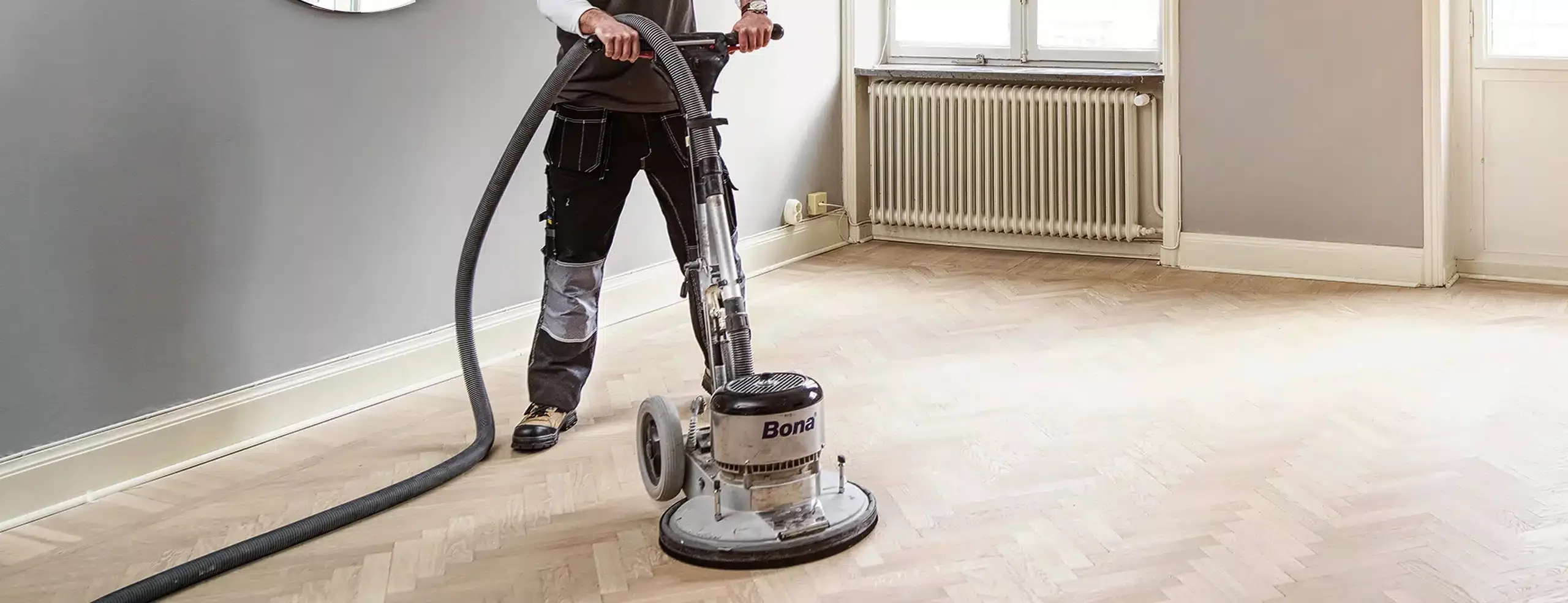
Solid wood keeps a reserve. A solid oak or parquet board carries enough thickness to sand a problem out completely — which is why deep damage in one of Oak Harbor's older floors is often repaired in place instead of replaced.
Most of what we repair in this town is a swap-plank floor rather than a sandable one — that is simply what five decades of building here put down. Solid wood does turn up, though: oak strip and parquet in the 1950s and '60s houses that grew with the air station, and the thin slice of pre-1940 stock around Old Town. Those floors have margin built in. Where an engineered plank has a millimeter or two of real wood on top, a solid board can give up a full pass of sanding and still have decades left — so before we quote a board swap, we ask whether the damage actually goes deeper than the finish.
Oak Harbor put up 68.5% of its housing between 1970 and 2009, which is exactly the age when fasteners start letting go, and in the manufactured homes around Silverspot Valley the decking under the floor is particleboard rather than plywood.
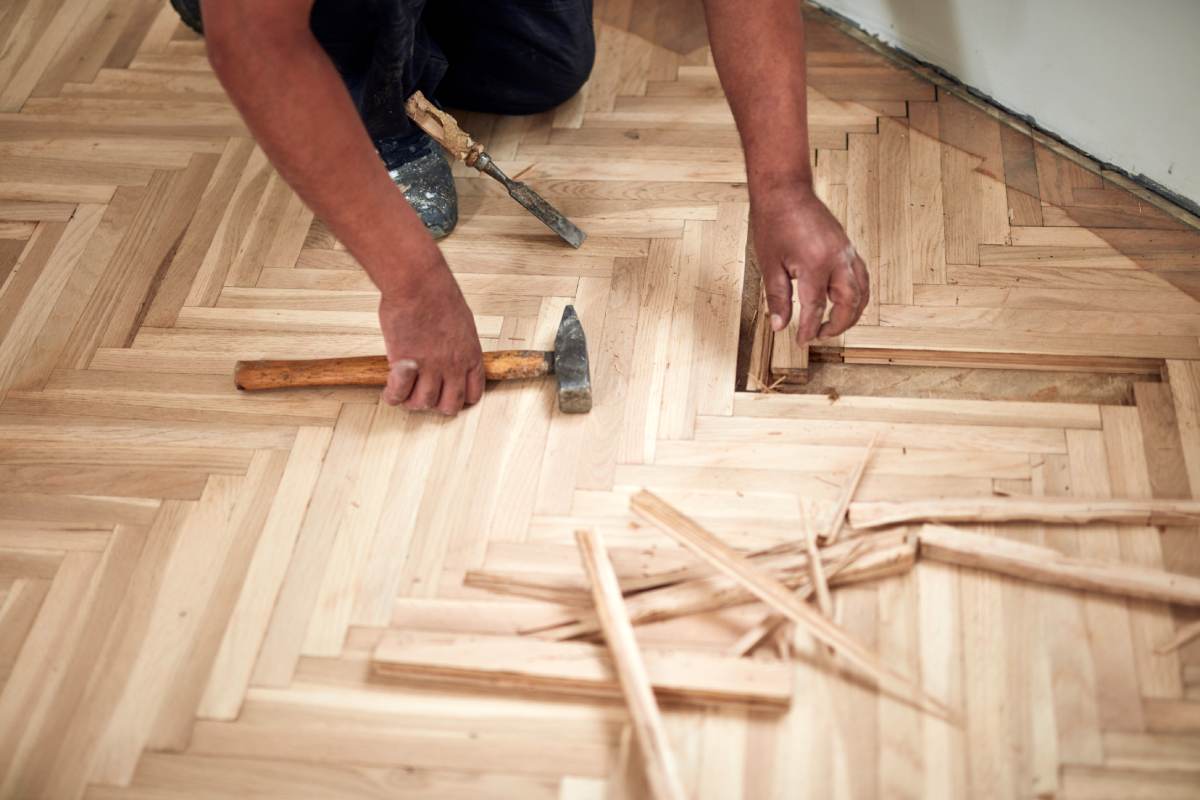
The fix starts under the boards. Loose pieces come up, the substrate gets fastened flat, and only then does the surface go back together.
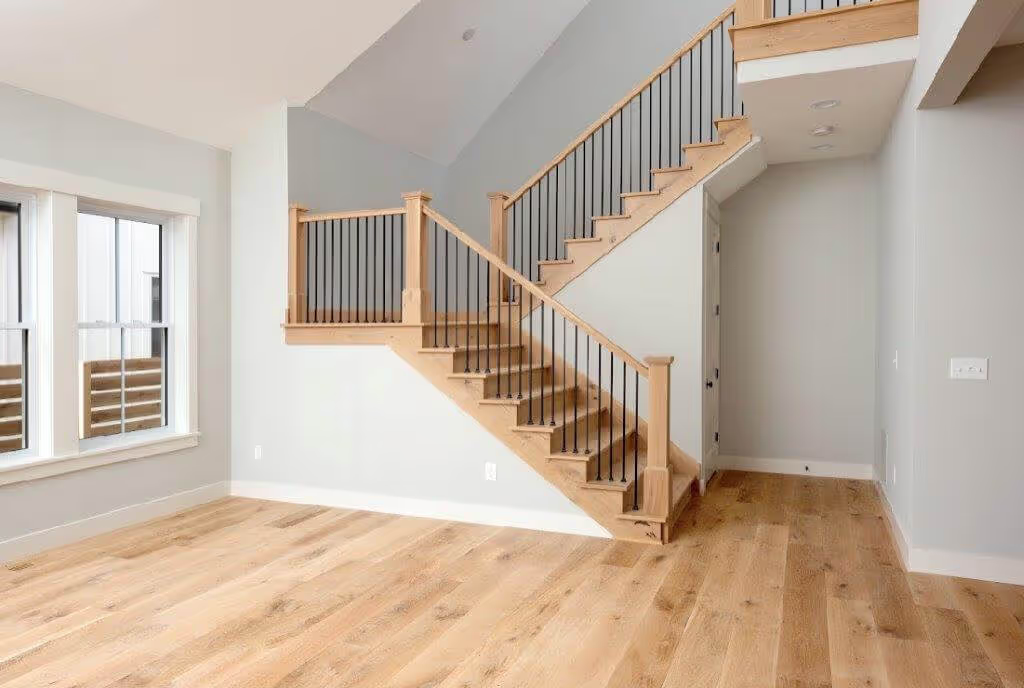
Stairs take the traffic of a hallway on a tenth of the wood. Treads, nosings and thresholds wear out years before the rooms around them — and they can be repaired one piece at a time.
Every early run out to the base gate, every school morning, every wet dog coming back up from the beach lands on the same few square feet of wood. In a two-story house through Fair Winds or Broad View the staircase is the busiest floor in the home, and the nosing on each tread takes the full strike of every step. In a rental — and more of Oak Harbor is rented than owned — it is also the first thing anyone notices at a move-out walkthrough. These are the repairs people put up with for years because they assume the whole staircase has to come apart. It does not.
Photograph the damage on your phone — a close-up of the worst spot, one from a few feet back, and one of the whole room. One of our estimators looks at every photo personally and emails you a written price the same business day. No visit, no sales call, no obligation.