1,000+ Floors Installed & Restored Across Washington
Searching for floor repair near me in Lake Stevens? We patch what went wrong and leave the good floor where it is: swollen laminate at a dishwasher, vinyl plank ridging up in a Cavalero Hill great room, oak gone dark beside a lakeside slider. Our crews work Old Town and Main Street, Frontier Village, Soper Hill, Sunnyside, Lochsloy, Machias and the newer streets off 20th Street SE. Call (425) 595-1079 for a free in-home estimate.
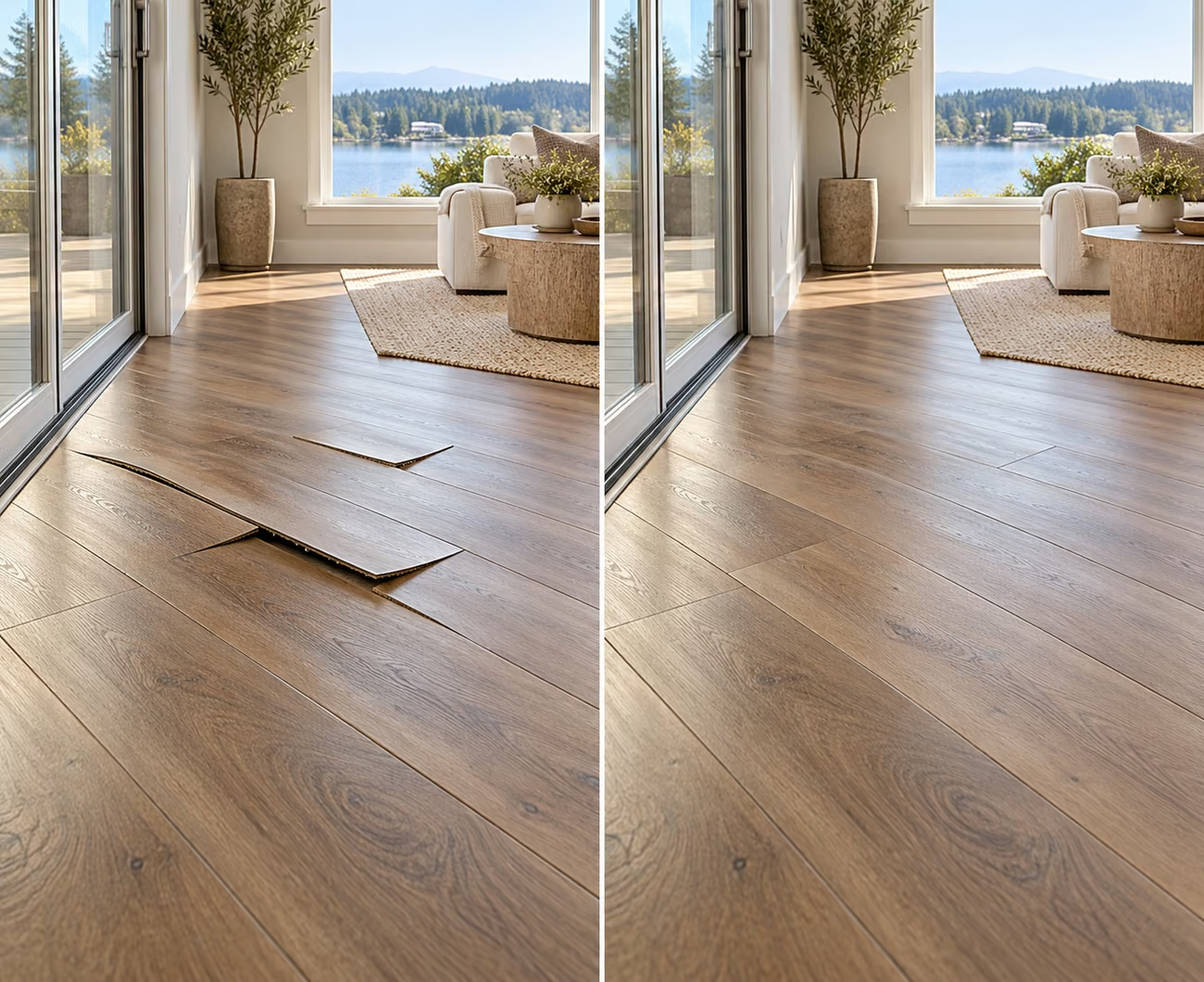




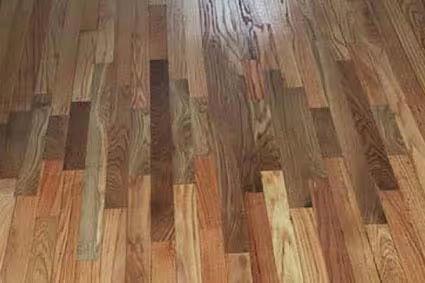
What a bad repair looks like. Wrong species, wrong grain, wrong color — patched by someone who didn't match the wood. You see it from the doorway, permanently.
Four out of five homes here are detached single-family, and most of what we open up in them came off a production line rather than out of a mill. That turns the repair into a question of tolerance rather than history: how much material the floor will let us take off, whether the joint will close flat again, whether the color can be rebuilt on site or has to be found. Oak, engineered plank and floating vinyl each answer that differently, and the mill-era fir in the oldest part of town gives the least room of any of them. Guess wrong about which one is under your feet and a two-board repair turns into a whole room.
Almost all of the year's rain here falls between October and April, and floors show it before anything else does. Dark edges along a slider, cupping in front of a dishwasher, a soft patch at the door people track in through from the dock. We meter the area first and let it dry, then cut out only the boards that will not come back and set matching ones in their place. If moisture is still coming from somewhere, we find that before we cut, because a repair over a wet spot fails twice.
In the newer developments around Cavalero Hill, Soper Hill and 20th Street SE, floating vinyl plank is what we see most, and floating floors move. Seams creep open, a run of planks peaks into a ridge where afternoon sun hits the glass, or one plank cracks because a fridge wheel pinned it while the rest expanded. We find what is stopping the floor from moving — trim nailed through the plank, a threshold screwed down too tight, a high spot in the slab — correct that, and then swap the damaged planks from a matched batch.
Laminate went into a lot of Lake Stevens kitchens and hallways in the 2000s remodel wave, and its weak point is the joint. Once water sits on a seam the core swells and the edge lifts into a hard ridge you can feel through a sock. Individual planks come out of a click-lock floor and go back in without touching the rest of the room. The real work is matching: decors get discontinued fast, so we check your leftovers first, then hunt the pattern before we promise an invisible fix.
The late-nineties and 2000s houses here typically got three-quarter-inch strip oak in the entry, hall and dining room. Cracked, split, cupped or stained boards come out one at a time and go back in with matching stock, then get stained and finished on site to sit down with the floor around them. Gaps are a separate question. Wood shrinks when the furnace runs all winter and swells back in summer, so we measure a gap in both seasons before filling anything — filling at the widest point is what causes the filler to squeeze out and crumble the following July.
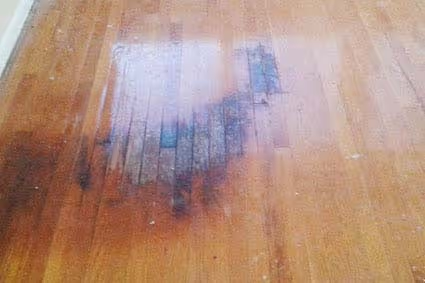
Dog nails, a dropped dumbbell, a chair dragged across an entry, a stain the previous owner covered with a rug. Light scratches buff and recoat. Deep gouges get filled and blended, or the board gets replaced when the damage went through the finish into the grain. Pet stains follow the same rule: surface darkening often sands out, but if there is odor the urine reached the wood and that board comes out. We also reset worn thresholds and transitions where hardwood meets tile, carpet or LVP, which is usually the first thing to come loose in a busy house.
A floor finish is a film, and a film only guards what stays on top of it. In the wet half of the year the difference is time: a spilled bowl or a wet dog by the door does not flash off the way it does in August, and given hours instead of minutes the water finds a seam and works down the edge of the board. Urine does not wait for a seam at all; it carries through the film into the grain, where no cleaner reaches it.
 1
1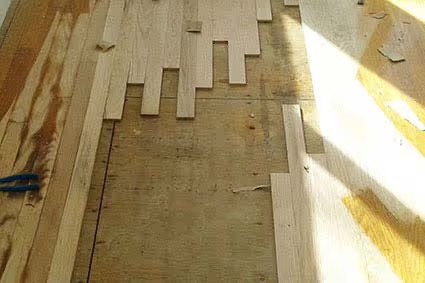 2
2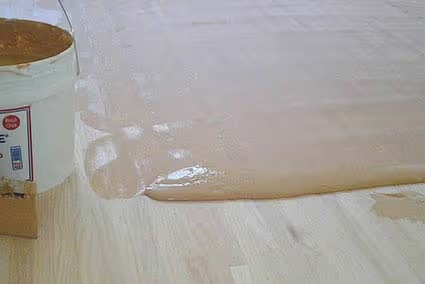 3
3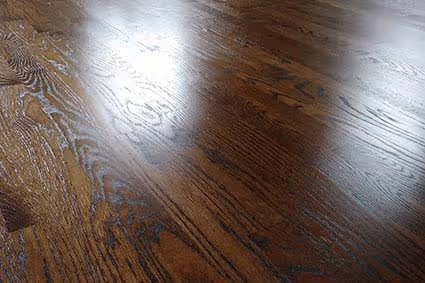 4
4Most pet-stain and water-damage repairs are finished in 1–2 days.
Refinishing is only on the table where there is solid wood with enough left above the tongue to take a sanding, and in housing this new that is not most of what we walk into. Laminate and floating vinyl are never refinished, and most engineered plank has one thin pass in it at best, so on those floors the damaged area is replaced and the rest is left where it is. On solid oak the question becomes how much of the room is involved: a few boards in a hallway is a repair, while an entry worn gray from the door to the kitchen is where sanding the whole floor costs less than chasing it one board at a time.
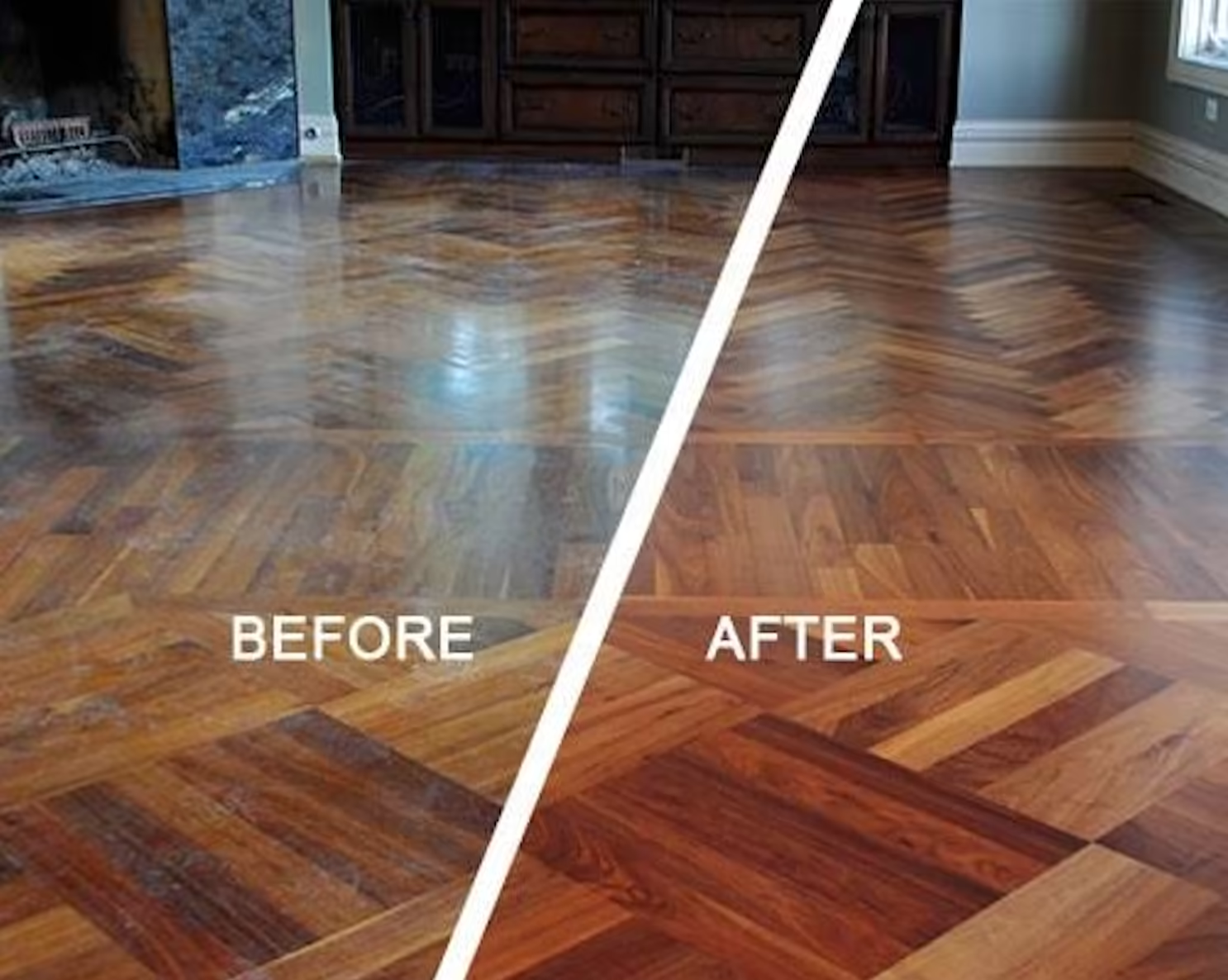
The same floor, split down the middle. Left: the finish is cloudy and worn through in the traffic path — no amount of patching fixes that. Right: sanded back and refinished.
Typically $200–$1,000 · most finished in 1–2 days
Board replacement is done first, so the whole floor is finished together
The water drop. Put a drop of water on a worn spot. If it beads, your finish is still doing its job — a spot repair is fine. If it soaks in within a minute, the finish is gone there and the floor is due for a refinish.
The rug test. Lift an area rug near a bright window. If the wood underneath is noticeably darker than the wood around it, that is sun fade rather than damage — and fade does not patch out board by board.
Still not sure? Send us a few photos of the floor and we will tell you which one you need, even when it is the cheaper answer.
Lake Stevens grew in bursts, and every burst left a different floor behind. Knowing which one you are standing on decides the repair.
The oldest of it is downtown. The Rucker Brothers opened their shingle mill in 1907 and filed the town plat in February 1908, laying out a business district and housing for the mill's roughly 250 workers. Machias had been platted two decades earlier, in 1888, and Hartford was already a rail junction by 1890. What survives from those years sits along Main Street, up toward Hartford, and out near the Centennial Trail, and it was floored in old-growth Douglas fir: narrow, tight-grained, and by now sanded two or three times by owners who came before you. On fir that thin, sanding again is usually the wrong answer and cutting in replacement boards is the honest one.
The mill burned a second time in 1925 and never reopened, and the lake became a resort instead. From the 1920s into the 1950s the shoreline filled with beach resorts and summer cabins, and a good number of those cabins are still standing, winterized and added onto a room at a time. That is why a waterfront job in Lake Stevens so often means three or four floors meeting inside one house — fir in the original room, sheet goods in a fifties kitchen, oak in the addition, vinyl plank from the last remodel. We price those by section rather than pretending a single repair covers the whole place.
Then came the suburbs. The city incorporated in 1960 with about 900 residents, the same year Frontier Village opened at Highway 9 and Highway 204, and Hewlett-Packard put a plant up on Soper Hill in 1985. The bigger change came later: the median Lake Stevens home was built in 1997, Cavalero Hill filled in through the 2000s, Frontier Village was annexed in 2007, and a nine-square-mile annexation in December 2009 added more than 10,000 residents overnight. The population went from 6,361 in 2000 to 28,069 in 2010 to 35,630 in 2020. Those late-nineties houses got strip oak, the 2000s ones got engineered hardwood, and the newest streets got floating vinyl plank. Three materials, three different failure modes, three different fixes.
Water is the last thing that sets this town apart from its neighbors. The lake is the largest and deepest in Snohomish County, fed by Lundeen, Mitchell and Stitch creeks and drained through Catherine Creek toward the Pilchuck. Lower Catherine Creek is one of the city's priority stormwater catchments, the outlet channel came over Hartford Drive during a record November rain, and lakeside owners have watched standing water sit on their lawns two winters running — at least some have been told by their mortgage company that they now fall inside a FEMA flood hazard area and have to carry flood insurance. When we get called out near the water, the moisture meter comes out of the truck before the saw does.
Most repairs we do here land between $200 and $1,000. What moves the number is how many boards or planks come out, whether the material is still made or has to be sourced, and whether the patch needs staining and finishing to blend. You get a written price at the in-home visit before any work starts, and the estimate itself is free.
Usually it can be saved, and usually less of it has to go than people expect. We start with moisture readings across the room, not just at the wet-looking spot, and we let the area dry before deciding anything, because wood that looks ruined at week one often flattens back out by week three. Boards that stay cupped, split or stained come out and get replaced. If the framing or structure underneath has been compromised, that is outside what we take on and we will tell you plainly rather than repair over it.
It can be repaired. Individual planks come out of a floating LVP floor and new ones go back in, and on a glue-down floor we cut out and reset the damaged pieces. The catch is that lifting and gapping are symptoms, not the problem. If a threshold is pinning the floor, trim is nailed through it, or the slab has a high spot, new planks will fail the same way, so we correct the cause first. Save any leftover boxes from the original install — that is the single biggest factor in whether the repair disappears.
Yes, laminate is click-lock, so damaged planks can be released and replaced without redoing the room. Two things decide how well it hides. First, whether we can match the decor — laminate patterns are discontinued quickly, so we check your spare planks or a closet run before ordering anything. Second, whether the leak is finished leaking. We check that the appliance connection is dry and the core underneath has dried out, because laminate that swells once will swell again on a damp base.
Often it is not, and we will say so. Strip oak shrinks when the heat runs from November through March and swells back once the house gets humid again in summer, and filling a gap at its widest point pushes the filler out when the wood expands. What we do repair is a gap that stays open year round, a board that has cupped or split rather than simply moved, and gaps wide enough to catch a heel. We check the same gaps in two seasons before recommending filler or a slip-in wood shim.
It usually is, and on floors like that it is often the only good option. Old-growth fir from the 1907 to 1925 period is soft, narrow and frequently sanded down close to the tongue already, so another full sanding can take it past the point of no return. We source salvaged fir of similar width and grain, cut in the damaged boards individually, and hand-blend the color and sheen to sit with a floor that has a century of patina on it. If there is not enough wood left to work with anywhere in the room, we will tell you that up front instead of selling you a repair that fails.
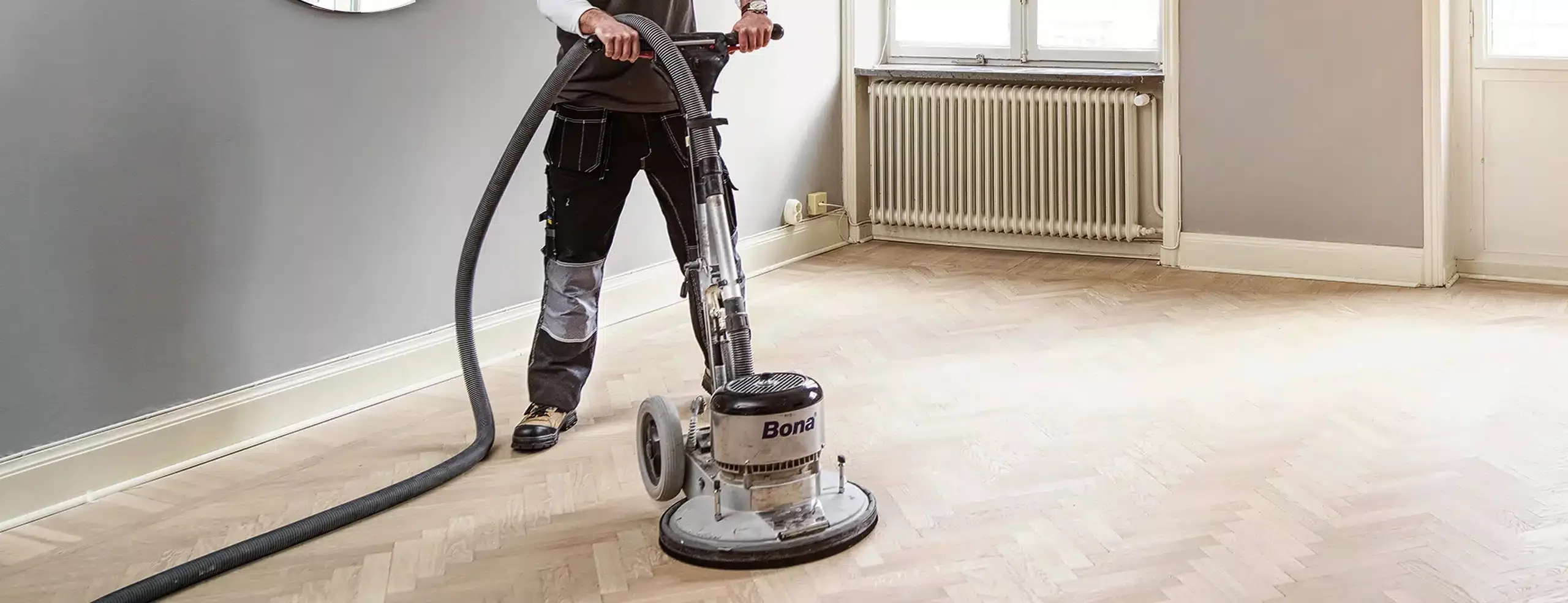
Solid wood keeps a reserve. A solid oak or fir board carries enough thickness to sand a problem out completely — which is why deep damage in an older Lake Stevens floor is often repaired in place instead of replaced.
Solid hardwood is the one floor with margin built in. Where an engineered plank has a millimeter or two of real wood on top, the three-quarter-inch strip oak that went into the late-nineties houses here can give up a full pass of sanding and still have decades left. So before we quote a board swap on oak, we ask whether the damage actually goes deeper than the finish — because a surprising amount of it does not. Mill-era fir downtown is the exception, and we say so honestly.
The boards you see are rarely the ones at fault. The problem lives underneath — a fastener that has let go of its joist, a subfloor panel rubbing its neighbor, or framing that has dried and shrunk a hair since the house went up. The median Lake Stevens home was built in 1997 and the Cavalero Hill streets filled in through the 2000s, which is exactly the age when those fasteners start letting go. We chase the problem to its source instead of patching the symptom.
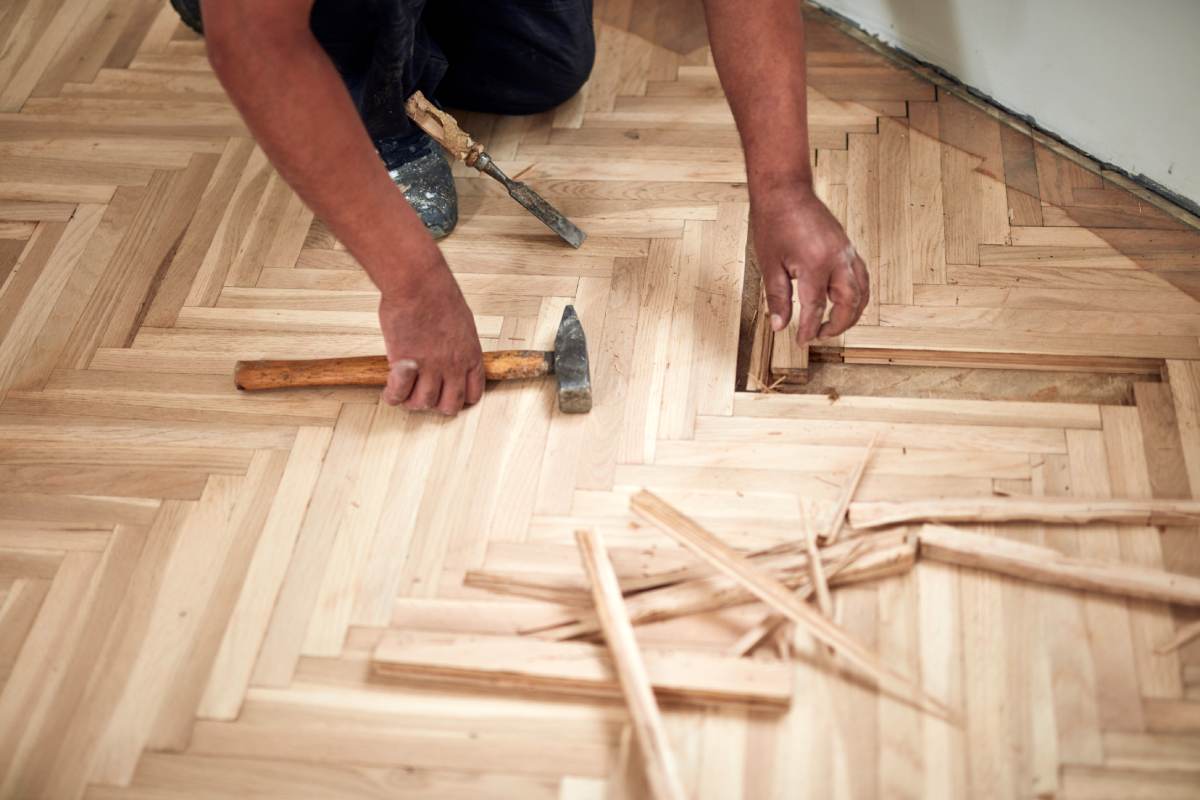
The fix starts under the boards. Loose pieces come up, the substrate gets fastened flat, and only then does the surface go back together.
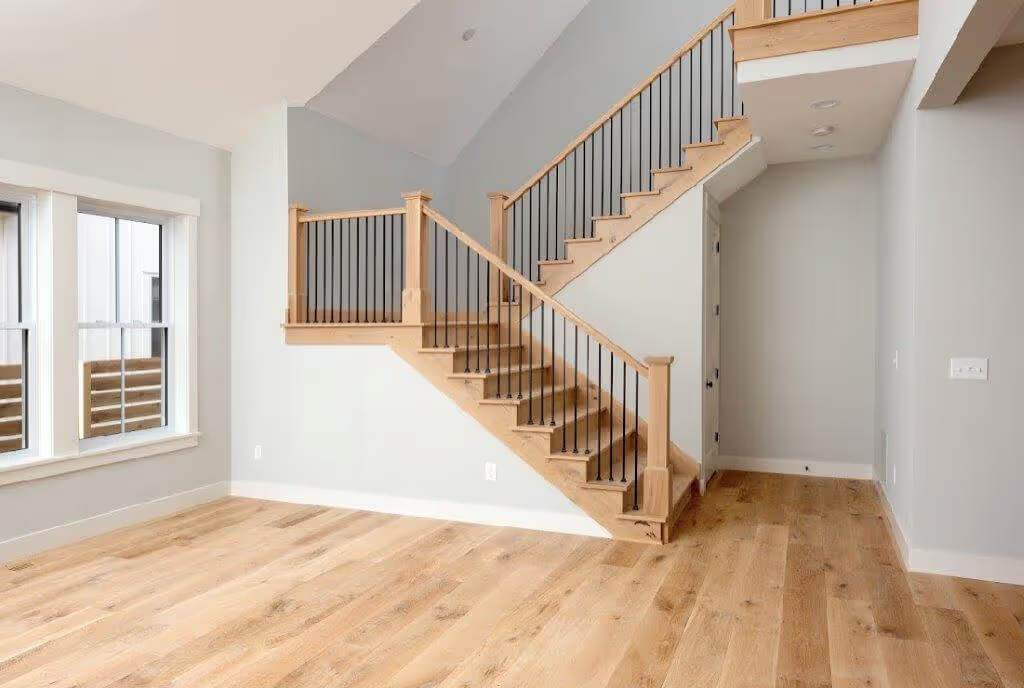
Stairs take the traffic of a hallway on a tenth of the wood. Treads, nosings and thresholds wear out years before the rooms around them — and they can be repaired one piece at a time.
Every early merge onto Highway 9, every school run, every wet trip back up from the dock lands on the same few square feet of wood. In a two-story Cavalero Hill home the staircase is the busiest floor in the house, and the nosing on each tread takes the full strike of every step. These are the repairs people put up with for years because they assume the whole staircase has to come apart. It does not.
Photograph the damage on your phone — a close-up of the worst spot, one from a few feet back, and one of the whole room. One of our estimators looks at every photo personally and emails you a written price the same business day. No visit, no sales call, no obligation.