




Hardwood care is four habits: dust-mop or vacuum a few times a week, damp-mop monthly with a pH-neutral hardwood cleaner, wipe spills immediately, and recoat the finish every 4–7 years. The don'ts matter as much: no vinegar, no steam, no oil soaps, no soaking-wet mops — all four damage polyurethane finishes or the wood beneath. Done right, cleaning takes minutes a week and the floor outlives everyone reading this.
Most hardwood floors aren't worn out by feet — they're cleaned to death. Acidic "natural" mixes, wet mopping, shine-in-a-bottle polishes: we see the damage weekly. We're OC Flooring, and after 1,000+ floors across King and Snohomish County since 2013, this is the exact routine we give clients the day we hand a refinished floor back. It's short on products and long on results, and it's tuned for homes on the wet side of the mountains.
Why "Gentle" Is the Whole Strategy
You're not cleaning wood — you're cleaning a plastic-like finish film over wood, and everything on the do-not-use list attacks that film. Modern floors carry polyurethane (ours are Bona waterborne finishes), and polyurethane needs exactly two things: grit removed before it scratches, and chemistry that doesn't etch or coat it. That's it. Everything else in the cleaning aisle is solving a problem your floor doesn't have — or creating one it didn't.
the acidity of household vinegar — thousands of times more acidic than the neutral pH 7 your finish wants. That's why vinegar-water slowly dulls polyurethane.
the moisture content hardwood flooring is kiln-dried to before installation. Every wet-mop puddle pushes the wood away from that number — and wood moves when it does.
what a screen & recoat costs — the every-4-to-7-years finish reset that good cleaning habits are quietly protecting you toward, instead of a $3.99+/sq ft full refinish.
The Routine, on a Schedule
| How often | What to do | The detail that matters |
|---|---|---|
| 2–3× a week | Microfiber dust mop or vacuum | Use a hard-floor setting — a spinning beater bar scratches finish. Grit removal is 90% of floor care. |
| Immediately | Wipe spills and wet paw prints | Liquid that sits finds board seams. In rainy season, patrol entries and the dog-bowl zone. |
| Monthly (more in traffic lanes) | Damp-mop with pH-neutral hardwood cleaner | Mist the floor or pad lightly; the floor should air-dry in about a minute behind you. |
| Seasonally | Check felt pads, mats, humidity | Hold indoor RH at 35–50% — it protects the wood itself, not just the surface. |
| Yearly | Water-drop test the traffic lanes | Water soaking in instead of beading = finish worn through = recoat time. |
| Every 4–7 years | Screen & recoat | $1.99/sq ft, about a day — the step that means you may never need a full sanding. |
Products: One Yes, Many Nos
- A pH-neutral hardwood cleaner — the kind sold by finish manufacturers (we use and recommend Bona's, matching the finishes we apply).
- Microfiber pads and dusters — they trap grit instead of pushing it around like string mops do.
- A vacuum with a hard-floor head — best tool of all for grit in board seams.
- Plain water, sparingly — for quick spot wipes, wrung nearly dry.
- Vinegar or ammonia solutions — acid and alkali both etch and dull the finish, one mop at a time.
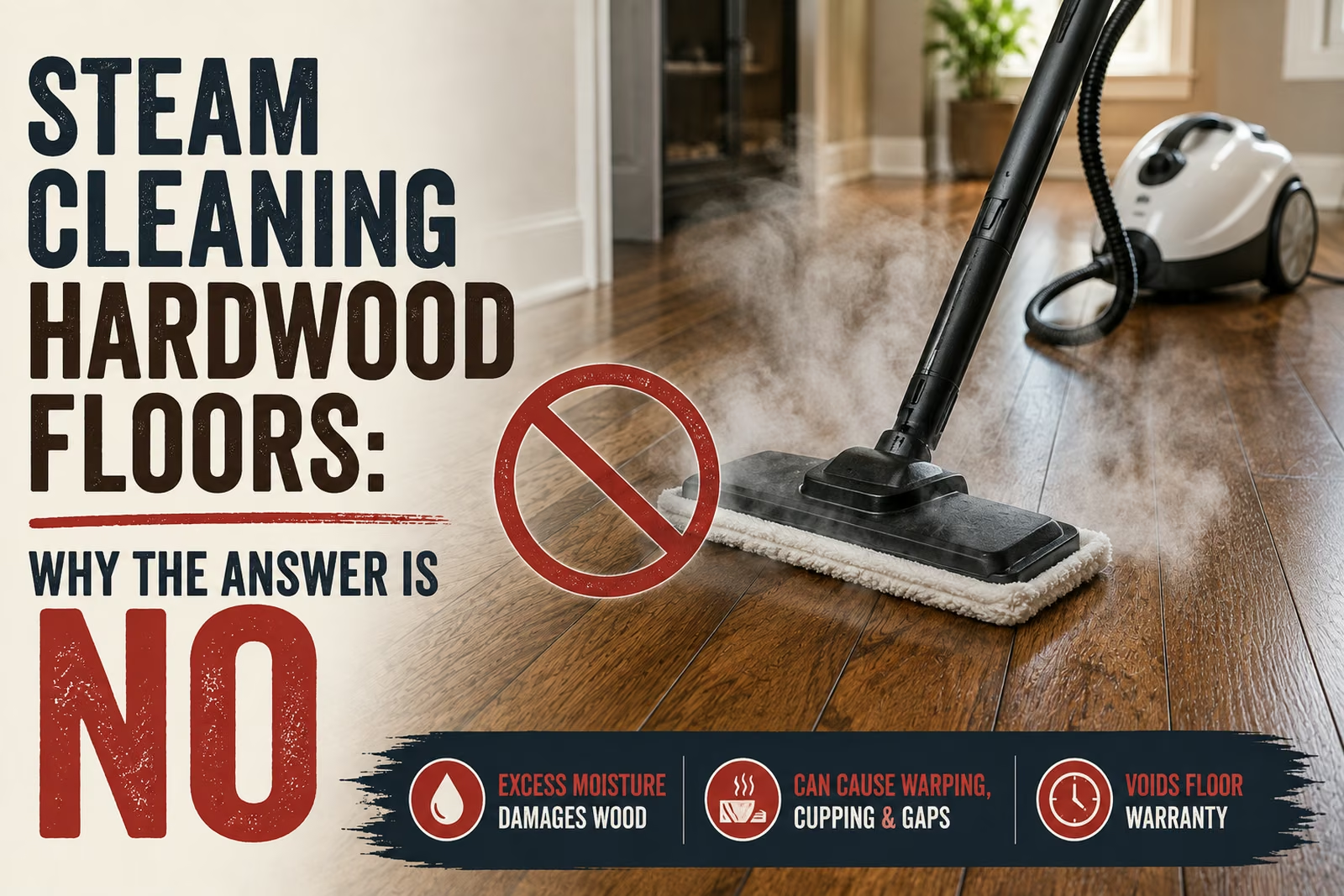
- Steam mops — heat plus forced moisture, straight into the seams. Full explanation here.
- Oil soaps, waxes, and "restore shine" polishes — they build a smeary film that also ruins adhesion for your future recoat.
- Soaking-wet mopping — standing water is the one thing kiln-dried wood can't forgive.
That polish warning deserves its own sentence, because the bottle promises exactly what a tired floor seems to need. Acrylic "rejuvenator" polishes look great for a month, then haze, show every footprint, and — the expensive part — contaminate the surface so a recoat won't bond until the residue is chemically stripped or sanded off. Floors that would have been a simple $1.99/sq ft recoat become full refinishes this way. If your floor looks dull enough that you're shopping for shine products, that dullness is the finish telling you it's recoat time.

Technique: The Two-Minute Damp-Mop Method
Dust-mop or vacuum first — always; damp-mopping over grit is just wet sanding. Then lightly mist a section of floor (or the pad itself) with the pH-neutral cleaner and work with the grain in overlapping passes, flipping or rinsing the pad when it loads up. The moisture test is simple: the floor should air-dry within about a minute behind you. Visible wet sheen lingering longer means you're using too much. Stubborn spots — dried drips, sticky patches, scuff marks — get a direct spray and thirty seconds of dwell time, then a firm rub with the microfiber; rubber-soled scuffs usually lift with nothing more than a dry tennis ball on tough days.
Wet-Side Washington Additions
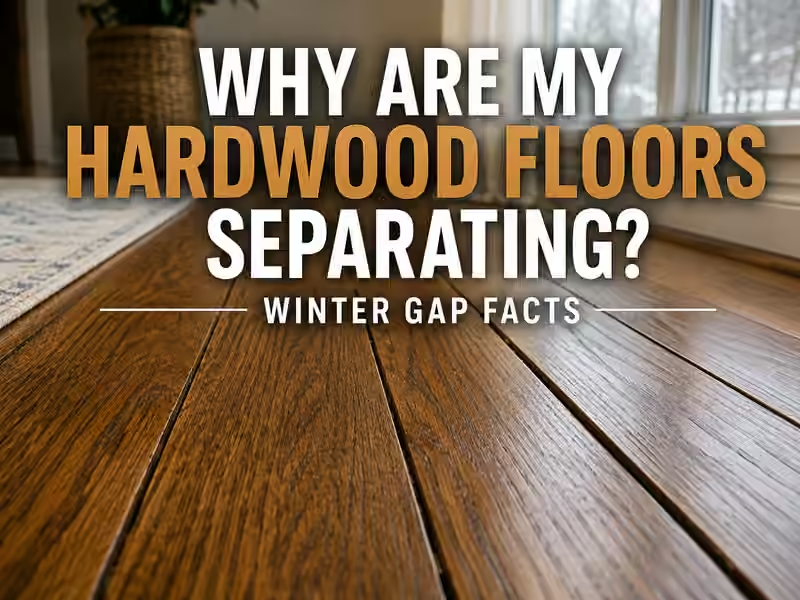
Our climate adds three lines to the standard national advice. First, the entry zone works harder here — 150+ rainy days a year means a scraper mat outside, an absorbent mat inside, and shoes off October through May will do more for your finish than any cleaner. Second, watch standing moisture in fall: wet dog towels, drying rain gear, and plant saucers sitting on hardwood all print rings and gray stains into the finish over damp months. Third, winter dryness is a floor-care issue too — furnace season is when local floors shrink and gap, so a hygrometer and the 35–50% humidity band are part of "cleaning" here; the full story is in our guide to why hardwood floors gap in winter. And when accidents beat you to it — pet urine especially, which turns black if it soaks in — act the same day; here's what actually works on urine stains.
When Cleaning Isn't the Answer Anymore
Cleaning maintains a finish; it can't rebuild one. Three signs the baton needs passing: traffic lanes stay dull no matter what you do, the water-drop test soaks in instead of beading, or fine scratches are white and visible everywhere in low sun. At that point you want a screen & recoat — $1.99/sq ft, roughly a day, no dust storm, and it resets the wear surface completely. Gray or black patches, deep gouges, or bare wood showing mean the window for recoating has passed and it's refinishing instead ($3.99/sq ft natural, $6.50/sq ft with stain — with dustless sanding available). The cost logic is worth internalizing: every recoat done on time pushes the expensive sanding another half-decade away.
Cleaning & Maintenance Questions, Answered
Can I clean hardwood floors with vinegar and water?
What does pH-neutral mean on a floor cleaner label?
How often should hardwood floors be mopped?
Why does my hardwood floor look cloudy after I clean it?
Are disposable wet-pad spray mops safe on hardwood?
Should I wax or polish my polyurethane-finished floors?
What's the best way to get scuff marks off wood floors?
How should I clean up a pet accident on hardwood?
How do I know when my floor needs professional help instead of cleaning?
Cleaning Not Cutting It Anymore? That's a Recoat Talking
Dull lanes and water that soaks in mean the finish is done — and catching it now costs $1.99/sq ft instead of a full refinish. Free in-home estimates across King & Snohomish County.
Related reading: Why you should never steam clean hardwood · 5 ways to protect hardwood flooring · What refinishing costs in 2026 · Screen & recoat service