1,000+ Floors Installed & Restored Across Washington
Searching for floor repair near me in Monroe? We replace damaged boards, repair water-related damage, and reset lifting vinyl planks throughout Monroe. Call (425) 595-1079 for a free in-home estimate.




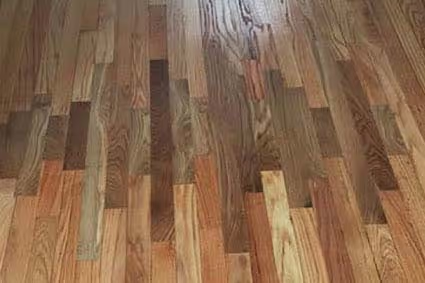
What a bad repair looks like. Wrong species, wrong grain, wrong color — patched by someone who didn't match the wood. You see it from the doorway, permanently.
Half of a Monroe repair is settled before a single board comes out, by how the floor was fastened in the first place. Nineties oak is nailed through the tongue and interlocked on both edges, so getting one board out is a puzzle and putting one back is a color problem. The plank floors in the newest parts of town are the reverse: they release easily, then hold you to a tight seam and a square field or the patch announces itself. Old Town fir follows neither rule, because what is left above the tongue sets the limit before technique gets a say.
Monroe sits at the confluence of the Skykomish and the Snoqualmie, and the city's own flood program says plainly that the same low ground goes under year after year, most often between October and April. December 2025 was the hardest test in decades. Wet wood cups first, then the board edges crown and the seams open. We take moisture readings on the boards and in the room before quoting anything, because a repair made into a floor that is still carrying water buys you a second repair. Once it reads dry, ruined boards come out one at a time and matched boards go back in. Wood that was only briefly wet and then dried often flattens on its own and needs nothing but patience.
The city's housing inventory counts 2,282 units built between 1990 and 1999 — 40.9 percent of everything standing, more than any other decade by a wide margin. Most of those homes got strip oak, commonly 2¼-inch red oak, in the entry, hall and dining room. Thirty years on the factory finish is gone in the walking lanes and untouched everywhere else. That is repair territory, not a whole-house job. Shallow marks are abraded and recoated in the affected area only. Anything that reached the wood is filled and color-matched, or the board is swapped out. Oak from that era is still milled today, so matching a Monroe floor is far less of a hunt than matching a prewar Seattle one.
Floating floors are what went into the newer plats north of US 2 and into most Monroe kitchen remodels of the last decade. They fail nothing like wood does. A plank peaks in the middle of a room, a seam opens along a south-facing slider, or an edge swells and goes chalky where a dishwasher wept for a month. None of it sands out, because the wear layer is thinner than a business card. We work out why the floor moved before touching a plank — an edge pinched under a threshold or baseboard, no expansion room left at the wall, a high spot the planks are riding over. Then damaged planks come out, new ones lock in, and the seams close.
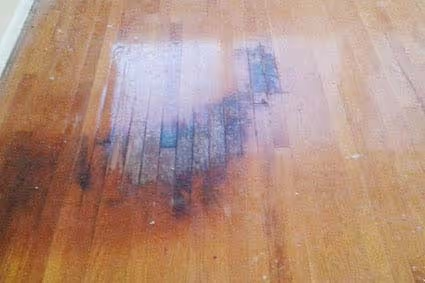
Between the acreage out toward Woods Creek and Chain Lake and yards that stay soaked from fall through spring, pet damage is steady work in this town. Urine does not sit on a finish, it passes through and into the grain, and by the time a mark reads black it has been there a while. Depth decides the fix. A shallow gray ring can sometimes be sanded back and recoated. A dark stain carrying an odor means the wood itself is saturated, and those boards come out. Replacements go in, seams are packed with tinted filler, and stain is mixed and tested on site until the patch stops being something your eye lands on.
About one Monroe housing unit in ten predates 1940, and the city notes that most of it sits downtown and in Old Monroe — the blocks off Main Street and South Lewis, where houses went up after the Great Northern came through in 1893. Those floors are vertical-grain Douglas fir: handsome, and soft enough to take dents from chair legs and dog claws that oak would shrug off. After a century of sandings there is often not much thickness left above the tongue. Matching means salvaged fir, not a supplier's rack. We also re-cut and reset the pieces that surrender first — the threshold between hall and kitchen tile, the strip at a doorway that has started to lift, and the back-door edge everyone crosses in wet boots.
Pet damage and floodwater reach the same wood from opposite sides. One soaks down from the top through a finish that is a film and never a seal, and the other pushes up from underneath, where a board carries no finish at all. That second route is why a floor can look sound across the room and still be finished along one wall.
 1
1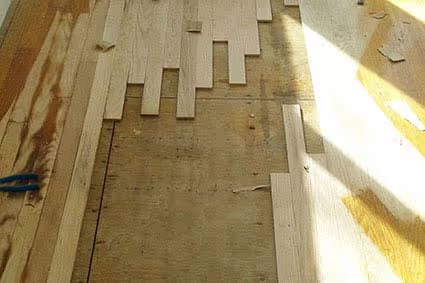 2
2 3
3 4
4Most pet-stain and water-damage repairs are finished in 1–2 days.
In Monroe the material answers before the damage does. A floating plank floor never gets sanded, so its answer is always a swap and the only open question is how far the bad run reaches. Oak and fir turn on where the wear stops instead, because a recoat can end cleanly at a doorway or a threshold and it cannot end halfway across an open run.
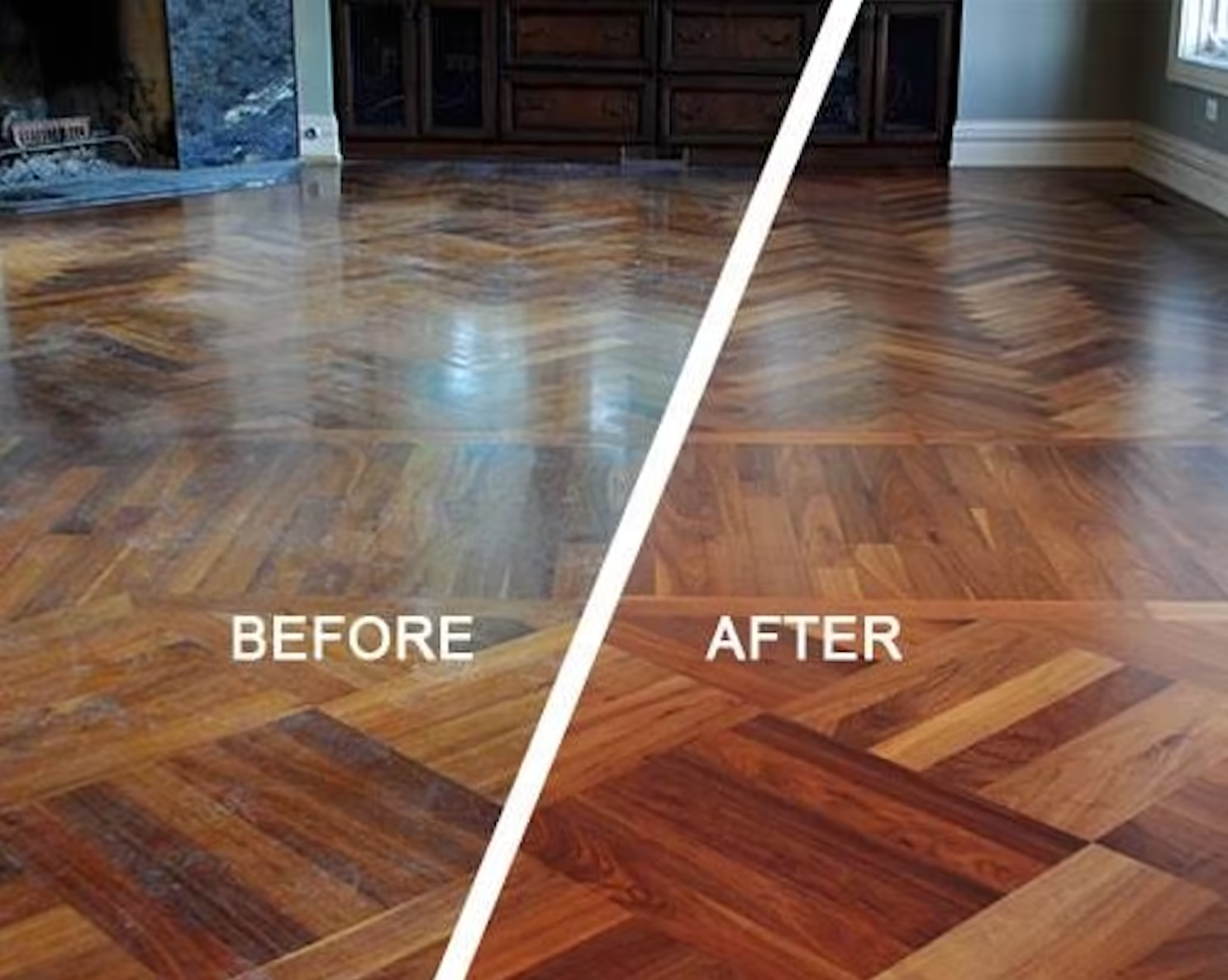
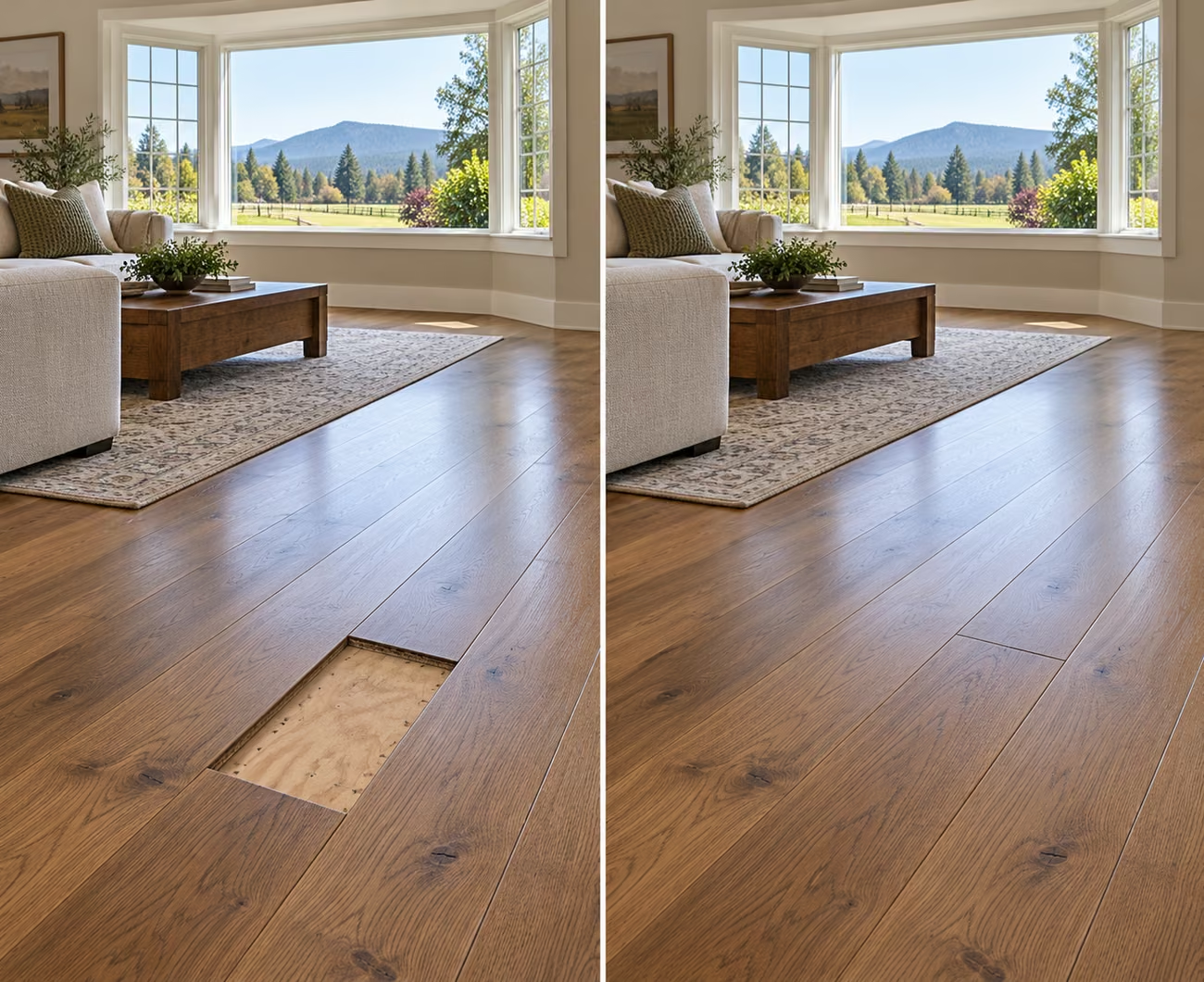
The same floor, split down the middle. Left: the finish is cloudy and worn through in the traffic path — no amount of patching fixes that. Right: sanded back and refinished.
Typically $200–$1,000 · most finished in 1–2 days
Board replacement is done first, so the whole floor is finished together
The water drop. Put a drop of water on a worn spot. If it beads, your finish is still doing its job — a spot repair is fine. If it soaks in within a minute, the finish is gone there and the floor is due for a refinish.
The rug test. Lift an area rug near a bright window. If the wood underneath is noticeably darker than the wood around it, that is sun fade rather than damage — and fade does not patch out board by board.
Still not sure? Send us a few photos of the floor and we will tell you which one you need, even when it is the cheaper answer.
Monroe has one of the youngest housing stocks we work in, and that single fact changes almost every repair we do here. The city's own inventory counts 2,282 units built between 1990 and 1999 — 40.9 percent of the total — with another 804 added from 2000 to 2004. Housing units grew 154 percent across the 1990s alone, and the population went from 4,278 in 1990 to 13,795 by 2000. The median Monroe home was finished right around the year 2000. Seattle's repair problem is prewar fir that has already been sanded four times. Monroe's is a thirty-year-old builder floor reaching the end of its first finish, all across town, all at once.
The Fryelands is the clearest case. A large farm on the west side sold to a developer in the late 1980s, the streets filled in through the 1990s, and Lake Tye was dug as mitigation for the project. Those ramblers, split-levels and two-stories are hitting the same wall on the same schedule: red oak with plenty of thickness left, under a factory finish worn clean through the hallway and the run from the garage door to the kitchen. That is board work and a blended recoat, not a gut.
The older Monroe is small but tightly concentrated. Roughly ten percent of the city's housing predates 1940, and the city says most of it sits downtown and in Old Monroe, around Main Street and South Lewis, where the mill and railroad houses were built after 1893. Those are vertical-grain Douglas fir floors — soft, ambered, thin from decades of sanding, and impossible to match with anything currently produced. We source salvaged stock for them, and we measure remaining thickness before promising anything.
North of US 2, where the city reports most new construction has moved, it is a third material entirely: luxury vinyl plank and laminate, floating and locked to itself rather than fastened down. Those floors never wear out at the surface. They fail at the seams and the perimeter, and the repair is a plank swap plus finding whatever made the floor travel.
Then there is the water, which is the part no neighboring city shares in quite the same way. Monroe sits at 72 feet of elevation where the Skykomish meets the Snoqualmie, and the south and east edges of the city fall inside the 100-year flood hazard zone. The city collects close to fifty inches of rain a year, about a foot more than Seattle records at Sea-Tac, spread over roughly 177 days.
Its flood page is blunt: high water runs October through April, four inches of rain in 24 hours over already-saturated ground does it, and the same properties go under repeatedly. In December 2025 the Skykomish crested about nine feet over flood stage, Ben Howard Road and Tualco Loop went underwater, the Snohomish River broke a record that had stood since 1990, and FEMA assistance for the event ran into 2026. That history is exactly why moisture readings come before the quote in Monroe and not after it.
The seasonal swing is gentler but never stops. Gaps in solid fir and oak open widest in late August — fair week at the Evergreen State Fairgrounds is a dependable marker — then close back down once the rain returns. A gap you could drop a dime into during the fair may be half that width by Christmas, which is precisely why nothing gets filled at its widest point.
Past the city limits the job changes again. Woods Creek, Chain Lake and the farms of the Tualco valley bring acreage, gravel drives, wood heat and working dogs. Out there it is grit that destroys a finish, and it starts at the back door and the mudroom, which is why so many rural Monroe calls begin as a worn threshold and end as three replaced boards.
Probably not, and the answer turns on how long the wood stayed wet rather than how long ago it happened. Wood that was briefly wet and then dried properly often flattens back out on its own — what looks like permanent cupping in January can be close to level by spring. Wood that sat saturated for days stains through the grain, crowns at the board edges and stays that way. We take moisture readings on the boards and in the room before quoting, because a repair made into a floor still holding water will fail a second time. If it reads dry and the damage is confined to a room or two, replacing boards is nearly always cheaper than replacing the floor.
Most repairs land between $200 and $1,000, and most wrap up in one to two days. What moves the figure is board count, how difficult your existing floor is to match, and whether the patch needs stain blending and a coat to disappear. A few cracked planks in a 1990s oak hallway sits at the low end. A water-damaged section with a dozen boards, mixed stain and a blended finish sits near the top. You get an itemized written price before anyone starts, with no hourly meter running.
It can be repaired, and on a floating floor the repair is usually straightforward. Click-lock planks unlock and re-lock, so a damaged plank comes out and a new one goes in without disturbing the rest of the room. Two things decide how cleanly it goes. First, matching: LVP and laminate decors get discontinued quickly, so leftover planks sitting in your garage from the original install are worth more to us than anything else you could hand over. Second, the reason the floor moved — sun through a slider, an edge pinched under a threshold, no expansion room at the wall, a high spot underneath. Skip that step and the new plank does exactly what the old one did.
That pattern — traffic lanes gone, everything else intact — is the most common call we get from Monroe's 1990s subdivisions, and it can go either way. If the wear is genuinely confined to one hall or the run from the garage door to the kitchen, we can abrade and recoat that area and blend the edges into the surrounding finish. If you set a lamp low at night and scratches catch the light across the whole floor, spot work will read as a patch and a full sand and finish is the better use of your money. Solid oak from that era usually has plenty of thickness left for it. Either way, broken boards get replaced before anything is coated.
Yes, with honest expectations. Vertical-grain Douglas fir is a softwood, so dents and dish-shaped wear are the material behaving normally, not a defect, and they will keep happening. Shallow dents can often be raised with steam and the area recoated. Deep gouges, splits and boards cracked through get replaced with salvaged fir, because nothing milled today matches the tight grain of old-growth stock. The real ceiling on Old Town floors is thickness — after a century of sandings there is sometimes not enough wood left above the tongue to work with. We measure first and tell you straight if that is where yours has landed.
Yes. We cover Monroe proper plus the surrounding valley and hill addresses, including Woods Creek, Chain Lake, the Tualco valley and the Ben Howard Road stretch toward Sultan, along with neighboring Snohomish, Sultan, Duvall and Lake Stevens. Rural calls tend to look different from in-town ones: longer unbroken runs of floor, wood heat drying things out in winter, gravel tracked in year-round, and damage bunched at back doors and mudrooms instead of spread evenly. If you are unsure whether your address is in range, call (425) 595-1079 and we will tell you before you spend time on it.
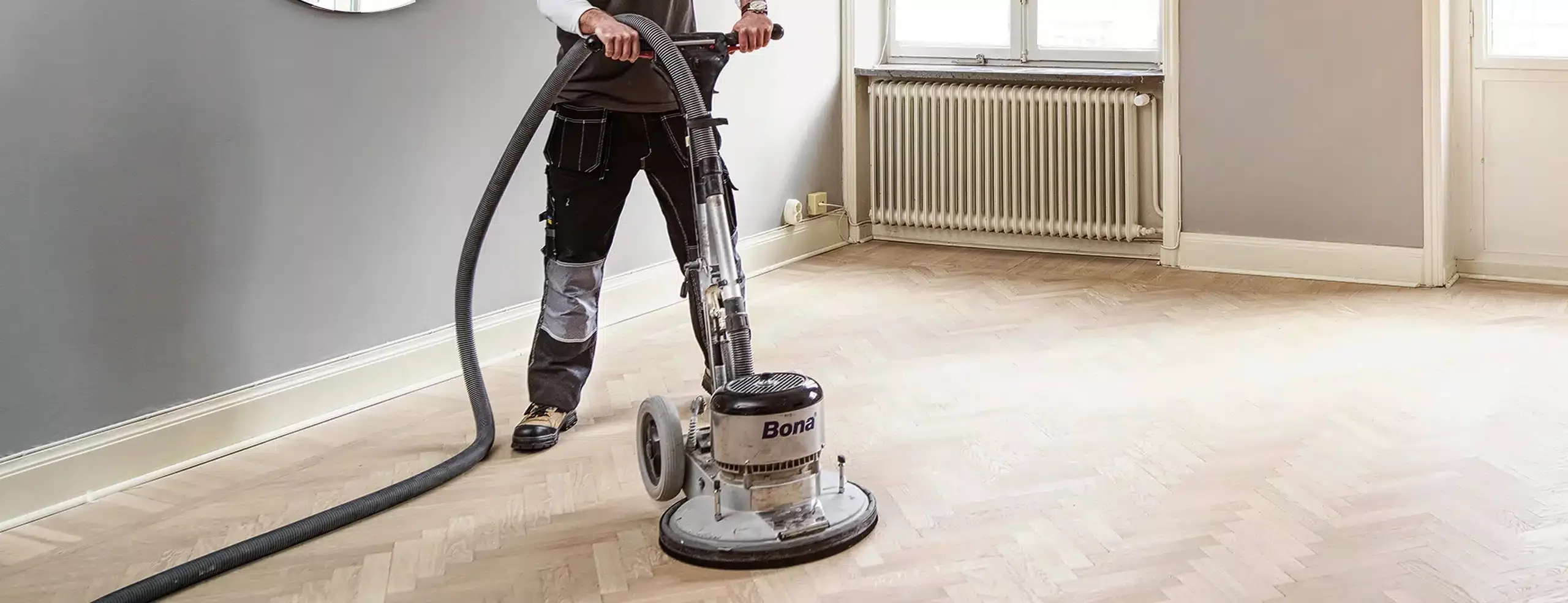
Solid wood keeps a reserve. A solid oak or fir board carries enough thickness to sand a problem out completely — which is why deep damage in a Monroe floor is often repaired in place instead of replaced.
Solid hardwood is the one floor with margin built in. Where a floating plank has a printed film or a paper-thin wear layer on top, the 2¼-inch red oak that went into the Fryelands in the 1990s can give up a full pass of sanding and still have decades left. So before we quote a board swap we ask whether the damage actually goes deeper than the finish — because a surprising amount of it does not. Old Town fir is the one place we check first rather than promise, since a century of sandings off Main Street and South Lewis leaves only so much wood above the tongue.
The trouble lives underneath — a fastener that has let go of its joist or framing that has dried and shrunk a hair since the house went up. Monroe added 2,282 homes in the 1990s alone, 40.9 percent of everything standing, and thirty-year-old framing is exactly the age when those fasteners start letting go.
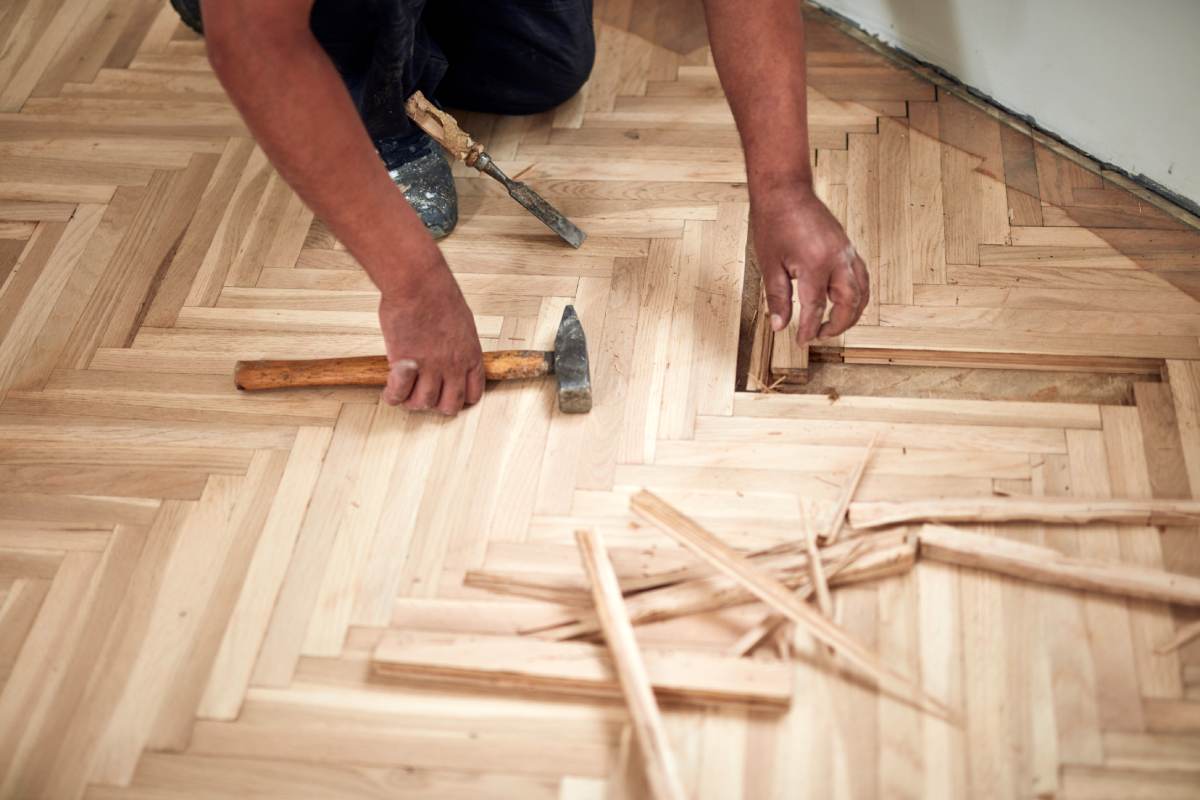
The fix starts under the boards. Loose pieces come up, the substrate gets fastened flat, and only then does the surface go back together.
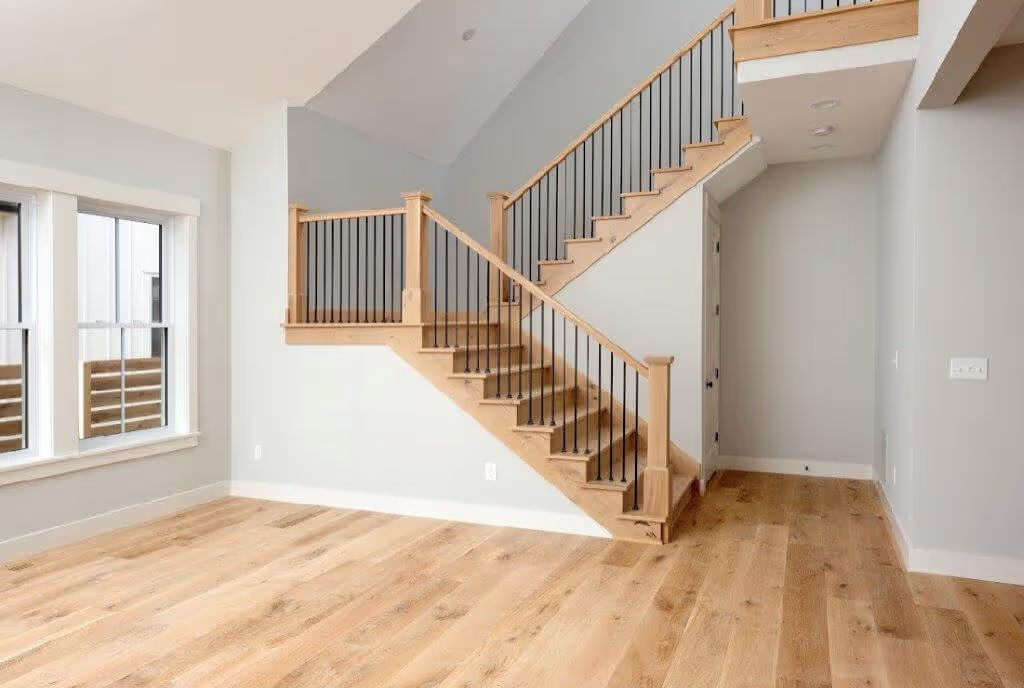
Stairs take the traffic of a hallway on a tenth of the wood. Treads, nosings and thresholds wear out years before the rooms around them — and they can be repaired one piece at a time.
Every run from the garage door to the kitchen, every school morning, every working dog coming back in off a gravel drive out toward Woods Creek lands on the same few square feet of wood. In a two-story Fryelands house the staircase is the busiest floor in the home, and the nosing on each tread takes the full strike of every step. Grit is what actually does the damage here — tracked in at the back door and the mudroom, then ground into a finish that was never meant to work as sandpaper. These are the repairs people put up with for years because they assume the whole staircase has to come apart. It does not.
Photograph the damage on your phone — a close-up of the worst spot, one from a few feet back, and one of the whole room. One of our estimators looks at every photo personally and emails you a written price the same business day. No visit, no sales call, no obligation.