



Restretching can be worthwhile when carpet is loose but its backing, pile and pad remain serviceable. Age alone does not decide the repair. Delamination, worn traffic lanes, damaged seams or persistent odors may favor replacement. OC Flooring offers carpet installation, stretching and repairs. Explore OC Flooring carpet services in King and Snohomish counties, compare samples at home and request a written estimate for the selected material, pad and preparation.
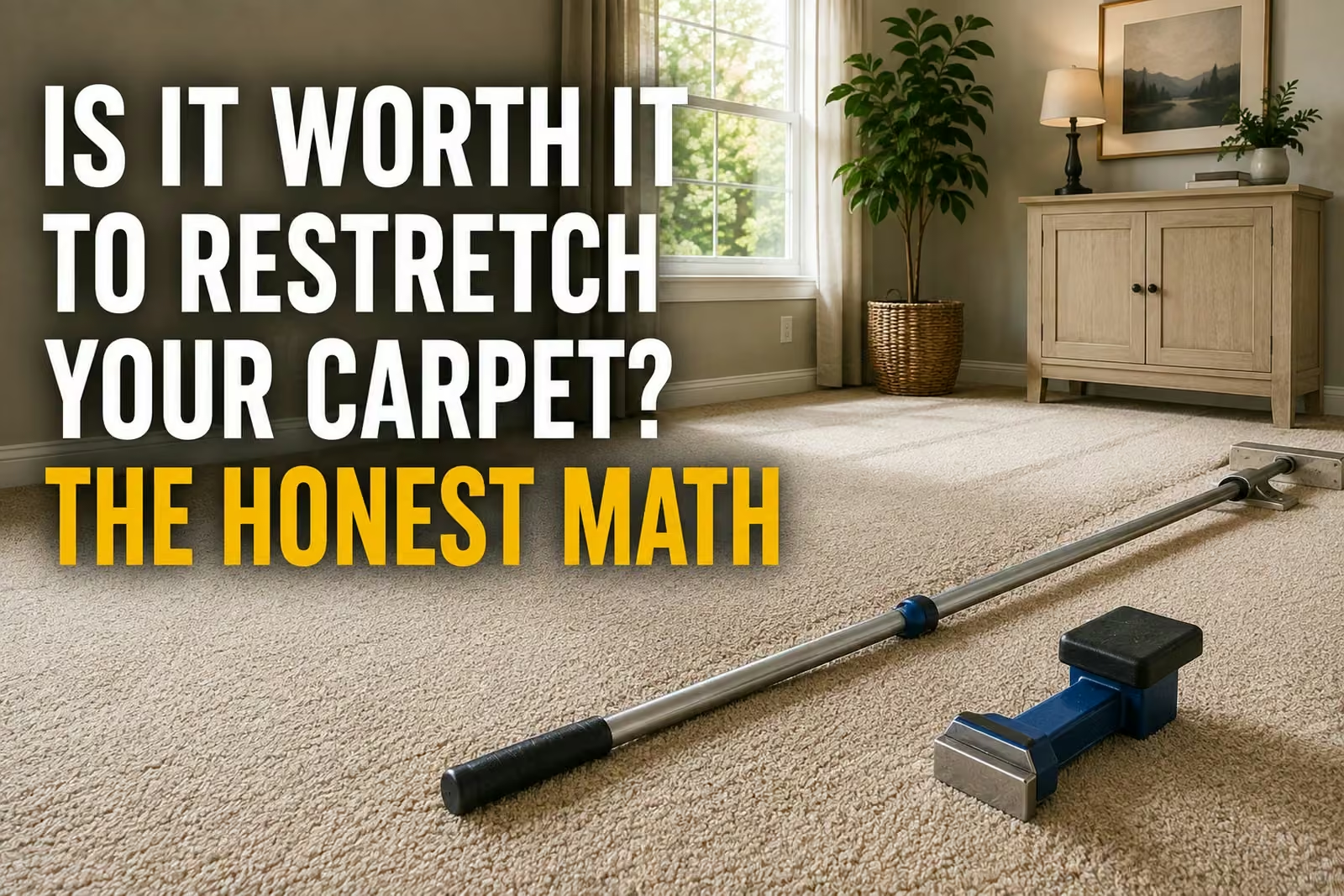
The ripple usually shows up in a hallway or across the middle of a family room: a soft wave that catches a toe, disappears for a season, and comes back worse. The internet will tell you anything from "stretch it for $60" to "rip it all out." We install hardwood, vinyl plank, and laminate across King and Snohomish County — carpet repair isn't our trade — but we've pulled up enough rippled carpet since 2013 to know exactly why it fails. Here's the honest math on restretching, with 2026 market prices and the cases where we'd tell you to skip it.
The Restretch Math, Up Front
per room — the typical 2026 market price for a professional restretch. Labor only, no materials; most companies also carry a $150–$200 minimum trip charge.
the cutoff most repair pros use. Under it, carpet backing usually takes new tension well; past it, the latex is brittle and the fix doesn't hold.
how long a proper power-stretch stays flat — often the rest of the carpet's life. A knee-kicker-only stretch can ripple again within a year.
When Restretching Is Worth It
- The carpet is under about 10 years old and the pile still springs back when you brush it
- The problem is ripples, waves, or looseness at walls — a tension problem, not a wear problem
- There was a one-time cause: a humid summer, a steam cleaning, heavy furniture dragged across the room, or an install that skipped the power stretcher
- The carpet was lifted for a repair (water damage, pet spot, pad replacement) and relaid
- You need 3–7 more years from an otherwise decent carpet before a bigger remodel
The economics are lopsided in stretching's favor when those boxes tick. One room restretched at even $200 versus the same room re-carpeted at $600–$1,200 installed — if the fiber is healthy, stretching buys back a flat, safe floor for a fifth of the money. It also removes a genuine trip hazard, which matters more than looks in homes with kids or older adults.
When It Isn't Worth It
- The carpet is 12–15+ years old — brittle backing tears at the tack strip instead of holding tension
- Traffic lanes are matted or shading — a stretch flattens the ripple and spotlights the wear
- The backing is delaminating — bubbles or wrinkles that move around mean the layers have separated, and no stretch re-glues them
- The pad is dead — hard, thin lanes underfoot mean everything above the pad is failing on schedule
- It has been restretched before and buckled again — the material, not the tension, is the problem
This is the sunk-cost trap: $200 to stretch, $150 to clean, $200 to stretch again eighteen months later — $550 keeping a dying carpet on life support. If two or more of those ✕ marks describe your floor, read our companion piece on the signs carpet is truly done and put the money toward what comes next. Our guide to how often flooring should be replaced puts carpet's clock next to every other floor type.
Restretching vs. Replacement: 2026 Market Costs
| Job | Typical 2026 market cost | What you get |
|---|---|---|
| Restretch one room | $80–$250 | Flat carpet again; same fiber, same pad |
| Restretch a whole home | $150–$400 (1,500–2,000 sq ft) | Every room re-tensioned in a day |
| Furniture handling adder | $25–$50 per room | Crew shifts big pieces; you clear the small stuff |
| Replace one 12×12 bedroom | $300–$1,150 installed | New mid-grade carpet, pad, and labor |
| Replace with mid-grade, whole home | ~$4.50/sq ft installed | New 8–12 year clock on every floor |
Figures in this table are planning examples, not verified current prices or a binding OC Flooring quote. Material, pad, preparation, stairs, removal and furniture handling can change the total. Request an itemized estimate.
Two fair-comparison notes. First, stretching is labor-only, so prices track access more than square footage — a cleared room is cheap, a furnished one isn't, which is why we wrote a whole post on the furniture question. Second, if a stretch quote climbs past $300 for one room, get a replacement quote too — our fair-price guide for carpet in Seattle shows what installed carpet should cost.
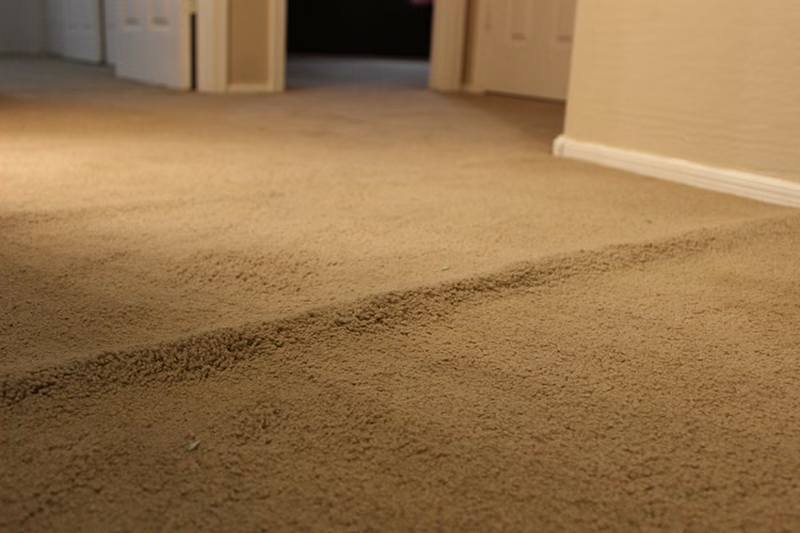
Why Carpet Buckles in the First Place
Bad initial stretch. The most common cause we see when we pull old carpet. Industry standard is a power stretcher — a pole tool that braces wall-to-wall and tensions the carpet 1–2% beyond relaxed. Plenty of fast installs were done with only a knee kicker, which can't create or hold that tension across a full room. Those carpets were loose from day one; it just took a few humid summers to show.
Humidity swings. Carpet backing absorbs moisture from the air, swells, and expands — the carpet grows slightly and, with nowhere to go, lifts into waves. Sometimes it re-tightens when the air dries; when it's stretched past its elastic limit, the ripple is permanent until re-tensioned.
Dragging heavy furniture. Sliding a loaded couch or dresser shears the carpet forward off the tack strip's pins. One good drag can undo an edge that held for a decade — lift and carry, or use hard sliders.
Over-wet cleaning. A ripple right after steam cleaning is usually temporary — swollen backing that settles within a day or two as it dries. If it hasn't flattened in a week, the cleaning didn't cause the problem; it exposed tension that was already marginal.
Age and delamination. The latex gluing the backing layers together dries out over 10–15 years. When layers separate, the carpet moves independently of its own skeleton — that's the buckle that returns after every stretch and the one no stretch can fix.
The Western Washington Factor
Our climate is genuinely harder on carpet tension than most of the country's. From October through April, outdoor air here sits near saturation, and in homes with crawl spaces or modest ventilation, indoor humidity holds above 60% all winter — carpet backing spends half the year mildly swollen, then a dry furnace stretch pulls the moisture back out. That cycling is why Puget Sound carpets ripple in muggy late summers and damp Novembers, and why a below-grade rec room on a slab ripples first. It's the same seasonal movement we manage in wood floors, just in latex instead of lumber — see how humidity affects hardwood and laminate.
Practical rule before you spend anything: if a ripple appeared during a damp stretch, run the heat, ventilate for two dry weeks, and look again. If it settles, monitor it. If it stays, the carpet has stretched past recovery and only re-tensioning will flatten it.
DIY Restretching: The Knee-Kicker Truth
Honesty about the DIY route, because rental counters make it look easier than it is. A knee kicker — the padded tool you punch with your knee — is a positioning tool, built for closets, stairs, and nudging carpet onto tack strip. It cannot create room-wide tension, which is why knee-kicker-only jobs ripple again within a year, and why your knee stops speaking to you after one afternoon.
A power stretcher is the real tool: it braces against the opposite wall and levers the whole sheet tight. Rentals run roughly $40–$80 a day, and the learning curve is real — over-stretch and you tear seams or pull the carpet off the strip; under-stretch and you've re-created the problem. For one simple, empty room and a patient weekend, DIY can work. For a furnished room, seams, or stairs, the $80–$250 a pro charges is honest value — and if you may replace the carpet within two years anyway, skip the stretch and read our carpet removal guide instead; tearing out is the DIY job that actually pays.
If the Verdict Is Replacement
When the carpet fails the ten-year test, one check before you order anything: pull back a corner in a closet. Seattle-area homes built before the mid-1970s very often hide original oak or fir under the carpet, and refinishing — from $3.99 per square foot with us — lands in the range of good carpet installed while ending the replace-every-decade cycle. No wood under there? For the rooms that killed your carpet, vinyl plank and laminate are the floors we install most often on top of exactly this decision. Either way, we'll give you a straight answer at a free in-home estimate — including "keep the carpet and stretch it" when that's the truth.
Carpet Restretching Questions, Answered
How much does it cost to restretch carpet?
How do I know if my carpet can be restretched?
Does restretching fix ripples permanently?
Can I stretch carpet myself with a knee kicker?
Why did my carpet ripple after steam cleaning?
Is it worth stretching 15-year-old carpet?
Does OC Flooring install carpet?
Stretching a Carpet You'll Replace Anyway? Get the Honest Math — Free
We'll check what's under your carpet and price refinishing, vinyl plank, or laminate against another decade of carpet costs. Free in-home estimates across King & Snohomish County.
Related reading: 6 signs your carpet is done · Do you have to move furniture to stretch carpet? · A fair price for carpet in Seattle · Our refinishing service