1,000+ Floors Installed & Restored Across Washington
Searching for floor repair near me in Redmond? Lifting LVP, swollen laminate edges, gouged boards and pet stains — fixed in place, without tearing out the rest of the room. We match what is already on your floor, whether it went down last spring or in 1985. Call (425) 595-1079 for a free in-home estimate anywhere in Redmond.
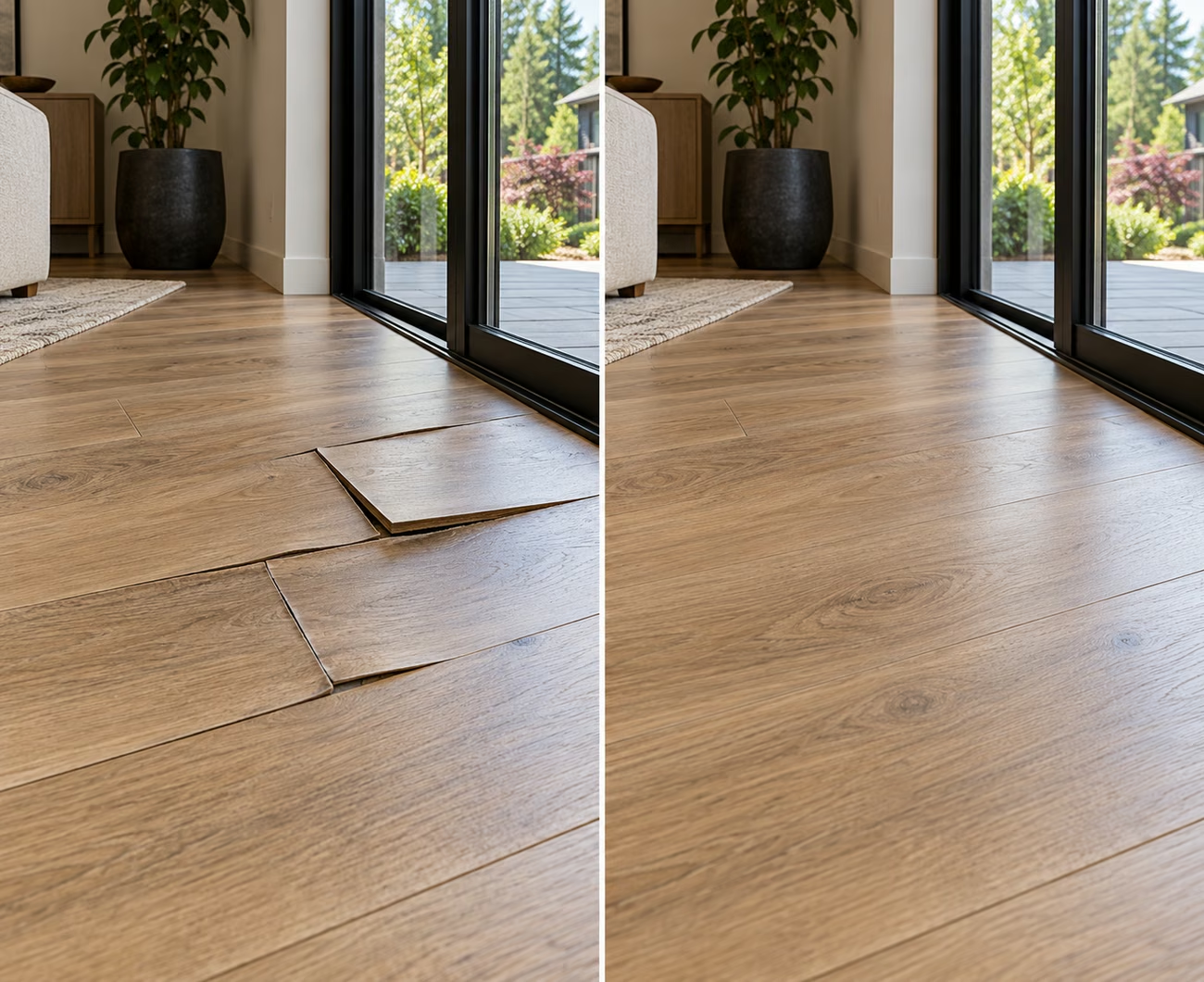




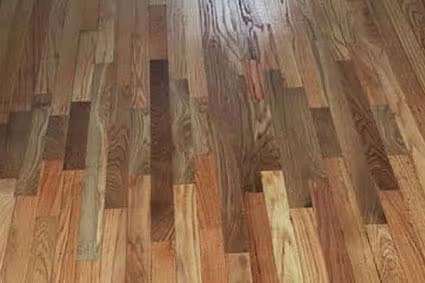
A patch that announces itself. The wood is close but not right, and the grain runs the wrong way. Matching properly is most of the skill in a board repair.
Only about one and a half percent of Redmond's homes went up before 1960, so there is almost no old-growth fir under this city and almost nothing that has already been sanded three times. What we work on instead is vinyl plank, laminate and prefinished oak — floors that are matched rather than restored.
Planks that have lifted at a seam, cracked under a chair leg, or drifted apart along a click joint. Most Redmond LVP is a floating floor, so before we swap anything we find what pinned or pushed it — a heat run, a heavy island, trim nailed through the plank, or a high spot underneath. Fix the cause first and the replacement planks stay put.
Blown-up edges beside a dishwasher, chipped corners at a slider, joints that have crept open down a hallway. Laminate carries a printed wear layer, so sanding is off the table — we unclick the run, take out only the bad planks, and lock the floor back together. If the spare box from the original install is still in your garage, it is worth more than you think.
Cracked, cupped, split or stained boards cut out one at a time and replaced with matching stock — species, width, grain and sheen. On engineered floors the real-wood layer can be thinner than a credit card, which rules out sanding the damage flat, so a clean board swap blended into the surrounding finish is the only honest repair.
Claw marks tracking down a hallway, grit ground in from the trail, a dark ring where the water bowl sat, black staining that soaked past the finish. Shallow marks are buffed and recoated. Anything that reached the wood gets cut out, replaced, and color-matched, because sanding will not chase a stain that is already in the grain.
Slow leaks from a fridge line or dishwasher, a bathroom supply line, and the run of plank just inside the door that takes every wet shoe in the house. We put a moisture meter under the floor before quoting, dry out anything still damp, then replace the ruined boards and re-cut thresholds so the edges sit flat and stop catching feet.
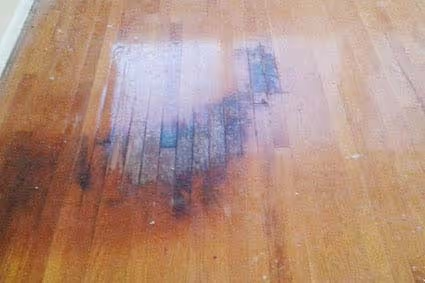
Pet urine and slow leaks go through the finish and into the wood itself, which is why cleaning does nothing for them. This is the sequence we run on a stained floor, photographed on our own jobs.
 1
1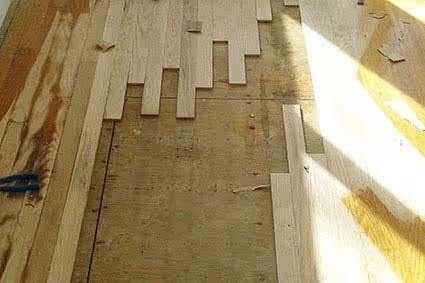 2
2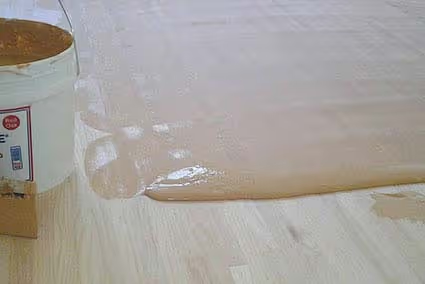 3
3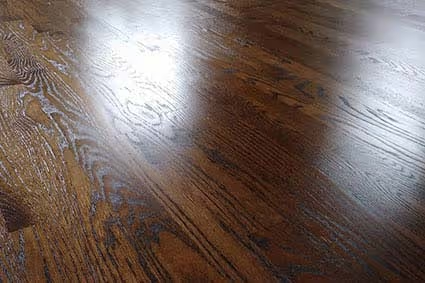 4
4Most pet-stain and water-damage repairs are finished in 1–2 days.
On a young housing stock the answer is a spot repair far more often than people expect. Here is how to tell which job your floor needs before you get a quote for the wrong one.
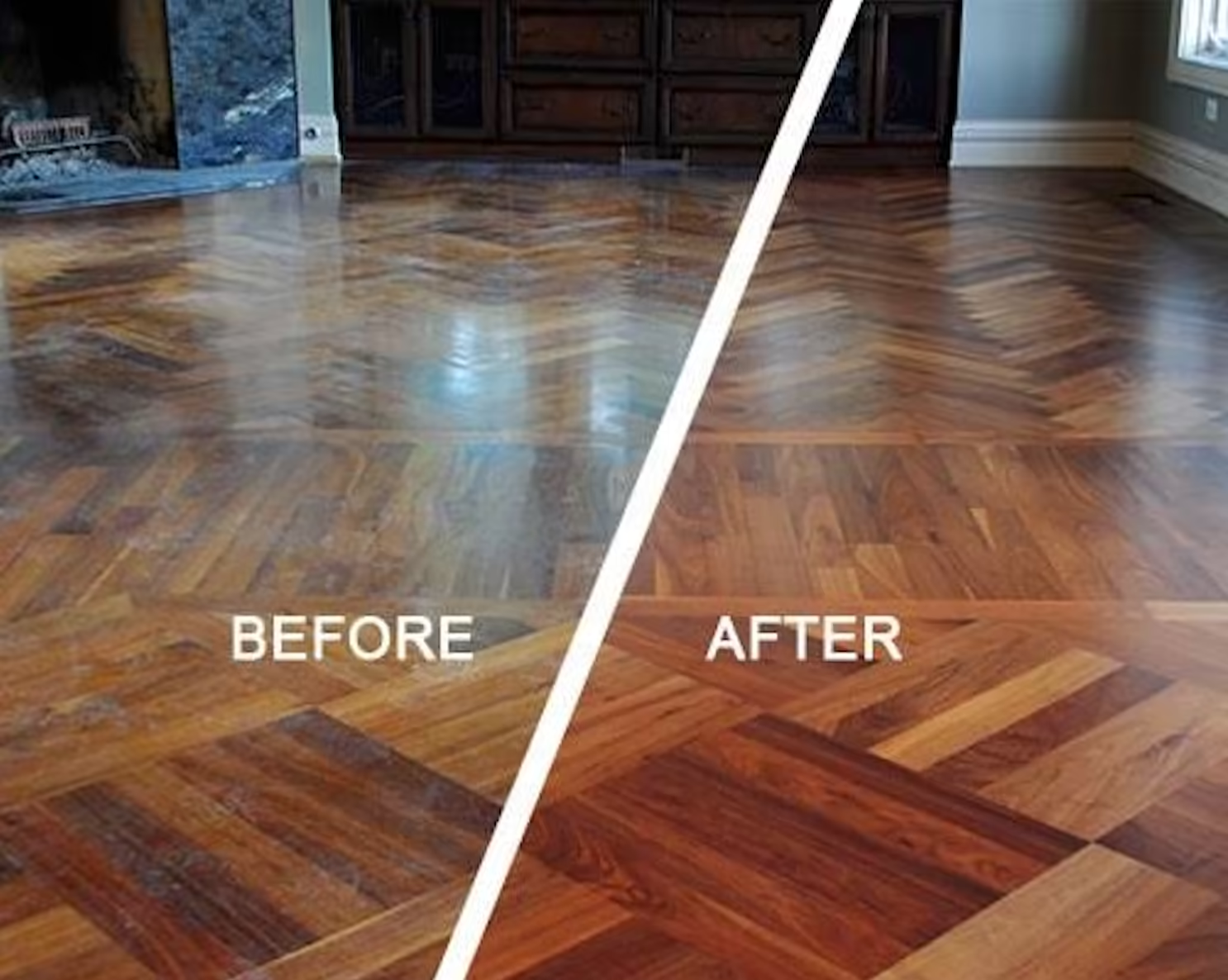
The same floor, split down the middle. Left: the finish is cloudy and worn through in the traffic path — no amount of patching fixes that. Right: sanded back and refinished.
Typically $200–$1,000 · most finished in 1–2 days
Board replacement is done first, so the whole floor is finished together
Water on the worn patch. If the drop sits up and beads, your finish still works and patching is sensible. If it sinks in and darkens the wood within a minute, that room needs sanding and refinishing, not a patch.
Look under the rug. Wood that is markedly darker beneath a rug than beside it has faded in the light. Fade runs across a whole zone, so swapping single boards there makes the mismatch worse, not better.
Still not sure? Send us a few photos of the floor and we will tell you which one you need, even when it is the cheaper answer.
Redmond barely has an old house. Census figures for 2024 count 38,240 housing units inside the city, and only 558 of them — about one and a half percent — went up before 1960. The city arrived in two big waves instead. Roughly a third of Redmond's housing dates from the 1970s and 1980s, after the Evergreen Point bridge and the SR 520 extension out to 148th turned a farm town into a commuter suburb and the population climbed past 22,000. Another third has been built since 2010. That shape drives almost every repair call we take here. There is very little old-growth fir under Redmond floors and very little that has already been sanded three or four times.
The 1970s and 80s houses on Education Hill, through Grass Lawn, and across the Willows and Rose Hill side of town were mostly carpeted when they were new, with sheet vinyl in the kitchen and oak strip or parquet in an entry or dining room. Nearly all of them have been remodeled at least once since. So what we are usually asked to fix in those homes is not the original floor at all — it is the engineered hardwood or the laminate that somebody laid over that plywood in 2004 or in 2016. Laminate was not even sold in the United States until 1994, which means if a Redmond home has it, it came in on a remodel, and the decor it was matched to has almost certainly been retired by the manufacturer since.
The other half of our Redmond work is inside buildings that did not exist fifteen years ago. Only about a third of the city's homes are detached houses; close to six in ten sit in multifamily buildings, and roughly three in ten are in structures of fifty units or more, concentrated downtown, north along the Sammamish Valley, and through Overlake Village. Those units are floored in LVP and engineered plank laid over concrete or plywood, floating rather than fastened. They do not rot, but they lift at the seams, gap along south-facing glass, and telegraph every flat spot underneath. Sanding is not available on a wear layer that thin, so the fix is nearly always a plank swap, which means matching a manufacturer's product line rather than a species. In a fifty-unit building it also means the elevator, the loading bay and the HOA's noise window, and we plan the day around all three.
Redmond also rents more than the cities around it. Owner-occupancy here has slid from 58 percent in 1990 to about 40 percent today, the lowest share among the Eastside cities Redmond benchmarks itself against, and a steady stream of our calls come from owners and property managers working a turnover: a scratched hallway, a lifted plank by the patio door, a stained patch in a bedroom, all of it against a move-in date.
Then there is Marymoor. King County's oldest and busiest park sits at the south end of town with a forty-acre off-leash area inside it, and dogs come back from it wet, muddy and full of grit. Add about forty inches of rain a year, a few more than Sea-Tac records, and a lot of front doors that open onto trails, and the boards inside a Redmond entry take punishment the rest of the floor never sees. Replacing four planks at a doorway is one of the cheapest and most visible repairs we do all year.
Most repairs land between $200 and $1,000, and the number moves on three things: how many planks or boards have to come out, whether we can buy a match off the shelf or have to hunt down a discontinued product line, and whether the area needs finishing work to blend. Condo jobs can run a little higher when building access and elevator scheduling eat into the day. Water that traveled under the floor also adds time, because it has to be dried before anything new goes down. You get a written price at the in-home visit rather than a guess over the phone.
Almost always, yes. Vinyl plank in newer Redmond buildings is a floating floor, which means it is designed to move as a sheet with the temperature. It lifts when something stops it moving — trim or a transition nailed straight through it, a heavy sectional or island sitting on it, a heat run or a stretch of south-facing glass baking one strip of it, or a low spot underneath. We work out which of those it is, deal with it, then replace the damaged planks and close the seams. Swapping planks without finding the cause just buys you a few months. Worth checking your original paperwork too, since some of this falls inside an installation warranty.
Often, but it takes legwork. Laminate decors get retired on a short cycle, and most Redmond laminate went in during a remodel somewhere between 2000 and 2018, so the exact plank is frequently gone. First we ask you to check the garage, the crawlspace and the top shelf of the coat closet — leftover planks from the original install solve it outright. If there are none, the second option is a donor plank: we lift boards from inside a closet or under an appliance, use those for the repair, and put the closest available match in the spot nobody looks at. If neither works, we will say so plainly rather than install something that will read as a patch forever.
Yes. Parquet is glued blocks rather than a locked or nailed floor, so damaged tiles are scored, chiseled out and reset individually without disturbing the ones around them. The work is in the matching. Common oak block patterns are still available, and where the pattern is unusual we pull donor tiles from a closet or under a piece of furniture and put the substitute there instead. Once the tiles are down, stain is mixed and tested on your own floor before the area is finished, so the repair sits at the same color and sheen as the rest of the entry.
Usually not. Vinyl plank itself is waterproof, but what is underneath it is not, and water that gets in at one point spreads sideways under the floor rather than staying put. We lift the planks over the affected area, take moisture readings underneath, and dry it out before anything goes back down. Covering damp material is how a repair fails the following winter. Once it reads dry, the ruined planks are replaced and the seams closed back up, and in most Redmond kitchens that is a section of floor rather than the whole room.
Yes, and they are a regular part of our week here. Redmond has more renters than owners, so a lot of our work is a handful of planks against a move-in date: a gouged hallway, a lifted board at the slider, a dark stain in one bedroom. Most of these are a single day on site with a written price agreed before we start. The one thing we will not do is talk you into a spot repair that will not hold. If the wear layer is gone through across a whole traffic path, or the damage runs room to room, we will tell you that replacement is the honest call instead of selling you a patch.
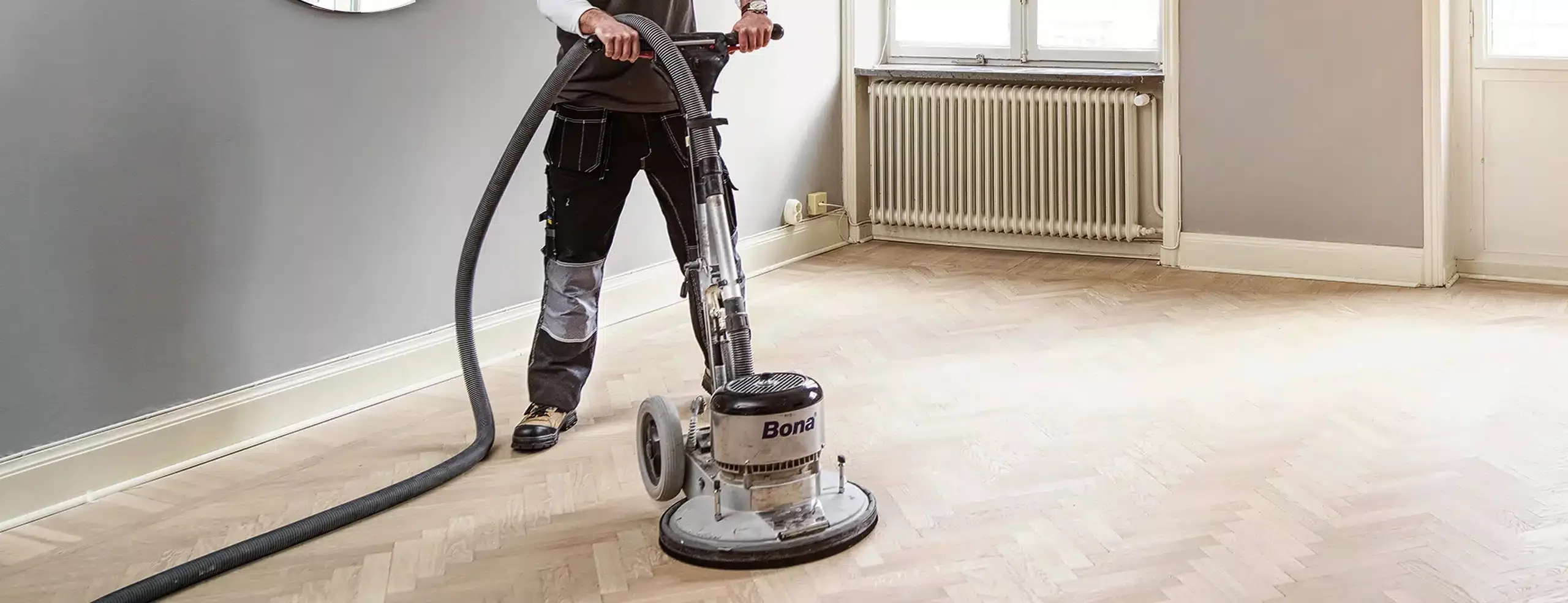
Solid wood keeps a reserve. A solid oak board carries enough thickness to sand a problem out completely — which is why the little solid wood Redmond does have is often repaired in place instead of replaced.
Only about one and a half percent of this city's homes predate 1960, so solid wood is the exception here rather than the rule — but where solid wood does turn up, it changes the answer entirely. The 1970s and 80s houses on Education Hill, through Grass Lawn and across the Willows and Rose Hill went in with oak strip or parquet in an entry or dining room, and a solid board there can give up a full pass of sanding and still have decades left. So on those floors, before we quote a board swap, we ask whether the damage actually goes deeper than the finish — because a surprising amount of it does not.
The trouble lives underneath — a fastener that has let go of its joist or framing that has dried and shrunk a hair since the house went up. Roughly a third of Redmond's housing dates from the 1970s and 1980s, and forty-year-old framing is exactly the age when those fasteners start letting go.
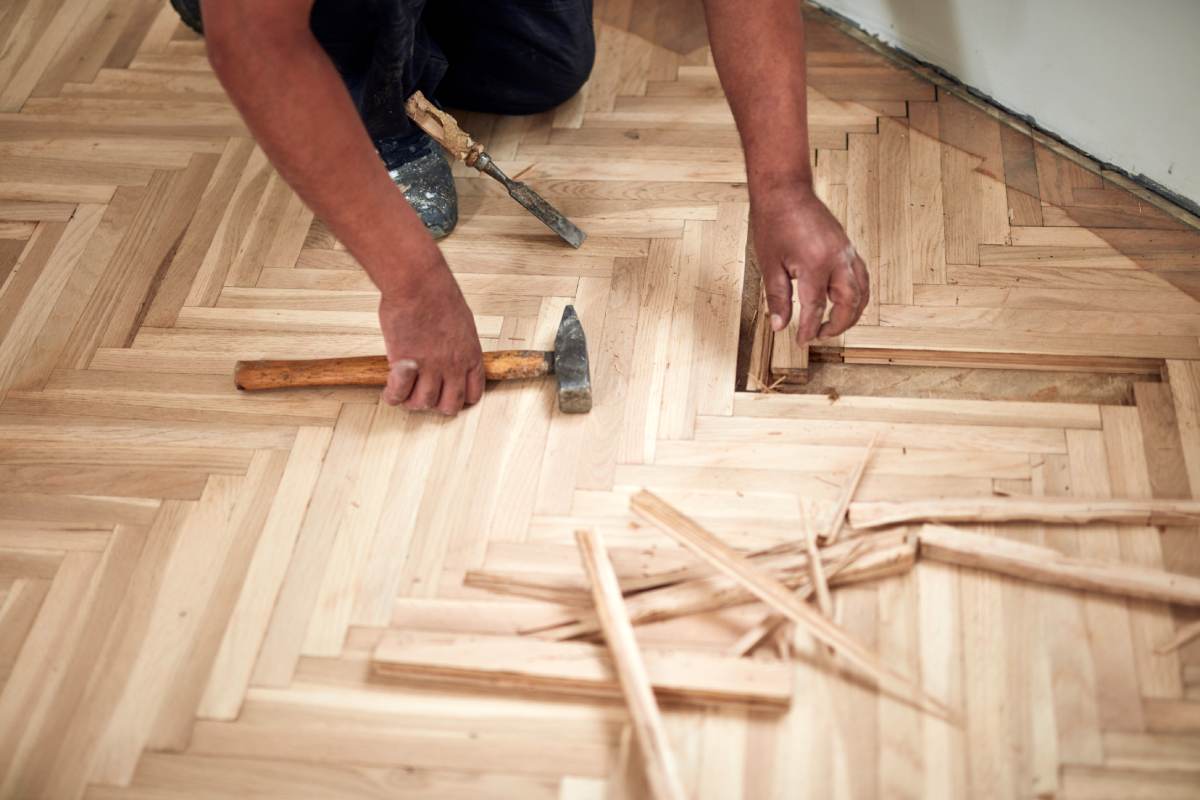
The fix starts under the boards. Loose pieces come up, the substrate gets fastened flat, and only then does the surface go back together.
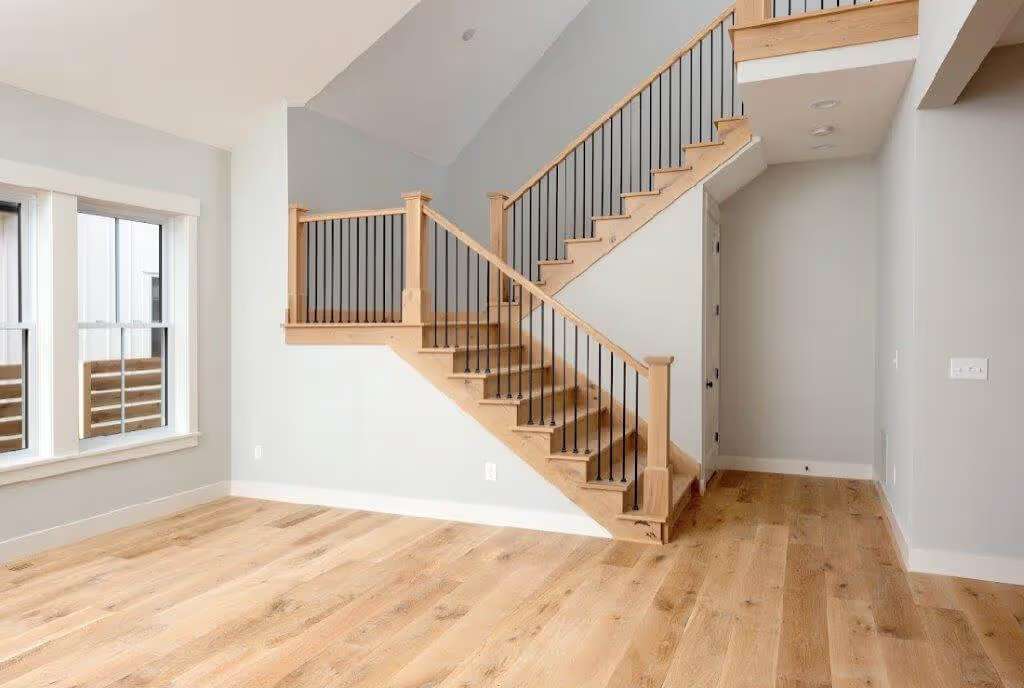
Stairs take the traffic of a hallway on a tenth of the wood. Treads, nosings and thresholds wear out years before the rooms around them — and they can be repaired one piece at a time.
Every dog back from the forty-acre off-leash area at Marymoor, every school run, every front door that opens straight onto a trail lands on the same few square feet of wood. Redmond takes about forty inches of rain a year, a few more than Sea-Tac, and all of it arrives indoors on shoes and paws. In a two-story Education Hill house the staircase is the busiest floor in the home, and the nosing on each tread takes the full strike of every step. These are the repairs people put up with for years because they assume the whole staircase has to come apart. It does not.
Photograph the damage on your phone — a close-up of the worst spot, one from a few feet back, and one of the whole room. One of our estimators looks at every photo personally and emails you a written price the same business day. No visit, no sales call, no obligation.