1,000+ Floors Installed & Restored Across Washington
Searching for floor repair near me in Marysville? Cupped boards over a damp crawl space, an LVP seam that keeps opening, a laminate plank the dog destroyed — most of that comes out and goes back without disturbing the rest of the room. We cover the whole city, from the old blocks around Comeford Park up through Kellogg Marsh, Whiskey Ridge, Shoultes and Smokey Point. Call (425) 595-1079 for a free in-home estimate.



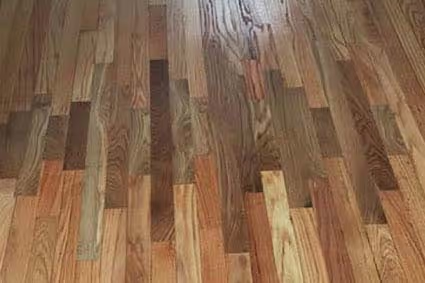
A patch that announces itself. The wood is close but not right, and the grain runs the wrong way. Matching properly is most of the skill in a board repair.
Marysville filled in after I-5 pushed the suburbs north, and the flooring in most of those houses was ordered off a builder's list rather than picked by the family who ended up living on it. That works in your favor at repair time, because a catalog floor can usually be found again, or imitated closely enough that nobody finds the seam. Most of the job is the part nobody sees: hunting the right stock, letting it settle in the room, and reading the layout before anything gets cut.
This is the repair Marysville generates more of than anything else. Snohomish County's own watershed plan for Quilceda and Allen creeks says crawl spaces and yards here fill with water, and it points at a high ground water table, filled wetlands and drainage never sized for the houses built on top. Wood reacts to that from underneath: board edges rise, the surface reads washboard in raking light, and the finish splits along the joints. We meter the boards and the space below them before anything is cut, dry the affected area, replace what is past saving, then blend stain and sheen into the surrounding floor. If the readings say the floor will simply cup again, you hear that before you spend money.
Roughly four in ten homes in Marysville went up between 1990 and 2009, and the wood in them is builder stock — narrow red oak strip, or engineered plank with a factory finish over a wear layer only a couple of millimeters thick. Sanding is rarely the answer on those. Cutting the bad boards out in place is. We match species, width and thickness, source the closest available stock when a line has been discontinued, and hand-blend the stain and sheen so the work does not read as a patch. If the original builder left a box of planks in your garage or attic, that box is the single most useful thing you can hand us.
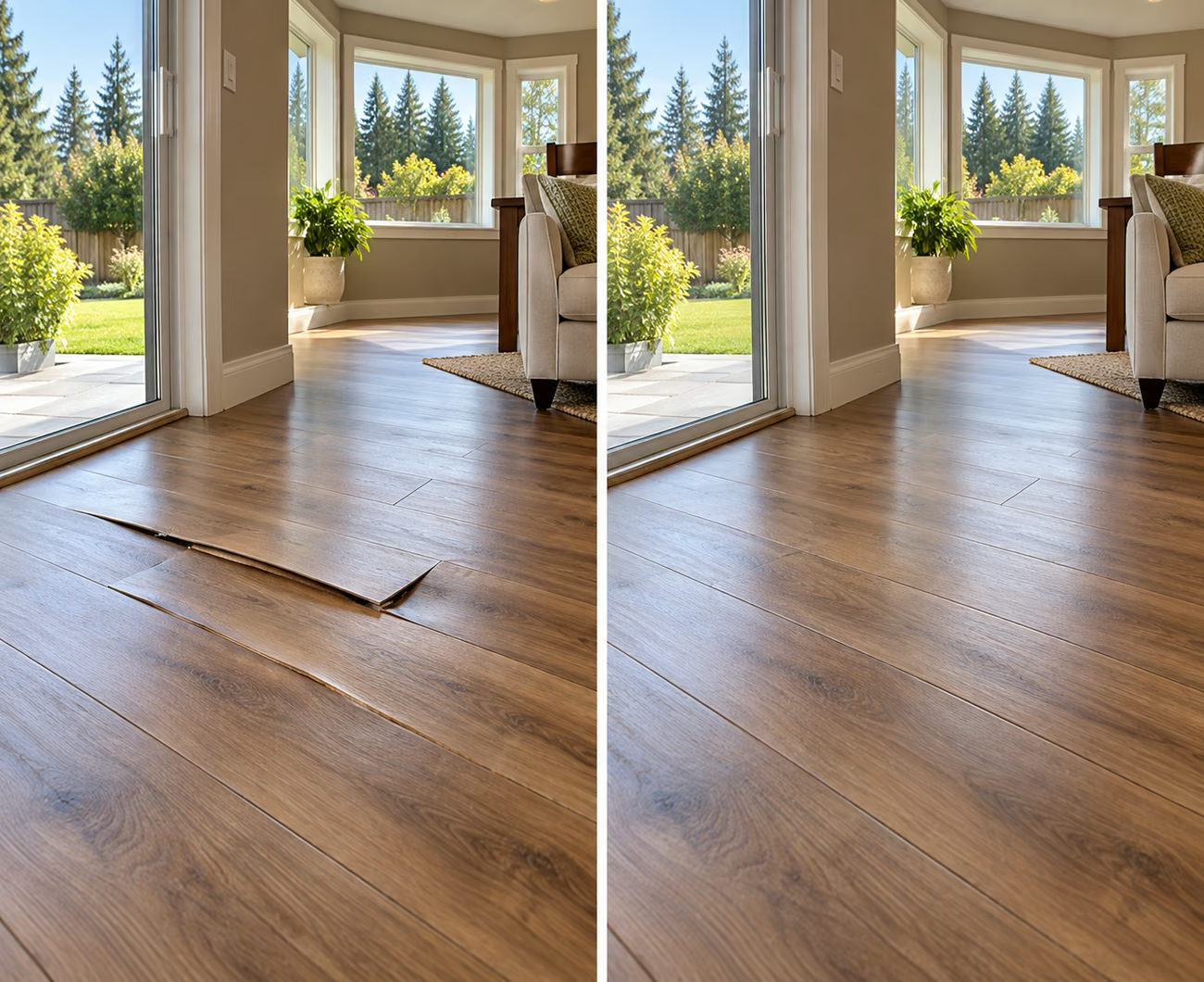
LVP is the default floor in everything Marysville has built recently, and it fails in a predictable pattern. Planks pinned beneath a heavy island or a full bookcase cannot move, so the floor buckles somewhere else. A high spot underneath telegraphs through and pops the click joint. Hillside homes east of downtown with big west-facing glass take enough afternoon heat to push planks apart at the seams. We identify the cause first — a swap without one is a repair you pay for twice. Then the damaged planks come out, the high spot underneath gets flattened, and the seams close back up.
Laminate was the upgrade of choice through the late 1990s and 2000s, and it is still everywhere in Marysville's manufactured-home communities — about seven percent of the city's housing units are manufactured or mobile homes. Laminate cannot be sanded, because the wear layer is a printed image. What it can do is come apart and go back together. On a floating click-lock floor we unlock from the nearest wall, work in to the damage, drop in replacements and re-lock. The obstacle is almost always matching a discontinued decor, which is why we ask about spare boxes before we price the job.
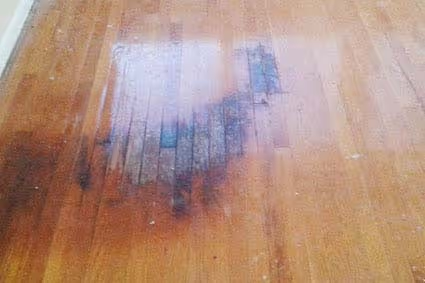
Marysville runs about two-thirds owner-occupied, mostly detached houses with yards, and yards mean dogs. Nails chew the finish in traffic lanes, water bowls leave dark rings, and the strip of floor just inside the front door absorbs an entire rainy season of wet boots and paws. Surface scratching usually comes out with an abrasion and a fresh coat. Black staining means urine reached the wood itself, and that board gets pulled, replaced, stained on site to match and blended. Where a stain went through, the smell tends to come back until the wood comes out.
A factory finish is a film, and it is thinnest where two boards meet, so a spill finds the joint before it finds anything else. In a house sitting over ground that stays wet through the winter, the wood is already holding moisture from below, and what lands on top has nowhere to dry to. How long it sat there is what decides the job, which is why the timing of the call matters more than the size of the spot.
 1
1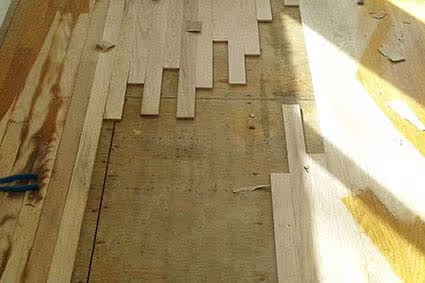 2
2 3
3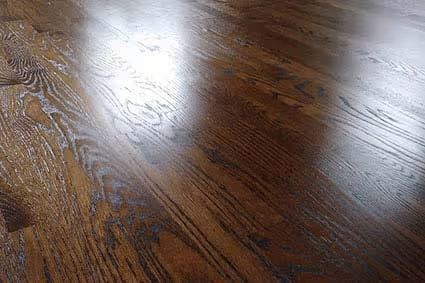 4
4Most pet-stain and water-damage repairs are finished in 1–2 days.
Refinishing is a real option when the floor is solid oak strip with wood left above the tongue, and there is plenty of that in the 1990s and 2000s houses here. It is a much narrower option on engineered plank, where one careful sanding is often the whole budget the veneer has, and it is not an option at all on the laminate and vinyl that came later. The other half of the answer is moisture: sanding a cupped floor flat before the house has dried just locks in a crown you will be looking at next summer.
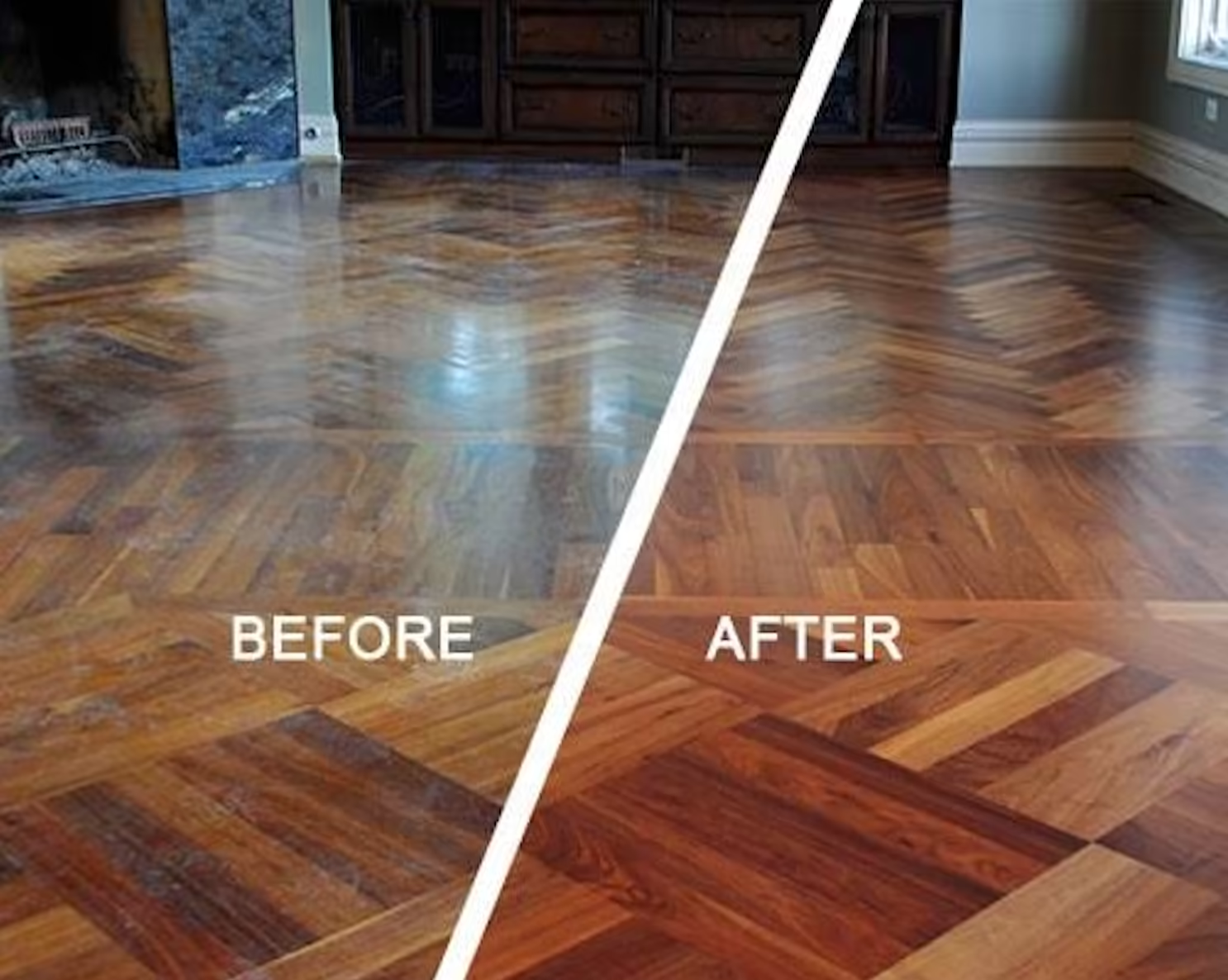
The same floor, split down the middle. Left: the finish is cloudy and worn through in the traffic path — no amount of patching fixes that. Right: sanded back and refinished.
Typically $200–$1,000 · most finished in 1–2 days
Board replacement is done first, so the whole floor is finished together
Water on the worn patch. If the drop sits up and beads, your finish still works and patching is sensible. If it sinks in and darkens the wood within a minute, that room needs sanding and refinishing, not a patch.
Look under the rug. Wood that is markedly darker beneath a rug than beside it has faded in the light. Fade runs across a whole zone, so swapping single boards there makes the mismatch worse, not better.
Still not sure? Send us a few photos of the floor and we will tell you which one you need, even when it is the cheaper answer.
By Puget Sound standards Marysville is a young housing market. The median home in the city was built in 1994. In Seattle that figure is 1981, in Everett 1980, in Bellevue 1984. Well under three percent of Marysville's roughly 26,000 housing units predate 1940, which is why the old-growth fir and Craftsman conversation that dominates floor repair further south barely comes up here. What is under the carpet in Marysville is builder oak, engineered plank, laminate and LVP — and what matters most is the ground those materials sit on.
That ground matters more here than in almost any city we work. Marysville runs from about five feet above sea level downtown along Ebey Slough, climbs to roughly 160 feet at Smokey Point, and passes 465 feet in the eastern highlands. It drains through Quilceda Creek, Allen Creek and something like seventy smaller streams into the Snohomish delta. Snohomish County's Quilceda/Allen watershed plan puts the consequence bluntly — "crawl spaces and yards fill with water" — and blames a high ground water table, lost wetland storage and drainage systems that were never built for the subdivisions above them. A hardwood floor does not care why the crawl space is wet. It cups, tightens, and cracks along the seams.
Stack the building eras on top of that and the repair map fills in. The 1970s and 1980s dropped ramblers and split-levels onto ground that had been strawberry fields a few decades earlier — Jennings Park, Marshall/Kruse, Shoultes, the older half of Kellogg Marsh. The 1990s and 2000s filled Sunnyside, Whiskey Ridge, Cedarcrest and Getchell Hill with tract two-stories carrying builder-grade oak strip and first-generation engineered plank. The 2009 North Marysville annexation folded thousands of existing houses into the city in a single stroke. Since 2020, roughly another 2,500 homes have been built, much of it tied to job growth at the Cascade Industrial Center straddling the Marysville–Arlington line, and nearly all of it floored in vinyl plank.
So a repair call in Marysville is seldom an antique. It is a 1998 oak strip floor cupped over a wet crawl space in Kellogg Marsh, a laminate hallway in a manufactured-home park off the State Avenue corridor, an LVP kitchen on Whiskey Ridge that peaked after two hot afternoons, a plank floor in a Pinewood rental that met a washer overflow. Different problem set from Seattle, different fix, and different questions before we ever get in the truck.
Not if the moisture is dealt with first. We take readings in the crawl space and in the boards themselves before quoting, and if the subfloor is reading wet we say so rather than laying good wood over a live problem. Drying an affected area and replacing damaged boards is repair work we do. Fixing why ground water is getting in — grading, drainage, a vapor barrier — belongs to a different trade, and we will tell you plainly when that call needs to happen before ours.
Yes, though not by sanding. The real wood on those floors is often only a couple of millimeters thick, so the fix is plank replacement rather than resurfacing the room. The real difficulty is matching, because factory finishes, plank widths and gloss levels changed constantly through those years and most of the original lines are long gone. We identify species and width, source the nearest available stock, and blend finish by hand at the edges of the repair. Leftover boxes from the original build get used first.
It can be repaired. Vinyl plank is fixed by swapping planks, never by refinishing. On a floating click-lock floor we unlock from the nearest wall and work in; on a glue-down floor the damaged plank is cut free and a replacement bedded in its place. The step people skip is the cause. If a plank lifted because it is trapped under a heavy island, or because a high spot sits underneath it, a brand new plank does exactly the same thing within a year. We handle the cause, then the plank.
Usually. Manufactured homes around Marysville are commonly floored in laminate or vinyl plank, and both repair the same way they do in a stick-built house — damaged planks out, matching planks in, seams closed. Two things decide the answer: whether the decor is still in production, and whether the material underneath is dry. We check both before pricing. Sourcing a discontinued laminate is the usual sticking point, so hang onto any spare planks you have.
All of it. We work Marysville end to end — downtown and Jennings Park, Kellogg Marsh, Marshall/Kruse, Shoultes, Sunnyside and Whiskey Ridge, Cedarcrest and Getchell Hill, Pinewood and North Marysville, and north through Lakewood and Smokey Point. We are based in Bellevue and cover King and Snohomish County, so a Marysville visit is an ordinary day for the crew rather than a special trip.
The usual range is $200 to $1,000, with most repairs finished in one to two days. What moves the number is how many boards come out, whether matching material is still available, and whether the repaired area needs staining and finishing to blend. Water damage costs more, because the area has to be dried and re-read before anything goes back down. We put pricing in writing after seeing the floor. We do not quote hardwood repair over the phone, because guesses on the phone turn into surprises on the invoice.
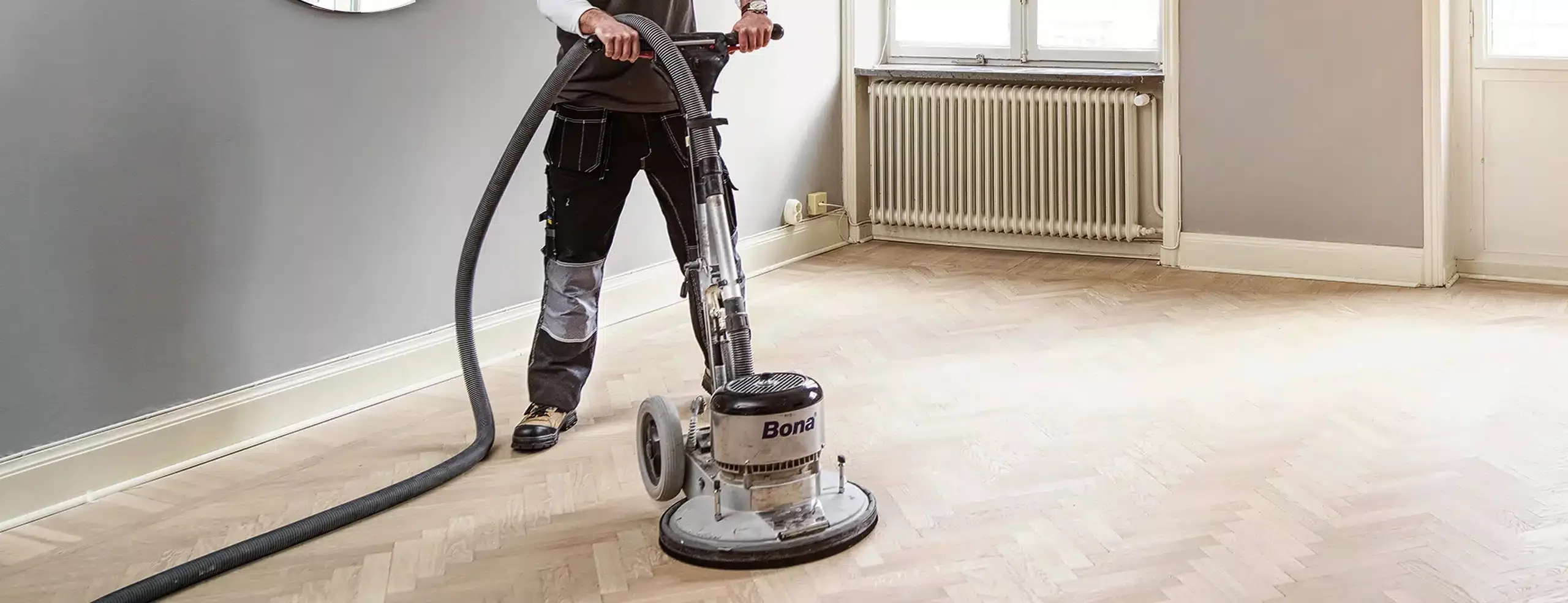
Solid wood keeps a reserve. A solid oak board carries enough thickness to sand a problem out completely — which is why deep damage in a Marysville oak strip floor is often repaired in place instead of replaced.
Solid hardwood is the one floor here with margin built in. Where an engineered plank has a millimeter or two of real wood on top, the builder oak strip in a 1990s two-story through Sunnyside, Whiskey Ridge or Cedarcrest can give up a full pass of sanding and still have decades left. So before we quote a board swap on one of those floors, we ask whether the damage actually goes deeper than the finish — because a surprising amount of it does not. The one thing that overrides all of it is moisture: nothing gets sanded flat until the readings say the house has dried.
The trouble lives underneath — a fastener that has let go of its joist or framing that has dried and shrunk a hair since the house went up. The median Marysville home dates to 1994, and the ramblers and split-levels around Jennings Park and Shoultes go back to the 1970s and 1980s, so most of this city is now well into the age when fasteners start letting go.
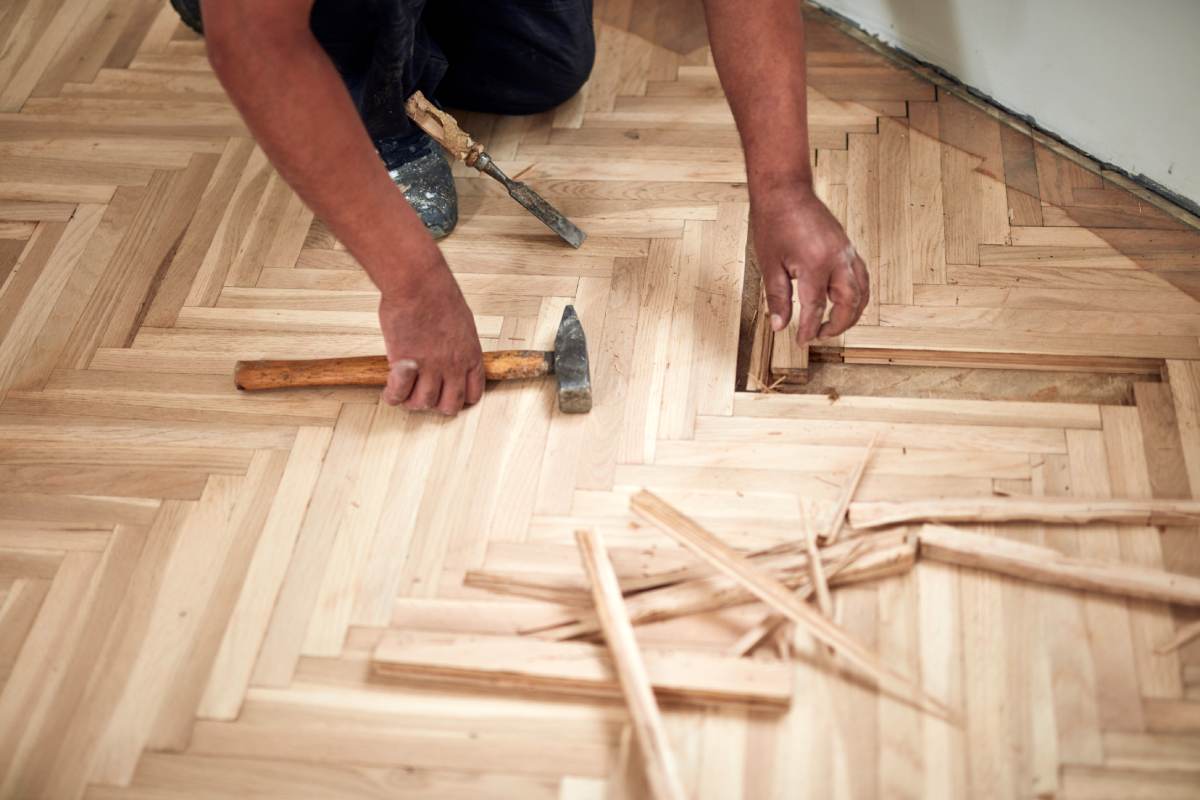
The fix starts under the boards. Loose pieces come up, the substrate gets fastened flat, and only then does the surface go back together.
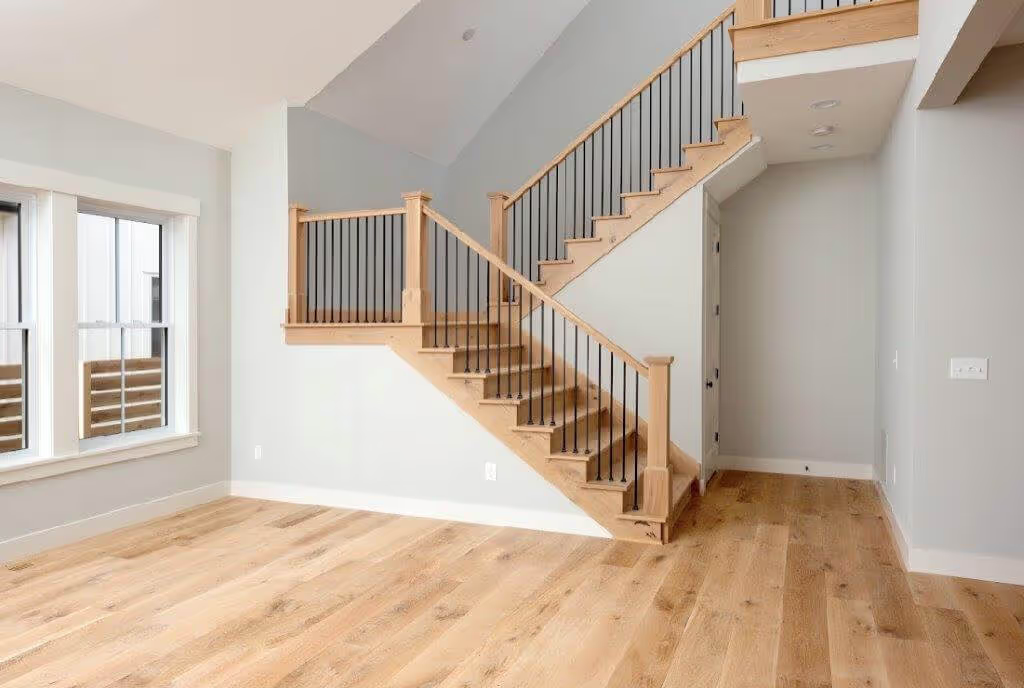
Stairs take the traffic of a hallway on a tenth of the wood. Treads, nosings and thresholds wear out years before the rooms around them — and they can be repaired one piece at a time.
Every early merge onto I-5, every school run, every wet dog coming back in off the yard lands on the same few square feet of wood. In the tract two-stories that fill Sunnyside, Whiskey Ridge and Getchell Hill the staircase is the busiest floor in the house, and the nosing on each tread takes the full strike of every step. Add a rainy season of boots landing in the same spot inside the front door and the entry threshold goes the same way. These are the repairs people put up with for years because they assume the whole staircase has to come apart. It does not.
Photograph the damage on your phone — a close-up of the worst spot, one from a few feet back, and one of the whole room. One of our estimators looks at every photo personally and emails you a written price the same business day. No visit, no sales call, no obligation.