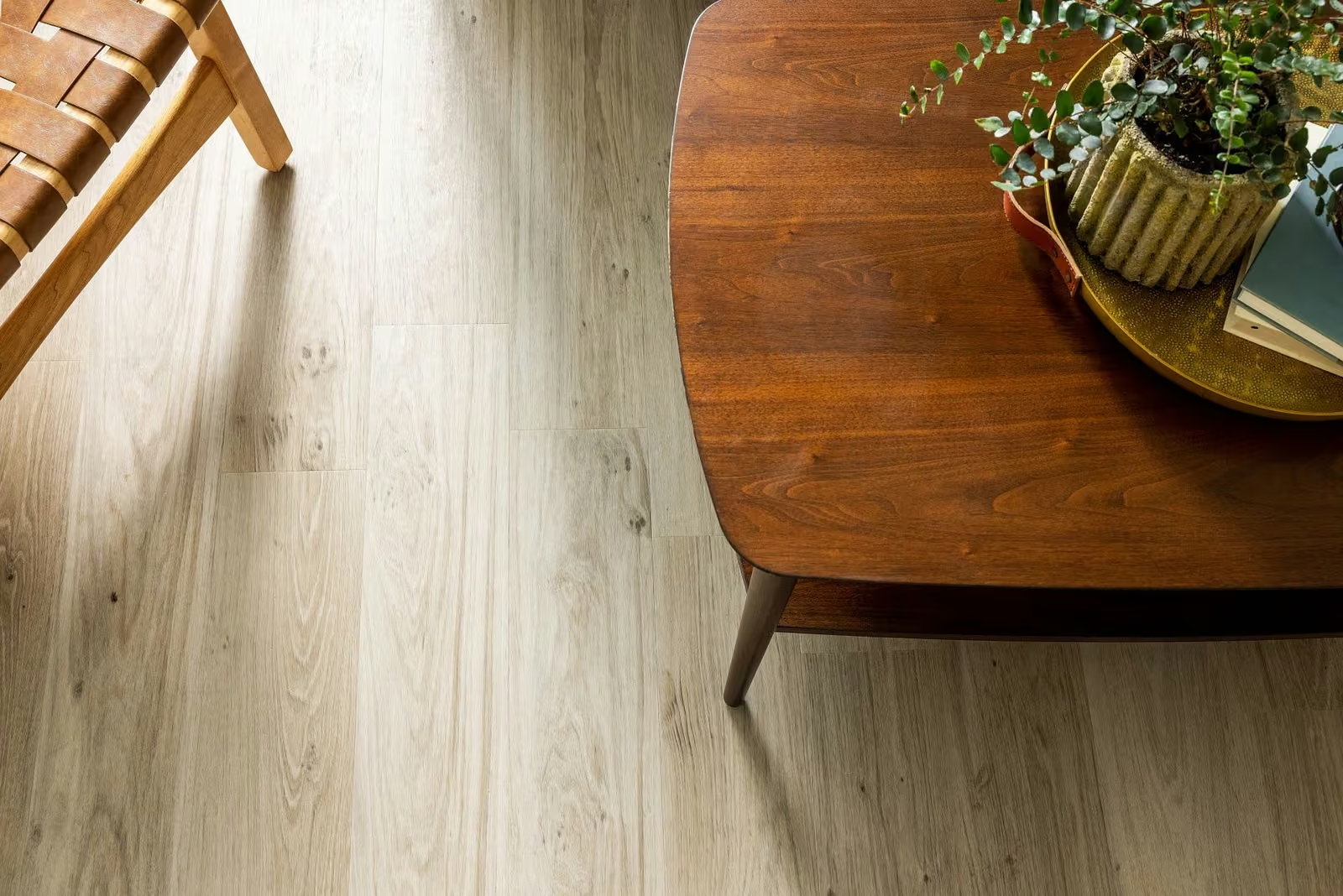
1,000+ Floors Installed & Restored Across Washington
Searching for floor repair near me in Medina? We repair hardwood, laminate and vinyl plank floors across Medina — Evergreen Point, Medina Heights, Northpoint, Groat Point, and the streets running off Overlake Drive and Lake Washington Boulevard. Most of what we do here is a handful of boards, a darkened patch inside a door that opens toward the water, or a run of LVP that has started to lift, not a whole new floor. Call (425) 595-1079 for a free in-home estimate, or send photos and get written pricing back the same business day.




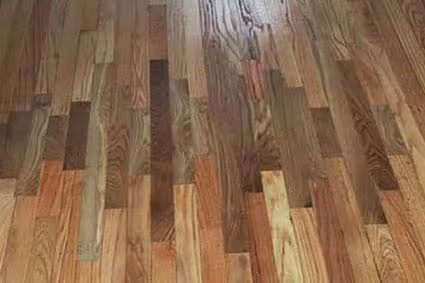
What a bad repair looks like. Wrong species, wrong grain, wrong color — patched by someone who didn't match the wood. You see it from the doorway, permanently.
Almost no floor in Medina is one you can still order a box of. The fir in the oldest waterfront houses was cut vertical-grain out of timber nobody is milling now, the red oak strip under the fifties and sixties houses runs widths the mills quit years ago, and the wide-plank engineered in the rebuilds is often a color that was dropped a season or two after it shipped. So the first question on a repair here is not how to sand the floor but what is going back into it. The board we pull out answers that: width, thickness, grain direction, and how much light it has taken.
A third of Medina's houses went up in the 1950s and 60s, which means red oak strip that has already been sanded more than once and has no thickness to spare. We lift the damaged boards one at a time, match species, width, thickness and grain direction, and go to salvaged stock when the milling is no longer made — the narrow vertical-grain fir in the older waterfront houses almost always calls for it. Stain gets mixed and tested on your floor, in your light, not on a sample board at the shop.
Dark, cupped boards just inside a door that opens toward the lawn or the dock are the most common thing we get called for in summer. We take moisture readings under the floor before anything comes up, cut and lift only the ruined boards, dry the area properly, then set matching boards and carry the finish out into the surrounding field so the patch has no edge. Refrigerator and dishwasher leaks get the same handling. Most are back in service in a day or two.
Wide-plank engineered went into most Medina rebuilds after 2000, and its wear layer is usually too thin to sand. Surface scratches can be abraded and recoated where they are. Anything that broke through the veneer — a dropped fireplace tool, a chair leg, a nail track worn down a hallway by a big dog — comes out plank by plank and gets replaced instead. This is the floor where keeping a leftover box in the garage pays for itself.
LVP turns up in Medina lower levels, pool houses and detached units, and laminate in guest wings and older remodels. Planks that rise at the ends, curl, or open at the seams are reporting a cause: a high spot beneath them, a moisture source, or a floating floor pinched with nowhere to move at the perimeter. We identify it, correct it, then replace the damaged run. Laminate that has swollen along the edges is replaced rather than repaired — a swollen core does not dry back flat.
Medina houses get added onto, and additions bring new doorways, changes in level and two different floors meeting at a line. Strips that have worn thin, worked loose or begun catching a toe are re-cut or replaced so they sit flat and look deliberate. Where an older wing runs into a newer one, we can often set a proper transition or feather the two floors together rather than leaving you with a lip to step over.
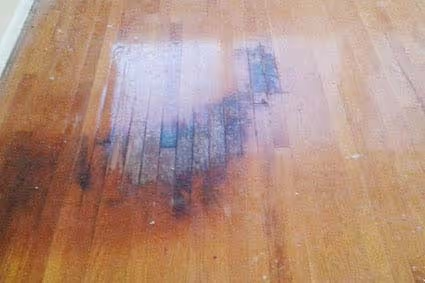
Finish is a film, not a seal, and it wears thinnest where the traffic concentrates, which in these houses is the few square feet just inside a door on the water side. Once moisture is past that film, oak carries it along the grain and holds a dark line well after the surface feels dry. Urine goes further, into the open pores and down toward the tongue, which is why a stain that has gone black does not lighten no matter what gets scrubbed over it.
 1
1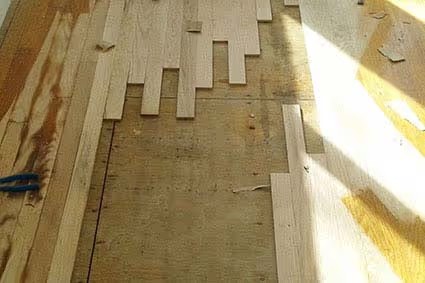 2
2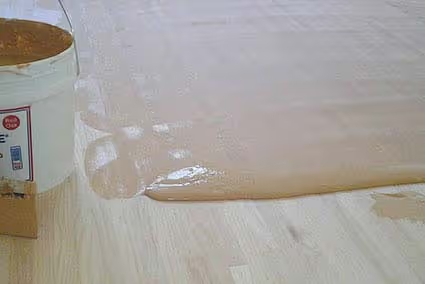 3
3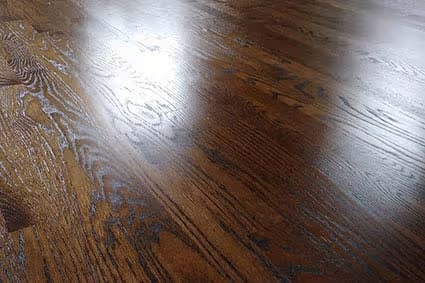 4
4Most pet-stain and water-damage repairs are finished in 1–2 days.
The answer changes depending on which Medina floor you are standing on. Solid oak from the fifties and sixties sometimes has one more sanding in it and sometimes spent that under a previous owner, so we pull a floor vent and measure what is actually left above the tongue before anyone promises a refinish. Engineered and LVP are never sanded flat, so the choice on those is a recoat or pulling the damaged planks, which turns it back into a matching problem.
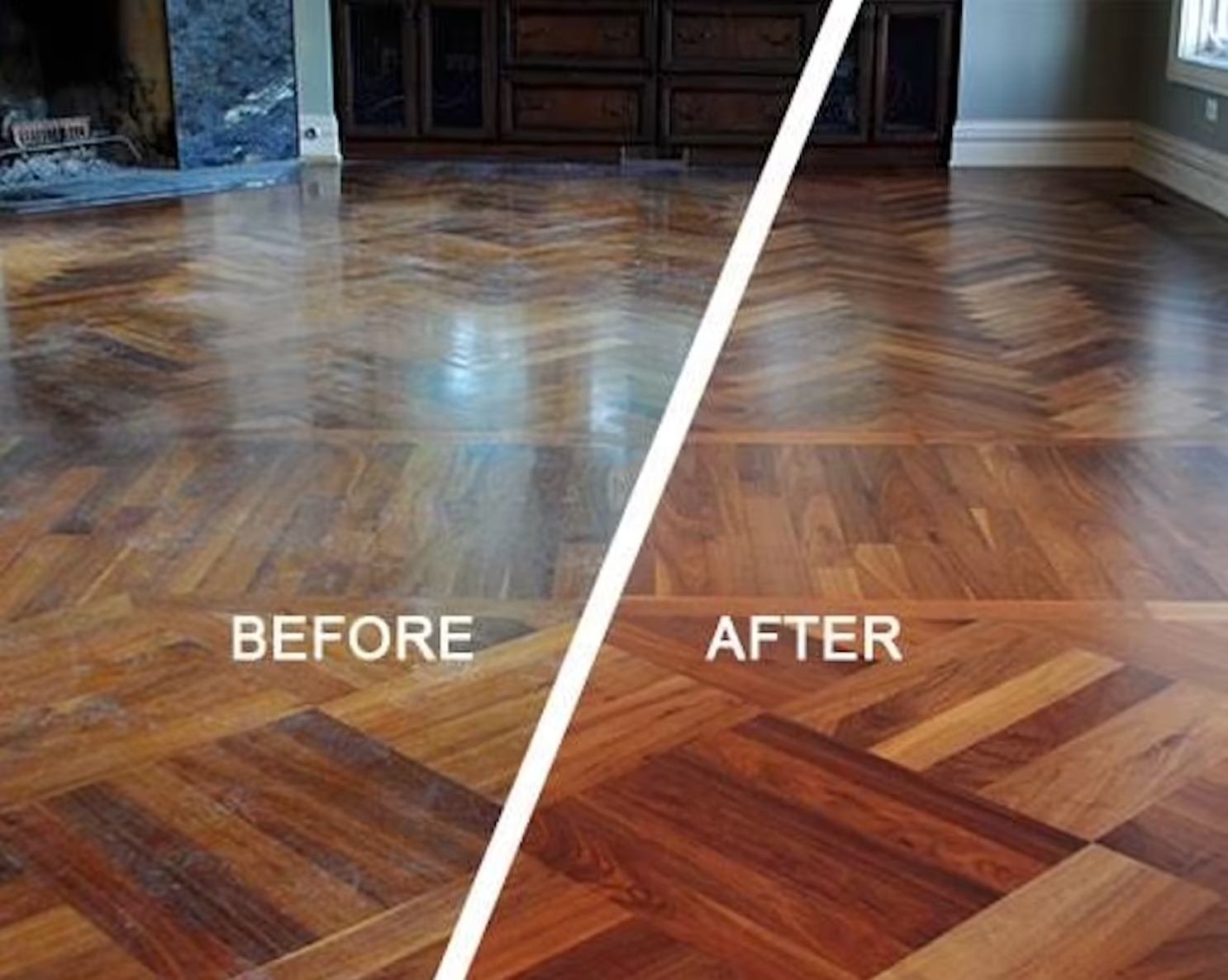
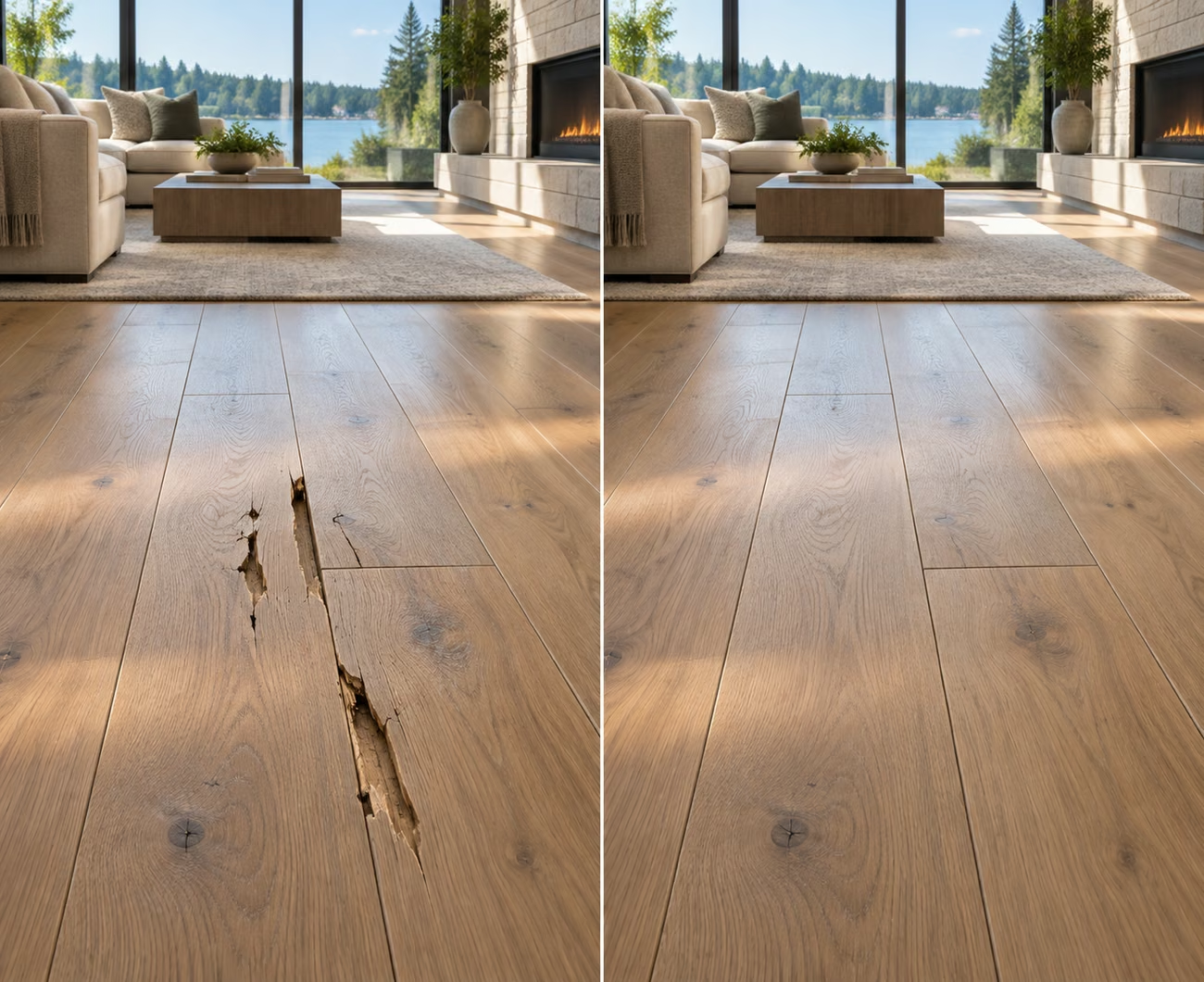
The same floor, split down the middle. Left: the finish is cloudy and worn through in the traffic path — no amount of patching fixes that. Right: sanded back and refinished.
Typically $200–$1,000 · most finished in 1–2 days
Board replacement is done first, so the whole floor is finished together
The water drop. Put a drop of water on a worn spot. If it beads, your finish is still doing its job — a spot repair is fine. If it soaks in within a minute, the finish is gone there and the floor is due for a refinish.
The rug test. Lift an area rug near a bright window. If the wood underneath is noticeably darker than the wood around it, that is sun fade rather than damage — and fade does not patch out board by board.
Still not sure? Send us a few photos of the floor and we will tell you which one you need, even when it is the cheaper answer.
Medina occupies a peninsula with Lake Washington on every side except the east, where Clyde Hill and Hunts Point take over. The town was platted in 1914 and stayed quiet until the first floating bridge went in around 1940; it incorporated in 1955 with 1,525 people, and the Evergreen Point Bridge came ashore at the base of Evergreen Point in 1963. Those dates are still legible in the flooring. Census figures put the median Medina house at 1973, with the 1960s producing more homes than any other decade and roughly one in eight built before 1950.
So a repair call here tends to land on one of three floors. The oldest surviving houses — the prewar ones on the water off Evergreen Point Road and Overlake Drive — sit on old-growth vertical-grain fir, occasionally quarter-sawn oak, milled tighter than anything sold today. The 1950s-through-70s stock, thick through Medina Heights where lots average about 15,000 square feet and on the closer-set blocks between NE 24th and NE 28th, is red oak strip, with parquet showing up in dens and entry halls. Then come the rebuilds. Medina's own comprehensive plan is blunt that the standard move here is razing a smaller house or adding onto it, and about one home in five now dates to 2000 or later. Those get wide-plank engineered upstairs and LVP in the lower levels and detached units.
Two local conditions make matching harder than it is inland. The city has four and a half miles of shoreline, nearly all of it private, so lake-side doors take wet feet from June through September and the boards behind them darken and cup before anything else does. And the good glass faces west across open water toward Seattle, which fades a floor unevenly — a board pulled from a closet and dropped into a sunlit great room reads too dark unless the finish is corrected for it. One more thing worth knowing: Medina has no apartments and no condominiums, because the zoning does not permit them. Every floor we work on in this city is in a detached house, and a fair number of them are rentals during a rebuild next door.
Usually, yes. Board replacement does not depend on remaining thickness the way sanding does — we cut out the damaged pieces, fit new red oak at the same width and thickness, and blend the finish locally. What a thin, twice-sanded floor cannot take is another full sand. If your plan was to deal with scratches by refinishing the whole main level, we will measure what is actually left and tell you where the floor stands before anyone starts.
Almost always a repair. Cupping from repeated wetting is local; it stops a few feet in from the door. We take moisture readings under the floor first, because wood that is simply wet often flattens once it dries properly and needs nothing beyond a recoat. Boards that stayed wet long enough for the stain to reach the grain get cut out and replaced. Only when the damage runs across a whole room does replacing the floor start to make sense.
It would, if we matched it to the color hiding in the closet. A sun-faded floor needs the replacement boards toned toward what the room looks like now, which means mixing and testing stain on site in that same afternoon light. We also feather the repair outward so it does not end on a hard line. Where the fade is heavy, carrying the finish a little further into the room gives a better result, and we will put that on the estimate rather than spring it on you.
It can be repaired. Click-lock LVP unlocks from the nearest wall, and glue-down planks can be cut out and reset individually. The thing to understand is that the plank is rarely the problem — a floor lifts or gaps because of a high spot underneath it, a moisture source, or a floating floor left no room to move at the perimeter. We deal with the cause first, or the same run rises again next summer. If you still have leftover boxes from the original installation, set them out for us.
Yes, and it comes up often in Medina, where adding on is the usual alternative to tearing down. Depending on how the two floors meet, we either set a clean transition, replace a short run so the seam falls somewhere sensible, or blend the finish across the joint so the difference reads as grain instead of a mistake. Height, board direction and sheen all have to agree — if one of the three is off, the seam keeps announcing itself.
Most repairs in Medina are one or two days on site, and typical repair work runs $200 to $1,000 depending on how many boards come out and how much finish work follows. The city allows construction between 7 a.m. and 7 p.m. on weekdays and 8 a.m. to 5 p.m. on Saturdays, with nothing on Sundays or city-observed holidays, and we schedule inside those hours. If your project turns out to need a permit, Medina Development Services is the office to confirm it with.
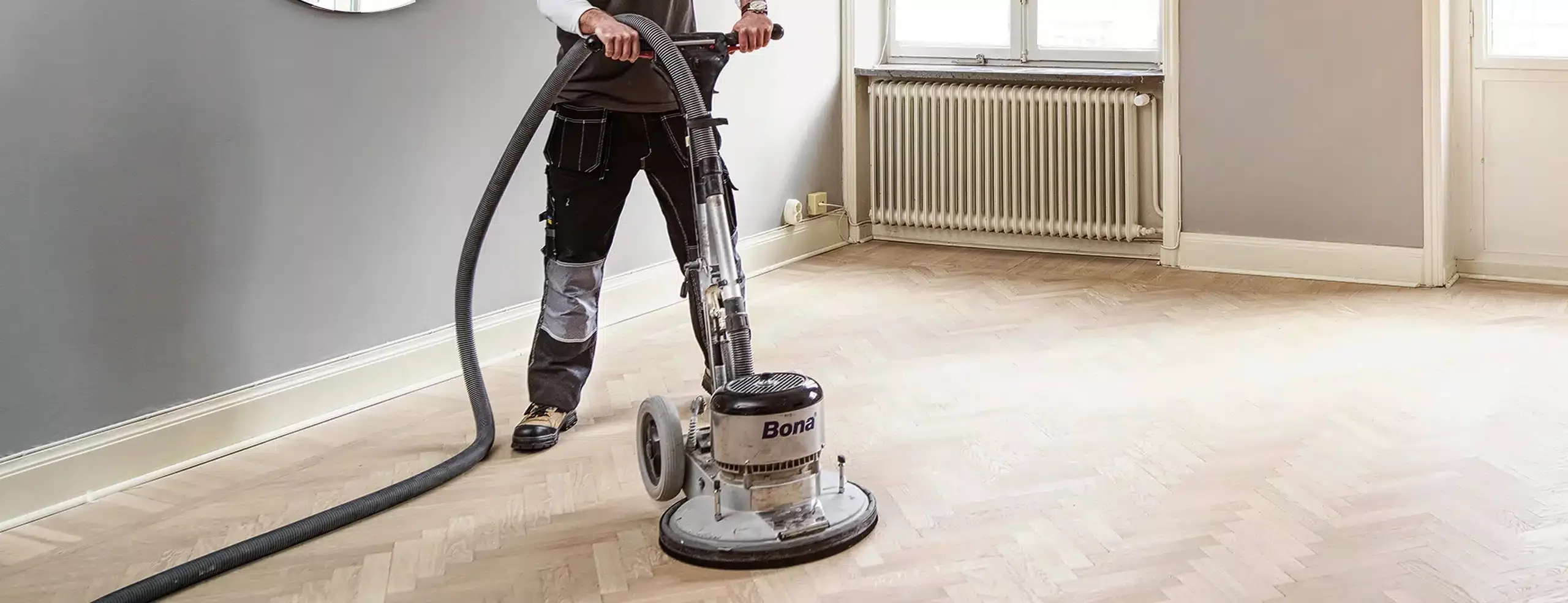
Solid wood keeps a reserve. A solid oak or fir board carries enough thickness to sand a problem out completely — which is why deep damage in an older Medina floor is often repaired in place instead of replaced.
Solid hardwood is the one floor with margin built in. Where the wide-plank engineered in a rebuild has a millimeter or two of real wood on top, the red oak strip through Medina Heights or the vertical-grain fir in a prewar house off Evergreen Point Road can still give up a pass of sanding. How much margin is left depends on who owned the house before you, so we pull a floor vent and measure above the tongue first — then ask whether the damage even goes deeper than the finish, because a surprising amount of it does not.
The boards you see are rarely the ones at fault. The problem lives underneath — a fastener that has let go of its joist, a subfloor panel rubbing its neighbor, or framing that has dried and shrunk a hair since the house went up. The median Medina house dates to 1973 and the 1960s produced more of them than any other decade, which is exactly the age at which those fasteners start letting go. We chase the problem to its source instead of patching the symptom.
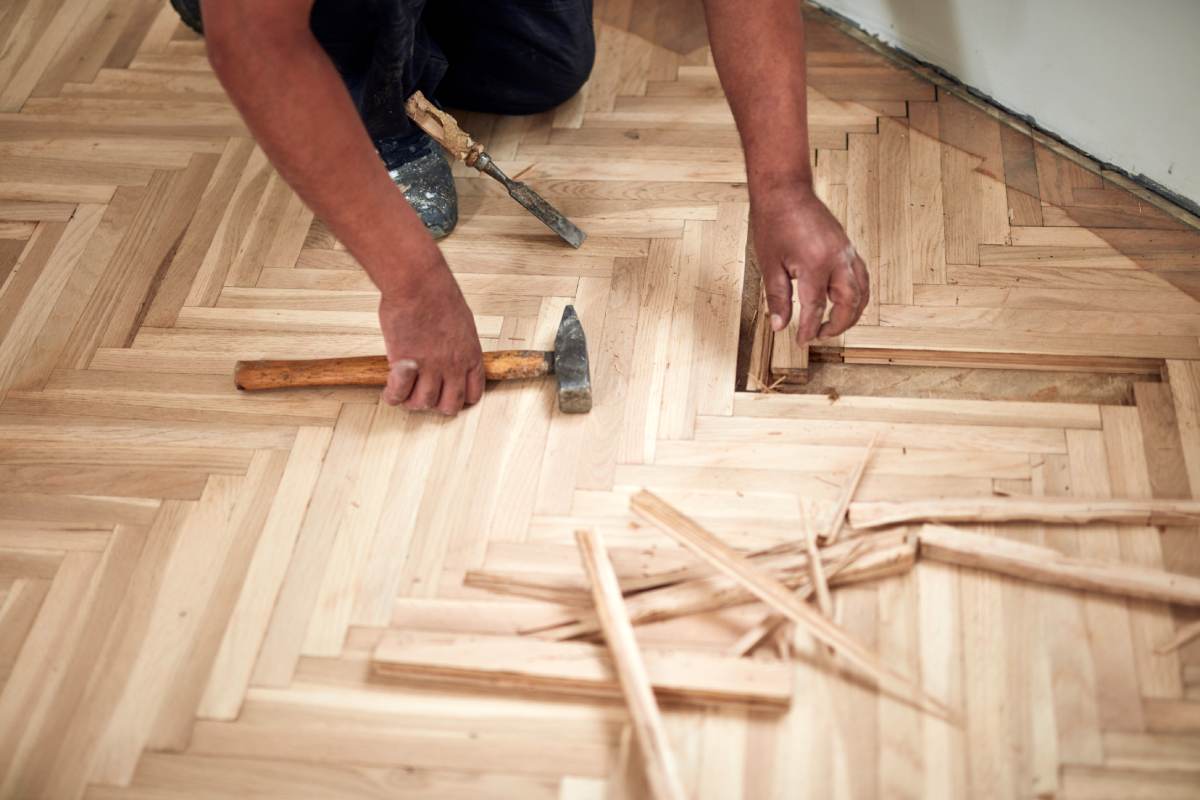
The fix starts under the boards. Loose pieces come up, the substrate gets fastened flat, and only then does the surface go back together.
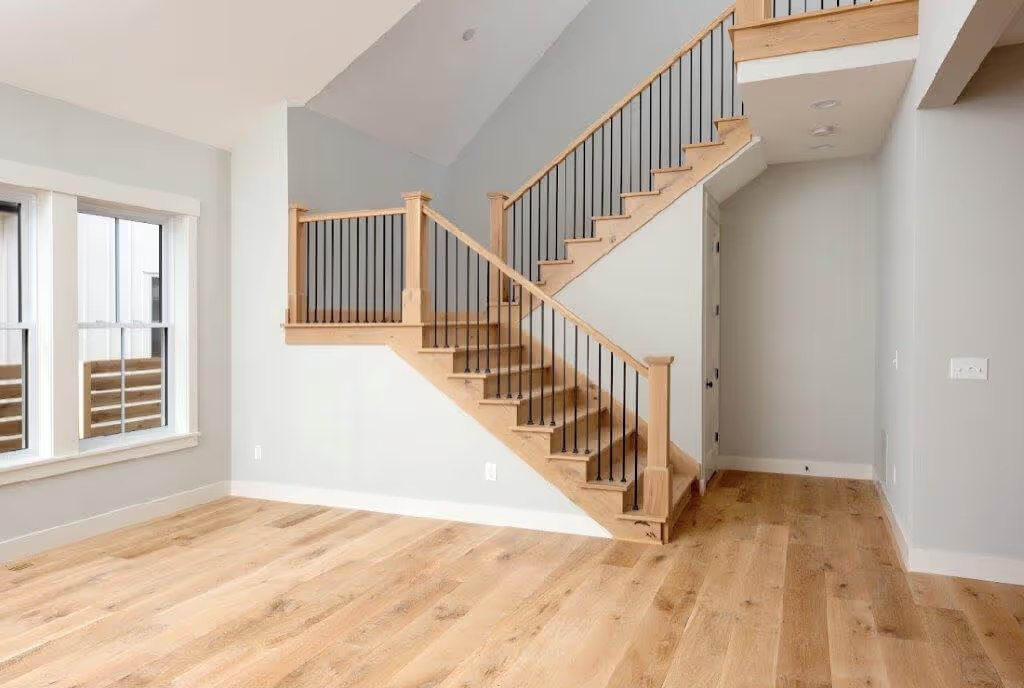
Stairs take the traffic of a hallway on a tenth of the wood. Treads, nosings and thresholds wear out years before the rooms around them — and they can be repaired one piece at a time.
Every morning run for the 520 bridge, every trip down to the dock and back, every wet dog coming up off the lawn lands on the same few square feet of wood. In a Medina house that steps down toward the water the staircase is the busiest floor in the building, and the nosing on each tread takes the full strike of every step. These are the repairs people put up with for years because they assume the whole staircase has to come apart. It does not.
Photograph the damage on your phone — a close-up of the worst spot, one from a few feet back, and one of the whole room. One of our estimators looks at every photo personally and emails you a written price the same business day. No visit, no sales call, no obligation.