1,000+ Floors Installed & Restored Across Washington
Searching for floor repair near me in Edmonds? Cut out the damage, match the wood, blend the finish, and leave the rest of your floor exactly where it is. We repair hardwood, laminate and vinyl plank across Edmonds, from the Bowl and Seaview out to Meadowdale, Five Corners and the Highway 99 side of town. Call (425) 595-1079 for a free in-home estimate.
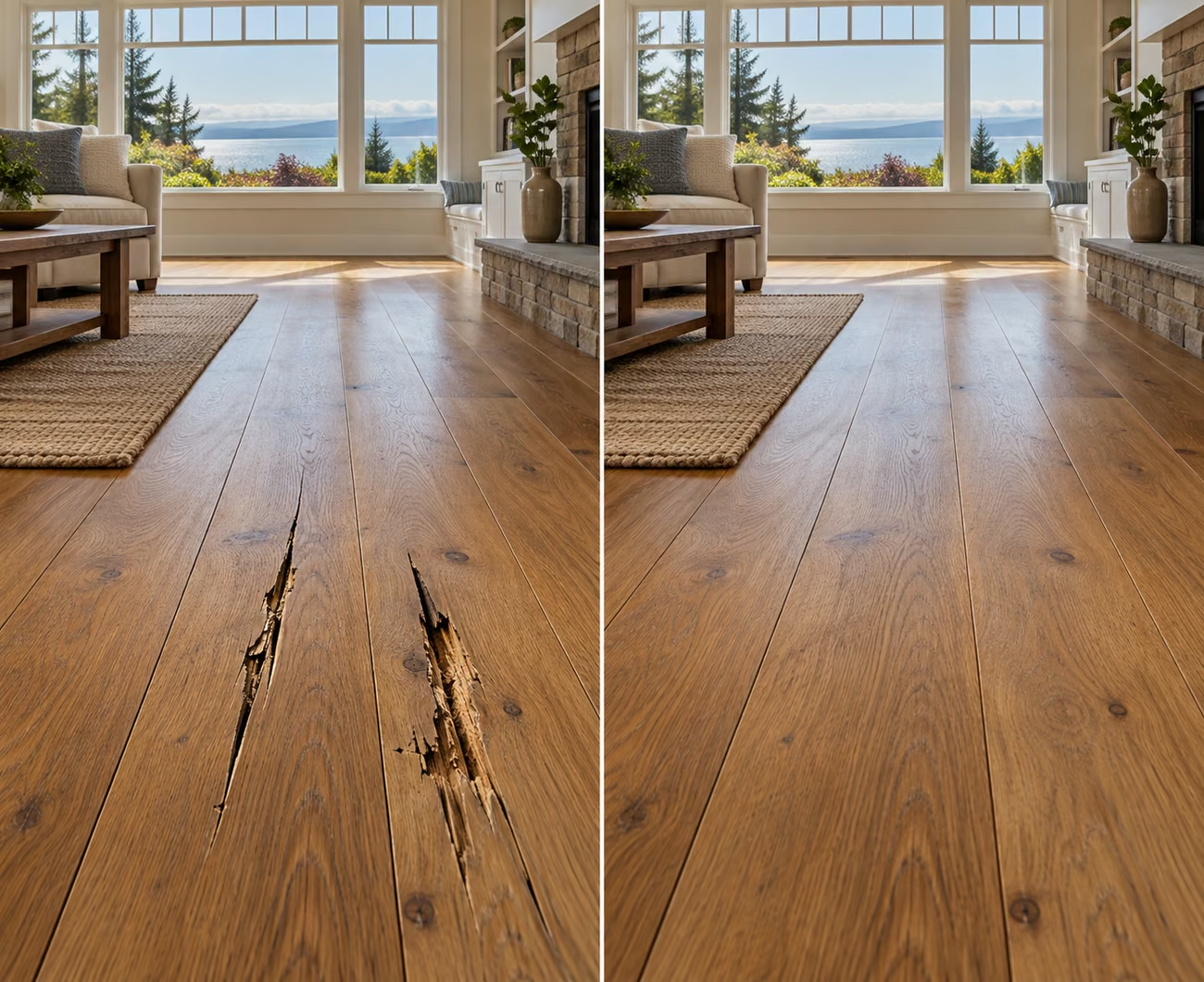




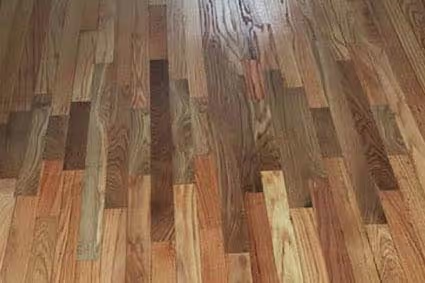
This is what we are hired to avoid. New boards dropped in without matching species or grain direction. It never blends in later; it just stays the first thing you notice.
Edmonds gives us two completely different floors. Up the hill, ramblers and split-levels from the forties through the sixties, carpeted when new and hiding narrow oak strip or 1970s parquet. Down in the Bowl, the original timber townsite, where the wood is older, softer and worth more care.
Cracked, split, cupped, scorched or stained boards cut out one at a time and replaced with wood matched for species, width, grain direction and thickness. On 1950s and 60s oak that has spent four decades under carpet, that normally means sanding and finishing the repaired area so the new boards disappear into the old instead of sitting there as a bright patch.
Darkened edges, cupped boards and swollen plank ends where a slider, a fridge line, a washer or a long wet winter got at the floor. We probe the area and take a moisture reading underneath before quoting. Anything still damp is dried out first, because covering wet wood only moves the problem to next year.
Black urine marks that went through the finish and into the grain, dog-claw scratching worn down a hallway, dents from chair legs and dropped tools. Shallow damage buffs out and gets recoated. Anything that reached the wood means the board comes out, gets replaced, filled and blended back into the surrounding color and sheen.
Lifting planks, cracked or gouged wear layers, curled ends and seams that have crept open. We work out what moved the floor first — afternoon heat through west-facing glass, a floating run pinned by trim or a heavy cabinet, a high or low spot underneath — then swap the damaged planks and close the seams back up.
Swollen laminate edges, chipped corners and click joints that have separated. Laminate has a printed wear layer and cannot be sanded, so we unlock the run, replace only the bad planks and re-lock it. Split-levels and tri-levels also wear out thresholds at every landing and doorway; those get re-cut or replaced so they sit flat and hold the plank edges down.
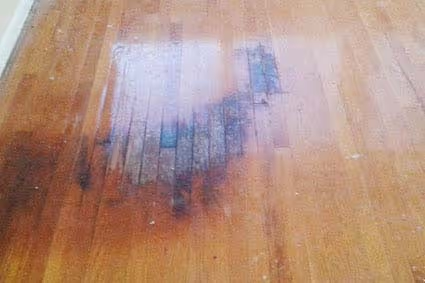
Rain off the Sound and wet shoes through a slider put more water on an Edmonds floor than most, and once it is past the finish no cleaner reaches it. This is the sequence we run, photographed on our own jobs.
 1
1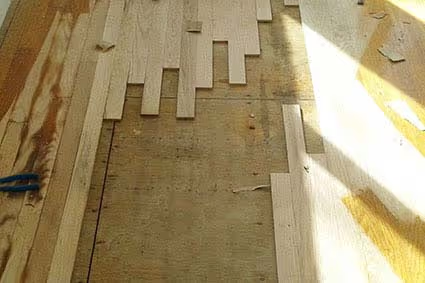 2
2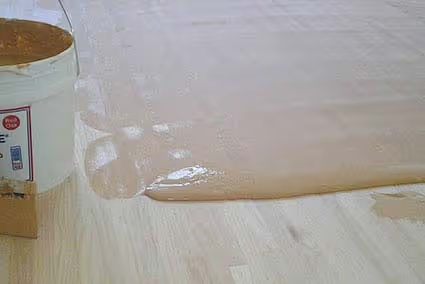 3
3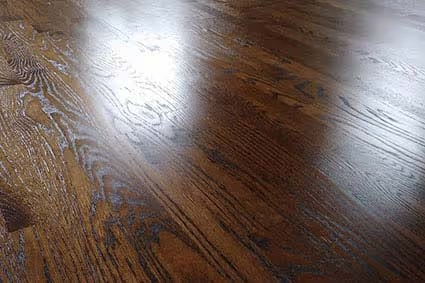 4
4Most pet-stain and water-damage repairs are finished in 1–2 days.
On mid-century oak the choice is usually open; on soft old fir in the Bowl it is not always. Here is how to tell which job your floor needs before you commit to either.
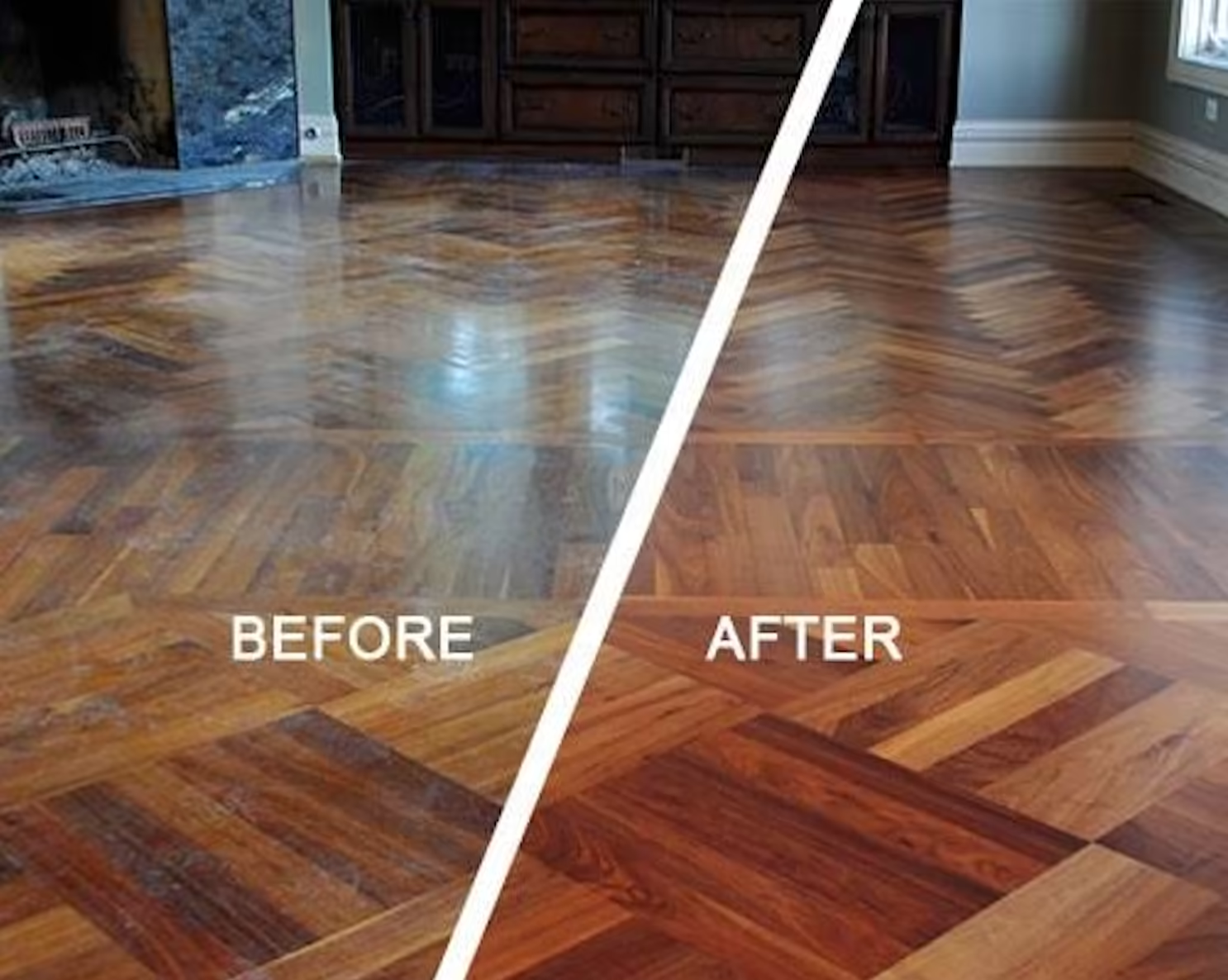
The same floor, split down the middle. Left: the finish is cloudy and worn through in the traffic path — no amount of patching fixes that. Right: sanded back and refinished.
Typically $200–$1,000 · most finished in 1–2 days
Board replacement is done first, so the whole floor is finished together
The bead test. Drip a little water onto the tired-looking area. Beading means the coating is intact and a spot repair will hold. If it darkens and soaks in, the finish has worn through and the room wants refinishing.
The furniture test. Slide a rug or a side table aside. A clear color step between the covered wood and the exposed wood is sun fade, and replacing individual boards there only adds a third shade.
Still not sure? Send us a few photos of the floor and we will tell you which one you need, even when it is the cheaper answer.
That split explains almost every repair call we take here. Roughly four in ten Edmonds homes went up between 1940 and 1969, the median house dates to the mid-1970s, and barely one in eight was built after 2000 — the legacy of a population that tripled from about 8,000 to over 30,000 between 1960 and 1990 as the hills north and east of downtown were subdivided and annexed. Those ramblers, split-levels and tri-levels were carpeted wall to wall when they were new, because that was the era. Forty and fifty years on the carpet comes up and what is underneath is narrow oak strip, sometimes fir, sometimes 1970s parquet, sometimes sheet vinyl in the kitchen. Most of it is worth saving. The board inside the slider usually is not, and that is where we start.
Down in the Bowl the picture changes completely. The original townsite is the old Edmonds — George Brackett's timber settlement, incorporated in 1890, with a sawmill on the beach from 1889 and ten shingle mills along the waterfront by 1900 — and the housing runs from the 1888 Bassett house through the Craftsman and Queen Anne years. Those floors are typically vertical-grain Douglas fir, the standard in Puget Sound houses of that age. Fir is soft, it dents under a chair leg and a dog's nails, and matching century-old grain means salvaged stock, not anything off a rack. Ringing the same few blocks are the low-rise condos, usually engineered wood or LVP over a slab, where the failures are gapped seams, hollow spots and planks cooking along the west-facing glass that stares at the Sound, the ferry lane and the Olympics all afternoon.
Then there is water, which in Edmonds is rarely dramatic. About 37 inches of rain over roughly 158 wet days a year, most of it between October and March, working on a town built across sloping ground above five miles of shoreline. Daylight basements and split-level lower levels take the brunt: the floor darkens at the low end of the house, laminate edges swell, LVP starts lifting along one wall. On the Meadowdale side, where the city maintains a designated earth-subsidence and landslide hazard area and the winter of 1996–97 did real damage, drainage is already something people watch. We read moisture under the boards before quoting anything, and if the problem is water arriving from outside the house we say so instead of covering it up.
The newest slice is the Highway 99 corridor, replanned under the city's 2017 subarea plan and filling in with mixed-use apartments and townhomes over LVP, plus rental stock through Firdale, Westgate and Five Corners. Those floors are young and the damage is mechanical — a dropped pan, an appliance dragged across a kitchen, a plank chipped at a doorway — which is exactly the kind of thing that gets quoted as a whole-room replacement when three planks would do. We cover all of it: the Bowl, Seaview, Perrinville, Meadowdale, Sherwood Forest, Westgate, Five Corners, Firdale and the Lake Ballinger end of town.
Usually yes, and it is one of the most common calls we take in this city. Homes built through the 1950s and 60s were carpeted from new, so the wood beneath is often barely worn. What you will actually find is tack-strip holes around the perimeter, staple marks, and a few bad boards near a doorway or a heat register. Those get replaced, the holes get filled, and the area gets sanded and finished. The one thing to check first is thickness — if the boards were sanded down to the tongue by a previous owner, there may not be enough wood left to work with. We will tell you that on the estimate, not after.
Most repairs land between $200 and $1,000. What moves the number is how many boards or planks have to come out, whether your material is still in production or has to be sourced or salvaged, and whether the repaired area needs sanding and finishing to blend into the rest of the floor. Water that got underneath adds time, because it has to be dried and read with a meter before anything new goes down. The price comes to you in writing before we start, and the estimate itself is free.
It depends entirely on how deep the urine went. If it only darkened the finish, sanding will take it off. Once it has soaked past the finish into the grain — the near-black staining with a hard outline to it — sanding will not reach the bottom of it, and those boards get cut out and replaced. Smell is the honest test. If you can still smell it on a warm afternoon, it is in the wood or below it, and surface work will not fix that.
We look for the source before touching a plank. That means probing the affected area, lifting one board or plank at the edge of the damage, and taking moisture readings underneath and then out into the dry part of the floor to compare. If the reading is high, the area is dried before new material goes in. On a sloping Edmonds lot that step is often the difference between a repair that holds and one you call us back about the following February. If we find something outside what we do, such as water arriving from the uphill side of the house, we will tell you plainly rather than quote around it.
Yes, and a good share of our Bowl work is exactly that. Condo floors are usually engineered wood or vinyl plank sitting on a slab, which changes how the repair works: nothing is nailed down, the underlayment matters, and a hollow or gapping seam often traces back to a flat spot in the concrete rather than to the flooring itself. Buildings also have their own rules on work hours, elevator use and parking — tell us what yours are when you call and we will schedule inside them.
Almost always. Gaps in a floating LVP floor mean the floor moved, so the first job is finding out why: no expansion gap left at the walls, a run pinned down by a heavy island or a bolted cabinet, direct afternoon sun through west-facing glass, or an uneven spot underneath. Once the cause is handled we lift only what we need to, replace the damaged planks and close the seams. Swapping planks without solving the movement just buys you a few months.
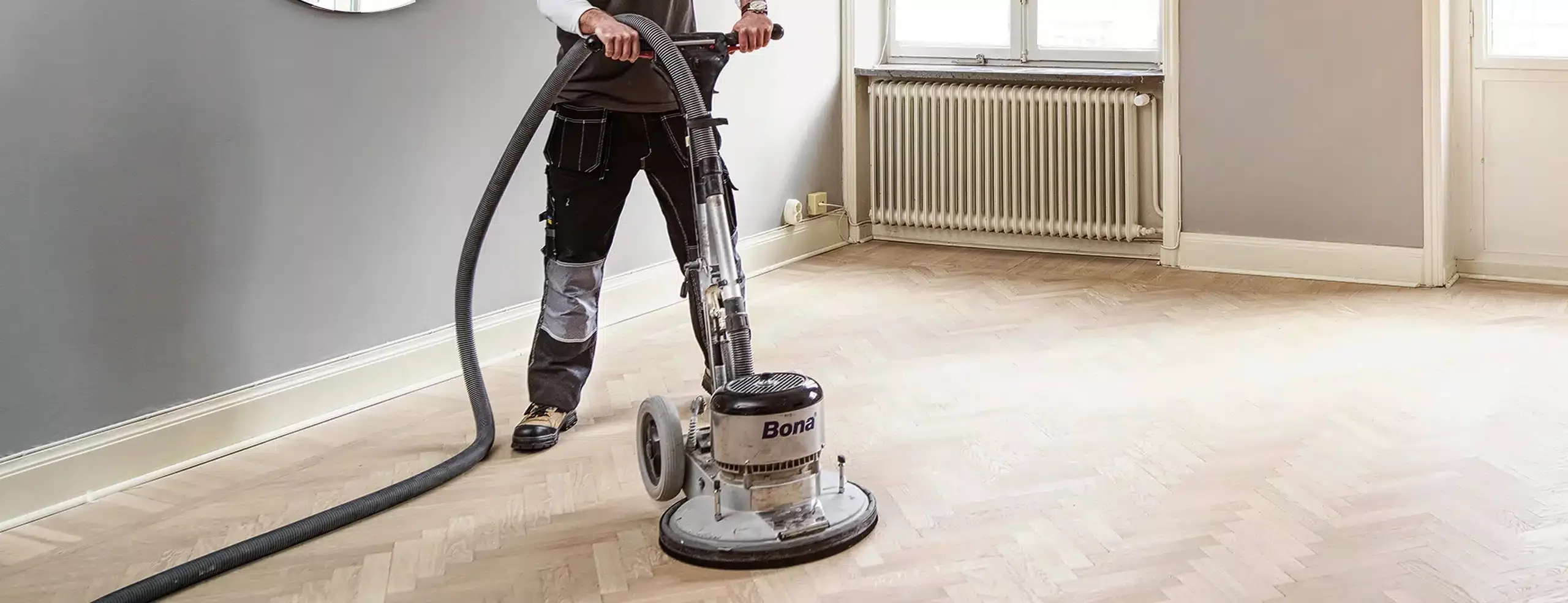
Solid wood keeps a reserve. A solid oak or fir board carries enough thickness to sand a problem out completely — which is why deep damage in an older Edmonds floor is often repaired in place instead of replaced.
Solid hardwood is the one floor with margin built in. Where an engineered plank has a millimeter or two of real wood on top, the narrow oak strip in a Seaview rambler or a Sherwood Forest split-level can give up a full pass of sanding and still have decades left — and most of it spent forty years asleep under carpet. So before we quote a board swap, we ask whether the damage actually goes deeper than the finish, because a surprising amount of it does not. Bowl fir is the one place we measure before we promise, since a century of sandings leaves only so much wood above the tongue.
When a floor develops a gap or a soft spot, the boards you see are rarely the ones at fault. The problem lives underneath — a fastener that has let go of its joist, a subfloor panel rubbing its neighbor, or framing that has dried and shrunk a hair since the house went up. Roughly four in ten Edmonds homes were framed between 1940 and 1969 and the median house dates to the mid-1970s, which is exactly the age when those fasteners start letting go. We chase the problem to its source instead of patching the symptom.
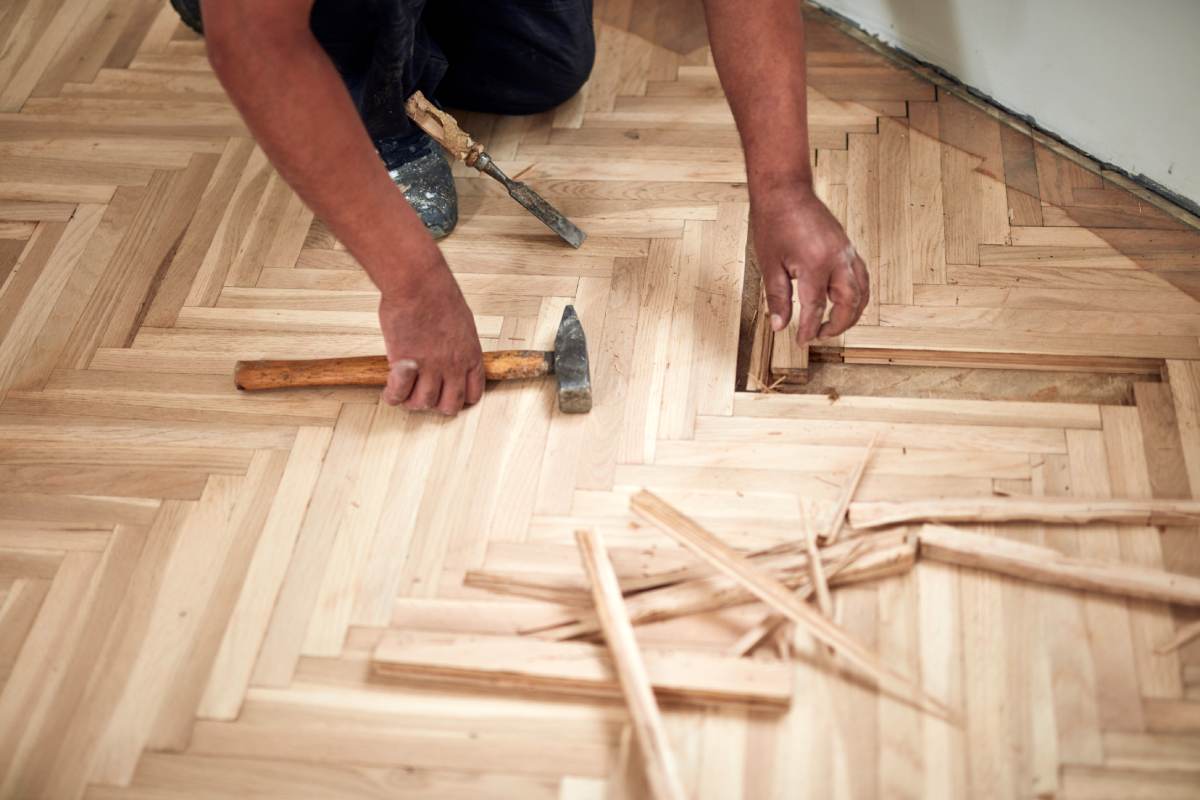
The fix starts under the boards. Loose pieces come up, the substrate gets fastened flat, and only then does the surface go back together.
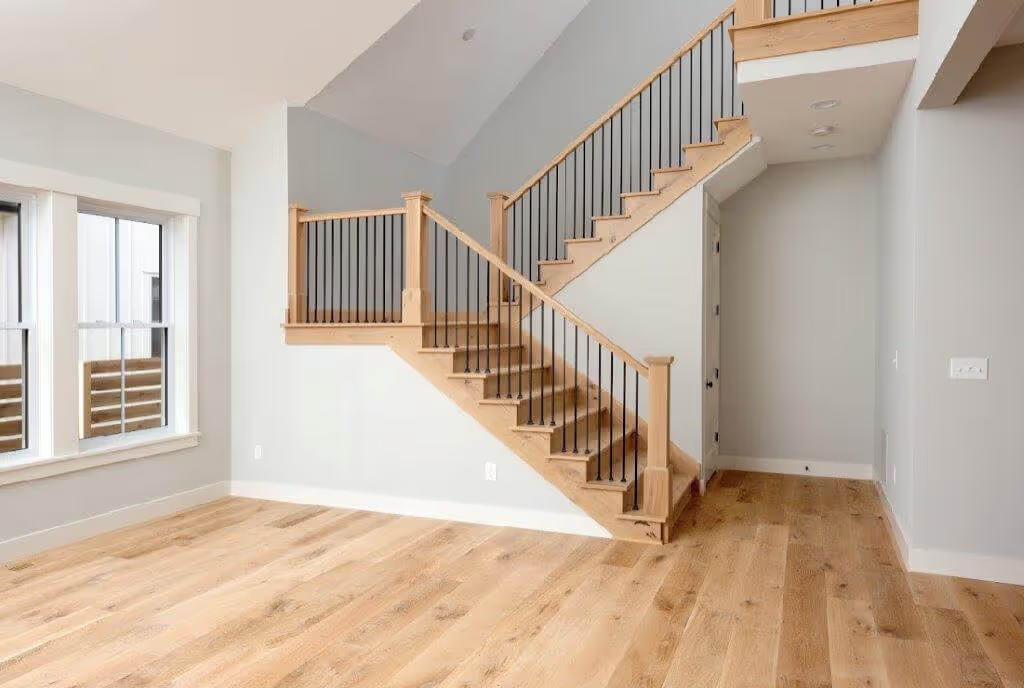
Stairs take the traffic of a hallway on a tenth of the wood. Treads, nosings and thresholds wear out years before the rooms around them — and they can be repaired one piece at a time.
Every walk back up from the waterfront, every school run, every wet dog in off five miles of shoreline lands on the same few square feet of wood. Edmonds is a town of split-levels and tri-levels, so the short flights between landings carry more crossings a day than any room in the house — and the nosing on each tread takes the full strike of every step. Thresholds at those landings are usually the first thing in the whole house to fail. These are the repairs people put up with for years because they assume the whole staircase has to come apart. It does not.
Photograph the damage on your phone — a close-up of the worst spot, one from a few feet back, and one of the whole room. One of our estimators looks at every photo personally and emails you a written price the same business day. No visit, no sales call, no obligation.