1,000+ Floors Installed & Restored Across Washington
Searching for floor repair near me in North Bend? We cut out ruined boards and planks and match them to what is already down, in Forster Woods, Si View, Maloney Grove, Riverbend and the older streets around downtown North Bend. Most repairs land between $200 and $1,000 and are finished in one or two days, without tearing out a whole room. Call (425) 595-1079 for a free in-home estimate.




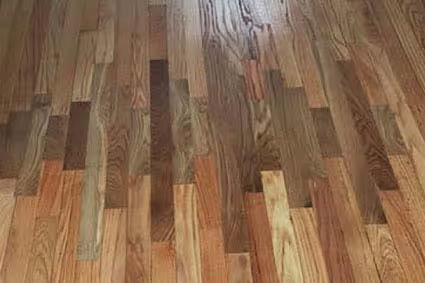
What a bad repair looks like. Wrong species, wrong grain, wrong color — patched by someone who didn't match the wood. You see it from the doorway, permanently.
The decade between those two is nearly empty here, and it shows up in the sourcing more than anywhere else. A board that has to come out is almost always being matched to one of two runs, nineties red oak and first-generation prefinished plank, or a click floor laid since about 2010, with the mill-era fir in the oldest houses sitting off on its own. Very little in a North Bend house falls between them, so dating the floor is the first thing we do at the door. The era decides where the first cut goes and what we are able to put back.
North Bend sits between the South Fork and the Middle Fork of the Snoqualmie, and the city maps roughly 42 percent of its land area inside the 100-year flood hazard area — the historic downtown core included. We see what that does over time: hardwood that cupped and then crowned, laminate that swelled and chipped along the seam edges, vinyl holding moisture underneath a slider or a mudroom door. We take moisture readings before anything else, let the area dry out, then replace only the boards or planks that are genuinely past saving. Everything still sound stays where it is.
More North Bend homes were built in the 1990s than in any other decade — about 35 percent of the housing stock, per the city's own housing needs assessment. That decade means a lot of two-and-a-quarter red oak strip and first-generation prefinished engineered plank, much of it in colors and grades that stopped being produced years ago. We identify what is actually on your floor, source a match, and when the run is dead we pull donor boards from a closet floor or from under the dishwasher and patch the hidden spot instead. Then we blend stain and sheen so the repair does not read as a patch from the doorway.
North Bend added roughly 800 housing units between 2010 and 2020 once the building moratorium ended, and vinyl plank was the material of the moment. Floating LVP and SPC move with temperature, and this valley swings harder than the Sound-side suburbs: colder winter nights at 440 feet of elevation, and a summer that reached 115 degrees in 2021. Seams open at a sunny slider, planks ride up where the run was locked in too tight against a wall or a threshold. We find the reason before we put anything back — expansion gap, a high spot under the plank, a transition strip pinning the field — then swap the damaged planks.
Mount Si is the most-hiked trail in Washington, drawing well over 100,000 people a year, and North Bend floors take the consequences. The grit that comes off boots and dog paws works like sandpaper, so the first eight feet inside a mudroom, the hall from the garage, and the lane between the back door and the kitchen wear through long before the rest of the room does. Light scratching we buff and touch up. Deeper gouges get filled and color-matched. Where traffic has cut through to bare wood, we replace those boards and blend the finish into what surrounds them.
About 18 percent of North Bend housing predates 1970, and the oldest of it sits on the 1889 town plat near North Bend Way, back when this was a lumber town feeding the Snoqualmie Falls mill. Those floors are often narrow vertical-grain fir, and a century of heating seasons opens the seams, splits boards at the ends, and softens the wood at doorways. Where a gap holds all year we shim it with wood rather than packing it with filler that will crack out by spring. Split and loose boards get replaced, and we rebuild worn thresholds and transitions where wood meets tile, carpet or vinyl.
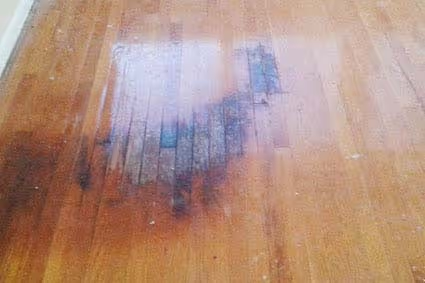
Finish is a film, and it stops working the moment there is a way under it. Through a North Bend winter the floor inside the door is rarely dry for long, and a mat that stays damp keeps the seam underneath it damp too. Urine works the same way, only quieter: it sits in the seam, gets under the finish, and by the time the smell shows up the stain is already down in the wood where cleaning cannot reach it.
 1
1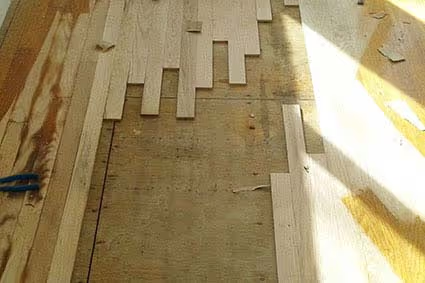 2
2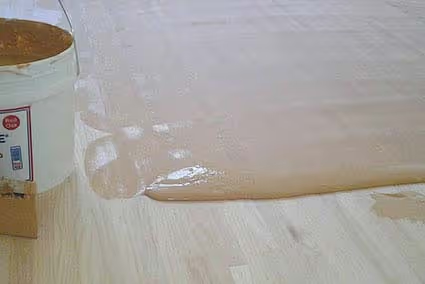 3
3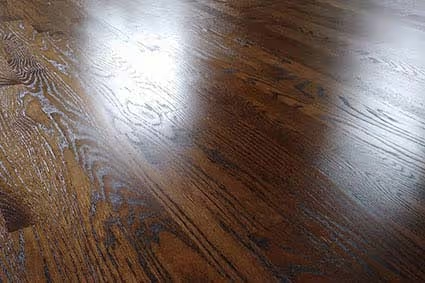 4
4Most pet-stain and water-damage repairs are finished in 1–2 days.
On a nineties oak floor the question is worth asking, because there is usually thickness left and one sanding brings the color back across a whole room at once. In the oldest houses we answer it by looking, since at a floor register or a doorway you can see how much wood sits above the tongue, and when there is very little a spot repair is the only honest option. On early engineered plank the wear layer is usually too thin to sand and on floating vinyl there is nothing to sand at all, so those floors get repaired plank by plank or they get replaced, and we will tell you which one you are looking at.
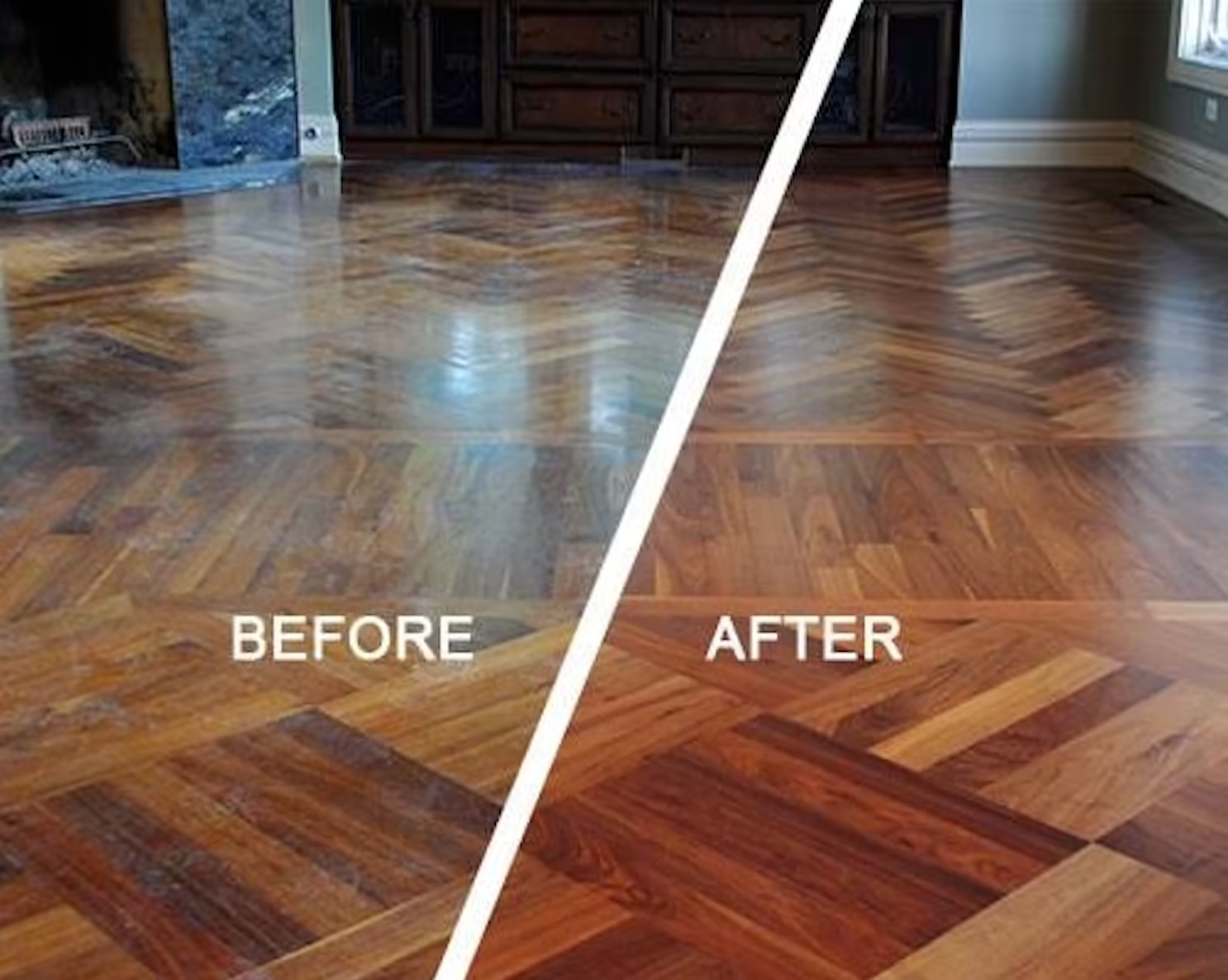
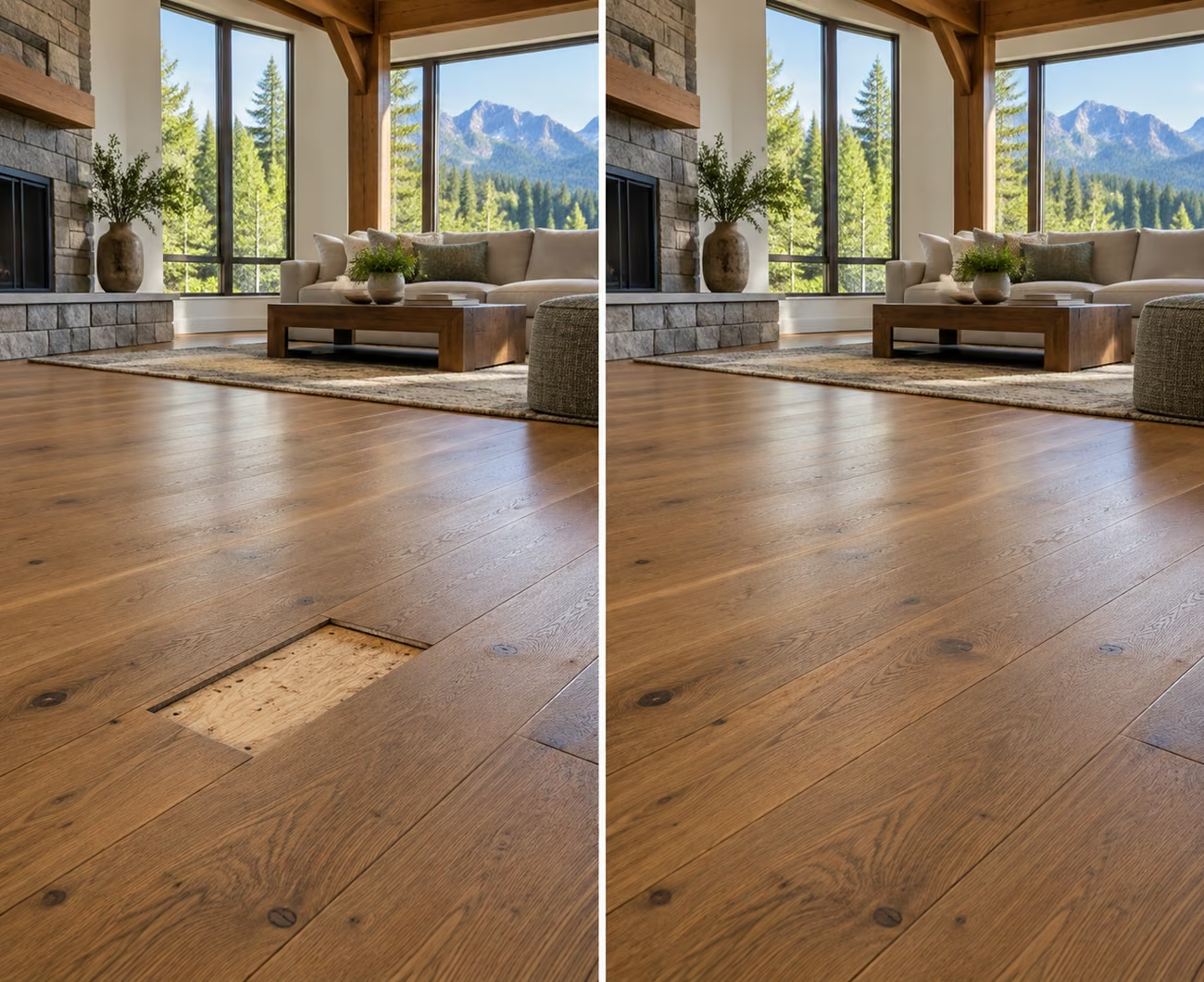
The same floor, split down the middle. Left: the finish is cloudy and worn through in the traffic path — no amount of patching fixes that. Right: sanded back and refinished.
Typically $200–$1,000 · most finished in 1–2 days
Board replacement is done first, so the whole floor is finished together
The water drop. Put a drop of water on a worn spot. If it beads, your finish is still doing its job — a spot repair is fine. If it soaks in within a minute, the finish is gone there and the floor is due for a refinish.
The rug test. Lift an area rug near a bright window. If the wood underneath is noticeably darker than the wood around it, that is sun fade rather than damage — and fade does not patch out board by board.
Still not sure? Send us a few photos of the floor and we will tell you which one you need, even when it is the cheaper answer.
Thirty miles east of Seattle and 440 feet up against the Cascade front, North Bend takes about 59 inches of rain a year where Seattle takes 39, plus roughly 15 inches of snow. All that water has to go somewhere, and a good share of it ends up moving through floors — as vapor rising off a crawlspace, as melt tracked in on boots, and sometimes as the river itself. The city counts 15 damaging floods in the North Bend vicinity since 1975, and lists the South Fork, the Middle Fork, Silver Creek, Ribary Creek and Gardner Creek as flood sources. Roughly 42 percent of city land falls inside the mapped flood hazard area, and the older, historic parts of town are among the exposed ones. That is not a Seattle problem, and it is not a Bellevue problem.
The building history explains the rest. North Bend went from 2,537 people in 1990 to 4,795 in 2000, and the floor under that growth is the one we open most: 35 percent of the housing here dates to the 1990s, more than any other decade, which is why so much of our work is red oak strip and early prefinished engineered plank. Then the tap closed. The 1999 building moratorium over water rights held until 2009, and only 6 percent of North Bend housing was built across that entire decade — an actual hole in the stock that you can see when you compare one subdivision to the next. When the moratorium lifted, construction came back hard: about 800 units between 2010 and 2020, with 91 percent of the permits going to single-family homes, laid mostly over vinyl plank.
So one small city holds three separate repair problems, and the address usually tells us which one is waiting. The pre-1970 houses — 18 percent of the total, going back to the mill era and the 1889 plat — have fir and oak that has already been sanded once or twice and cannot give up much more thickness. The nineties stock is sound but discontinued, so the whole job is matching. The newest streets are floating vinyl, where the fix is almost never about damage and almost always about movement. We work all of it: Downtown, Si View, Forster Woods, Maloney Grove, Opstad, Silver Creek, Riverbend, Tanner, the Middle Fork and South Fork blocks, the Meadowbrook and Tollgate farm properties, and out toward Edgewick.
Two last things that are particular to here. Two-thirds of North Bend homes are owner-occupied, against 56 percent countywide, so we are usually talking to the person who will actually stand on the repair every morning — not a manager patching a unit before turnover. And this is a trailhead town on the edge of a national forest, which means entry floors carry a load of mud, grit and wet that a house on a paved city block never has to deal with.
Most North Bend repairs land between $200 and $1,000, and the number moves with how many boards come out, how hard the material is to source, and whether the finish needs blending afterward. A handful of gouged boards in a hallway sits at the low end. A water-damaged section near an exterior door on a discontinued 1990s prefinished floor sits higher, because sourcing and color-matching take the time. We quote after we have looked at the floor, not over the phone, and the estimate is free.
Often, yes — but the honest answer depends on readings, not guesses. We meter the boards and the material under them and see how far the moisture traveled. Solid hardwood that cupped while wet frequently flattens back out once things dry, and then only the boards that split, delaminated or blackened need to come out. Engineered plank is less forgiving, because once the top veneer separates from its core it does not go back. Either way we let a floor dry before we replace anything, so we are not building a repair on top of a wet base.
This is the most common call we get in North Bend, since the nineties produced more of this housing than any other decade. Discontinued does not mean unrepairable. We start with a current match, since many oak profiles are still close enough to blend. If nothing lines up, we take boards from a low-visibility area — inside a closet, under the refrigerator or dishwasher — move them into the damaged spot, and put the newer material in the hidden place instead. Then we adjust stain and sheen so the seam disappears at standing height.
Individual planks can be taken out and replaced without pulling the room. On click-lock floating LVP we release the planks in line, swap the damaged ones, and lock the run back together. Glue-down comes up in place. The part that matters more than the swap is why it failed: a floating floor that lifted or opened at a seam is telling you something about expansion room, a high spot beneath it, or a transition strip clamping the field down. We deal with the cause first, or the same plank moves again next season.
Swelling in laminate is permanent — the fiberboard core absorbed water and expanded, and drying does not shrink it back. Those specific planks have to be swapped out. The good news is that click-lock laminate comes apart, so a couple of ruined planks by the entry do not condemn the room. The real obstacle is décor matching, since laminate patterns rotate out of production fast. If a tenant or a previous owner left spare boxes in the garage, keep them. If not, we look at what current lines come closest before recommending anything larger.
Yes. North Bend is a regular stop for us, not a stretch. We are based in Bellevue at 13343 NE Bel Red Rd #210 and run I-90 out to exits 31 and 32 routinely, and we cover the rest of the upper valley as well. Small jobs are the point of a repair-first crew — a few gouged boards, a lifted plank, a worn threshold. We come out, look at the floor, and give you the estimate free.
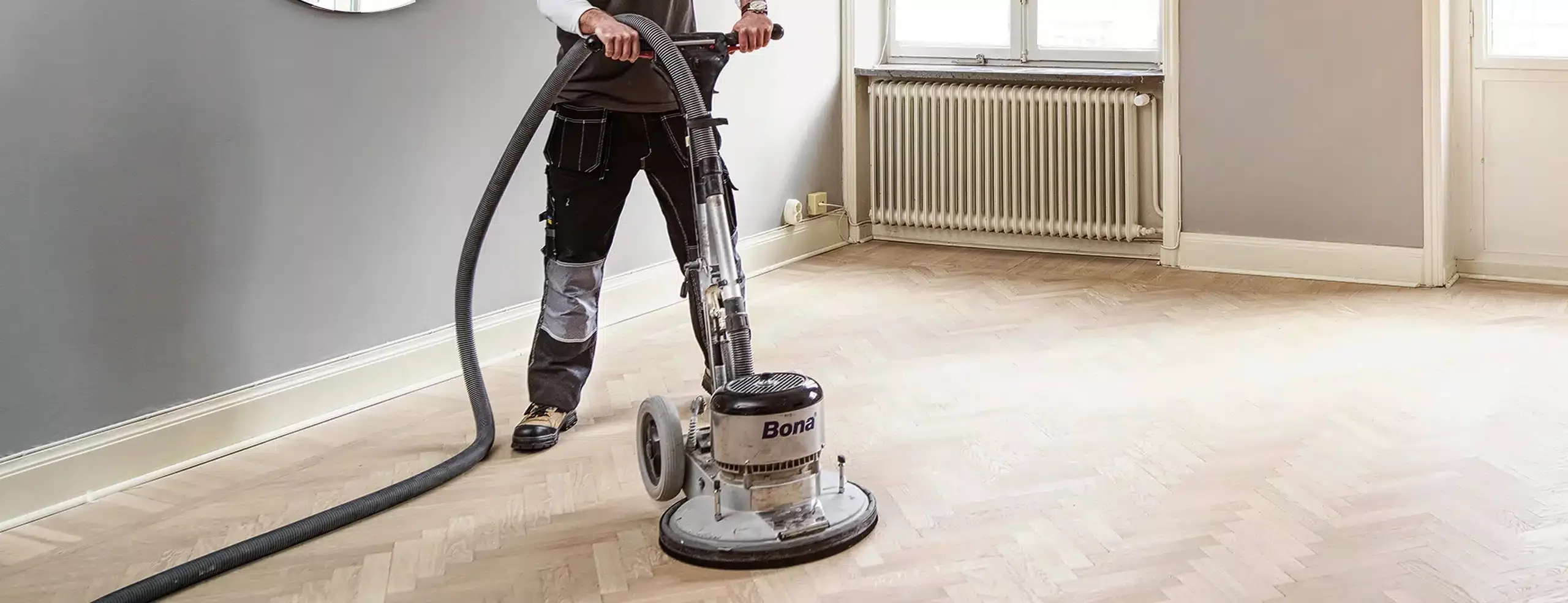
Solid wood keeps a reserve. A solid oak or fir board carries enough thickness to sand a problem out completely — which is why deep damage in an older North Bend floor is often repaired in place instead of replaced.
Solid hardwood is the one floor with margin built in. Where an early prefinished engineered plank has a millimeter or two of real wood on top, the nineties red oak strip through Forster Woods and Maloney Grove still has thickness to give, and even the mill-era fir near the 1889 plat downtown sometimes does. How much is left depends on who sanded it before you, so we pull a floor register and look at what sits above the tongue — then ask whether the damage goes deeper than the finish at all, because a surprising amount of it does not.
Thirty-five percent of North Bend homes date to the 1990s and another eighteen percent predate 1970, which puts most of this town squarely in the decades when fasteners start letting go.
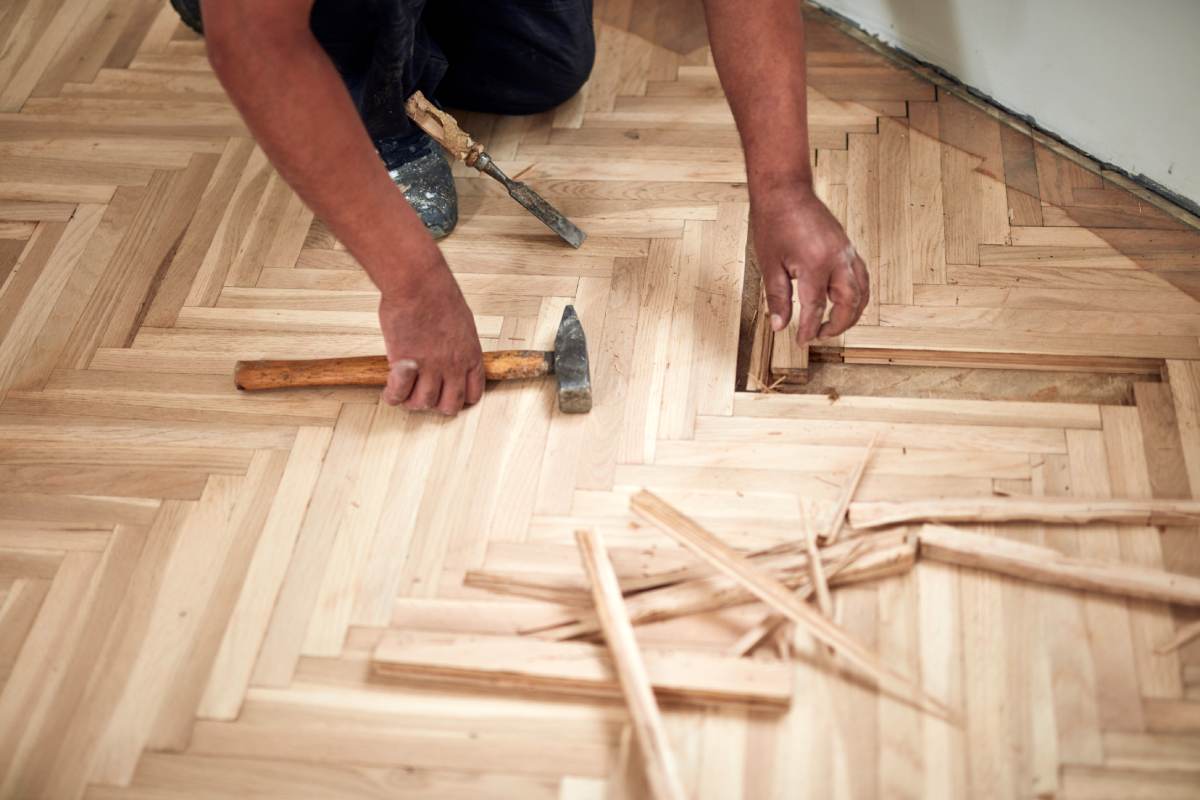
The fix starts under the boards. Loose pieces come up, the substrate gets fastened flat, and only then does the surface go back together.
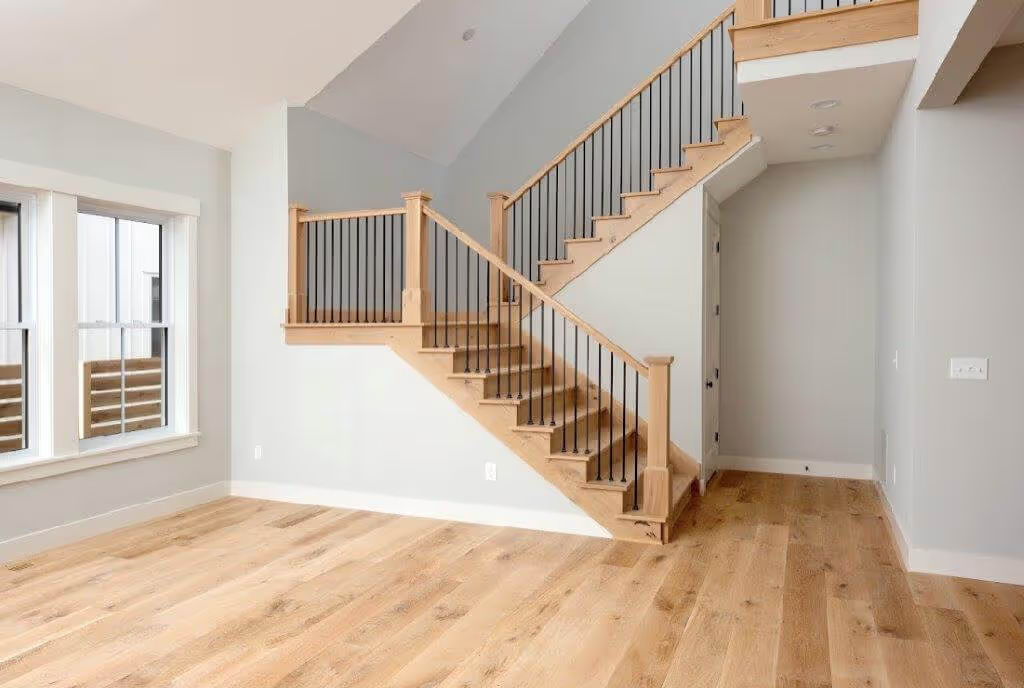
Stairs take the traffic of a hallway on a tenth of the wood. Treads, nosings and thresholds wear out years before the rooms around them — and they can be repaired one piece at a time.
Every trip back down from Mount Si, every school run, every wet dog coming in off the trail lands on the same few square feet of wood. In a two-story nineties house the staircase is the busiest floor in the building, and the nosing on each tread takes the full strike of every step — with trail grit doing the work of sandpaper. These are the repairs people put up with for years because they assume the whole staircase has to come apart. It does not.
Photograph the damage on your phone — a close-up of the worst spot, one from a few feet back, and one of the whole room. One of our estimators looks at every photo personally and emails you a written price the same business day. No visit, no sales call, no obligation.