1,000+ Floors Installed & Restored Across Washington
Searching for floor repair near me in Seattle? Damaged boards replaced, scratches and pet stains erased, lifting planks fixed — without replacing your whole floor. Call (425) 595-1079 for a free in-home estimate anywhere in Seattle.
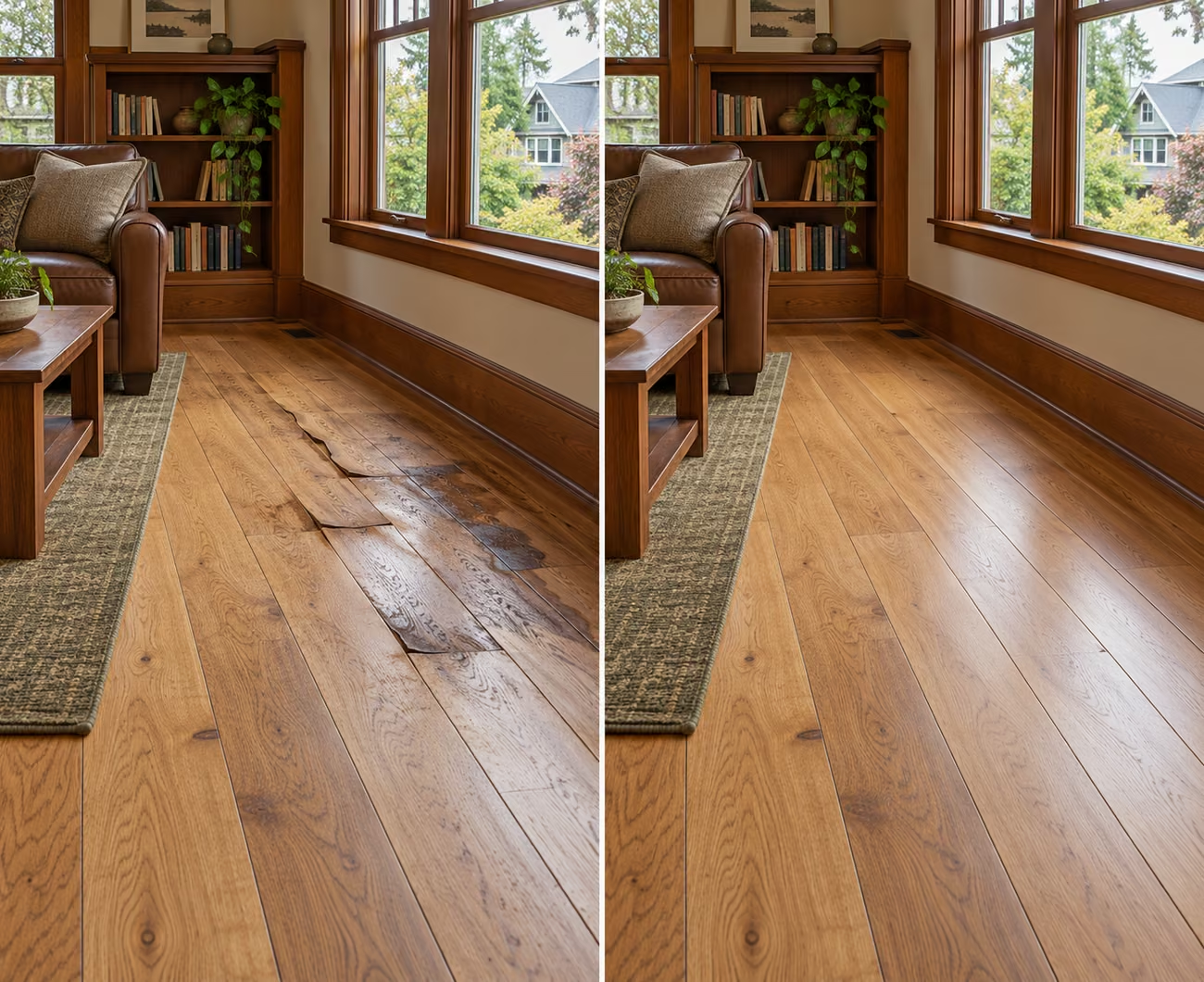





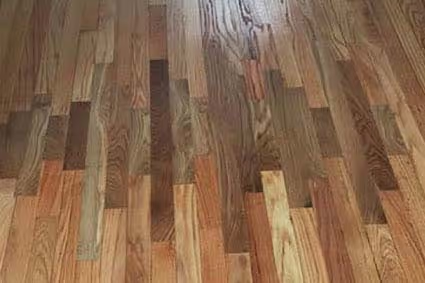
What a bad repair looks like. Wrong species, wrong grain, wrong color — patched by someone who didn't match the wood. You see it from the doorway, permanently.
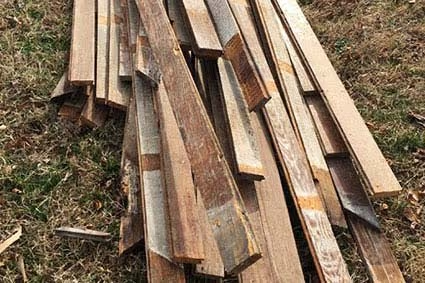
Salvaged 100-year-old pine. For pre-war Seattle floors we source reclaimed boards of the same era, so the repair reads as part of the original floor instead of a replacement.
Board & Plank Replacement · Seattle, WA · Since 2013
Anyone can pull a damaged board and screw a new one down. The difference between a repair you notice every day and one you forget about is entirely in the matching — species, grain, board width, thickness, stain and sheen. It's the part most handymen skip, and it's the part we won't.
Three different materials, three different repair methods — and one rule that covers all of them: fix what's damaged, leave the rest of your floor alone. Here's what comes up most in Seattle homes.
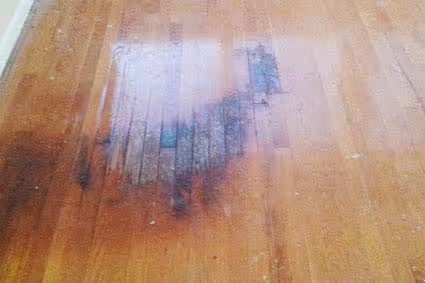
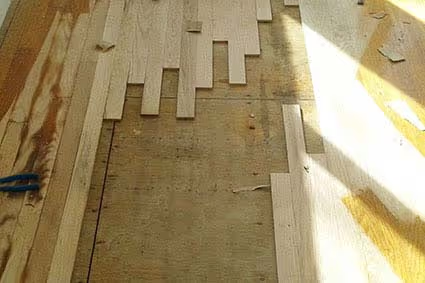
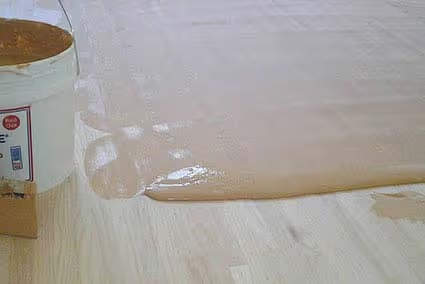
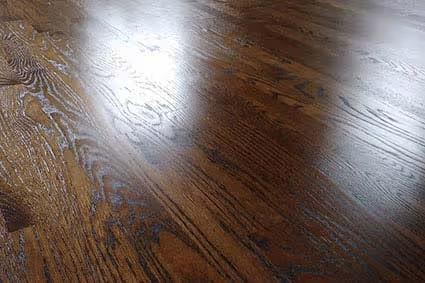
Pet urine and water rings soak through the finish into the wood itself, which is why cleaning never removes them. This is the actual sequence we run, photographed on our own jobs.
 1
1Dark pet stains and water marks that have gone through the finish and into the grain. Before quoting we probe the boards and take a moisture reading underneath — covering damp wood is how a repair fails a season later.
 2
2Stained boards are cut and lifted out one at a time, leaving the surrounding floor untouched. If moisture got underneath, that area is dried out before anything new goes down.
 3
3Matching boards go in, then seams, nail holes and hairline gaps are packed with filler tinted to your wood. The area is sanded flat with the floor around it — no ridge or dip where new meets old.
 4
4Stain is mixed and tested on your own floor, then the repaired area is coated to match the surrounding sheen. Done right, you shouldn't be able to point to where the stain used to be.
Most pet-stain and water-damage repairs are finished in 1–2 days.
Two different jobs at two very different prices. Here is how to tell which one your floor actually needs — before anyone quotes you.
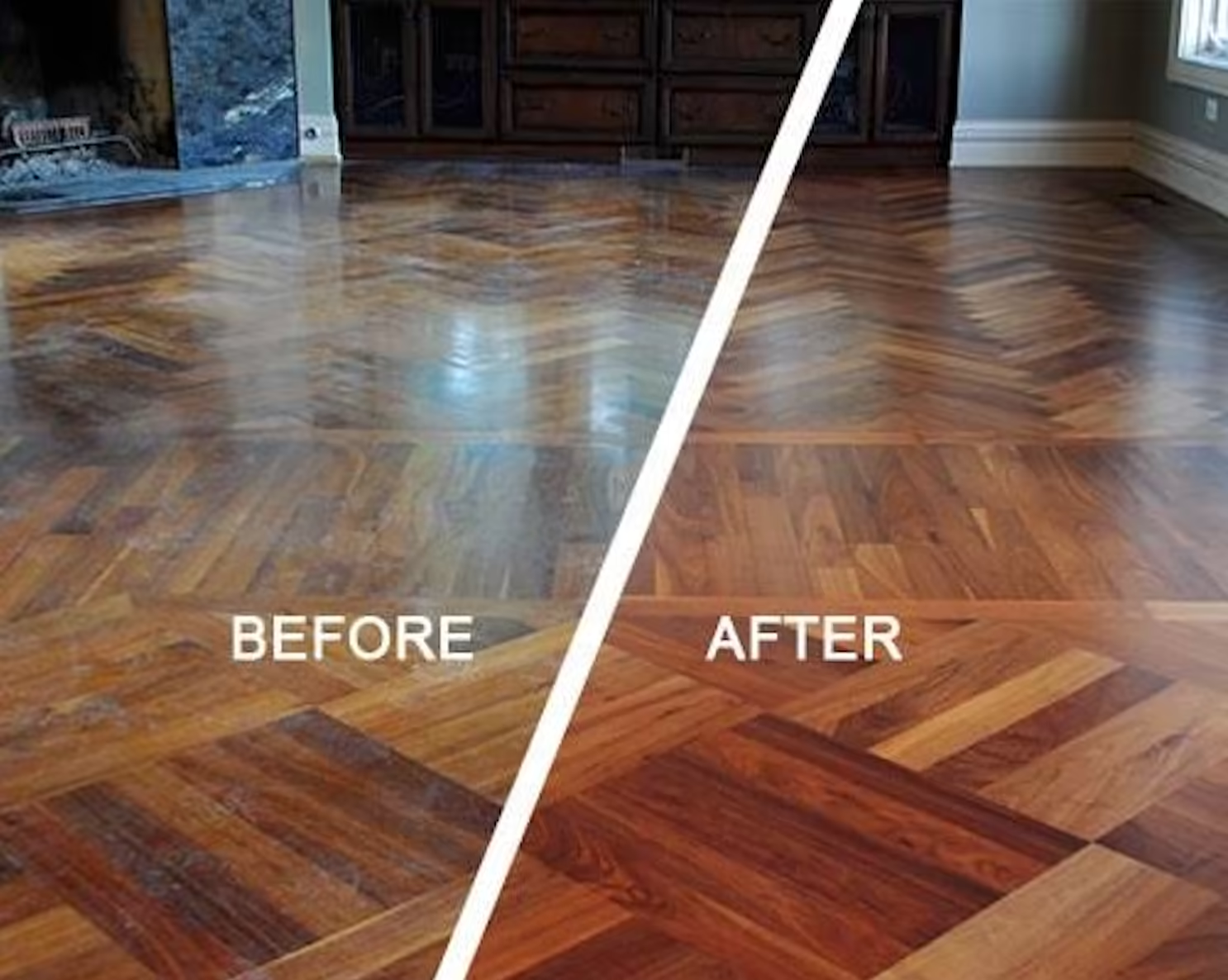
Typically $200–$1,000 · most finished in 1–2 days
Board replacement is done first, so the whole floor is finished together
Still not sure? Send us a few photos of the floor and we will tell you which one you need, even when it is the cheaper answer.
Floor Repair Questions
Straight answers to what Seattle homeowners ask us before booking a repair.
Or call (425) 595-1079 · More on our floor repair services
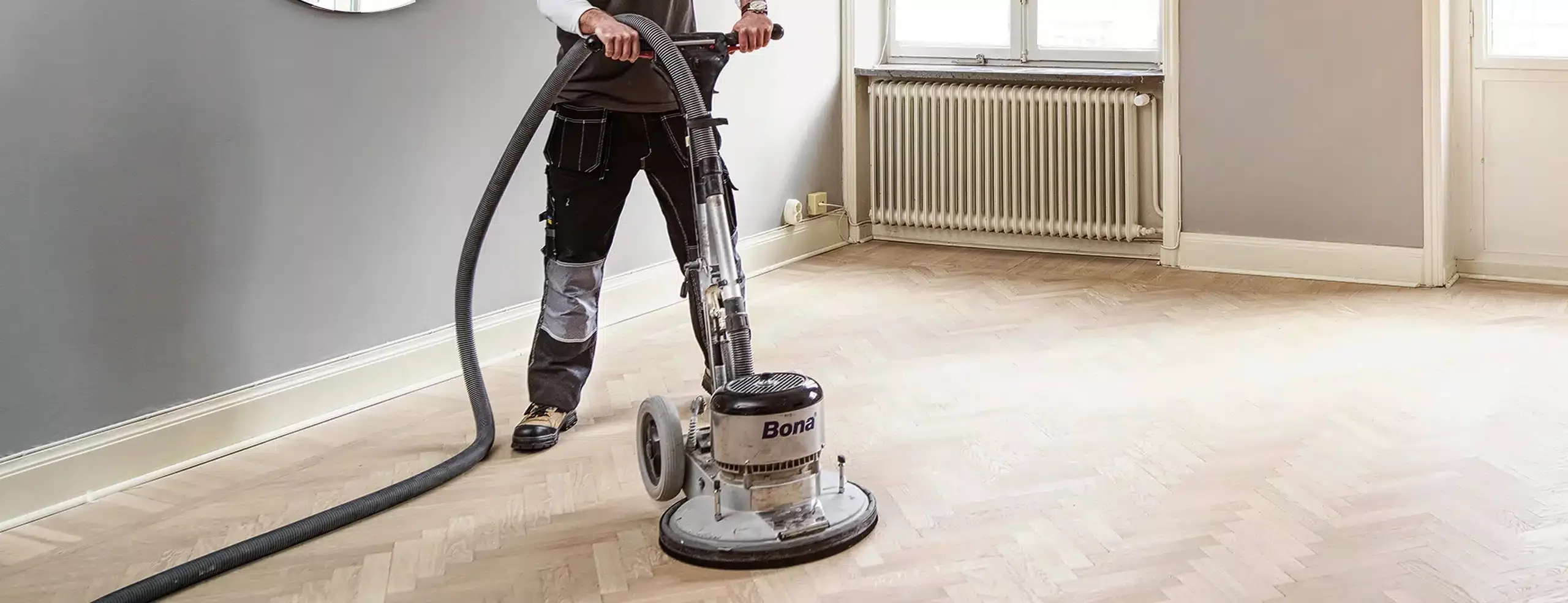
Solid wood keeps a reserve. A solid oak or fir board carries enough thickness to sand a problem out completely — which is why deep damage in an older Seattle floor is often repaired in place instead of replaced.
Solid hardwood is the one floor with margin built in. Where an engineered plank in a South Lake Union condo has a millimeter or two of real wood on top, the fir in a Ballard bungalow or the narrow oak in a 1940s Beacon Hill box can give up a full pass of sanding and still have decades left. So before we quote a board swap, we ask whether the damage actually goes deeper than the finish — because a surprising amount of it does not.
When a floor develops a soft spot or a gap, the boards you see are rarely the ones at fault. The problem lives underneath — a fastener that has let go of its joist, a subfloor panel rubbing its neighbor, or framing that has dried and shrunk a hair since the house went up. Seattle gives us both ends of that: Craftsman bungalows and 1920s to 1940s boxes in Wallingford and Green Lake carrying a century of movement, and newer townhome framing barely done settling. We chase the problem to its source instead of patching the symptom.
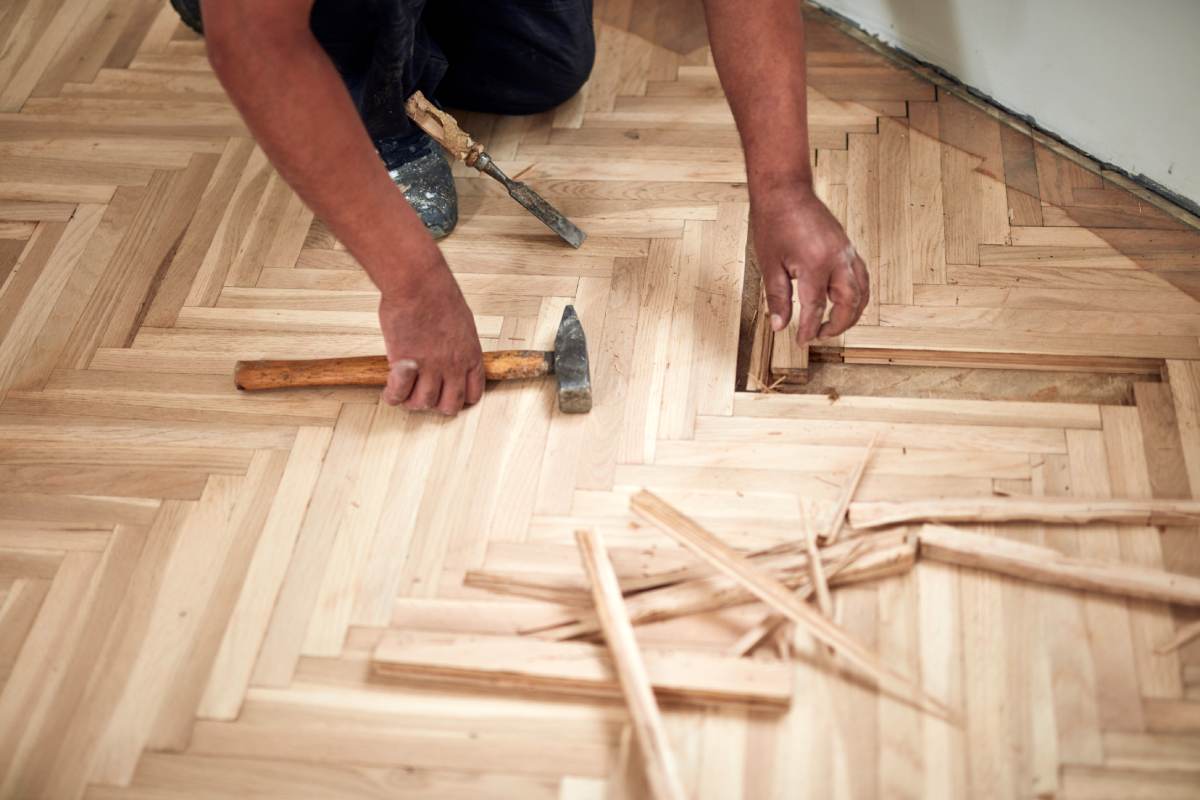
The fix starts under the boards. Loose pieces come up, the substrate gets fastened flat, and only then does the surface go back together.
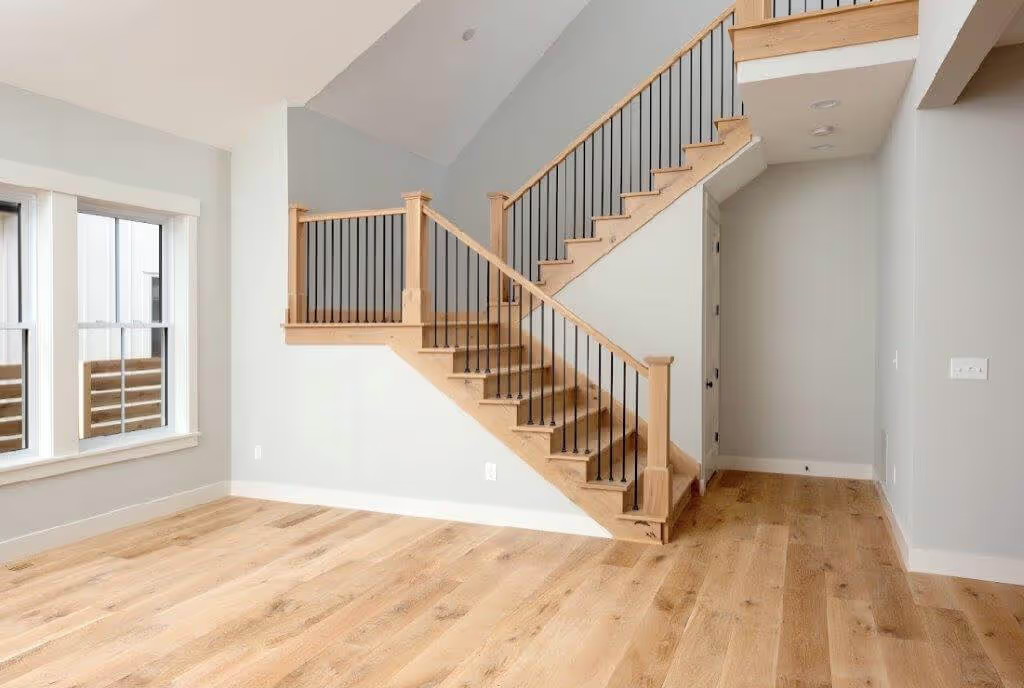
Stairs take the traffic of a hallway on a tenth of the wood. Treads, nosings and thresholds wear out years before the rooms around them — and they can be repaired one piece at a time.
Every wet commute back through the same front door, every school run, every dog coming home from Green Lake lands on the same few square feet of wood. In a two-story Ballard bungalow or a Capitol Hill townhome the staircase is the busiest floor in the house, and the nosing on each tread takes the full strike of every step — which is why Seattle nosings are so often sanded thin while the treads beside them still look fine. These are the repairs people put up with for years because they assume the whole staircase has to come apart. It does not.
Photograph the damage on your phone — a close-up of the worst spot, one from a few feet back, and one of the whole room. One of our estimators looks at every photo personally and emails you a written price the same business day. No visit, no sales call, no obligation.