1,000+ Floors Installed & Restored Across Washington
Searching for floor repair near me on Mercer Island? We repair hardwood, vinyl plank and laminate in Mercer Island homes, from the flat grid through East Seattle and First Hill to the private lanes dropping off East Mercer Way. Most of what we do is a board here and a section there, matched to what is already down, instead of tearing out a whole floor that is still good. Call (425) 595-1079 for a free estimate.




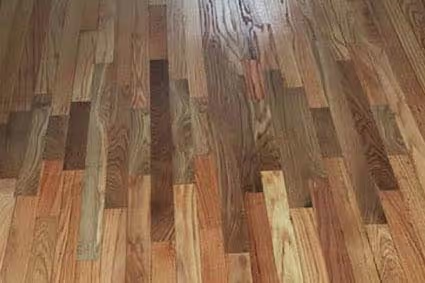
This is what we are hired to avoid. New boards dropped in without matching species or grain direction. It never blends in later; it just stays the first thing you notice.
The floors we open on Mercer Island come out of a short list of products, because the houses behind them mostly went in during the postwar decades. Oak strip, parquet block and engineered plank each carry a shallow ceiling above the tongue or the core, and on a floor that has been sanded and recoated a few times since it went down, part of that ceiling is already gone. So the useful question here is rarely how much more we can take off the top. It is how cleanly a new board can be worked into a run that is already down.
Most hardwood on the island went down between the 1950s and the 1970s, which usually means narrow white oak strip on the main level and parquet in dens, hallways and rec rooms. We cut out the damaged boards or tiles, set new ones into the same run, and match species, grain, width and sheen so the finished area reads as floor rather than as a patch. When a run is unusual, we pull matching stock from a closet or from under a built-in and put the odd board where nobody walks.
Houses stepped into the slopes off East and West Mercer Way have lower levels sitting partly below grade, and that is where floating vinyl plank gives up first. We find the cause before we touch a plank: an expansion gap closed up tight at the walls, heat load from a wall of south-facing glass, a high spot under the run, or a moisture reading telling us the slab is still giving off water. Then we lift the affected area, swap the damaged planks and relay it with the gap it should have had.
Mercer Island does not flood the way the river towns do, because Lake Washington is held at a steady level at the Ballard Locks. What we get called for instead is a dishwasher that ran all night, an ice line behind the refrigerator, a laundry pan that overflowed, and lake water walked in through a slider all summer. Cupped and blackened boards come out, we take moisture readings underneath and let the area dry, then replace, sand that section and blend the stain and finish into the floor around it.
Sand off the beach, grit tracked in from the trails at Pioneer Park and Luther Burbank, dog nails, and furniture dragged during a remodel. Light scratches come out with a screen and recoat of the affected area. Deep gouges are filled, or the board is swapped if the damage runs through the wear layer. Where a hallway or the top of a stair has worn through to bare wood, we treat that section instead of sanding a whole floor that does not need it.
Laminate chips along the edges and swells at the joints once water gets under the wear layer, and a lot of the island's laminate is in lower levels, rentals and older condo units. We take out the failed planks where the locking joint lets us and work the replacements back into the run. We also reset thresholds, transition strips and stair nosings left loose, proud or mismatched when a kitchen goes in or an addition ties two eras of flooring together, which is routine in houses remodeled two or three times since the 1960s.
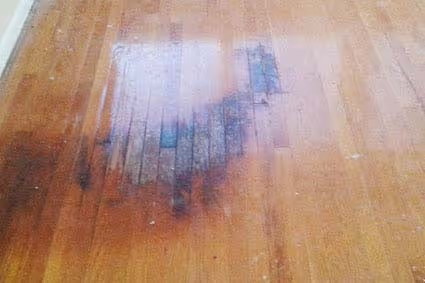
Oak that went down in the postwar years has had decades to collect recoats, and the film is always thinnest where a dog sleeps or a water bowl sits. Parquet gives liquid an easier road down still, with a joint every few inches across the whole room. Once it reaches the wood the stain is in the grain rather than on top of it, and cleaning will not bring that back.
 1
1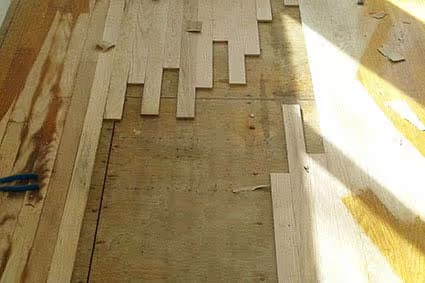 2
2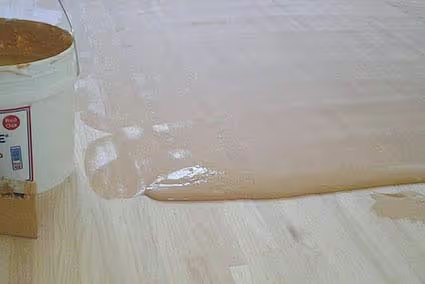 3
3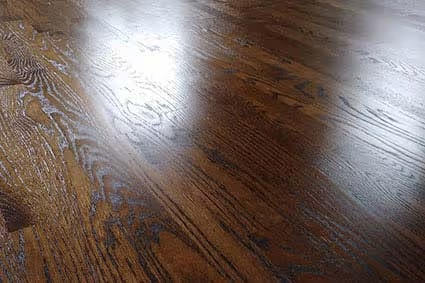 4
4Most pet-stain and water-damage repairs are finished in 1–2 days.
A repair is the right call when the damage is local and the rest of the floor still has finish on it, which covers most of what we see in the ramblers and split-entries. A refinish only makes sense if the oak still has thickness left above the tongue, and on a main level that has been sanded two or three times since it went in, that is a real question rather than a formality. Parquet and engineered plank narrow the choice further, because a block floor sands unevenly with the grain running both directions and a thin wear layer gets one pass at most.
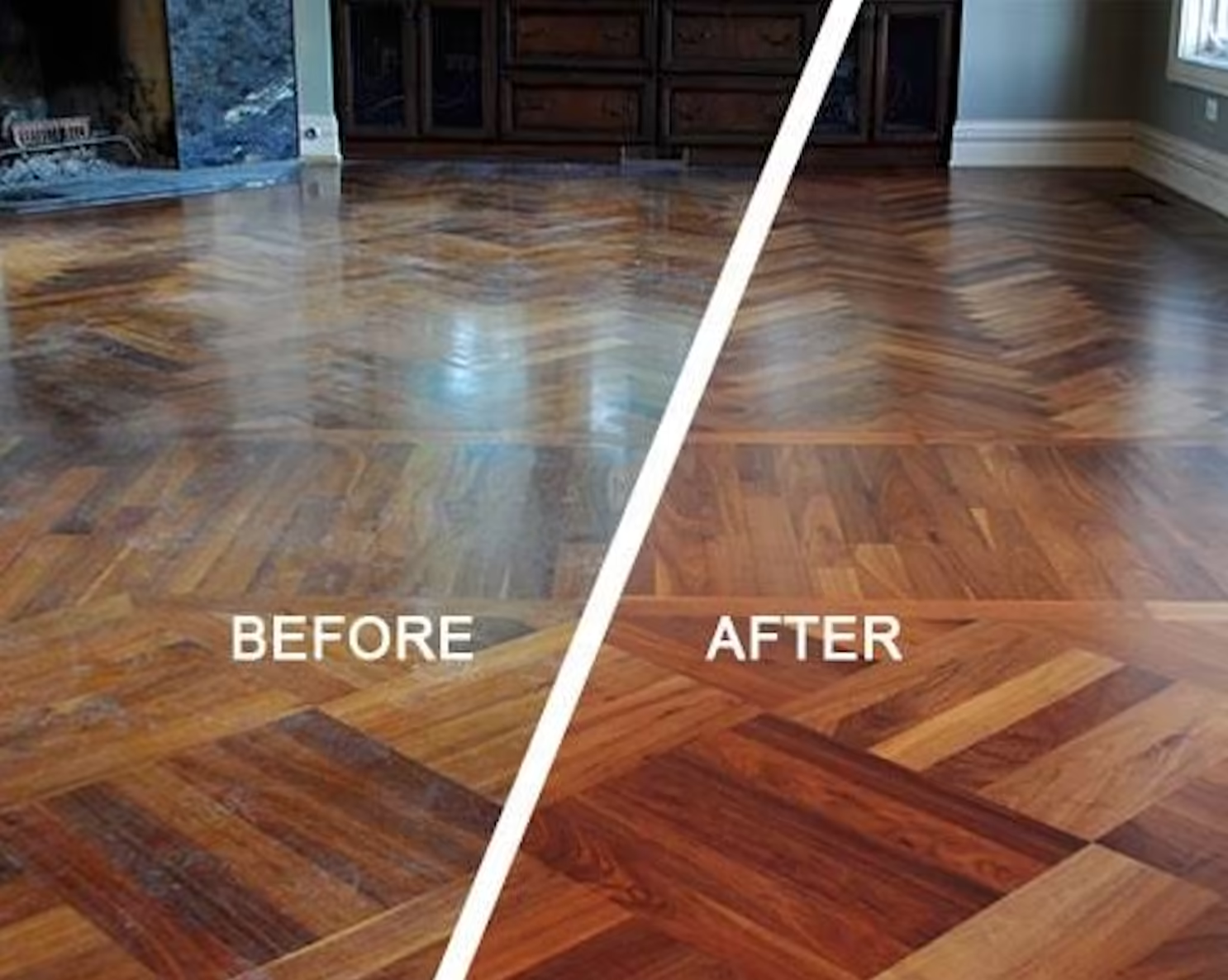
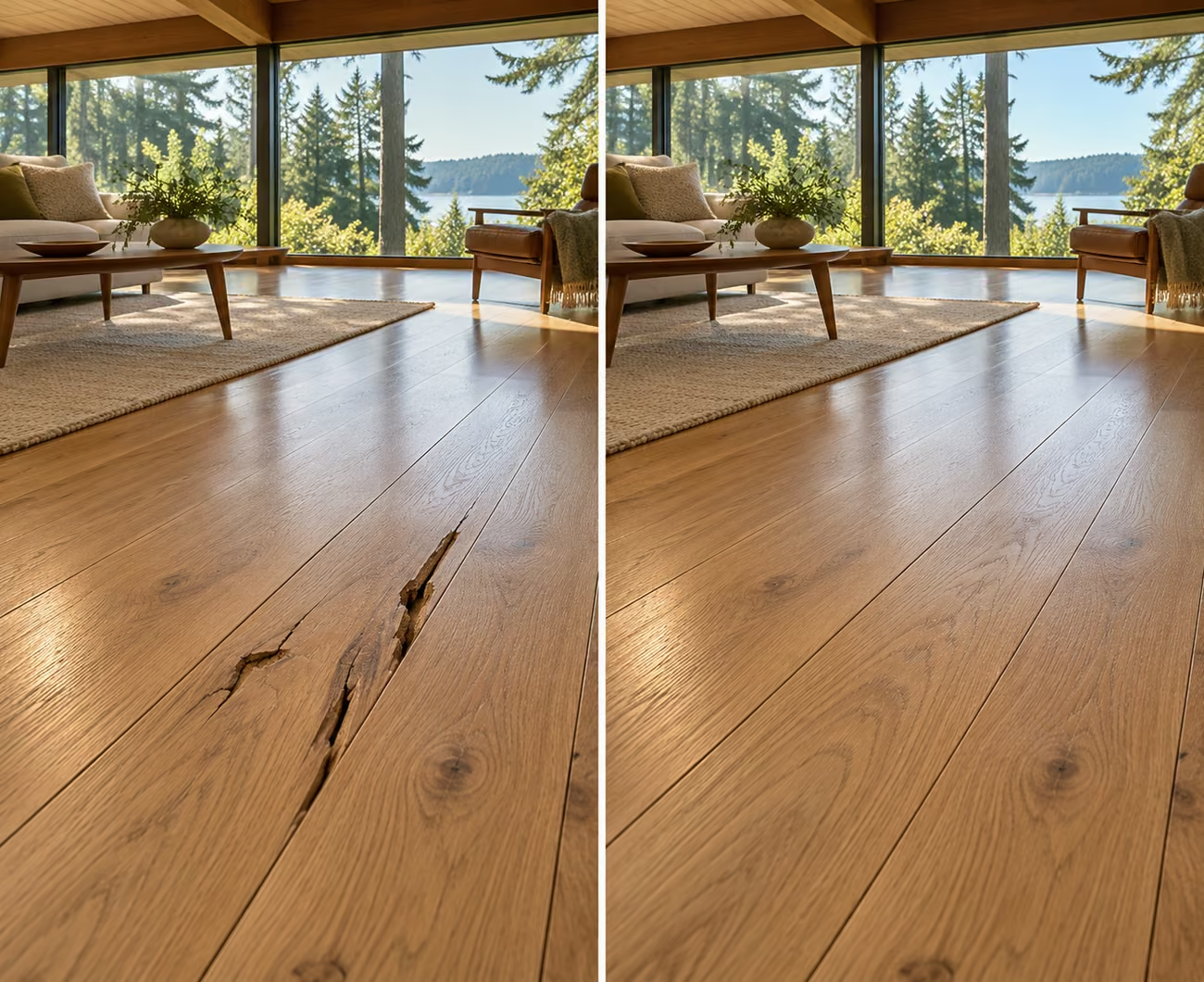
The same floor, split down the middle. Left: the finish is cloudy and worn through in the traffic path — no amount of patching fixes that. Right: sanded back and refinished.
Typically $200–$1,000 · most finished in 1–2 days
Board replacement is done first, so the whole floor is finished together
The bead test. Drip a little water onto the tired-looking area. Beading means the coating is intact and a spot repair will hold. If it darkens and soaks in, the finish has worn through and the room wants refinishing.
The furniture test. Slide a rug or a side table aside. A clear color step between the covered wood and the exposed wood is sun fade, and replacing individual boards there only adds a third shade.
Still not sure? Send us a few photos of the floor and we will tell you which one you need, even when it is the cheaper answer.
About 1,200 people lived out here before the Lacey V. Murrow floating bridge opened in July 1940, and a good share of what stood on the island was summer cabins. After the bridge landed, the place filled in fast: roughly 4,500 residents by 1950 and about 12,000 by 1959. The city's own comprehensive plan puts the bulk of the housing in the 1950s through the 1970s, with 2,783 units standing before 1959 and another 3,966 added between 1960 and 1979. That compressed build-out is why our work here looks nothing like our work in Seattle. Seattle's older neighborhoods are full of pre-1920 old-growth fir. Mercer Island mostly skipped that era and went straight to postwar oak strip, 1960s and 70s parquet, and the wide-plank and open-plan floors that came with Pacific Northwest modern houses by architects like Paul Hayden Kirk and Wendell Lovett.
The island also has two completely different street patterns, and they hand us two completely different repair jobs. The older grid sits on the flattest ground, through East Seattle and First Hill, on the blocks north and south of I-90, and along Island Crest Way, on lots of roughly 8,400 to 9,600 square feet. Those are the ramblers and split-entries: oak on the main level, something newer downstairs. The east and west shores are the opposite, with lots of 15,000 square feet and up on narrow curving roads, many of them private, cut into steep slopes with ravines and small watercourses running between them. Those houses step down the hill, and the lower level is partly below grade. That lower level is where most of the lifting vinyl plank on this island lives.
Waterfront is its own category. Along Faben Point, Groveland, Brook Bay and the Fruitland and El Dorado stretch of the north shore, homes with a dock and a bulkhead take lake water in through the same door every summer, and beach grit does more to a finish in three months than a year of ordinary use. The damage is real but it is local, which is exactly the kind of thing a spot repair is for.
The north end is a different animal again. About a quarter of the island's housing is multifamily, most of it in and around Town Center plus the two large complexes straddling I-90, including Shorewood, first built out from 1949 and still the island's largest apartment community. Those floors are usually engineered wood or vinyl plank over concrete, with building rules about underlayment and noise, so a full replacement turns into a project nobody wants. Replacing a few planks in place does not. With the 2 Line station opening just north of Town Center in March 2026, that end of the island keeps getting denser.
One last thing shapes the work here: trees. Mercer Island carries close to 48 percent canopy cover and is one of the most forested cities in the region. Shaded entries and north-facing doors stay damp longer than they would on an open Bellevue lot, and that is precisely where entry boards cup and where the finish dulls first.
Usually, yes. Solid strip oak has wear layer above the tongue, and three-quarter-inch flooring from that era typically has room left for spot work even after two or three sandings. We measure the remaining thickness at a heat register or a doorway before we quote anything. If the floor is genuinely too thin to sand again, we can still replace damaged boards and finish those boards to match, which keeps the rest of the floor out of it.
Parquet is one of the more common repairs we do here, and it almost never needs a matching product off a shelf. We salvage tiles from inside a closet, from under a built-in, or from a section that is being covered anyway, and we set those into the damaged area. Where salvage is not available, we source reclaimed parquet of the same block pattern and wood, then sand and finish the repaired area so the seam disappears.
It usually works better than a replacement does. A spot repair opens a small area, so the existing underlayment stays intact everywhere we are not working, which matters when the building has sound requirements written into the rules. We keep to posted work hours, use the service elevator and parking the building assigns, and keep the job small enough that it does not need a full HOA review the way a whole-floor tear-out often does. Check your own association's requirements and we will work to them.
In most cases, yes. Vinyl plank in a below-grade lower level moves for a reason, and it is usually one of three: the expansion gap at the perimeter was closed up during installation or trapped by trim, a wall of glass has been heating one run all afternoon, or the concrete under it is still releasing moisture. We take a moisture reading, check what the planks are sitting on, then lift only the affected run, replace anything damaged and relay it with the correct gap. The rest of the floor stays where it is.
No. A repair crew for this kind of work is two people with hand tools and a vacuum, not a truck full of equipment and a dumpster in the street. We hand-carry material down the stairs or the driveway, park wherever the lane allows, and clean up behind us the same day. Tell us about the access when you call and we will plan around it.
Most localized repairs run $200 to $1,000 and are done in one to two days. Cost depends on how many boards come out, how hard the match is, and whether the area needs sanding and refinishing after the replacement. Estimates are free, in person or from photos, and we tell you up front if what you are describing is really a refinishing job rather than a repair, because paying repair prices twice helps nobody.
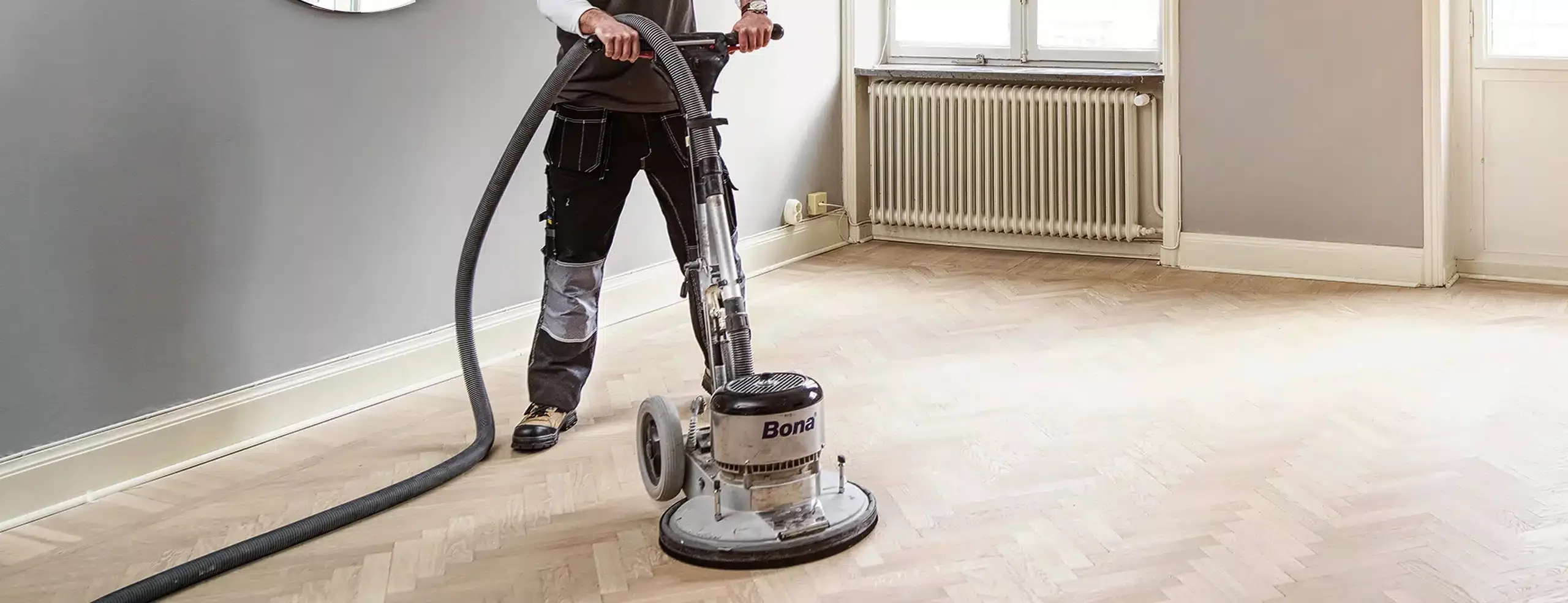
Solid wood keeps a reserve. A solid oak board carries enough thickness to sand a problem out completely — which is why deep damage in a postwar Mercer Island floor is often repaired in place instead of replaced.
Solid hardwood is the one floor with margin built in. Where an engineered plank has a millimeter or two of real wood on top, the narrow white oak strip in a rambler off Island Crest Way or a split-entry in East Seattle can give up a pass of sanding and still have decades left. The honest caveat on this island is that a lot of that oak has already been sanded two or three times since it went down, so we measure what is left above the tongue at a heat register before we promise anything. Then we ask whether the damage actually goes deeper than the finish — because a surprising amount of it does not.
The trouble lives underneath — a fastener that has let go of its joist or framing that has dried and shrunk a hair since the house went up. Nearly 2,800 homes here were standing before 1959 and almost 4,000 more went in between 1960 and 1979, so most island floors have had sixty or seventy years for that to happen.
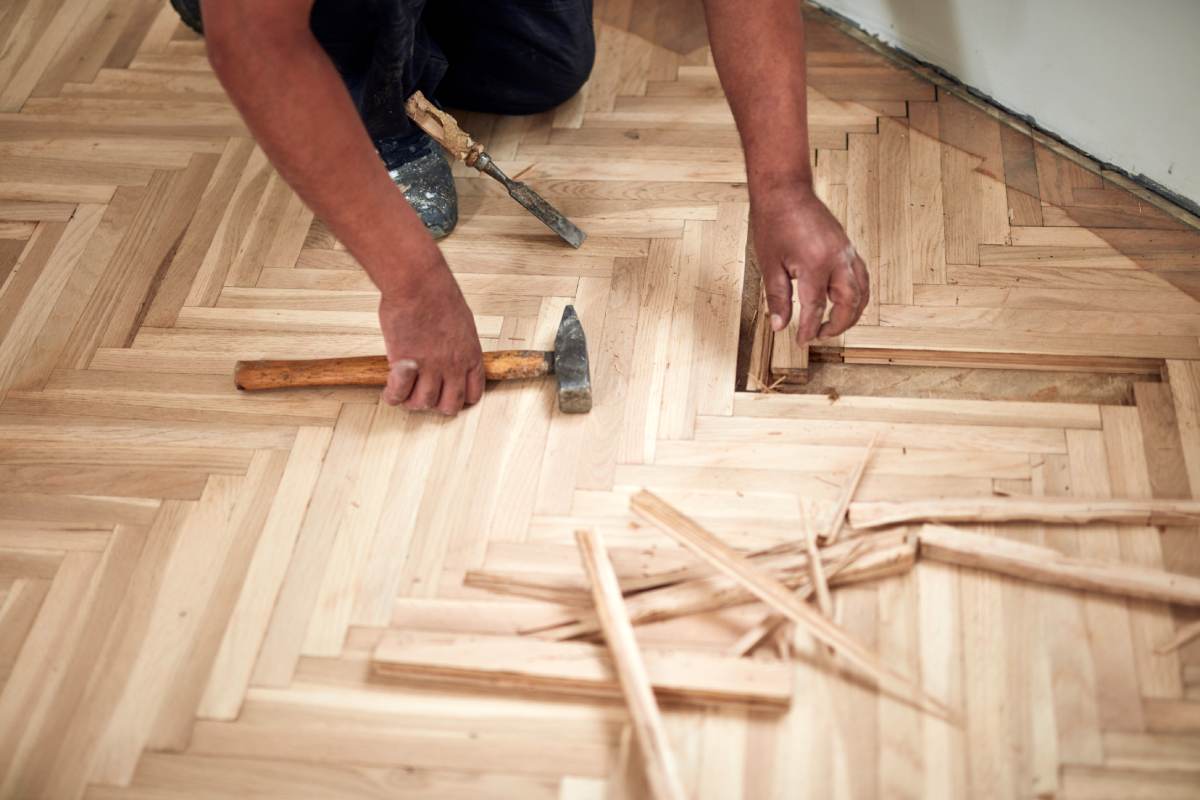
The fix starts under the boards. Loose pieces come up, the substrate gets fastened flat, and only then does the surface go back together.
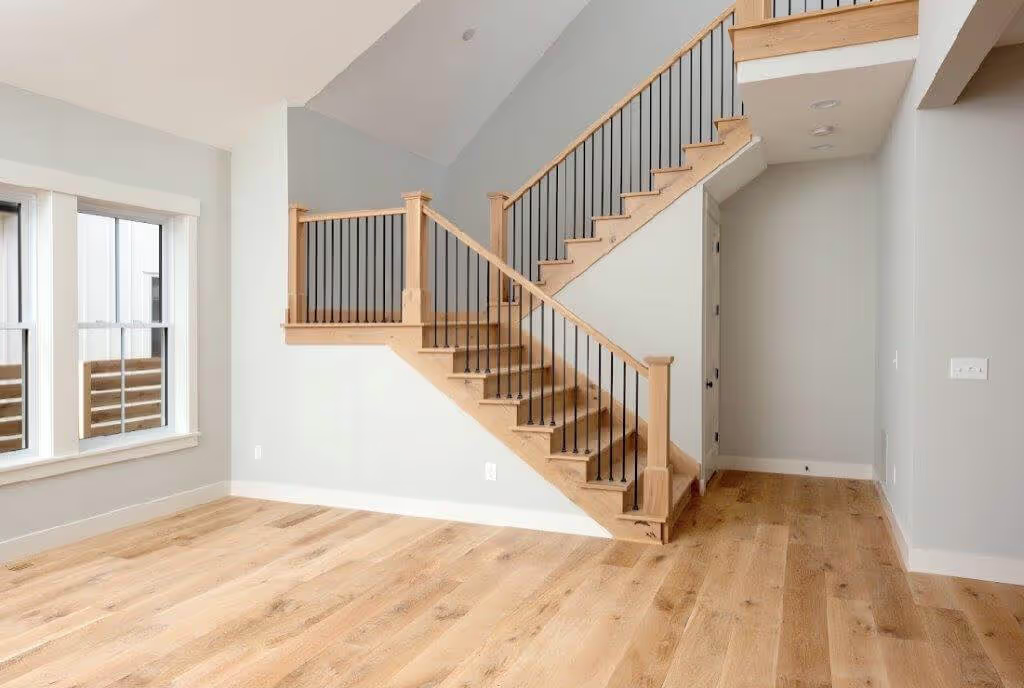
Stairs take the traffic of a hallway on a tenth of the wood. Treads, nosings and thresholds wear out years before the rooms around them — and they can be repaired one piece at a time.
Every morning run for the I-90 on-ramp, every trip down to the dock, every wet dog coming back from the trails at Pioneer Park lands on the same few square feet of wood. On the shore lanes the houses step down the hill, so a stair run is not an upstairs detail here — it is the spine of the house, and the nosing on each tread takes the full strike of every step. In a split-entry on the grid it is the first thing anyone sees through the front door. These are the repairs people put up with for years because they assume the whole staircase has to come apart. It does not.
Photograph the damage on your phone — a close-up of the worst spot, one from a few feet back, and one of the whole room. One of our estimators looks at every photo personally and emails you a written price the same business day. No visit, no sales call, no obligation.