1,000+ Floors Installed & Restored Across Washington
Searching for floor repair near me in Cottage Lake? Cracked oak, scratched traffic lanes, pet stains and vinyl planks that have crept apart get fixed in place instead of torn out. We cover the whole Cottage Lake spread — the lakefront lots off NE Woodinville-Duvall Road, Bear Creek Country Club and Brook Trails Estates, and the five-acre parcels running east toward West Snoqualmie Valley Road. Call (425) 595-1079 for a free in-home estimate.




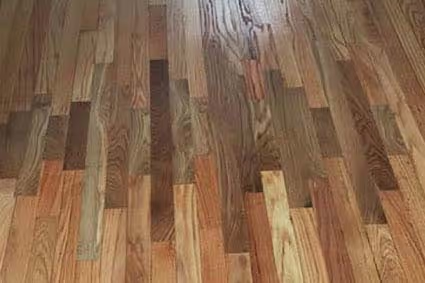
A patch that announces itself. The wood is close but not right, and the grain runs the wrong way. Matching properly is most of the skill in a board repair.
What makes a repair demanding out here is not the age of the floor, it is the size of the house. Cottage Lake has more four- and five-bedroom homes than 95 percent of neighborhoods in the country, and in a house that size one oak floor usually carries through the entry, the hall and two or three rooms past it. All of that is a single continuous surface for the eye to measure a repair against. So the job gets decided at the cut, in board width, grain direction and where the new pieces stop against the old ones, long before any stain comes out of the can.
Nobody out here walks in off a sidewalk. Grit arrives from gravel drives, garden beds and wet trails, and it does its damage in a narrow band — hall to kitchen, back door to laundry, the strip in front of the sink. Where the finish has thinned but the wood under it is still sound, we abrade and recoat the worn lane and blend it into the sheen you already have. Where boards are cut through past the point a new coat will hide, those come out and get replaced before anything else happens.
Most houses in the Cottage Lake area went up between 1970 and 1999, and wood floors from those decades are typically oak strip, with parquet turning up in an entry or a den. Forty years on, the damage is rarely everywhere: one split board under a chair leg, a run of cracked pieces where something heavy sat, a gouged plank at a doorway. We identify the species and cut, source stock that matches width and grain, weave the new boards into the existing run rather than dropping in a square patch, then stain and finish so the seam stops reading. If a floor genuinely cannot be matched, we say so before we lift anything.
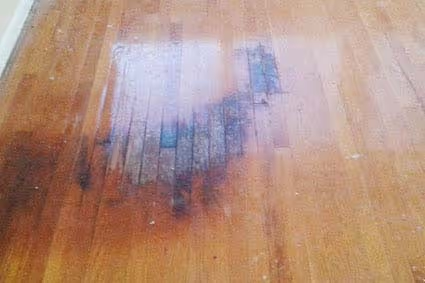
Big lots, dogs, and a door that opens onto wet ground put most of the water damage we see here within ten feet of an exterior threshold or under an appliance. Dark rings and black urine marks tell us how deep it went — some sand out, some have soaked clean through the board. We take moisture readings before touching anything, pull only the boards that are actually ruined, dry the area, then fill, sand, stain and blend to the surrounding floor. Most of these are done in one to two days.
Cottage Lake sits in the Bear Creek drainage, with wetlands, big evergreens and lots that stay shaded and slow to dry. Wood floors in that setting take on moisture through the wet half of the year and give it back once the heat is running, which is why gaps open in January and close again by midsummer. We measure first and tell you which gaps will close on their own and which have become permanent. Permanent ones get filled with wood cut to fit, not a tube of putty. Cupped or crowned boards get flattened or replaced once the moisture reading has come back down.
Newer builds and post-2010 remodels around here run heavily to LVP and laminate, and those fail differently than wood. Vinyl plank lifts or peaks when it was pinned under a cabinet toe-kick, laid tight to a wall with no room to expand, or cooked by south-facing glass. Laminate swells at the seams where water sat. Both are repairable a plank at a time as long as the click profile and the color can still be matched, and we will tell you straight when a retired pattern makes that impossible. Doorway thresholds and transitions that have worked loose or split get replaced on the same visit.
A stain needs two things to line up: an opening in the finish, and liquid that sits long enough to find it. Both are ordinary here, where a dog is in and out all day and a shaded lot keeps a wet spot wet, so the mark that finally shows is usually older than the day you noticed it. Under a floating floor it is harder to place, because moisture travels along beneath LVP and laminate and surfaces as a lifted seam a few feet from where it went in, so we find the source before anything comes up.
 1
1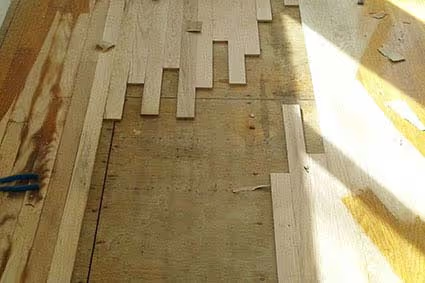 2
2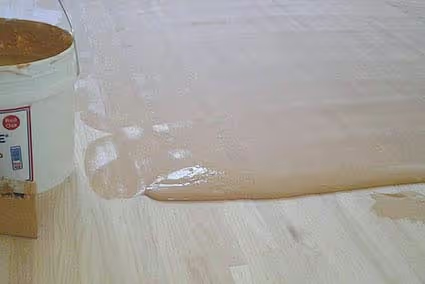 3
3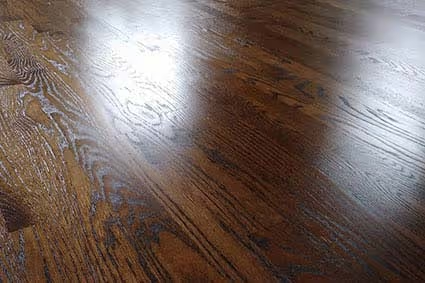 4
4Most pet-stain and water-damage repairs are finished in 1–2 days.
On solid oak from the seventies and eighties it comes down to two things: how much of the floor is genuinely bad, and how many times it has already been sanded. Three-quarter-inch strip oak usually has another sanding left in it, so a full refinish stays a real option here long after a handful of replaced boards would have done the job. Engineered plank from the nineties and click LVP never get that choice, since a veneer has only so much thickness to spend and LVP is not sanded at all, so those stay plank-for-plank repairs.
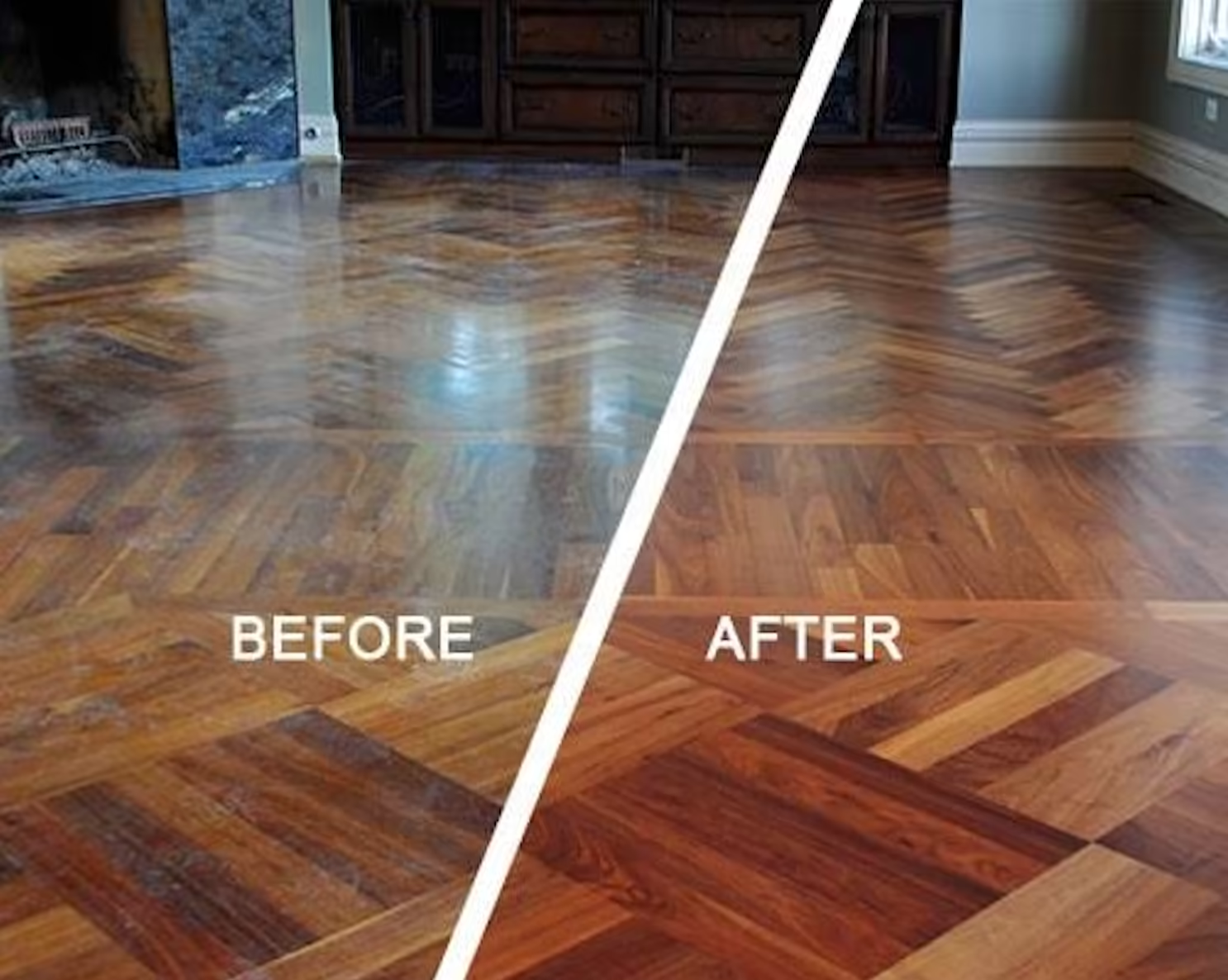
The same floor, split down the middle. Left: the finish is cloudy and worn through in the traffic path — no amount of patching fixes that. Right: sanded back and refinished.
Typically $200–$1,000 · most finished in 1–2 days
Board replacement is done first, so the whole floor is finished together
Water on the worn patch. If the drop sits up and beads, your finish still works and patching is sensible. If it sinks in and darkens the wood within a minute, that room needs sanding and refinishing, not a patch.
Look under the rug. Wood that is markedly darker beneath a rug than beside it has faded in the light. Fade runs across a whole zone, so swapping single boards there makes the mismatch worse, not better.
Still not sure? Send us a few photos of the floor and we will tell you which one you need, even when it is the cheaper answer.
Cottage Lake is a big, thinly settled square of King County — 22.8 square miles, about 22,900 people at the 2020 census, running from SR 202 on the west out to West Snoqualmie Valley Road on the east. That matters for floors, because almost nothing here is old in the Seattle sense. The Nielsen homestead of 1876 and Ezra Jurey's 1891 house on the south shore are landmarks, not a housing stock. What actually sits under people's furniture went down between 1970 and 1999, with a steady run of building since 2000. So we are hardly ever lifting vertical-grain old-growth fir out here. We are matching oak strip from the seventies and eighties, parquet in a den or entry, the first wave of engineered plank from the nineties, and LVP from the last fifteen years.
The 1980s show up in a particular way. Bear Creek Country Club, the gated golf neighborhood in 98077, went in as a Street of Dreams development in the early eighties — a little over two hundred homes on roughly third-acre lots — and those floors are now on their second or third finish. Brook Trails Estates, Serena Estates, Reintree and Aspenwood sit in the same age band. Past them, the RA-zoned acreage off Avondale Road NE and NE Woodinville-Duvall Road is five-acre-and-up country on private wells and septic, where the driveway is gravel and there is nothing paved between the car door and the house. Grit is the single most common thing that wears a Cottage Lake floor out, and it wears it out in lanes rather than evenly.
Then there is water. The area drains west and south to the Sammamish River, with Cottage Lake Creek feeding Bear Creek, which runs about twelve miles from Paradise Lake down to Marymoor. Evergreen canopy, wetlands and the creek corridor keep lots damp, and heavy rain has been enough to close NE 165th Street in the past. Homeowners feel that as seasonal movement — gaps that open over winter and shut by July — and as damage clustered in mudrooms, laundry rooms and the back rooms of houses where dogs and kids come in off soaked ground. Lakefront houses near Cottage Lake Park, the old Fragner resort King County bought in 1991, get the same thing from swim traffic every summer.
The last piece is who lives here. Roughly 88 percent of Cottage Lake homes are owner-occupied against under 9 percent rented, and the houses skew large — four and five bedrooms are ordinary, not exceptional. These are floors people have lived on for twenty and thirty years and fully intend to keep. That is a repair market, not a tear-out market.
Most repairs land between $200 and $1,000 and are finished in one to two days. What moves the number is how many boards come out, whether the material is still in production or has to be sourced, and how much finish blending it takes to make the patch stop showing. Acreage addresses east of Avondale Road are not priced any differently than the ones near the lake. You get the figure in writing before we start.
Usually, yes. Oak strip from that era is still made in the same widths, so the work is less about finding wood and more about color — a floor that has been down forty years has ambered, and new stock has not. We weave replacement boards into the existing run instead of setting in a square patch, then stain and adjust sheen to the floor around it. If yours is a parquet or an unusual plank width we cannot match, we will tell you before anything comes up.
It can be repaired, and the room rarely has to come out. The common failures — a lifted end, a peaked seam, a gouged plank — are a plank-swap job as long as the click profile and color can be matched. What matters more is why it moved. If it was pinned under a cabinet toe-kick, run tight to a wall with no expansion room, or sitting over a high spot, that gets sorted out as the planks go back down, or it lifts again in the same place next summer.
Swollen laminate edges do not shrink back — the core took on water and stayed that way. The fix is replacing the affected planks and dealing with whatever let the water sit, which out here is usually a threshold that no longer seals or a boot mat that stays wet from October to May. The catch with laminate is pattern availability: manufacturers retire decors quickly, so we check whether yours can still be bought before quoting a swap.
Leave the seasonal ones alone. Wood on a shaded, damp lot in the Bear Creek drainage takes on moisture through the wet months and gives it back once the house is being heated, and a gap that closes on its own is just wood behaving like wood. We take moisture readings and tell you which gaps are seasonal and which have gone permanent. The permanent ones get filled with wood slivers cut to fit so they hold through the next cycle, rather than putty that cracks out by spring.
Both. We cover the lakefront lots and the neighborhoods off NE Woodinville-Duvall Road, Bear Creek Country Club and Brook Trails Estates, and the five-acre parcels running east toward West Snoqualmie Valley Road and north toward Paradise Lake Road. Long gravel driveways and gated entries are routine for us. We are based at 13343 NE Bel Red Rd in Bellevue and work all of King and Snohomish County.
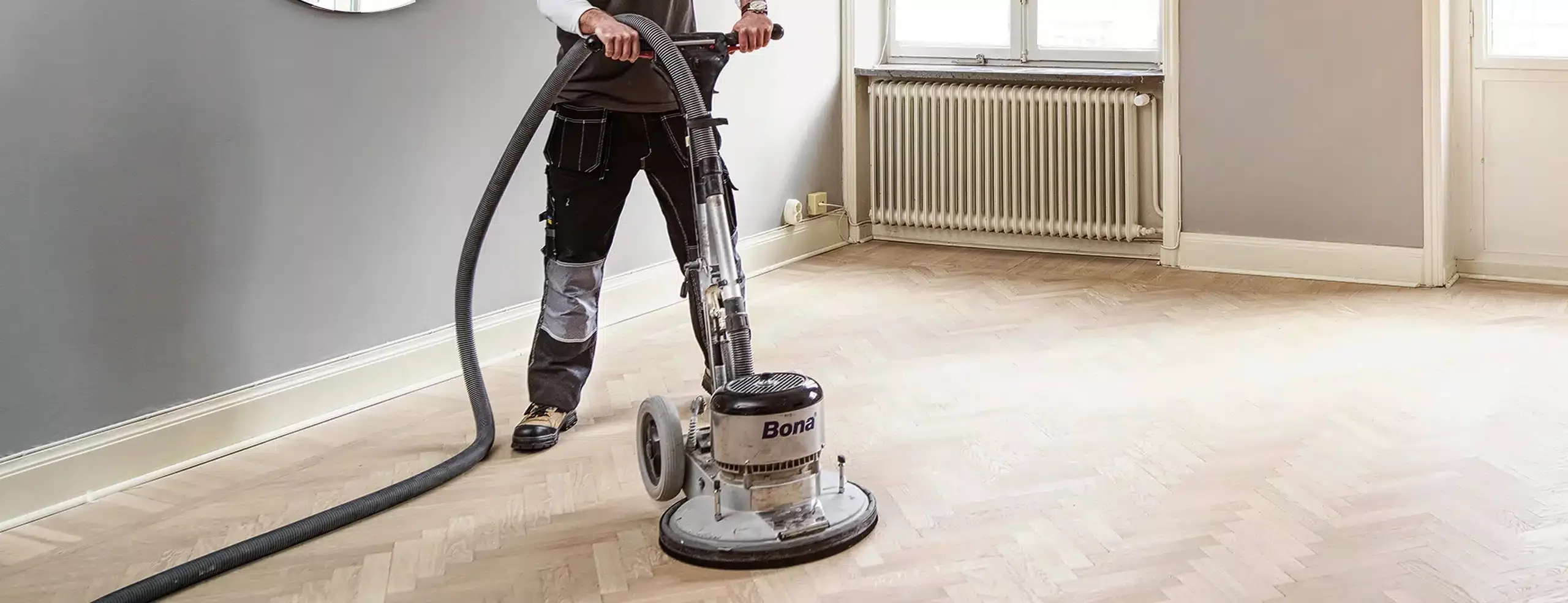
Solid wood keeps a reserve. A solid oak or fir board carries enough thickness to sand a problem out completely — which is why deep damage in an older Cottage Lake floor is often repaired in place instead of replaced.
Solid hardwood is the one floor with margin built in. Where an engineered plank has a millimeter or two of real wood on top, the three-quarter-inch strip oak in a Bear Creek Country Club house or a Brook Trails rambler can give up a full pass of sanding and still have decades left. So before we quote a board swap on oak, we ask whether the damage actually goes deeper than the finish — because after forty years of gravel-drive grit, a surprising amount of it does not.
The boards you see are rarely the ones at fault. The problem lives underneath — a fastener that has let go of its joist, a subfloor panel rubbing its neighbor, or framing that has dried and shrunk a hair since the house went up. Nearly all of Cottage Lake was built between 1970 and 1999, which is exactly the age when those fasteners start letting go.
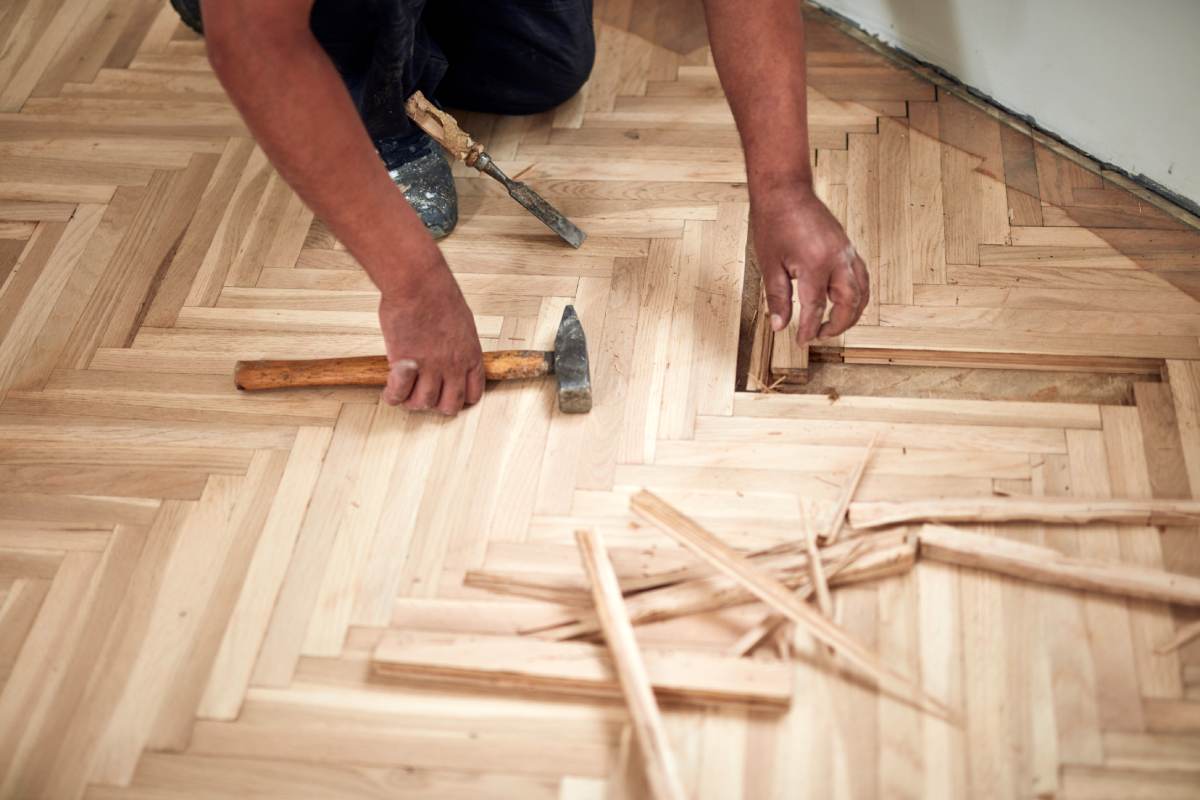
The fix starts under the boards. Loose pieces come up, the substrate gets fastened flat, and only then does the surface go back together.
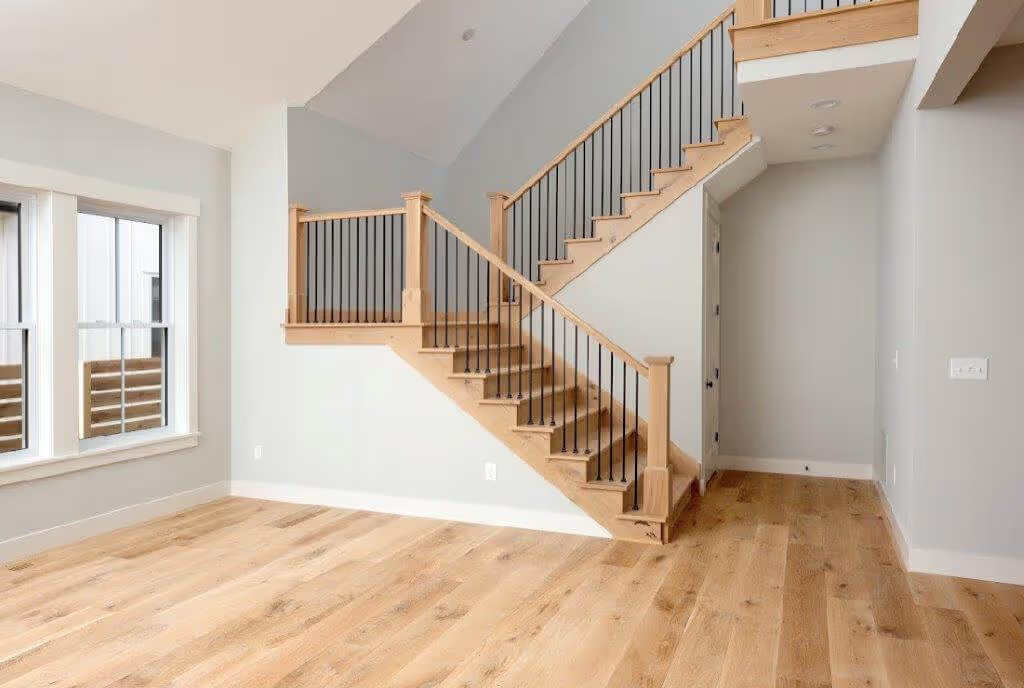
Stairs take the traffic of a hallway on a tenth of the wood. Treads, nosings and thresholds wear out years before the rooms around them — and they can be repaired one piece at a time.
Every trip in off a gravel driveway, every school run, every wet dog coming back from the creek lands on the same few square feet of wood. In a two-story house off NE Woodinville-Duvall Road the staircase is the busiest floor in the building, and the nosing on each tread takes the full strike of every step, with grit doing the cutting. These are the repairs people put up with for years because they assume the whole staircase has to come apart. It does not.
Photograph the damage on your phone — a close-up of the worst spot, one from a few feet back, and one of the whole room. One of our estimators looks at every photo personally and emails you a written price the same business day. No visit, no sales call, no obligation.