1,000+ Floors Installed & Restored Across Washington
Searching for floor repair near me in Arlington? Century-old fir in Old Town, builder-grade oak through Gleneagle, vinyl plank in the newer Smokey Point subdivisions — we fix the damaged section and leave the rest of your floor where it is. Swollen boards, gouges, lifting planks and worn thresholds are handled in place, most of it inside two days. Call (425) 595-1079 for a free estimate.



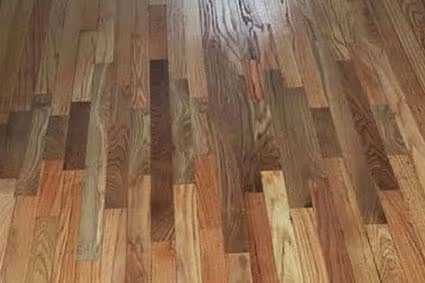
What a bad repair looks like. Wrong species, wrong grain, wrong color — patched by someone who didn't match the wood. You see it from the doorway, permanently.
Four floors turn up in Arlington houses and each one fails on its own terms. Close to three in ten homes here went up between 2000 and 2009, right behind the 1990s subdivisions, so most rooms hold factory-run material: oak strip, engineered plank over a plywood core, laminate, click LVP. Outside a small pre-1940 pocket none of that is rare wood, and for a repair that works in your favor, because flooring made in volume comes apart and goes back one piece at a time. What changes from room to room is how far down the damage goes and whether the floor can be sanded at all.
Arlington sits where the two forks of the Stillaguamish come together, so wet ground here is a season, not an emergency. We take moisture readings across the room and let the area come back down to a stable number before cutting anything, because boards that look finished at week one often flatten out by week three. Whatever stays cupped, stained black or loose gets cut out and replaced, and the new wood is blended into the existing finish rather than left standing out.
Split, gouged, blackened and permanently cupped boards come out one at a time and go back in matched for species, width and grain direction. Most Arlington hardwood is 2 1/4 or 3 1/4 inch red oak from the 1990s and 2000s, which is straightforward to source; pre-war fir takes longer to find and we tell you that before you commit. Finish is then feathered into the surrounding area so the repair reads as floor, not as a patch.
Vinyl plank can absolutely be repaired, but not before we work out why it moved. Glue-down that curls at the ends, floating LVP with seams pulled open, and planks tenting against a baseboard each point somewhere different: adhesive letting go, no expansion room left at the perimeter, or a high spot underneath pushing the planks up. We deal with the cause first, then swap the deformed planks for boards out of your leftover cartons or the closest color match we can find.
Laminate cannot be sanded, so repairing it means pulling planks and putting new ones back. Swollen edges beside a dishwasher or an entry door, chipped corners and rows that have drifted apart are all fixable when the product line still exists or a spare carton is sitting in the garage. Arlington has a lot of first-generation laminate from the late 1990s, and where the pattern is long discontinued we bring options and show you the match before a single plank goes in.
Dogs on acreage, gravel driveways and wet boots put a floor through more than city living does. Surface scratches and dulled traffic lanes can often be buffed and recoated; claw gouges and urine that soaked past the finish into the wood need the board itself replaced. Thresholds where hardwood meets tile, carpet or LVP take the hardest use in the house and can be rebuilt on their own without touching the floors on either side.
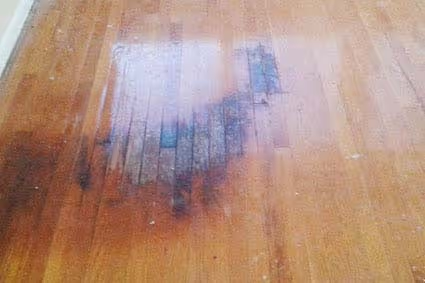
Finish is a film, not a seal. A spill that sits, or a dog that keeps going back to the same corner, gets under it through a worn spot or an open seam, and through an Arlington winter the wood below is already holding more moisture than it does in August. By the time the color goes dark the liquid is in the fiber, and nothing done at the surface reaches it.
 1
1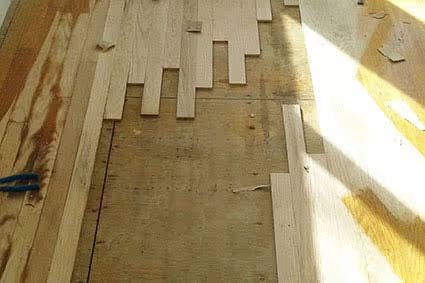 2
2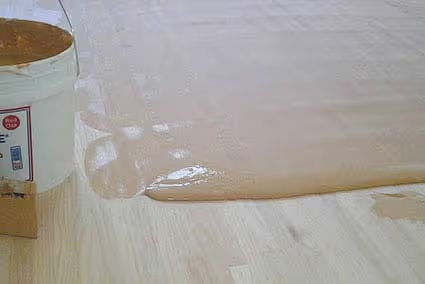 3
3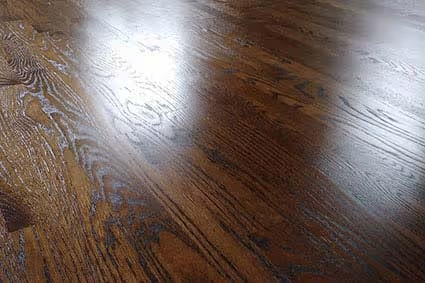 4
4Most pet-stain and water-damage repairs are finished in 1–2 days.
On solid red oak the question is a real one, because a tired hallway and a few hundred small scratches will usually come back with a sand and a fresh finish. The other three floors never offer that choice, so with them the only question left is how many pieces have to come out. Plenty of Arlington houses have two or three of these floors under one roof, which is why the answer can change from room to room.
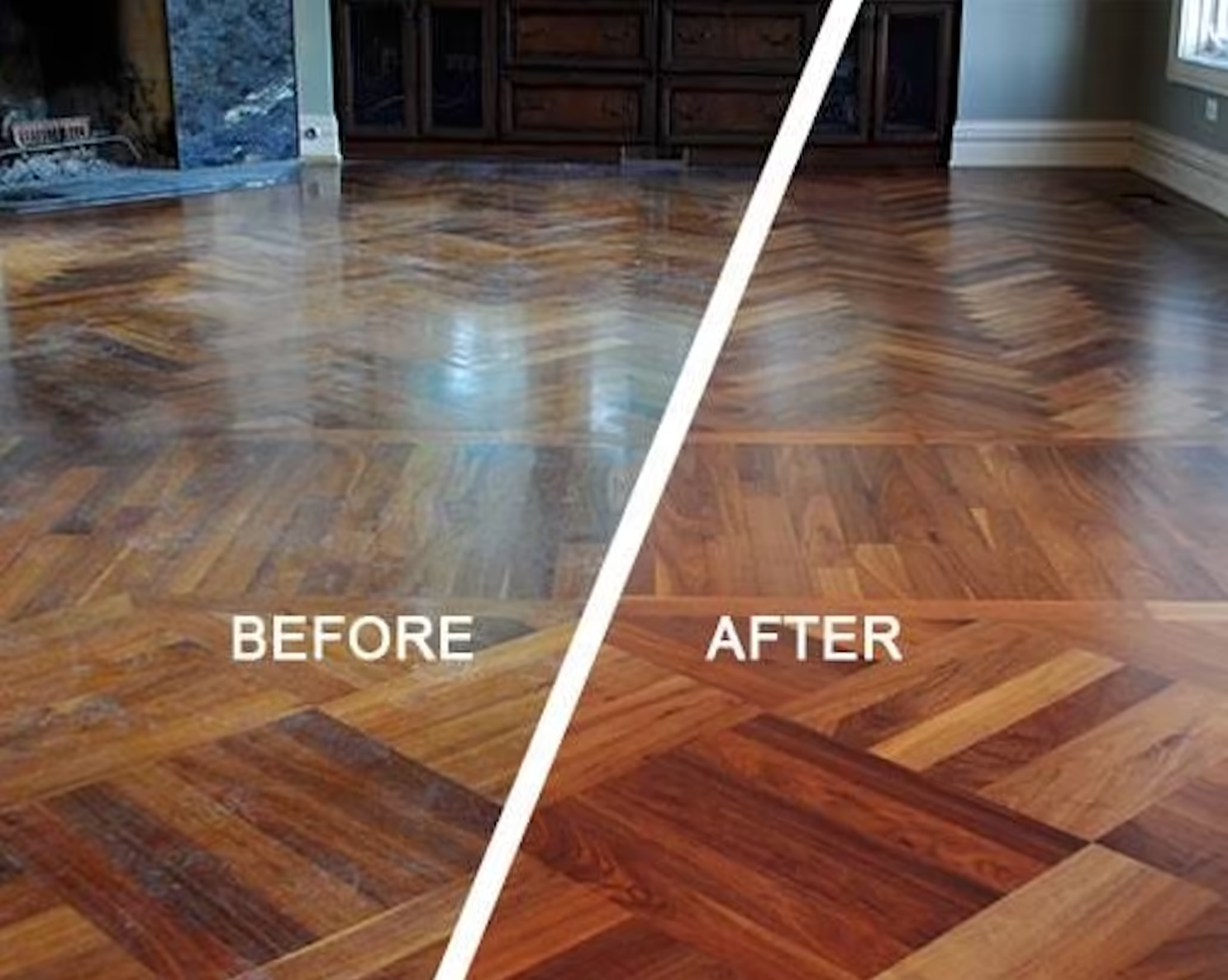
The same floor, split down the middle. Left: the finish is cloudy and worn through in the traffic path — no amount of patching fixes that. Right: sanded back and refinished.
Typically $200–$1,000 · most finished in 1–2 days
Board replacement is done first, so the whole floor is finished together
The water drop. Put a drop of water on a worn spot. If it beads, your finish is still doing its job — a spot repair is fine. If it soaks in within a minute, the finish is gone there and the floor is due for a refinish.
The rug test. Lift an area rug near a bright window. If the wood underneath is noticeably darker than the wood around it, that is sun fade rather than damage — and fade does not patch out board by board.
Still not sure? Send us a few photos of the floor and we will tell you which one you need, even when it is the cheaper answer.
Arlington incorporated in 1903 as a shingle-mill town, but the median home here was built in 1996. That gap explains almost everything we find under people's furniture. The bulk of Arlington floors are now twenty-five to thirty years old: builder-grade red oak strip, early engineered hardwood with a thin wear layer, and first-generation laminate. Gleneagle filled in around a golf course that opened in 1993, and those houses reached their repair years together — finish worn through down the hallway, a cupped board near the slider, an engineered floor with nothing left to sand.
North of that, Smokey Point came into the city in 1999 after a long court fight with Marysville, and the I-5 corridor and the Cascade Industrial Center have kept new houses and new rentals going up ever since. Nearly all of that is vinyl plank, and vinyl plank fails on its own terms: seams opening, ends curling, planks tenting where nobody left room to expand. With close to four in ten Arlington homes rented, a lot of that damage shows up between tenants.
Then there is the river. The North and South Forks of the Stillaguamish meet at the edge of downtown, and on December 5, 2023 the gauge at Arlington crested at a record high, closing Highway 530 by Twin Rivers Park and cutting Silvana off entirely. Island Crossing, the low ground around Haller Park and the valley roads all take water. Those calls come in every wet winter, and the answer is almost never to pull the whole floor.
The oldest pocket is small — under five percent of Arlington homes predate 1940. Those are the blocks off Olympic Avenue with original vertical-grain fir, and matching that wood is a hunt, not an order.
Not always. What matters is how long the water sat and whether it reached the wood or only sat on the finish. We take moisture readings across the room and give the area time to come back down before cutting anything, because boards that look ruined in the first week often flatten out by the third. The ones that stay cupped, go black, or work loose get replaced, and the new wood is blended into the surrounding finish. If the readings will not settle, we tell you what has to dry out before any repair is worth doing.
Usually yes, and repair is often the only route left. Engineered floors from that era have a wear layer thin enough that another full sanding would cut straight through it. Individual planks can still be lifted out and replaced, which is how we handle deep gouges, pet stains and water-damaged sections in Gleneagle and the other subdivisions built around the same time. We measure the wear layer at a floor vent or a threshold before recommending anything, so you are not guessing.
Often, though it takes sourcing rather than ordering. Vertical-grain Douglas fir milled before 1940 came from old-growth timber and is denser and tighter-grained than anything cut today, so a fresh board rarely passes on its own. We look for reclaimed stock in the right width and grain, and when the damage is in a visible spot we will sometimes take good boards from a closet or under a permanent rug line and move them into the room you actually see. Either way you look at the match before it goes down.
Most vinyl plank repairs are a single day once the cause is clear. Lifting in a rental is usually expansion-related — plank run tight to a wall or pinned by a fixed threshold with nowhere to move — so the fix is opening the perimeter back up and replacing the planks that deformed. Hang on to any leftover cartons from the original install. Tracking down a discontinued LVP color is what slows a job like this, not the labor.
No. Wear concentrates in a narrow path — back door to kitchen, down the hallway, the patch in front of the sink — and that path can be dealt with on its own. If only the finish is gone, buffing and recoating that room usually handles it at a fraction of a full refinish. Where claws have cut past the finish into the wood, or urine has gone black underneath, those boards are replaced first and the finish is carried out into the field so the repair does not read as a rectangle.
Most repairs run between $200 and $1,000. The spread comes down to how many boards are coming out, how hard the material is to source, and whether the finish needs blending afterward. Arlington is inside our regular service area — we work throughout King and Snohomish County — so a job up the I-5 corridor is routine for us. Text or email photos of the damage for a written estimate the same day, or call (425) 595-1079 and we will talk it through.
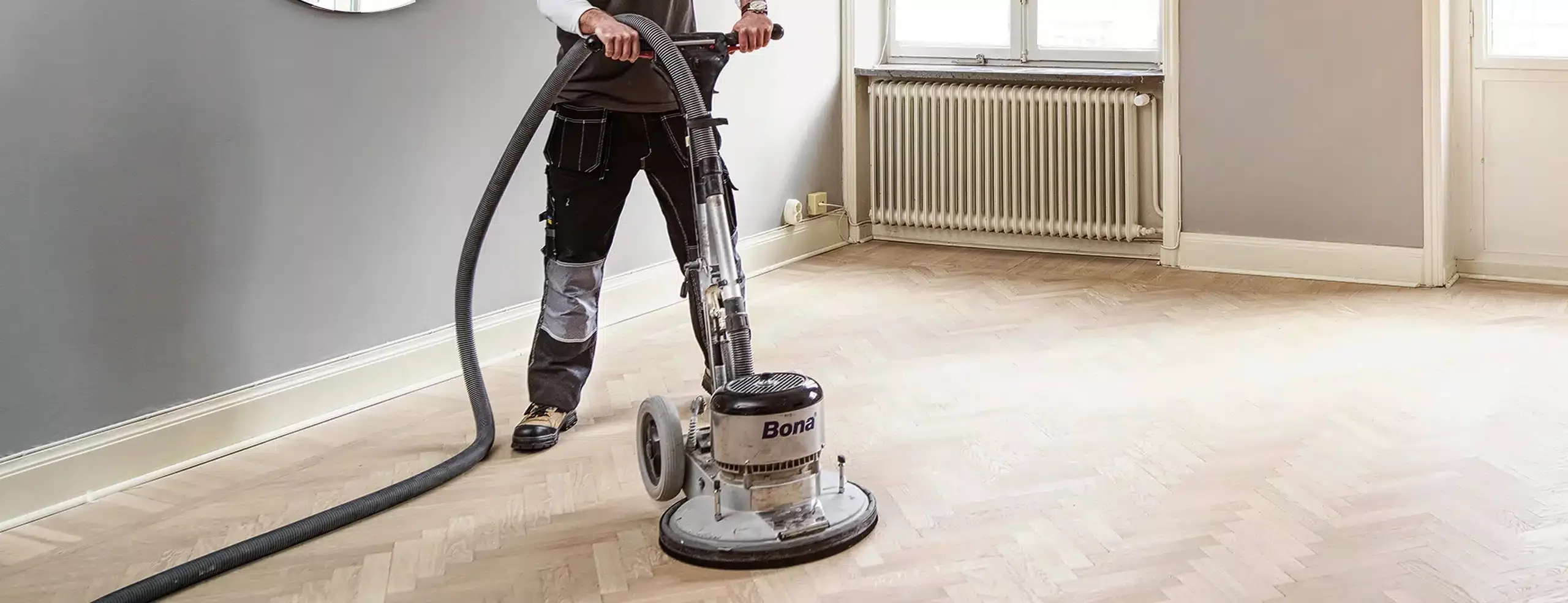
Solid wood keeps a reserve. A solid oak or fir board carries enough thickness to sand a problem out completely — which is why deep damage in an older Arlington floor is often repaired in place instead of replaced.
Solid hardwood is the one floor with margin built in. Where an engineered plank has a millimeter or two of real wood on top, a strip of 2 1/4 inch red oak in a Gleneagle house or vertical-grain fir off Olympic Avenue can give up a full pass of sanding and still have decades left. So before we quote a board swap, we ask whether the damage actually goes deeper than the finish — because a surprising amount of it does not.
The boards you see are rarely the ones at fault. The problem lives underneath — a fastener that has let go of its joist, a subfloor panel rubbing its neighbor, or framing that has dried and shrunk a hair since the house went up. The median Arlington home was built in 1996 and the subdivisions around it went up through the 1990s and 2000s, which is exactly the age when those fasteners start letting go. We chase the problem to its source instead of patching the symptom.
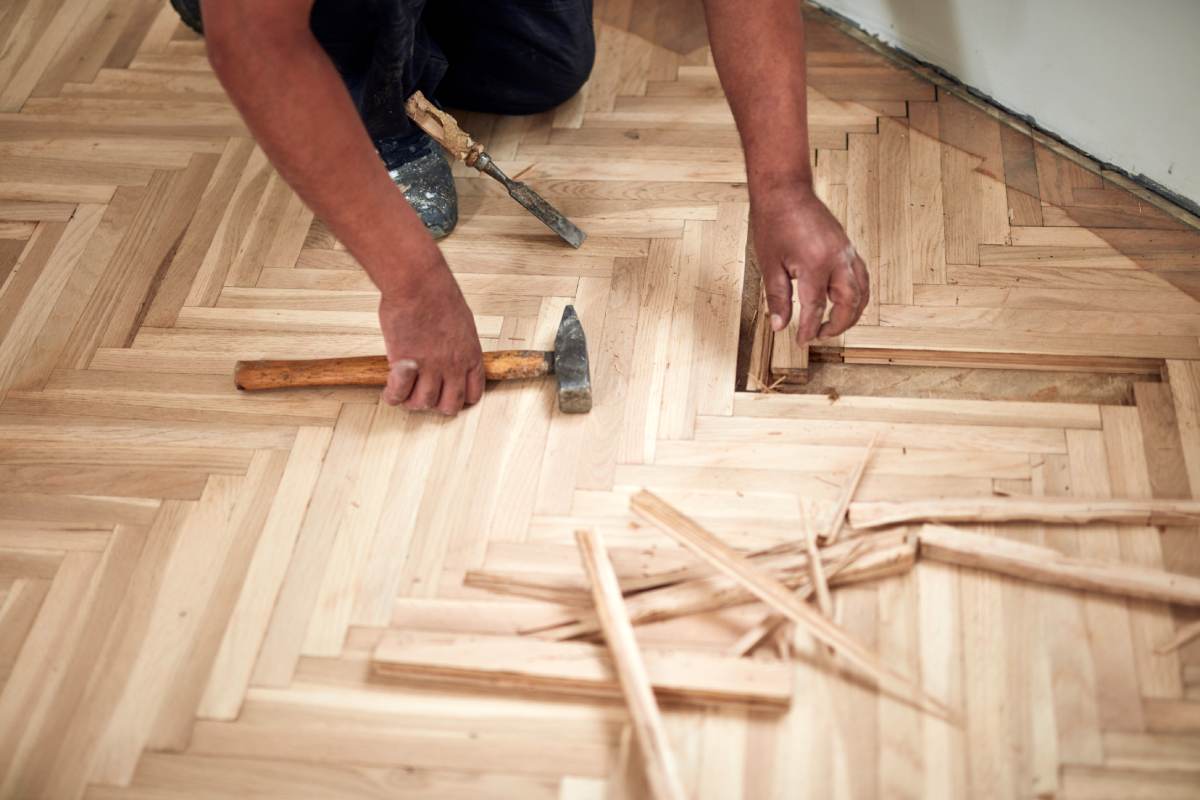
The fix starts under the boards. Loose pieces come up, the substrate gets fastened flat, and only then does the surface go back together.
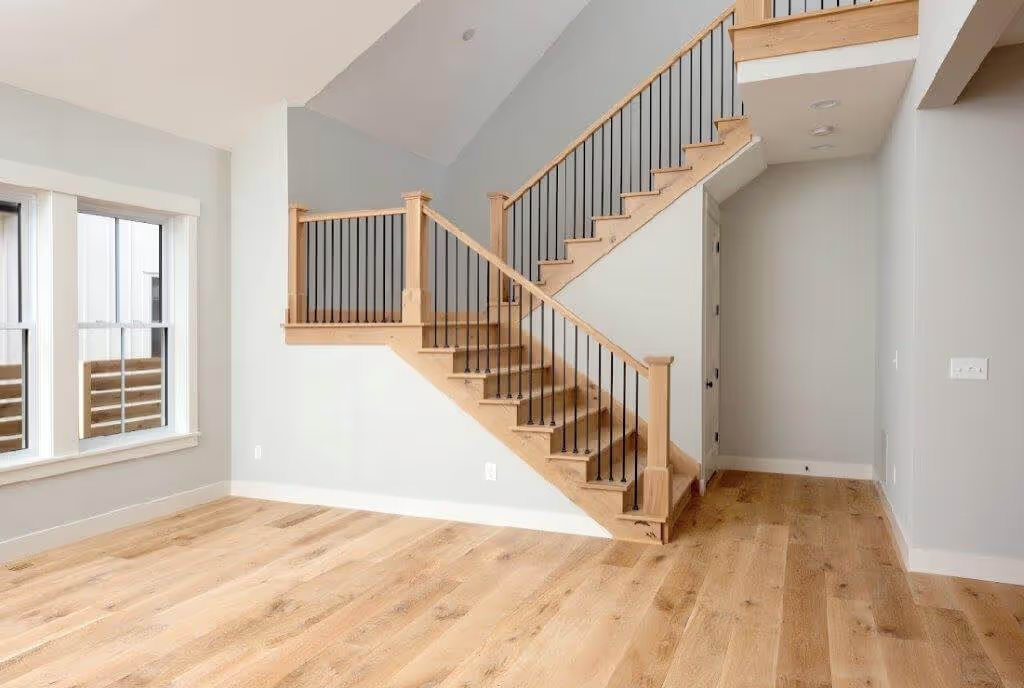
Stairs take the traffic of a hallway on a tenth of the wood. Treads, nosings and thresholds wear out years before the rooms around them — and they can be repaired one piece at a time.
Every early start down the I-5 corridor, every school run, every pair of boots coming in off a gravel drive lands on the same few square feet of wood. In a two-story Gleneagle home the staircase is the busiest floor in the house, and the nosing on each tread takes the full strike of every step. These are the repairs people put up with for years because they assume the whole staircase has to come apart. It does not.
Photograph the damage on your phone — a close-up of the worst spot, one from a few feet back, and one of the whole room. One of our estimators looks at every photo personally and emails you a written price the same business day. No visit, no sales call, no obligation.