1,000+ Floors Installed & Restored Across Washington
Searching for floor repair near me in Snoqualmie? We repair engineered wood, LVP, oak, and fir in homes across Snoqualmie, matching replacement boards to the existing floor whenever possible. Call (425) 595-1079 for a free estimate.



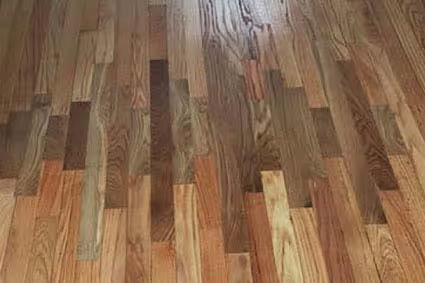
What a bad repair looks like. Wrong species, wrong grain, wrong color — patched by someone who didn't match the wood. You see it from the doorway, permanently.
Snoqualmie went from about 1,600 residents in 2000 to more than 10,000 ten years later, the fastest growth rate in the state that decade, and floors bought in that kind of hurry came off a short list of products. On a repair that works in your favor: the same plank shows up street after street, and where the original line is long gone the near equivalent is usually one shelf over.
What none of it will take is a sander, so the whole job rides on the board that goes back in and how quietly it sits next to the twenty years of wear around it. The century-old fir down on the valley floor points to the same work for a different reason, since replacing a few boards costs that floor nothing while a full sanding spends thickness it can never get back.
Houses built on Snoqualmie Ridge from 1997 onward went in with engineered hardwood across most of the main floor. The wear layer on that product is thin, so a deep gouge or a chair-leg dent isn't a sanding problem — the plank comes out and a new one goes in. We lift the damaged boards without wrecking the joints on either side, source a match by species, width, bevel profile and sheen, then set the replacement so the seam stops registering at standing height. When the original line is discontinued, which is normal on a twenty-year-old build, we find a color-and-grain equivalent and lay a sample next to your floor before anything is glued or nailed down.
Vinyl plank is where most Snoqualmie remodels have landed since around 2015, and it's what we get called on most in the newer townhomes and finished lower levels. Planks separate at the seams, peak up along a wall, or rise where a heat register dumps warm air on one spot. The fix follows the cause: a floating floor installed tight to the baseboard needs its expansion gap cut back, a popped seam needs to be reset, and a plank scratched clean through the wear layer just gets replaced. Before anything goes back down we check the room for a high spot, because a floor that lifted once over a bump will do it again.
Snoqualmie takes close to 80 inches of precipitation a year at this elevation in the foothills, roughly double Seattle, and the valley floor carries a long flood record — 1990, 2009, and the December 2025 atmospheric river that pushed the river to Phase 4 for the first time since 2019. Most of the water we actually deal with is smaller than that: a refrigerator supply line, a dishwasher gasket, a mudroom where wet boots and skis stand all winter. We take moisture readings first, dry the area, and only then decide how far the damage runs, because cupped boards often flatten back out on their own and boards that have gone black don't. Only the ruined pieces come out.
The mill cottages moved into Williams Addition in 1958 were built between 1916 and 1924, and Northwest houses of that era were floored in vertical-grain Douglas fir. Fir is soft, it dents under a dropped pan, and after a century plus two or three sandings there's often not much wood left above the tongue. When that's the case we patch instead of sand, weaving in salvaged fir so the new pieces run with the existing grain rather than sitting as an obvious rectangle. Same approach for the strip oak in the mid-century houses on the flat: cut the replacements in on a stagger, then blend stain and sheen by hand until the repair stops reading as a repair.
Laminate turns up in the early-2000s builds and in rentals around town, usually in kitchens and hallways. Once the printed layer is chipped or a plank has swollen at the edge from standing water there's nothing to fill — that board gets replaced, worked in from the nearest wall if it's a locking floor. Surface scratches in wood and engineered floors are a separate job, done with color-matched fill and a blended topcoat. Thresholds take the worst of it here, since half of Snoqualmie tracks in grit and wet boots off the Snoqualmie Valley Trail and the ridge paths; when a transition has gone flat we replace the strip and the boards on either side of it.
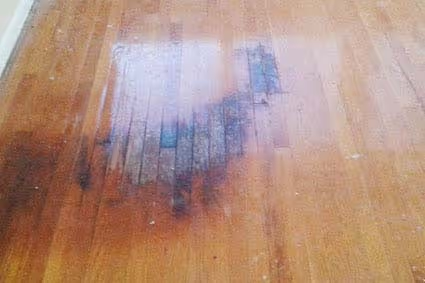
Most of the water that ruins a floor here never makes the news. It comes in on the dog, on a pair of boots, on a bag of wet gear left by the door, and it sits in the one place a finish is thinnest, right along a seam. Pet stains do the same thing from the other side: by the time the smell is obvious the liquid is already past the wear layer or into the wood, and no amount of surface work brings that color back.
 1
1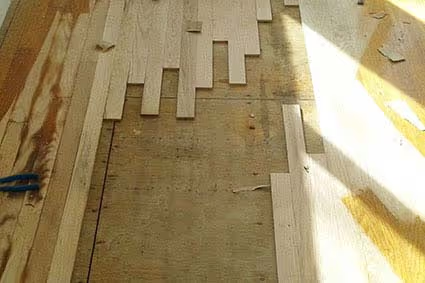 2
2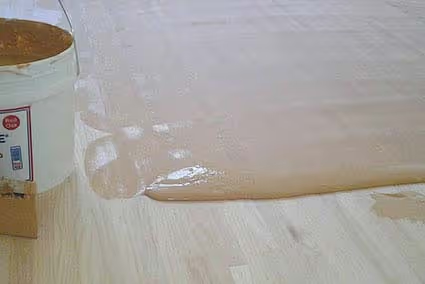 3
3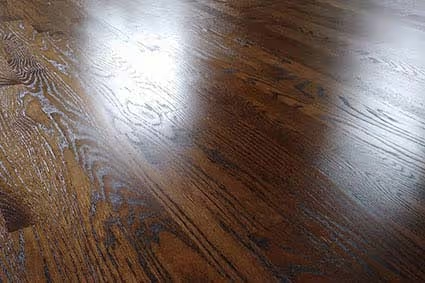 4
4Most pet-stain and water-damage repairs are finished in 1–2 days.
On the Ridge the answer is usually settled before we get there. Sanding is off the table on both engineered plank and printed vinyl, so the only live questions are how many boards come out and how completely the blend hides them. In the older houses down on the valley floor a sanding is still a real option, and the first thing to settle is how many that floor has already had, which we can read at a doorway or a floor vent where the edge of a board is exposed.
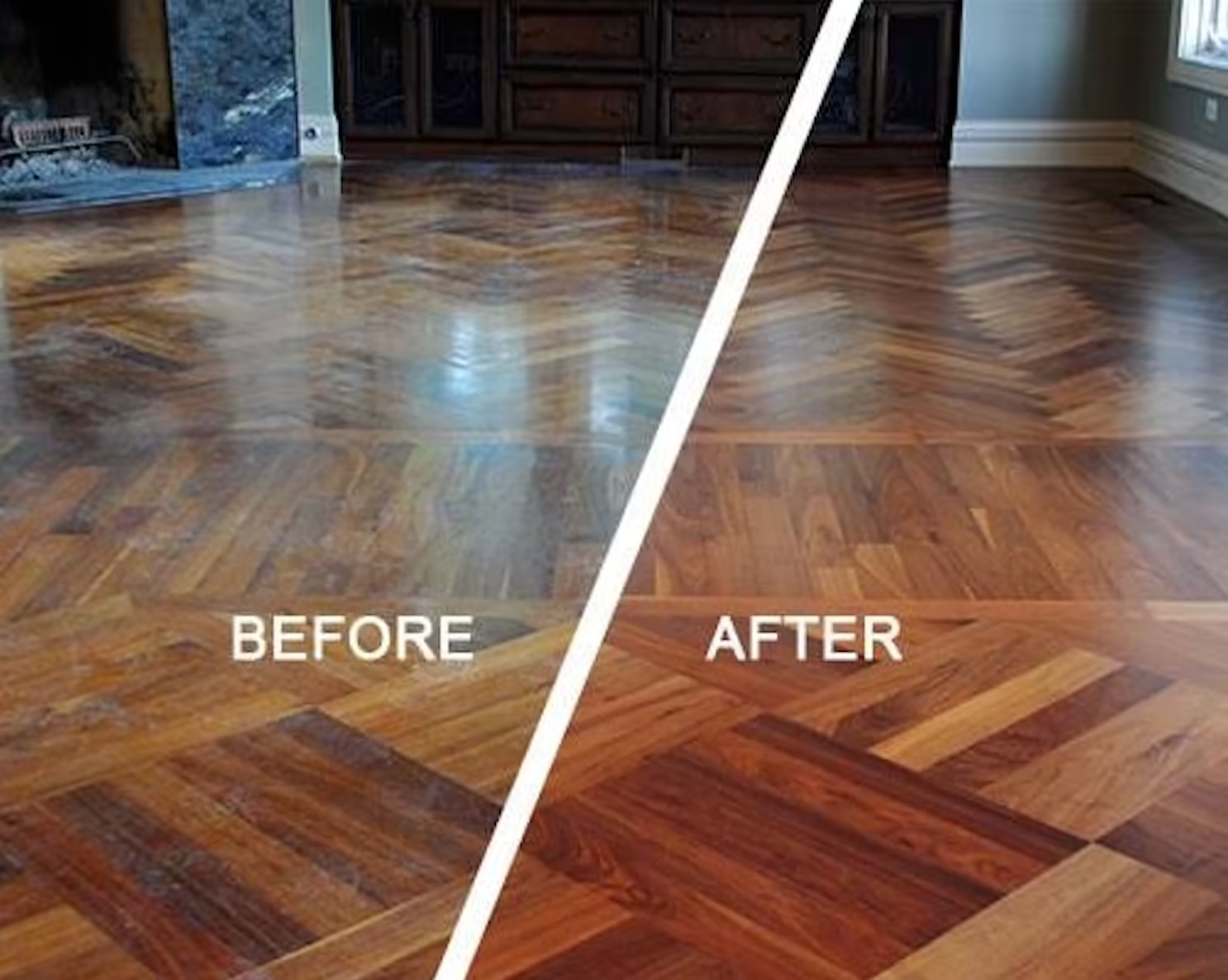
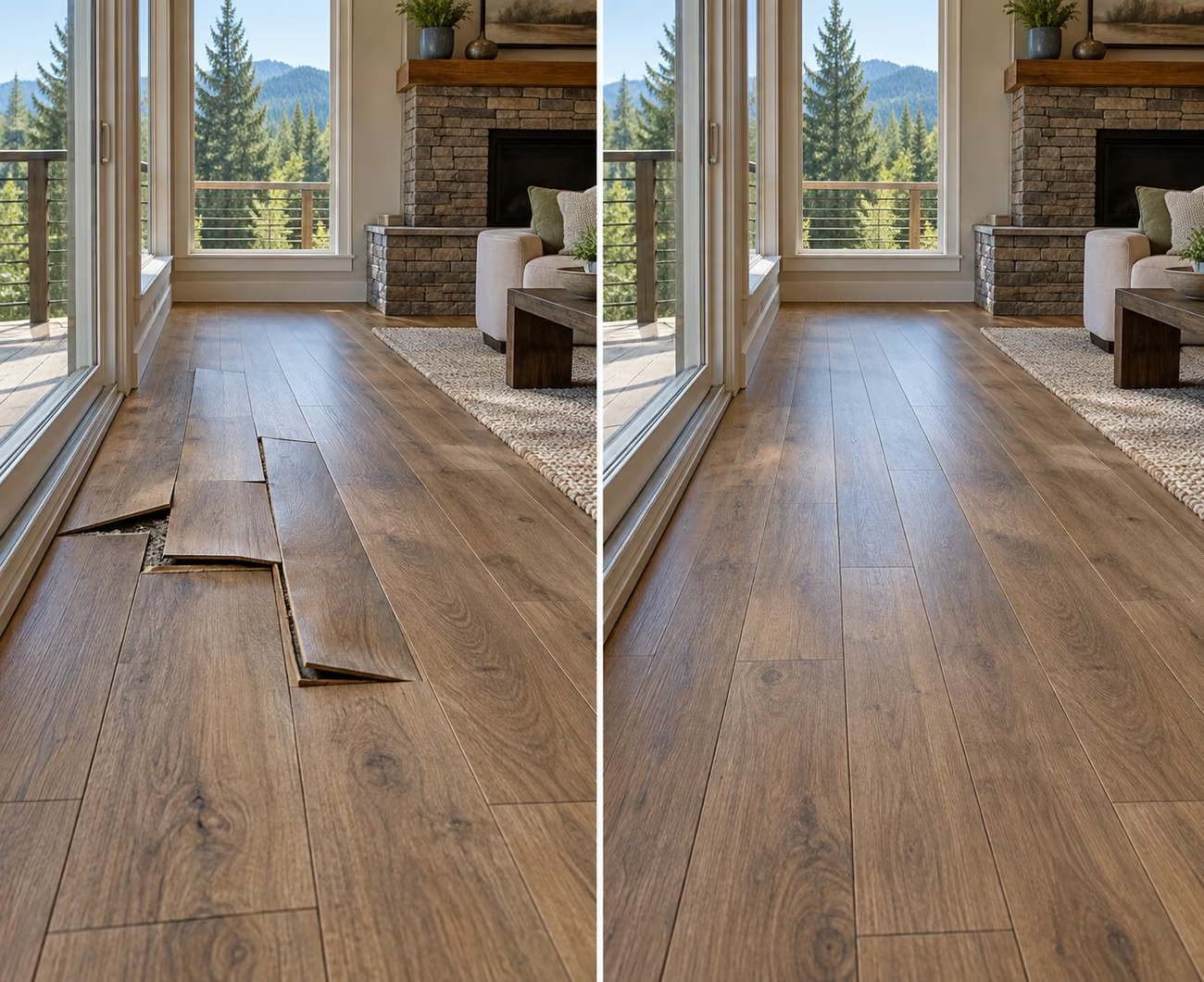
The same floor, split down the middle. Left: the finish is cloudy and worn through in the traffic path — no amount of patching fixes that. Right: sanded back and refinished.
Typically $200–$1,000 · most finished in 1–2 days
Board replacement is done first, so the whole floor is finished together
The water drop. Put a drop of water on a worn spot. If it beads, your finish is still doing its job — a spot repair is fine. If it soaks in within a minute, the finish is gone there and the floor is due for a refinish.
The rug test. Lift an area rug near a bright window. If the wood underneath is noticeably darker than the wood around it, that is sun fade rather than damage — and fade does not patch out board by board.
Still not sure? Send us a few photos of the floor and we will tell you which one you need, even when it is the cheaper answer.
Snoqualmie is really two housing stocks stacked on top of one another, and they fail in opposite ways.
Up on the plateau, Snoqualmie Ridge delivered its first houses in 1997 on land the city annexed in the mid-1990s, with a second phase of roughly 1,850 more homes annexed in 2004 and the last of the build-out finishing now. That run is why the median Snoqualmie house dates to 2006 and why about three quarters of the city's homes are newer than 2000 — a completely different picture from Seattle or Bellevue, where a repair crew spends its days on pre-war fir.
In Eagle Pointe, Deer Park, Aspen and the streets feeding off Snoqualmie Parkway, the floors are engineered hardwood, with LVP on anything remodeled in the last decade. Neither can be sanded out of trouble. A two-millimeter wear layer gives you one light screen-and-recoat in its life if you're lucky, so the work here is plank replacement and finish blending, not refinishing. Roughly 85 percent of homes in town are owner-occupied and full of kids, dogs and gear, which is why the damage we see is so concentrated: one bad patch at the slider, one gouged run down a hallway, on a floor that's otherwise perfect.
Down on the valley floor it's the reverse. The town was platted in 1889 for the Seattle, Lake Shore and Eastern Railway, and the commercial district along Railroad Avenue spans 1889 to 1941. The houses that matter for flooring are the Snoqualmie Falls mill cottages — about thirty-two of them, built 1916 to 1924, floated across the river on a temporary bridge in 1958 and set down as Williams Addition off SE 384th. Those, plus the older homes out toward Meadowbrook and the mill site, are fir-floored, thin from decades of sanding, and low enough to feel the river.
Snoqualmie floods on roughly a five-year rhythm; 1990 is still the benchmark, 2009 came close, and in December 2025 an atmospheric river closed the Parkway at Jacobia along with Meadowbrook Bridge, Millpond and Reinig. The city sits inside FEMA's mapped floodplain and floodway and participates in the NFIP Community Rating System, and a fair number of downtown homes have been elevated because of it. Kimball Creek and the streets between there and the historic district sit somewhere in the middle — newer than the mill houses, lower than the Ridge.
The weather finishes the job. At 568 feet in the Cascade foothills, Snoqualmie gets close to 80 inches of precipitation a year against Seattle's 37, plus snow on about 17 days. Wood moves more between January and August here than it does 28 miles west, which is why gaps open at the ends of boards in the old houses and why a floating floor on the Ridge needs a real expansion gap at every single wall.
Boards can be replaced. Engineered flooring is a thin hardwood veneer over a plywood or HDF core, so sanding a gouge out is usually off the table, but pulling individual planks is routine work. On a glued or nailed floor we cut the damaged board out in sections and set the new one in; on a floating click floor we either work back from the nearest wall or cut and re-lock the plank. The real work is the match, since a line installed in 2004 is almost certainly discontinued. We identify species, width, bevel and sheen, find the closest current product, and put a sample down next to your floor before anything becomes permanent.
Measure it rather than guess at it. We take moisture readings across the wet area and several feet past it, because water runs further under a floor than the staining on top suggests. Solid and engineered wood that has cupped will often flatten back out once its moisture content evens up with the rest of the room, which can take weeks, so we don't cut anything until the numbers settle. Boards that have gone dark and soft, delaminated at the core, or released from the substrate aren't coming back and get replaced. Laminate is the least forgiving of the three — once the core swells at the edges, those planks are finished.
Usually yes, and patching is often the only option left. Old fir starts at three quarters of an inch with roughly a quarter inch of usable wood above the tongue, and two or three past sandings can eat most of that. We measure at a floor vent or an exposed doorway edge to see what you actually have. Even when a floor is too thin to sand, we still replace broken and rot-damaged boards with salvaged vertical-grain fir, weave the ends on a stagger so the patch doesn't sit as a block, and hand-blend color and sheen into the boards around it. It won't be invisible from six inches away. From standing height it should read as one floor.
In most cases, yes. LVP is built to come apart — a scratched, dented or torn plank can be swapped out, and on a floating floor that means unlocking back from the nearest wall or cutting the bad plank free and re-locking a replacement with adhesive at the seam. Where planks have peaked or separated across a whole room, the fix is about the cause rather than the plank: usually no expansion gap left at the walls, or a bump under the floor. We check for both before anything goes back down. If you kept a leftover box from the install, hang onto it; if not, we source a match.
Most repairs land between $200 and $1,000, depending on how many boards are involved, how difficult the match is, and whether stain has to be blended on site. Snoqualmie sits inside the King County area we've covered since 2013, so it's a normal call for us and the estimate is free. If it's easier than scheduling a visit, send photos of the damage and the room and we'll price it from those. Most jobs wrap up in one or two days.
Usually not, and filling them in January makes things worse. Interior air dries out once the furnace has run through a Snoqualmie winter, the boards give up moisture and shrink, and by August they've taken it back — filler put in at the wide point gets crushed or pushed out when the wood expands. What is worth looking at is a gap that never closes, one you can catch a fingernail in year-round, one that tapers along a single board, or a run of them where the floor meets an exterior wall on the valley side. Those point to a loose or cupped board or a moisture source, not to the season.
Often yes, because the damage buyers notice is rarely the whole floor. A gouged run in an entry, a pet-stained patch by a slider, or three lifted planks in a hallway read as deferred maintenance on an inspection walk-through, and fixing them is a one- or two-day job in the $200 to $1,000 range rather than a floor replacement. Where it stops making sense is a floor that's dull and scratched everywhere, or an engineered floor with no wear layer left in the traffic lanes. We'll tell you which one you have.
Both. The older houses near Railroad Avenue, in Williams Addition and out toward Meadowbrook are a different kind of job than a Ridge build — fir instead of engineered, hand-blended finish instead of a factory sheen, salvaged material instead of a current catalog item — and that's the work we started doing in 2013. Newer homes on the plateau are mostly plank swaps and seam work. We bring different material and a different plan depending on which side of the valley you're on.
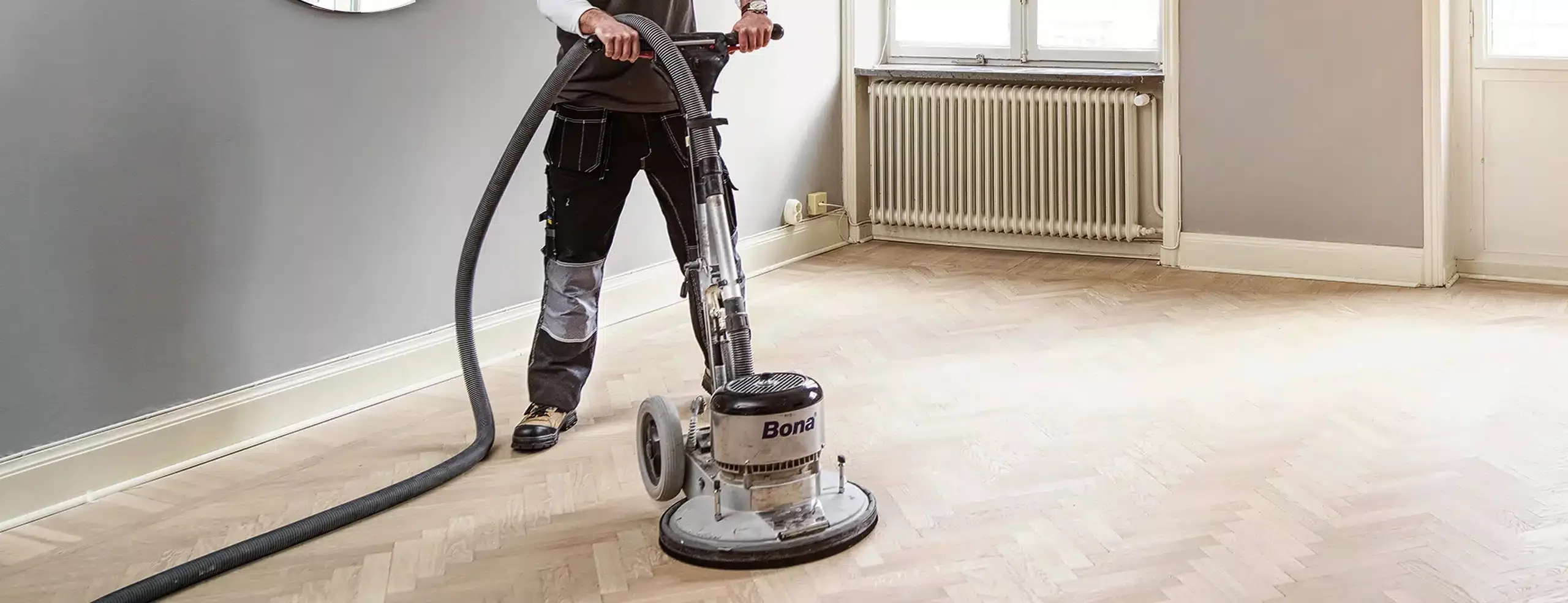
Solid wood keeps a reserve. A solid oak or fir board carries thickness an engineered plank does not — which is why damage in an older Snoqualmie floor can sometimes be sanded out in place instead of swapped.
Three quarters of Snoqualmie is newer than 2000, so most of what we open is engineered plank with a millimeter or two of real wood on top and no margin at all. Solid wood does turn up, though — the mill cottages in Williams Addition, the older houses near Railroad Avenue and out toward Meadowbrook, the strip oak in the mid-century places on the flat. On those we ask a different question first: is there still wood above the tongue? A century-old fir floor two or three sandings in often has very little, and we check at a floor vent before promising anyone a sand-out.
On the Ridge the framing is now twenty-odd years past its build, which is exactly when fasteners start letting go; down on the valley floor the mill cottages have had a century of it.
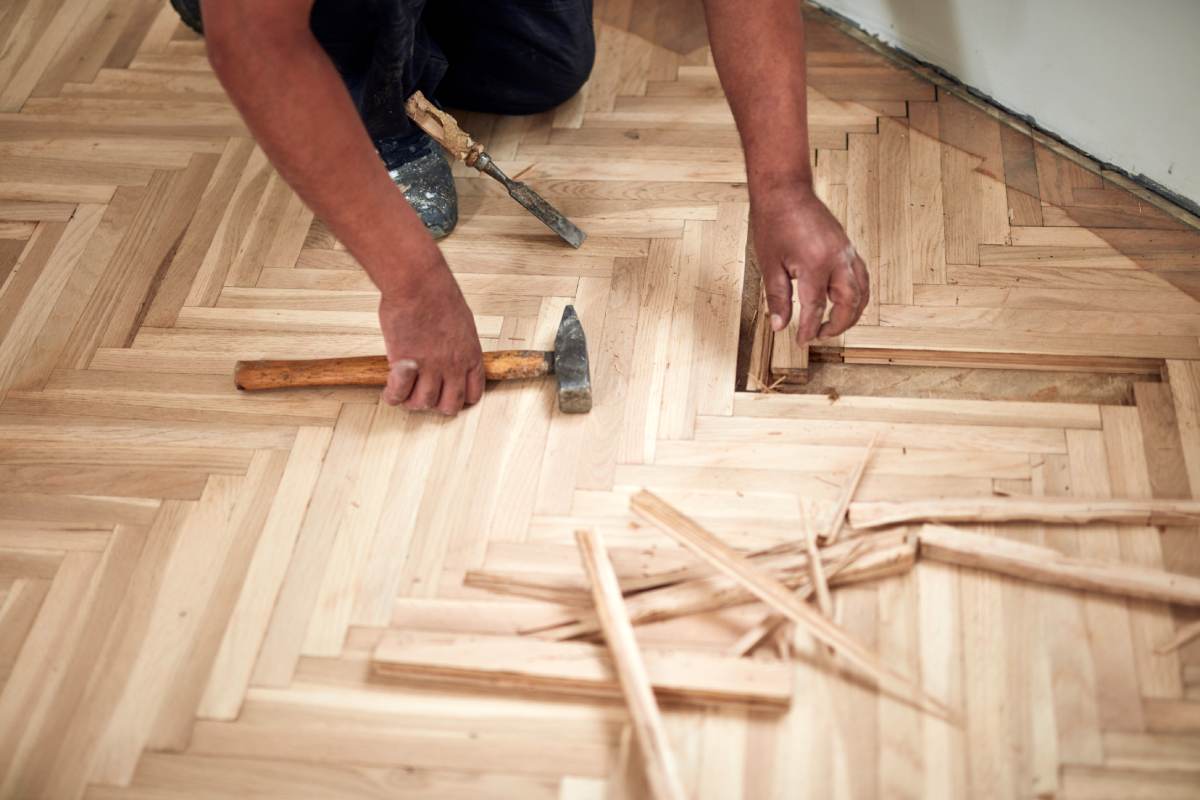
The fix starts under the boards. Loose pieces come up, the substrate gets fastened flat, and only then does the surface go back together.
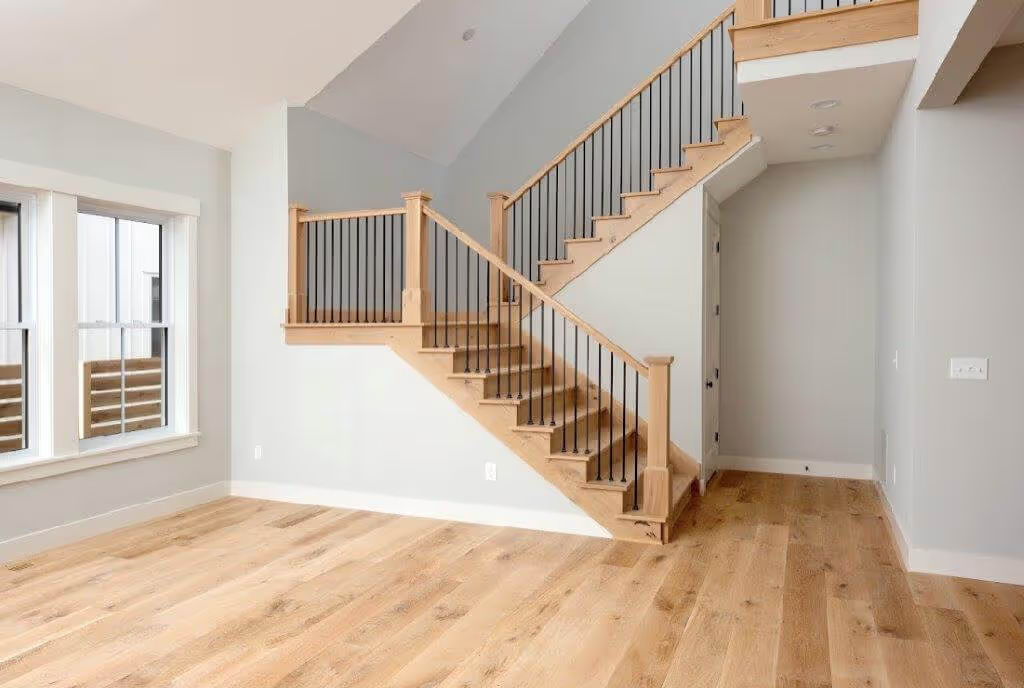
Stairs take the traffic of a hallway on a tenth of the wood. Treads, nosings and thresholds wear out years before the rooms around them — and they can be repaired one piece at a time.
Every trip in off the Snoqualmie Valley Trail, every school run, every wet dog coming back from the ridge paths lands on the same few square feet of wood. In a two-story house off the Parkway the staircase is the busiest floor in the building, and the nosing on each tread takes the full strike of every step — with tracked-in grit doing the work of sandpaper. These are the repairs people put up with for years because they assume the whole staircase has to come apart. It does not.
Photograph the damage on your phone — a close-up of the worst spot, one from a few feet back, and one of the whole room. One of our estimators looks at every photo personally and emails you a written price the same business day. No visit, no sales call, no obligation.