1,000+ Floors Installed & Restored Across Washington
Searching for floor repair near me in Duvall? We repair swollen laminate, cupped hardwood, gouged oak, lifting LVP, and worn thresholds while keeping good flooring in place. Call (425) 595-1079 for a free estimate.




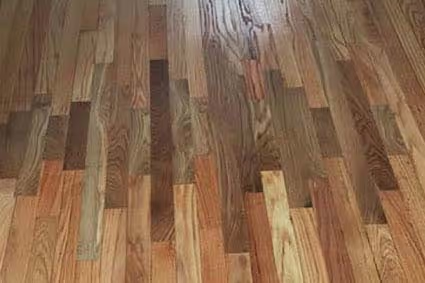
What a bad repair looks like. Wrong species, wrong grain, wrong color — patched by someone who didn't match the wood. You see it from the doorway, permanently.
The median Duvall house was finished in 2000, and that one number decides most of how a repair here goes. A floor that age was made in a factory and sold as a line, so the piece we put back is either that same product or the closest thing still in production. Solid red oak in the nineties plats is the exception, because on site-finished oak the stain and the sheen are still mixed here in the room rather than ordered from a warehouse. Everything else is a sourcing problem first and a carpentry problem second, which is why the first hour usually goes to identifying the floor down to the manufacturer and the line.
Cupping, dark edges, a soft spot in front of the fridge, a lower level that took water in a wet winter. We take a moisture reading before anyone decides anything, confirm the source has been stopped, and let the area dry. Then only the boards that are genuinely past saving come out. Hardwood that cupped often flattens as it releases moisture; laminate that swelled does not.
Duvall tracks in a lot of mud. Laminate holds up fine until water sits in a joint, and then the core swells, the edge chips, and the seam never closes properly again. We lift the affected planks, replace them with the closest match we can source, and reset the run so the click joints lock instead of riding on a damaged edge. If the original line is discontinued, you hear that before we start.
The 2000s subdivisions went in with engineered floors, and a two-millimeter veneer does not sand out. Once it is worn through at a pivot point, scratched to the plywood, or gouged at a chair leg, replacing that board is the honest answer instead of refinishing. We weave new boards into the field rather than dropping in a square patch, so the seams land where seams already were.
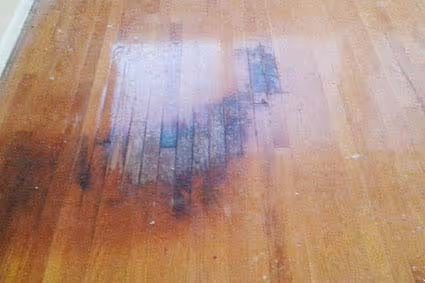
Black urine rings under a window, dog-nail scoring at a slider, a dropped tool that went through the finish and into the wood. On solid oak we cut out the ruined boards, lace in replacements matched for species, width, thickness and grain direction, then stain and finish the repair so it reads as part of the floor rather than a spot you look at.
Rigid-core LVP moves with temperature, and a floating run that gets pinched will find somewhere to go. Planks bow in a south-facing bay, or open at the ends beside a transition strip screwed down too tight. We locate the pinch point, replace the damaged planks, take down a high spot underneath if that is what pushed them up, and reset the threshold with real expansion room.
A finish is a wear layer, not a seal, and every board in a house has four edges where that layer stops. Through a wet Duvall winter the air inside never really dries out, so a spill that would flash off in August sits in the seam and works its way down into the joint instead. Pet urine does the same thing faster, following the grain into the board until the stain is under the finish and no cleaner off a shelf can reach it.
 1
1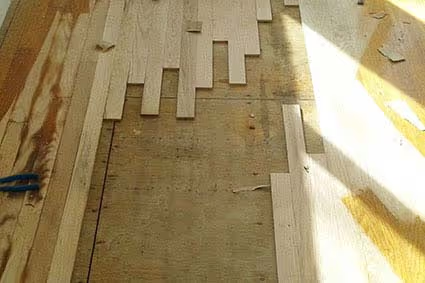 2
2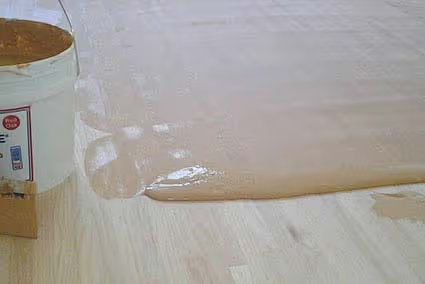 3
3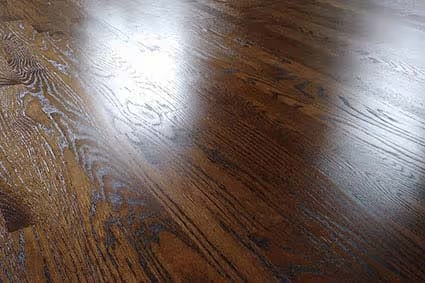 4
4Most pet-stain and water-damage repairs are finished in 1–2 days.
Refinishing means sanding a floor back to bare wood and starting the finish over, and that is only an option when there is wood to spare. Solid red oak from the nineties plats usually has the thickness for it, so a room full of scratches can be sanded flat and finished as one surface. A veneer, a laminate wear layer and a vinyl print film do not, so the question on those floors is not how bad it looks but how many pieces have to come out and what we can put back.
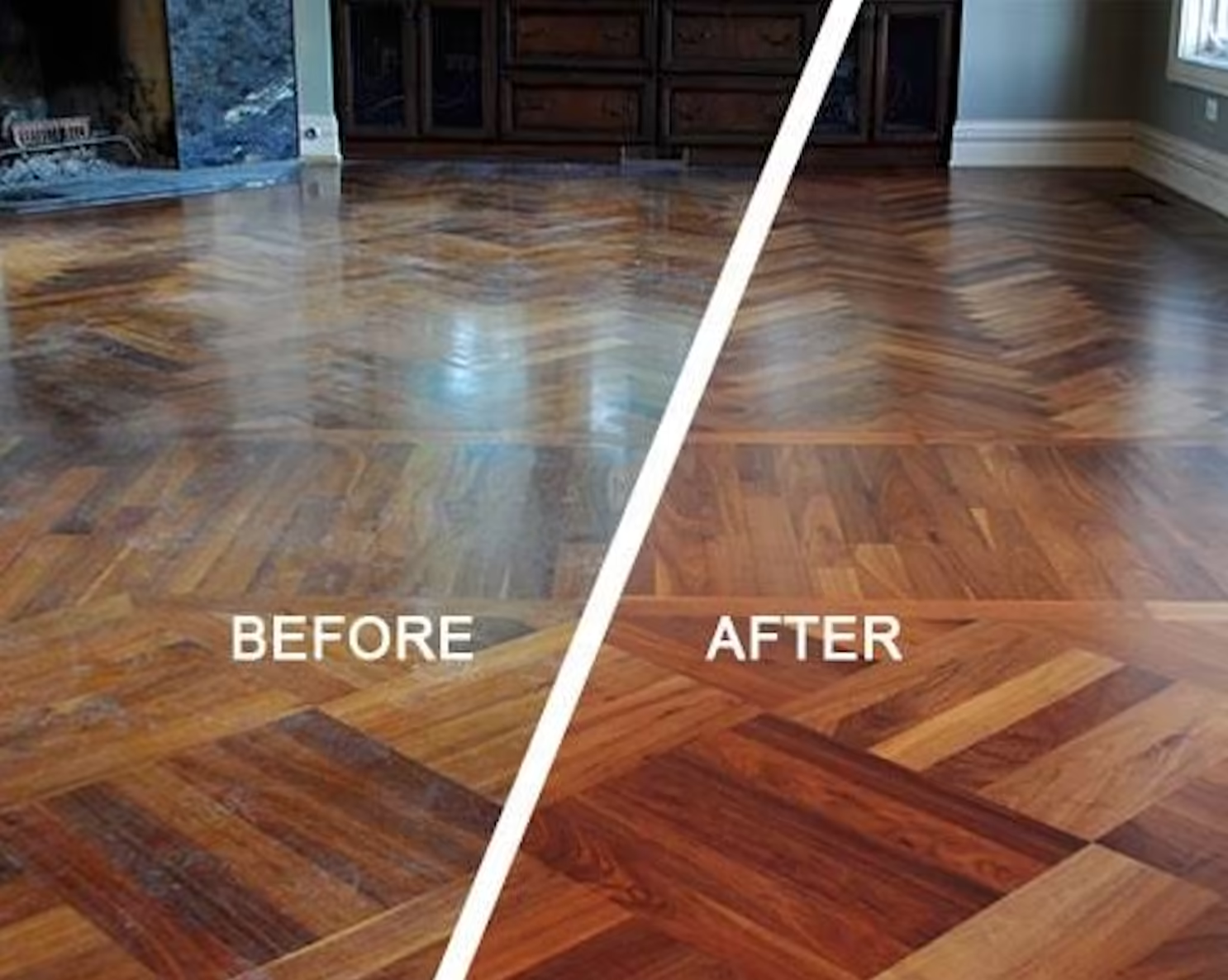
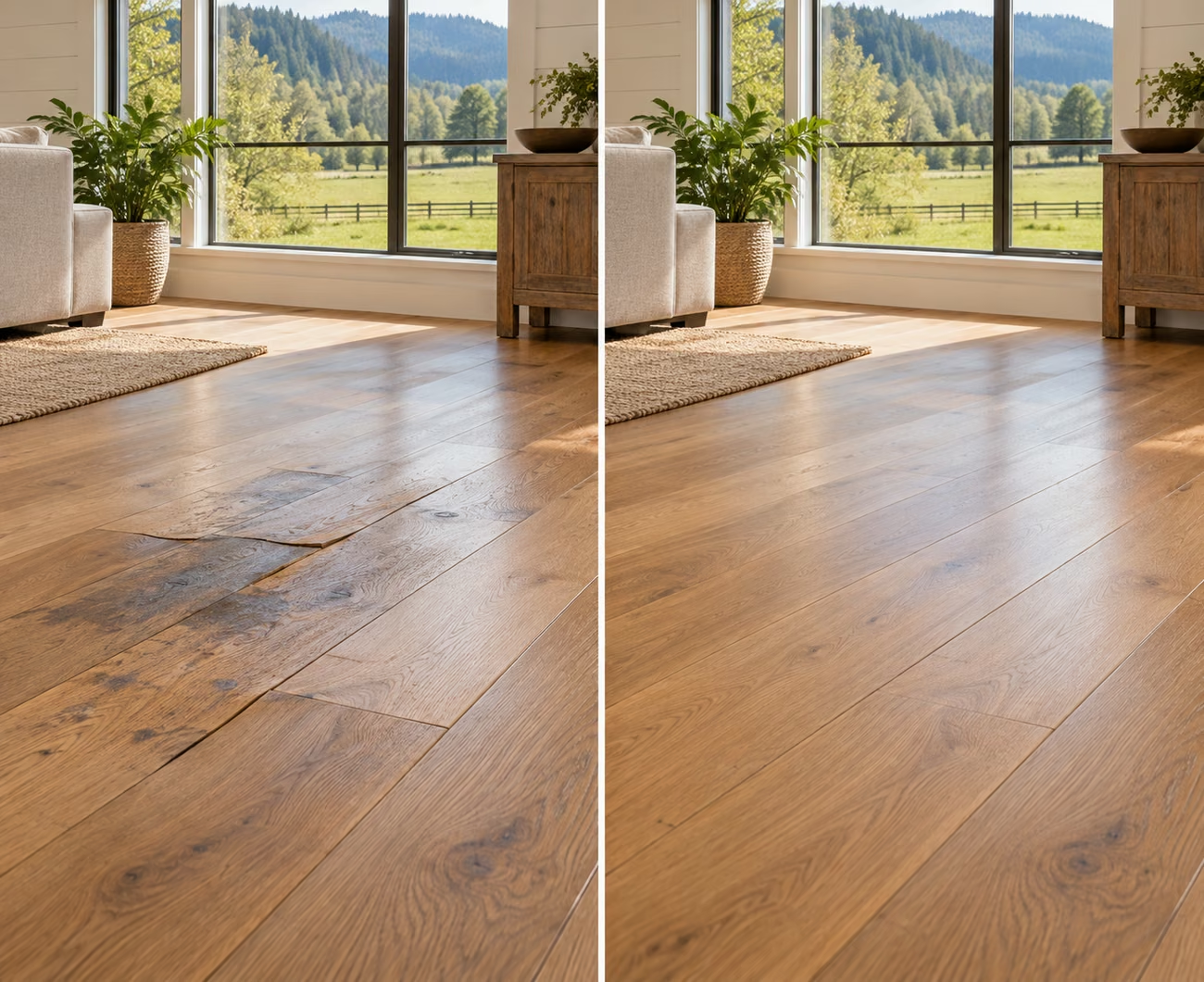
The same floor, split down the middle. Left: the finish is cloudy and worn through in the traffic path — no amount of patching fixes that. Right: sanded back and refinished.
Typically $200–$1,000 · most finished in 1–2 days
Board replacement is done first, so the whole floor is finished together
The water drop. Put a drop of water on a worn spot. If it beads, your finish is still doing its job — a spot repair is fine. If it soaks in within a minute, the finish is gone there and the floor is due for a refinish.
The rug test. Lift an area rug near a bright window. If the wood underneath is noticeably darker than the wood around it, that is sun fade rather than damage — and fade does not patch out board by board.
Still not sure? Send us a few photos of the floor and we will tell you which one you need, even when it is the cheaper answer.
Duvall is a young town standing on old ground. The buildings that became downtown were hauled up the hill from Cherry Valley in 1909 so the railroad could lay track along the river, and the first three plats went on the books in 1910 and 1911. Almost everything else arrived much later and arrived fast. The city's own housing assessment puts 29 percent of Duvall's homes in the 1980s, 21 percent in the 1990s and 28 percent in the 2000s — roughly four out of five houses in town were framed between 1980 and 2009, and 93 percent of them are single-family detached.
That timeline is what we find under our knee pads. The early plats — Duvall Sunset Heights, Duvall Heights, Parkwood Estates, Duvall Hills, Crestview Estates, Juniper Glen — were carpet-and-sheet-vinyl houses with a strip of oak or parquet at the entry, and most have been through a flooring change or two since. The Taylor Ridge, Cherrybrooke, Kasper Heights and Big Rock Ridge years brought solid red oak, site-finished and prefinished.
Alderwood Grove, The Orchard, Fawn Meadows, Tuscany Hills, Fox Hollow and Cottonwood landed squarely in the engineered-hardwood and floating-laminate era, which is why so many repair calls here are about a thin wear layer or a swollen seam rather than a solid board. The newest addresses — River Ridge, Hawthorne, Duvall 143 — are largely rigid-core vinyl plank. About one home in twenty here is a manufactured home, and those bring their own problem: laminate and sheet vinyl over a decking that swells the moment a seam lets water through.
Water is the other constant. Duvall takes roughly 58 inches of rain in a year against about 37 at Sea-Tac, and the Snoqualmie fills the valley below town from late fall into spring. Most of the hillside subdivisions sit above the 100-year flood zone on the city's floodplain map; the valley floor along SR 203 and Cherry Valley Road, and the Coe Clemons and Thayer Creek bottoms, do not.
On December 11, 2025 the mayor declared a state of emergency while the river went over the highway and cut the town off. Even well up the hill, that much rain plus gravel driveways, 2.95 people per household and children in 48 percent of them means the first eight feet inside every door take punishment the rest of the floor never sees. Ninety-two percent of Duvall's workforce commutes out of town, so those entries get crossed twice a day in wet boots, year after year.
Most Duvall repairs land between $200 and $1,000, and most are finished in one or two days. What moves the number is how many boards come out, whether the material is still in production or has to be tracked down, and whether the repair needs staining and finishing to blend into the surrounding floor. Four water-damaged boards in an entry sits at the low end. A stained-and-finished pet-damage repair running across a dining room sits at the high end. You get the price in writing before anything is lifted.
Usually not. We take moisture readings and let the area dry before making any decision, because hardwood that cupped while wet often flattens back out as it releases moisture, and only the boards that split, stained black or came apart actually need replacing. Laminate is less forgiving — once the core swells at a seam it stays swollen, so those planks come out. Vinyl plank frequently survives outright and needs relaying rather than replacing. Have someone look before you commit to a full tear-out; the cost difference is generally large.
Yes, as long as we can reach them. Laminate floats, so we work in from the nearest wall or transition, swap the damaged planks and click the run back together. The genuine obstacle is matching: laminate lines turn over every few years, and a plank from a 2006 Duvall build is not sitting on a shelf anywhere. If you have leftovers in the garage, or a closet run we can borrow from, that solves it cleanly. If not, we show you the closest match we can find and you decide before we lift anything.
It can. Glue-down LVP is cut out and replaced plank by plank. Floating rigid-core is unclicked back to the damaged piece and reassembled. What people miss is that lifted or gapped vinyl is nearly always a symptom rather than the problem — a transition screwed down too tight, no expansion gap left at a wall, a high spot underneath, or a slow leak. We deal with the cause while we are there, otherwise the replacement planks do the same thing the following summer.
Often, though not out of a catalog. We identify the species, plank width, total thickness and grain pattern, then work through current products, salvage stock, and any place the original floor is still hiding — a closet, under the refrigerator, beneath a permanent bookcase. Engineered floors from that period were commonly three-eighths to one-half inch thick with a thin veneer, and the thickness has to match or the repair sits proud of the field. When we cannot get close enough to satisfy you, we say so rather than install something you will notice every morning.
Yes. We cover addresses in town and the rural properties around it — Cherry Valley Road, Big Rock Road, Woodinville-Duvall Road, and the acreage spread between Duvall, Carnation and Monroe. We work throughout King and Snohomish County from our Bellevue base, so a trip out here is routine scheduling rather than a special arrangement. Sending photos of the damage gets you a written price before anyone drives out.
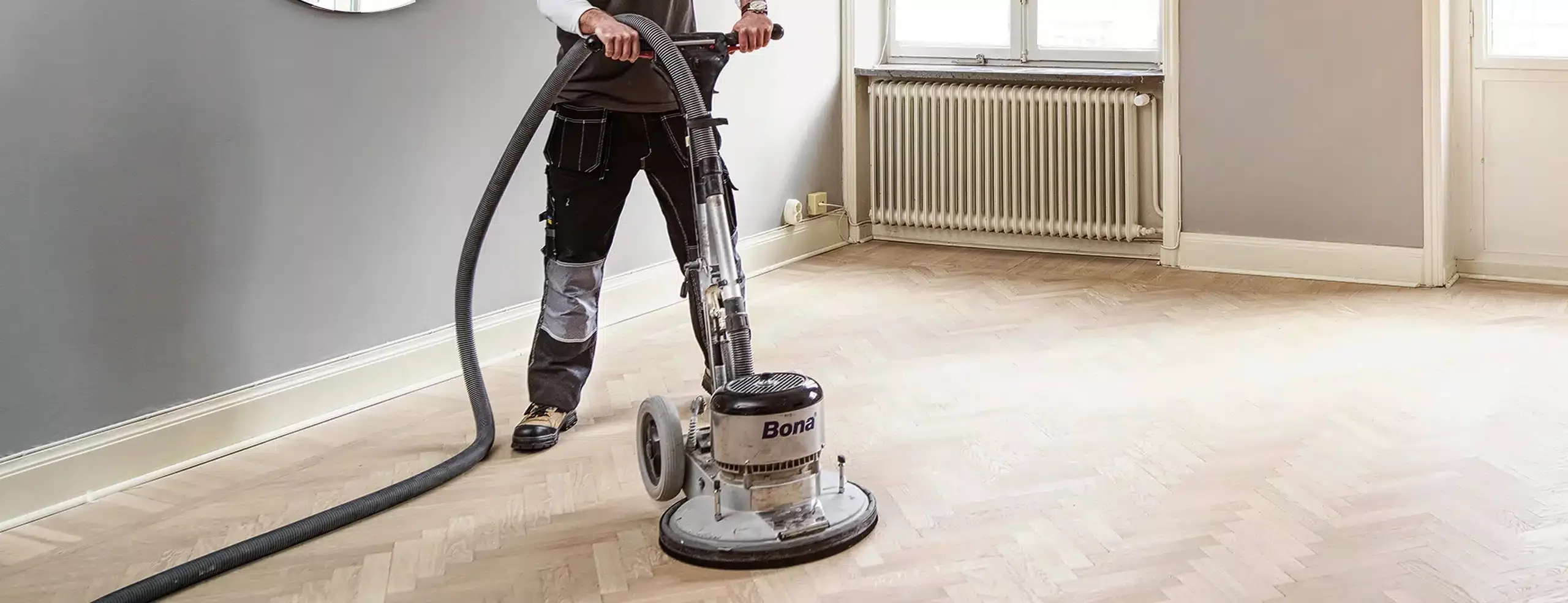
Solid wood keeps a reserve. A solid red oak board carries enough thickness to sand a problem out completely — which is why deep damage in a nineties Duvall floor is often repaired in place instead of replaced.
Most of this town was framed after 1980, so most of its floors are engineered, laminate or vinyl plank — none of which have wood to spare. But solid red oak does turn up here, and where it does the rules change. The Taylor Ridge, Cherrybrooke, Kasper Heights and Big Rock Ridge years brought site-finished and prefinished oak, and the early plats above Main Street put a strip of oak or parquet at the entry. Those boards can give up a full pass of sanding and still have decades left, so before we quote a board swap we ask whether the damage actually goes deeper than the finish — because a surprising amount of it does not.
The trouble lives underneath — a fastener that has let go of its joist or framing that has dried and shrunk a hair since the house went up. Roughly four out of five houses in Duvall were framed between 1980 and 2009, which is exactly the age when those fasteners start letting go.
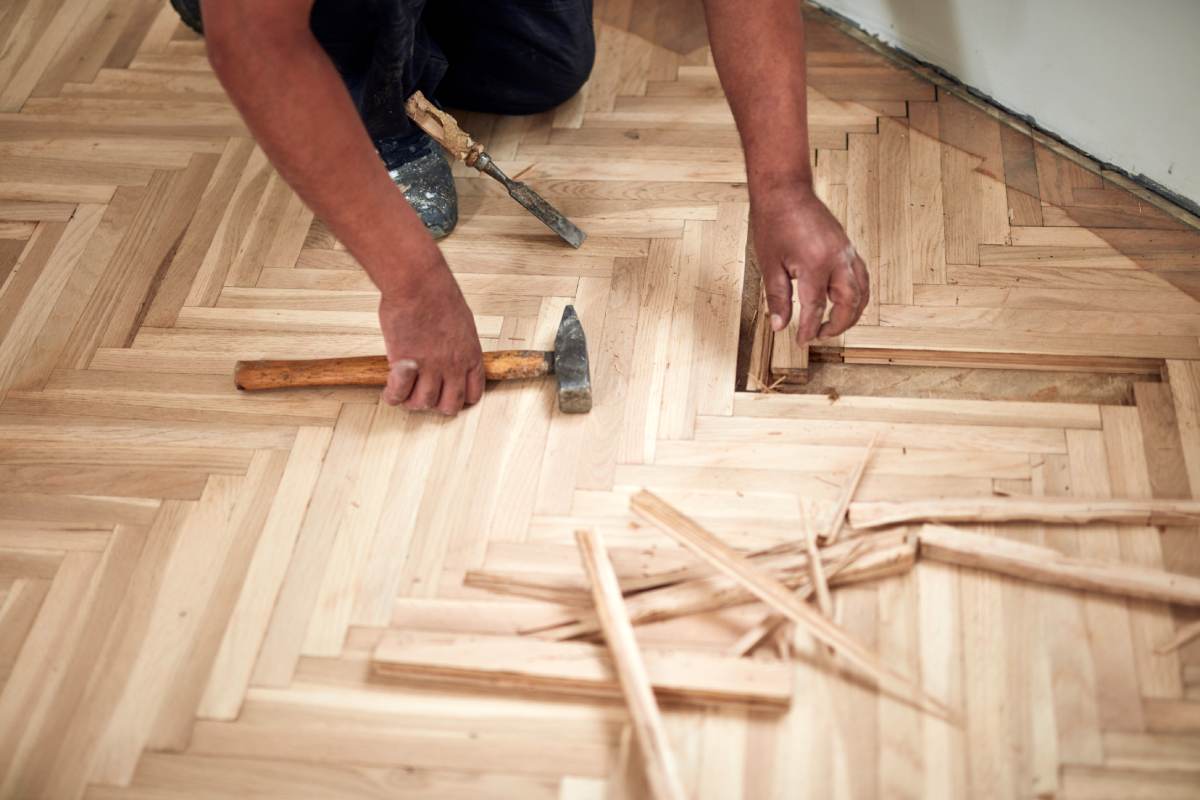
The fix starts under the boards. Loose pieces come up, the substrate gets fastened flat, and only then does the surface go back together.
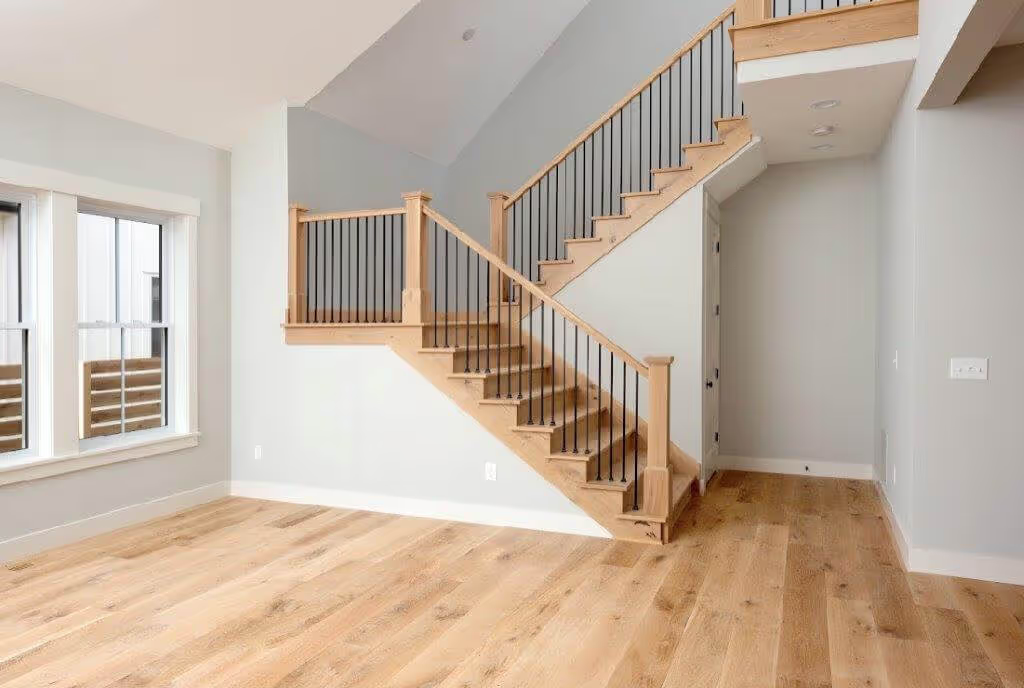
Stairs take the traffic of a hallway on a tenth of the wood. Treads, nosings and thresholds wear out years before the rooms around them — and they can be repaired one piece at a time.
Ninety-two percent of Duvall's workforce commutes out of town, so the stairs get crossed twice a day in wet boots before anyone has taken a coat off. Add a school run in a town where 48 percent of households have children, and a wet dog coming back up a gravel driveway, and the same few square feet of wood absorb all of it. In a two-story Fox Hollow or Tuscany Hills home the staircase is the busiest floor in the house, and the nosing on each tread takes the full strike of every step. These are the repairs people put up with for years because they assume the whole staircase has to come apart. It does not.
Photograph the damage on your phone — a close-up of the worst spot, one from a few feet back, and one of the whole room. One of our estimators looks at every photo personally and emails you a written price the same business day. No visit, no sales call, no obligation.