1,000+ Floors Installed & Restored Across Washington
Searching for floor repair near me in Kirkland? We replace damaged hardwood, engineered flooring, laminate, and LVP while keeping good flooring in place. Call (425) 595-1079 for a free in-home estimate.




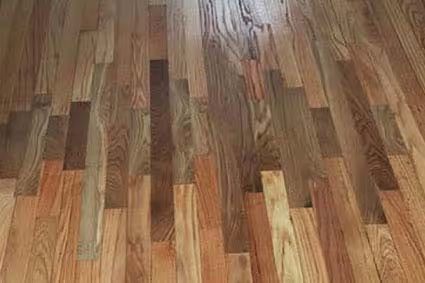
A patch that announces itself. The wood is close but not right, and the grain runs the wrong way. Matching properly is most of the skill in a board repair.
Kirkland built late and fast, so we are rarely rescuing irreplaceable old-growth wood here. We are matching a mass-produced floor convincingly: red oak strip and parquet in the ranches and split-entries, engineered plank in the condos and townhomes, and click LVP in everything laid since about 2014.
The default floor in Kirkland's condos, townhomes and almost anything built since the mid-nineties. The real-wood wear layer on most of it is thinner than a credit card, so sanding a gouge out is off the table — the plank comes up and a matched one goes down. Before we touch it we work out whether yours is glued, nailed or floating, because that decides how a plank comes out without wrecking the three around it.
Lifting ends, open seams, cracked planks, and the ridge that appears when a floating floor runs out of room to expand. We find the reason first — a heat run, an edge pinned under trim or a heavy island, a sun-baked strip beside the glass, a high spot underneath — then swap the damaged planks and close the seams. Replacing a plank without fixing what moved it only buys you a season.
Cracked, cupped, split or stained boards cut out one at a time and replaced with wood that matches on species, width, grain and thickness. Red oak strip and parquet in the ranch and split-entry houses, vertical-grain fir in the older places around Market and Norkirk, where we source salvaged stock because new fir will never read like 1920s fir. Gaps that stay open all year get shimmed with matching wood rather than packed with putty.
Dog claws, dragged dining chairs, grit walked in off the trail, and the dark rings where a water bowl or a bladder sat too long. Surface scratches buff out and recoat. Anything that went through the finish into the grain gets filled and blended, or the board comes out — pet urine that has blackened the wood cannot be cleaned or sanded away, and we tell you which of the two you are looking at before we quote.
Swollen laminate edges, chipped corners, click joints that have crept apart, and the doorway strips where wood meets tile, carpet or LVP. Laminate carries a printed wear layer that cannot be sanded, so we unlock the run, replace only the bad planks and lock it back together. Worn, cracked or lifting transitions get re-cut or replaced so they sit flat, hold the plank edges down and stop catching feet.
Urine and standing water soak straight through the coating into the grain, which is why no cleaner has ever shifted them. Here is the sequence we run to take a black stain out of a floor and leave nothing behind, photographed on our own jobs.
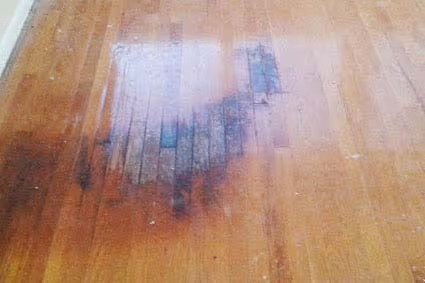 1
1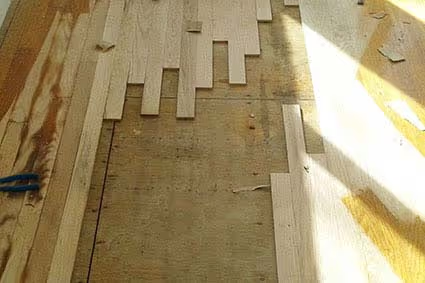 2
2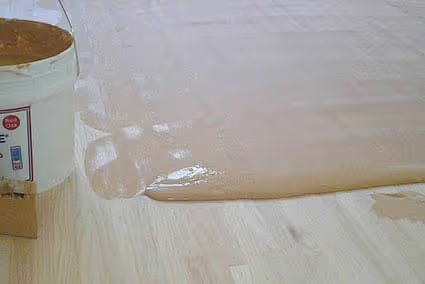 3
3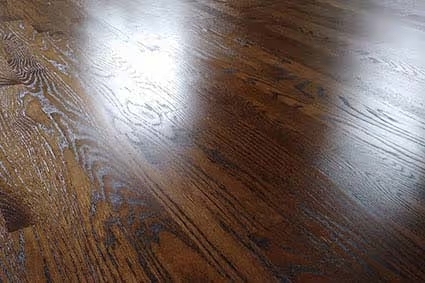 4
4Most pet-stain and water-damage repairs are finished in 1–2 days.
One is a few hundred dollars and a day or two. The other is the whole room. Here is how to work out which one your floor actually needs before anybody quotes you.
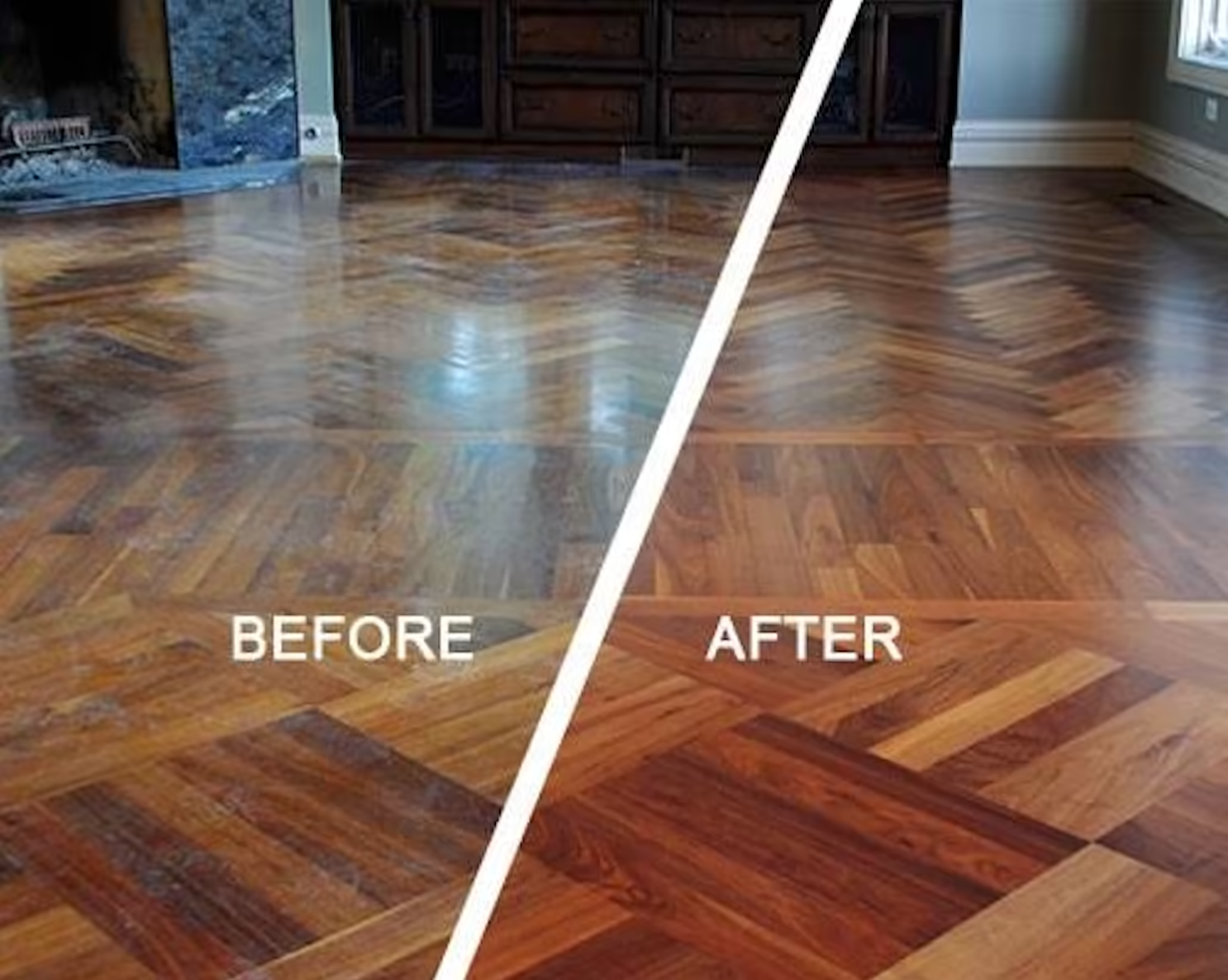
The same floor, split down the middle. Left: the finish is cloudy and worn through in the traffic path — no amount of patching fixes that. Right: sanded back and refinished.
Typically $200–$1,000 · most finished in 1–2 days
Board replacement is done first, so the whole floor is finished together
Water on the worn patch. If the drop sits up and beads, your finish still works and patching is sensible. If it sinks in and darkens the wood within a minute, that room needs sanding and refinishing, not a patch.
Look under the rug. Wood that is markedly darker beneath a rug than beside it has faded in the light. Fade runs across a whole zone, so swapping single boards there makes the mismatch worse, not better.
Still not sure? Send us a few photos of the floor and we will tell you which one you need, even when it is the cheaper answer.
Kirkland built itself late and quickly, and that shows up in every repair call we take here. Only about 22 percent of the city's homes were finished before 1970, while 42 percent went up between 1970 and 1989 — a heavier concentration in those two decades than any other east King County city carries. So the floors we are asked to fix in Kirkland are mostly not century-old fir. They are red oak strip and parquet in ranch houses and split-entries, plus whatever a second or third owner laid over the original carpet in 1996 or 2014. The work is less about rescuing irreplaceable old-growth wood and more about matching a mass-produced floor convincingly.
The older quarter of the city sits where you would expect. Market and Norkirk hold Kirkland's largest collection of Craftsman houses and vernacular cottages, most built between the First World War and about 1930, and those are the addresses where we still pull vertical-grain fir. A scattering of survivors from the same years stands farther out in Rose Hill, Juanita and Finn Hill, originally on orchard and berry-farm lots. Then there is the wartime layer: more than 1,600 dwelling units went up in Kirkland in 1942 and 1943 for Lake Washington Shipyard workers, whose numbers jumped from 250 in 1939 to over 8,000. Whatever remains of that stock has been refloored at least twice, and what is under the top layer is usually a surprise to everyone.
The real building did not start until the Evergreen Point Bridge opened in 1963 and put Kirkland inside an easy commute. Finn Hill alone added 444 houses between 1961 and 1965; South Juanita added 235 and North Rose Hill 231. Nearly all of them are ranches and split-entries — low, wood-framed, attached garage, a picture window at the front. They share a habit too: an oak or parquet entry that has taken sixty years of shoes, and one room on the low side where the wood has moved. Bridle Trails, on its large lots beside the state park, tends to hold more original wood than anywhere else in Kirkland, which is exactly where board-for-board matching earns its keep.
The other half of our Kirkland work is not solid wood at all. Downtown along Moss Bay, thousands of condominiums and apartments have gone in since the 1990s, and Totem Lake and Kingsgate have kept stacking townhomes and apartment blocks since the city annexed Finn Hill, North Juanita and Kingsgate in 2011. Those units are engineered hardwood or LVP over concrete. They do not rot, but they gap at the seams, cup at the joint edges and lift wherever a floating floor gets pinned or cooked by south-facing glass.
With several thousand jobs at Google's downtown campus and at EvergreenHealth up by Totem Lake, a large share of these homes turn over as rentals, so dented planks, chair-leg gouges and dog scratches arrive on a two-year cycle instead of a twenty-year one. In a building, the loading dock, the elevator pad and the HOA noise window matter as much as the floor, and we plan around all three.
Then there is the water. Kirkland takes close to forty inches of rain a year, November being the worst of it, and the front of the city is a lake — Marina Park, Houghton Beach, Juanita Beach, Carillon Point. Sliders onto decks, dogs coming back up from the shoreline, and eight damp months through the same doorway are why the boards just inside a Kirkland entry and along the deck threshold are almost always the worst boards in the house. We take a moisture reading underneath before quoting anything, because covering wood that is still damp is how a repair fails the following winter.
Most repairs land between $200 and $1,000. What moves the number is how many boards or planks have to come out, whether we can buy a match off the shelf or have to hunt salvaged or discontinued stock, and whether the repaired area needs sanding and finishing to blend with what surrounds it. Engineered and LVP repairs usually sit toward the lower end because there is no finishing step. Water damage across a wide area sits at the top, because the wood underneath has to be dried out before anything new goes down. You get a written figure at the in-home visit, not a range over the phone.
Yes, and with engineered it is usually the only sensible option, since the wear layer is far too thin to sand a gouge out. A glued or nailed plank is scored free and lifted; a floating floor can often be unclicked back from the nearest wall, or the bad plank cut out and the replacement bottom-cut so it drops into place. The honest catch is color. Engineered finishes shift under years of UV, so a factory-fresh plank from the same product line can read lighter than the ten-year-old floor beside it. We hold a sample against your floor before ordering anything.
Routinely. Buildings around Moss Bay and Carillon Point tend to come with loading-dock bookings, elevator pads, insurance certificates and noise windows, and none of that is a problem when we know about it before the day. Send the HOA or building rules along with your estimate request and we will schedule inside them. We are licensed and insured, so the certificate your building manager asks for is straightforward to provide.
Three usual causes, and they show up most on the glass side of a Kirkland house. Direct sun heats the planks, they grow, and if the expansion gap at the wall was cut short or the trim is pinning the edge, the floor has nowhere to go but up. Second is a door track or threshold screwed straight through a floating floor, which locks it in place. Third is a dip or a high spot underneath that lets the planks flex until the joints let go. We check all three, level that one spot if that is what it turns out to be, then replace the affected planks and close the seams back up.
It happens more often than not, because décors get changed every few years. There are three routes. We chase remaining stock through suppliers and clearance channels; we borrow planks from a closet, from under an appliance or from a corner nobody walks on and move the mismatch out of sight; or we accept a near match and place it where the eye will not travel. If none of those gives a result you would be happy living with, we say so before quoting instead of after. And check the garage first — leftover boxes from the original install are worth real money to you.
Depth decides it. If the urine only reached the finish, sanding takes it out and the board stays where it is. Once it has soaked into the grain — the black marks you see in bedrooms, along baseboards and beside a favorite corner — no cleaner and no sander will get down to it, and those boards have to come out. Smell is the giveaway: if you can still smell it after a thorough clean, it is in the wood or below it. The upside is that oak from that era is straightforward to match, so replacement boards go in, get stained on your own floor and finished to the sheen around them.
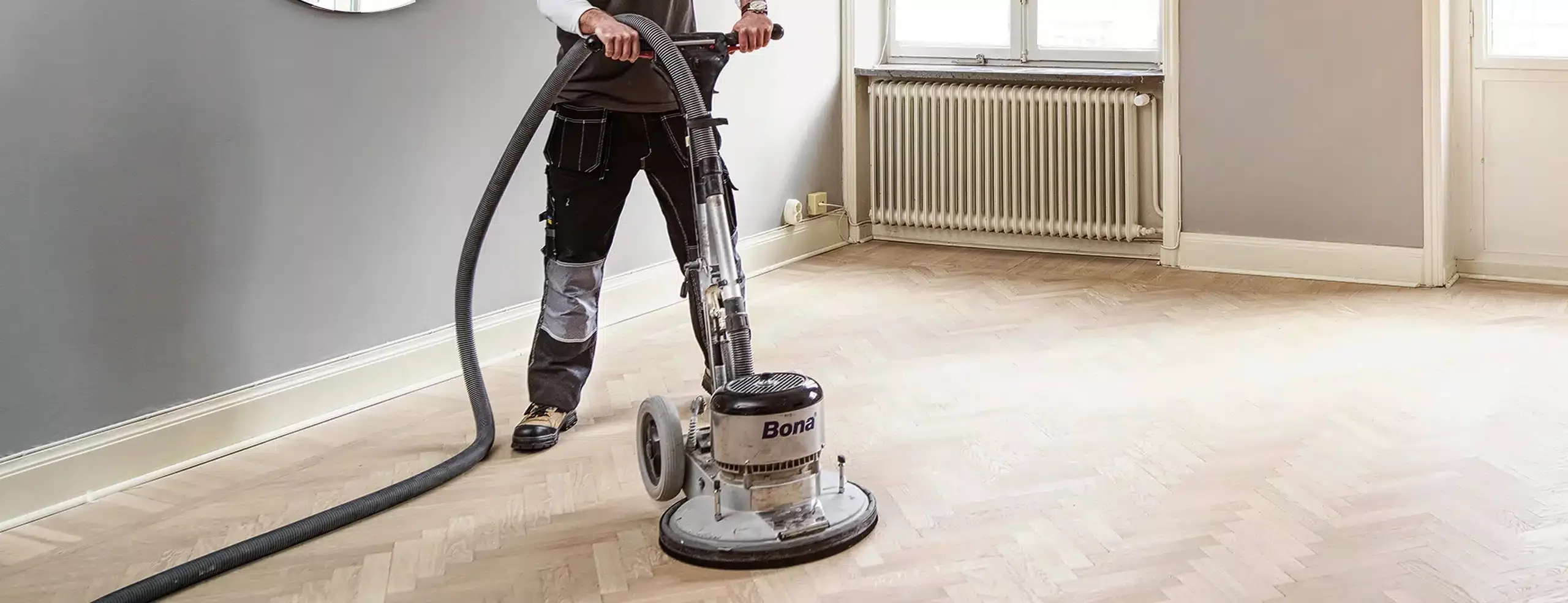
Solid wood keeps a reserve. A solid oak or fir board carries enough thickness to sand a problem out completely — which is why deep damage in an older Kirkland floor is often repaired in place instead of replaced.
Solid hardwood is the one floor with margin built in. Where an engineered plank in a Moss Bay condo has a wear layer thinner than a credit card, the red oak strip in a Finn Hill ranch or a South Juanita split-entry can give up a full pass of sanding and still have decades left. So before we quote a board swap, we ask whether the damage actually goes deeper than the finish — because a surprising amount of it does not.
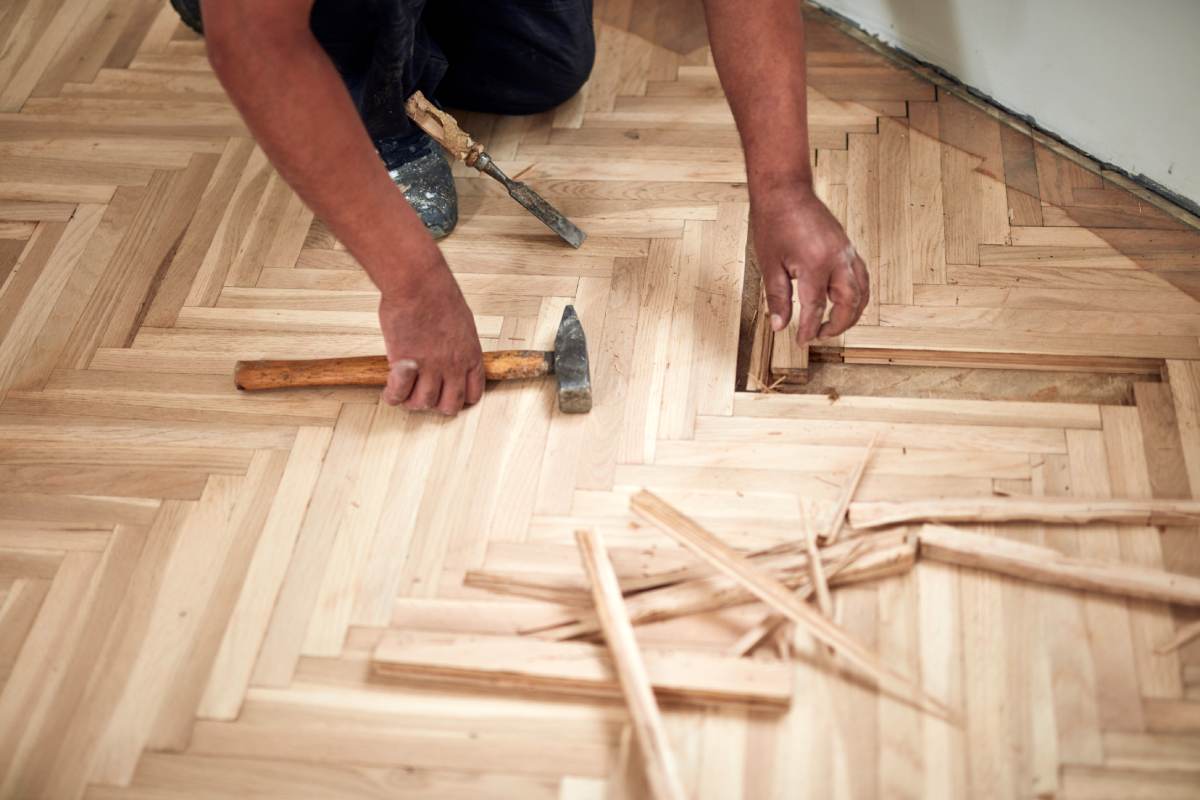
The fix starts under the boards. Loose pieces come up, the substrate gets fastened flat, and only then does the surface go back together.
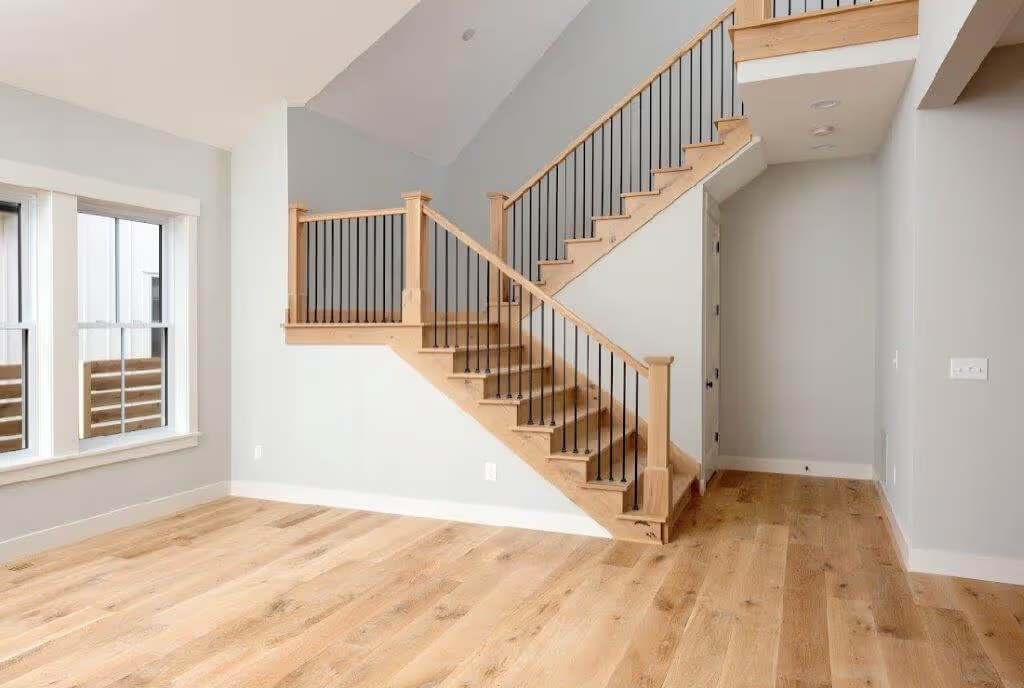
Stairs take the traffic of a hallway on a tenth of the wood. Treads, nosings and thresholds wear out years before the rooms around them — and they can be repaired one piece at a time.
A Kirkland split-entry puts a short flight of stairs directly inside the front door, so every commute, every grocery run and every dog coming back up from Juanita Beach lands on the same few square feet of wood. In the ranches and split-entries that fill Finn Hill and North Rose Hill, that flight is the busiest floor in the house, and the nosing on each tread takes the full strike of every step. These are the repairs people put up with for years because they assume the whole staircase has to come apart. It does not.
Photograph the damage on your phone — a close-up of the worst spot, one from a few feet back, and one of the whole room. One of our estimators looks at every photo personally and emails you a written price the same business day. No visit, no sales call, no obligation.