1,000+ Floors Installed & Restored Across Washington
Searching for floor repair near me in Everett? We replace cracked or damaged planks, repair stains and water damage, and blend repairs into the surrounding floor. Call (425) 595-1079 for a free in-home estimate.
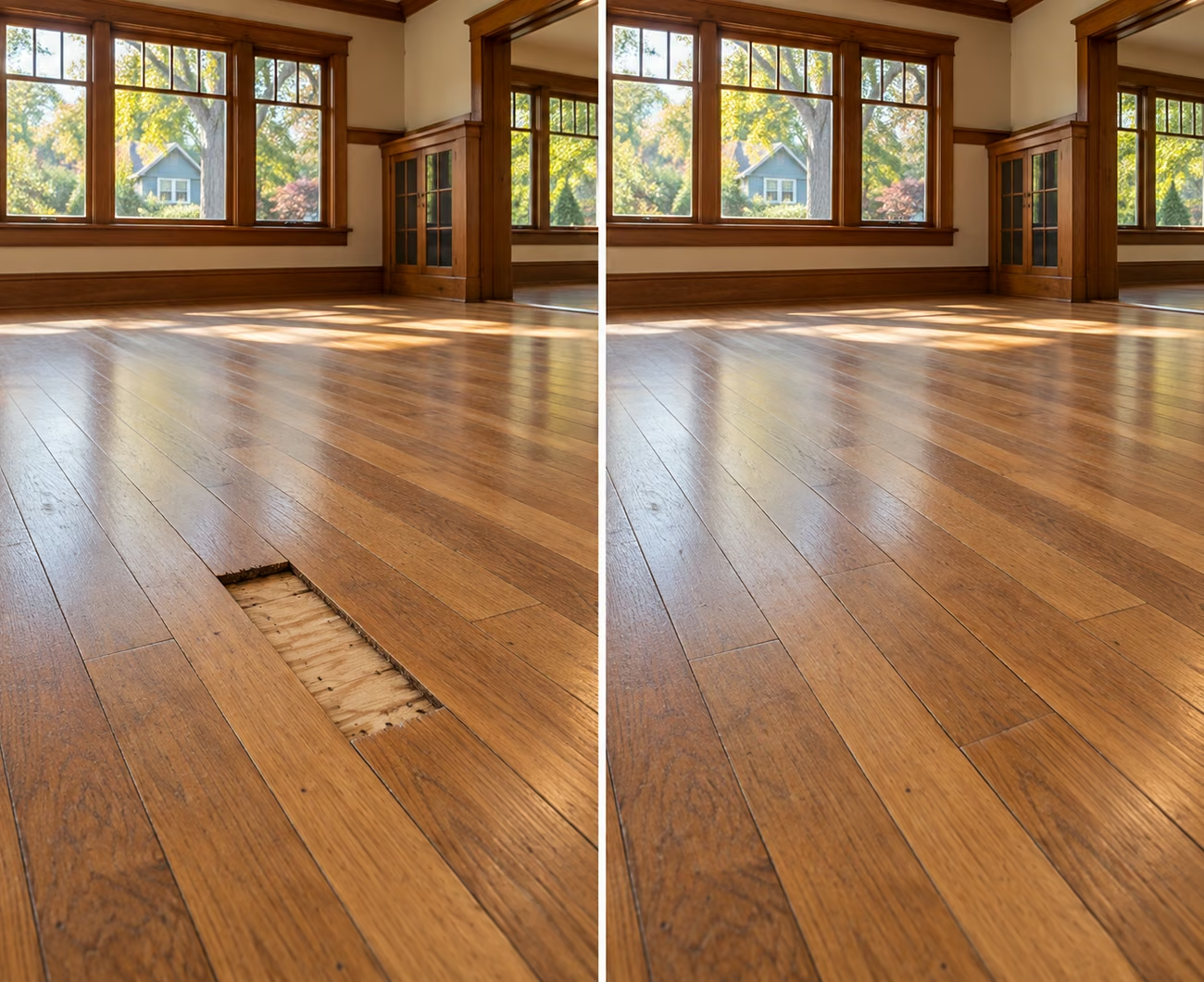




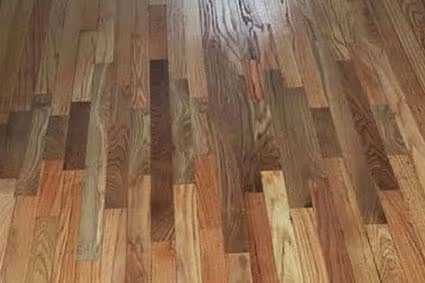
A patch that announces itself. The wood is close but not right, and the grain runs the wrong way. Matching properly is most of the skill in a board repair.
Everett splits cleanly down the middle. North of downtown you get thin vertical-grain fir from the mill years, already sanded more times than it can stand. South and east you get oak, laminate and vinyl plank from the last forty years. Those two floors fail in different ways and they are repaired with different tools.
Most of Everett's rentals, townhomes and newer builds are click-together LVP, and it fails in ways you can predict: ends curling away from a sun-baked slider, seams opening into a hairline gap you can catch with a fingernail, a plank cracked where a bed frame sat for three years. We work out why it moved before we touch it — an edge pinned under a door casing, a hump in the substrate, a run laid too tight to the wall — then release the affected planks and lock in replacements from the same batch or the nearest match we can source.
Laminate went into a lot of Everett condos and kitchen remodels between the mid-1990s and the mid-2000s, and it does not forgive standing water. Once an edge has swelled, that plank is finished; sanding it only opens more core. We take the row apart from the nearest wall, swap out the ruined planks, and put the base and trim back so the repair does not announce itself. If the decor is out of production, we go looking for a donor plank in a closet or under an appliance before we suggest anything bigger.
The houses in Bayside, Riverside and up on Rucker Hill were floored in thin vertical-grain Douglas fir; the post-war blocks below them went down in oak strip. Split, cupped, scorched or stained boards come out one at a time and go back in matched for species, width and grain direction, with the end joints woven into the surrounding rows instead of running a straight seam across the room. On old fir with little wood left above the tongue, replacing beats sanding every time.
A black ring that will not sand out has already gone through the finish and into the grain, and the smell in a closed room usually tells you before the color does. We take the ruined boards out, confirm what sits underneath is dry before anything new goes down, then lay in fresh stock, stain it to the color the room has aged into, and feather the finish out past the repair.
Grit tracked in off wet Everett sidewalks works like sandpaper, and it shows up first in the traffic lane and on the single board inside the front door. Light scratches burnish and blend. Deep gouges get filled, or the board gets swapped. Cracked thresholds and lifting transition strips between rooms are re-cut and re-fastened so nothing catches a toe, a chair leg or a vacuum wheel.
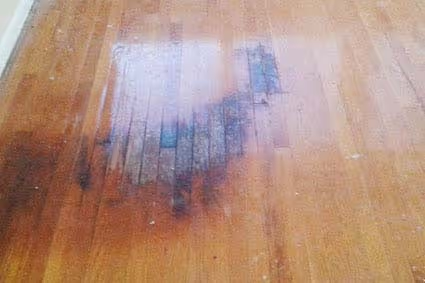
Between mill-era fir and modern plank, the one thing Everett floors share is what standing water and pet urine do to them: the stain goes past the finish into the wood, which is why cleaning never lifts it. This is the sequence we actually run, photographed on our own jobs.
 1
1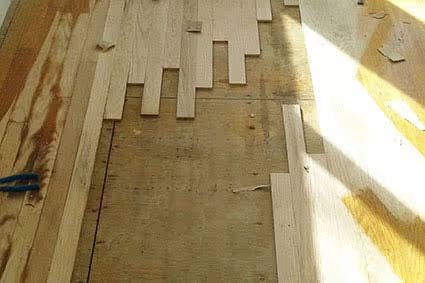 2
2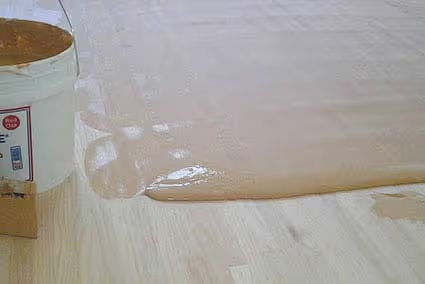 3
3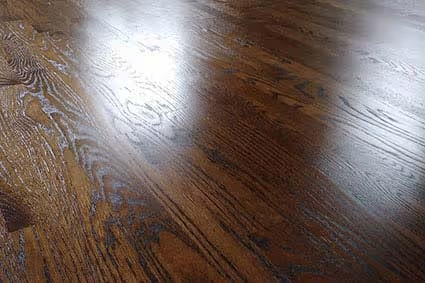 4
4Most pet-stain and water-damage repairs are finished in 1–2 days.
Two different jobs at two very different prices — and on century-old Everett fir the answer matters more than usual, because there may only be one sanding left in the floor. Here is how to tell which one you need.
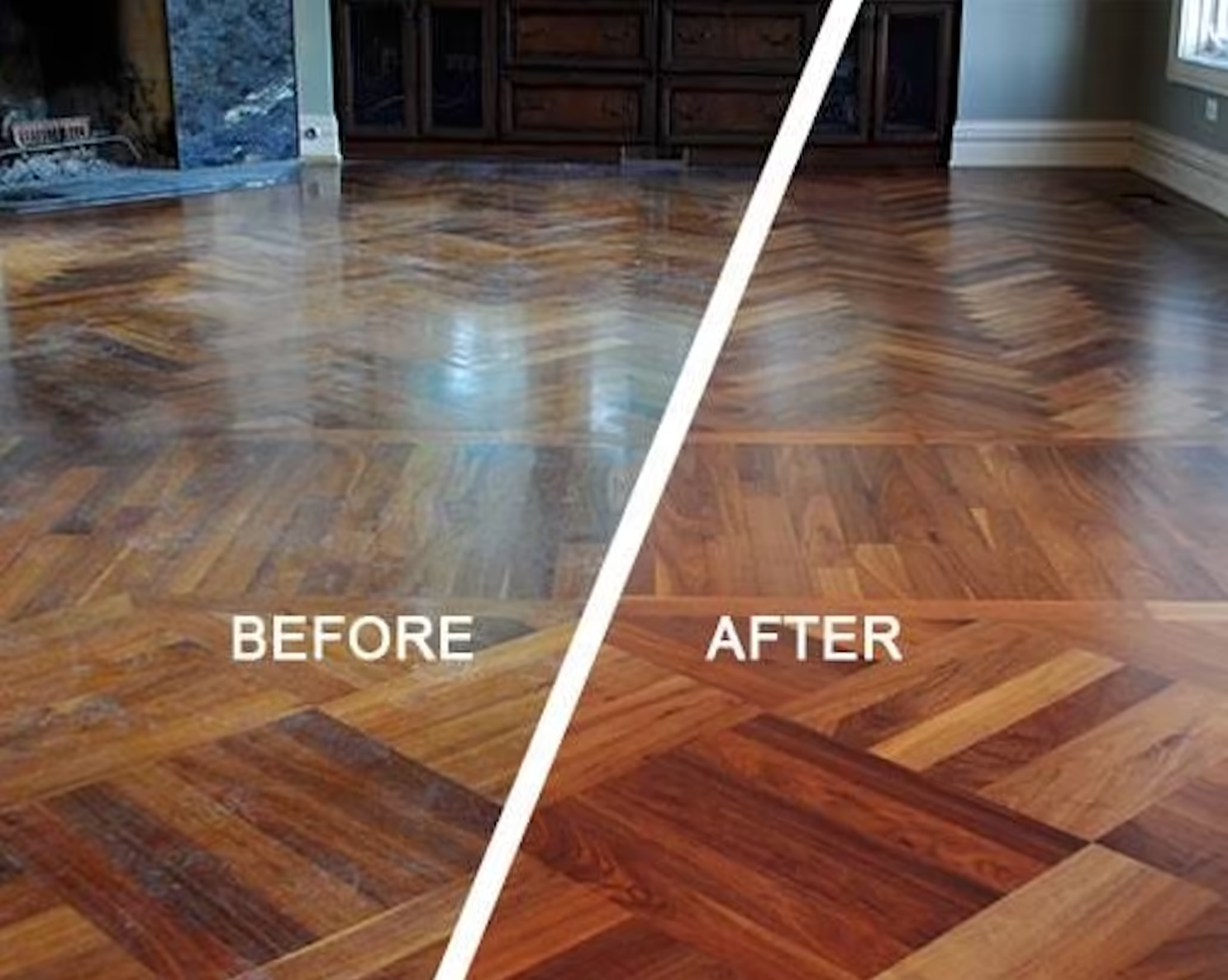
The same floor, split down the middle. Left: the finish is cloudy and worn through in the traffic path — no amount of patching fixes that. Right: sanded back and refinished.
Typically $200–$1,000 · most finished in 1–2 days
Board replacement is done first, so the whole floor is finished together
Water on the worn patch. If the drop sits up and beads, your finish still works and patching is sensible. If it sinks in and darkens the wood within a minute, that room needs sanding and refinishing, not a patch.
Look under the rug. Wood that is markedly darker beneath a rug than beside it has faded in the light. Fade runs across a whole zone, so swapping single boards there makes the mismatch worse, not better.
Still not sure? Send us a few photos of the floor and we will tell you which one you need, even when it is the cheaper answer.
Everett was built by its mills. By 1903 the city directory counted ten sawmills and twelve shingle mills working the waterfront, and the Weyerhaeuser plant here was billed as the largest lumber mill in the world. Pull the carpet in the houses that went up alongside all that — Bayside, Riverside, Northwest Everett, the 102 homes on Rucker Hill that joined the National Register in 1989 — and what turns up is usually thin vertical-grain Douglas fir laid somewhere between 1900 and 1930.
A century of sandings later there often is not much wood left above the tongue, and that decides the job for us: on fir that thin we replace boards rather than chase damage with a sander, and we hunt salvage from closets, stair landings and under kick plates, because nobody has milled that run since before the war. The old mill cottages down in Lowell, platted in 1873 and not annexed by Everett until the 1960s, are the same story with less trim in the way.
South of downtown it is a different city and a different repair. Boeing opened at Paine Field in 1967, the population had already doubled since 1950, and the build-out kept rolling south through Silver Lake, Cascade View, Holly and Evergreen — ranches and split-levels first, then a long run of apartments, condos and townhomes from the 1970s into the 2000s. Fewer than half of Everett's housing units are detached houses, roughly one in six sits in a building of twenty units or more, and the city carries the highest share of renters in Snohomish County.
So more often than not, the floor we get called about clicks together rather than nails down: laminate from a 1990s remodel, or the LVP that went into rentals, flips and the new blocks at Riverfront on the old Kimberly-Clark mill site. Those floors are not refinished. A plank comes out, a matching plank goes back in, frequently between tenants or before a family posted to Naval Station Everett hands over the keys.
The bay handles the rest. Everett sits open to Port Gardner, the wet stretch runs long on both sides of winter, and the damage follows the water indoors: the board just inside the front door, the plank at the base of a slider, the laminate edge that puffed up beside a dishwasher nobody checked. We meter moisture before we cut anything out. Setting a good board over a damp spot only buys about six months.
Most of the repairs we do land between $200 and $1,000. What moves the number is how many boards or planks are coming out, whether the material is still in production or has to be sourced and matched, and whether the area needs staining and finishing afterward. A fir patch color-matched into a 1920s floor takes considerably longer than snapping four LVP planks back into a hallway. We look at it, price it in writing, and you decide from there.
Usually, though not out of a catalog. The vertical-grain fir in those houses was milled a century ago in widths that are no longer standard, so we start by looking for salvage inside the house itself — a closet floor, a stair landing, the run hidden under a built-in. If there is none, we source reclaimed fir and mill it to the same width and thickness. The new boards then get stained to the color the room aged into, and that step is what actually makes the repair disappear.
Often, but it depends on the decor pattern. Laminate lines get retired every few years, and once yours is out of production the best match is another plank from your own floor: a closet, the space under the refrigerator, the back of a pantry. If nothing can be borrowed, we will show you the closest plank available and tell you plainly whether it will read as a repair or as a mismatch, before you have spent anything.
If the stain sits in the finish, sanding and refinishing takes it. If it is dark all the way through the grain and you can still smell it in a closed room, it has gone past what a sander reaches and the board comes out. We test one spot rather than guess. Replacing three boards you will never be able to pick out again is a better result than sanding an entire floor and still seeing the shadow.
No. Click-together LVP releases in rows, so we lift only what is affected, confirm everything under it has dried, and lock the same planks or matched replacements back down. The part that matters is finding where the water came in — a failing threshold, a worn door sweep, condensation running off a sliding track — because a floor put back over an active leak will lift again.
Most plank swaps and small board replacements are a single visit, provided the matching material is in hand or still in production. Sourcing is what adds days, not the labor. Send photos of the damage, plus a picture of the flooring box or a spare plank from a closet if you have one, and we will tell you before scheduling whether this is a one-day job or a two-trip job.
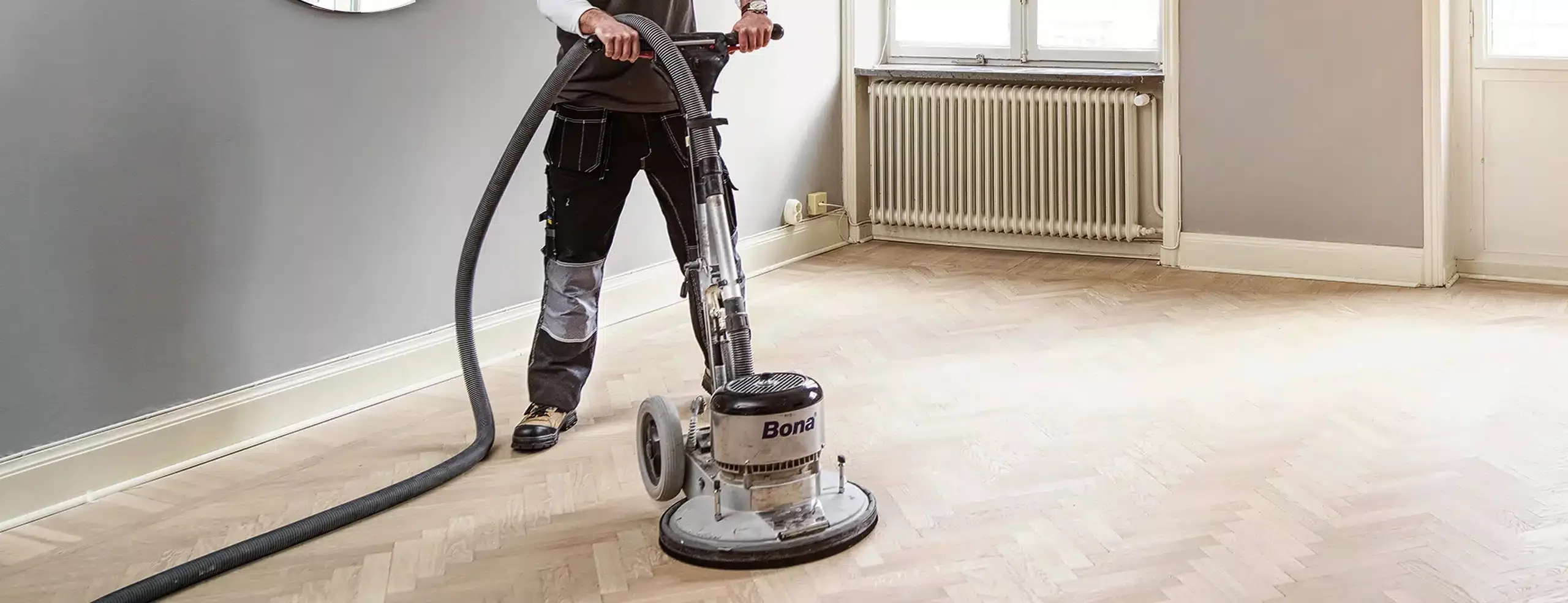
Solid wood keeps a reserve. A solid oak or fir board carries enough thickness to sand a problem out completely — which is why deep damage in an older Everett floor is often repaired in place instead of replaced.
Solid hardwood is the one floor with margin built in. Where an engineered plank has a millimeter or two of real wood on top, an oak strip floor in one of the post-war blocks below Rucker Hill can give up a full pass of sanding and still have decades left. So before we quote a board swap, we measure what is actually left above the tongue — because a surprising amount of Everett damage never got past the finish.
When a floor develops a gap or a soft spot, the boards you see are rarely the ones at fault. The problem lives underneath — a fastener that has let go of its joist, a subfloor panel rubbing its neighbor, or framing that has dried and shrunk a hair since the house went up. Everett gives us both ends of that: fir houses framed between 1900 and 1930, and the ranches and split-levels that filled Silver Lake and Holly after Boeing opened at Paine Field. We chase the problem to its source instead of patching the symptom.
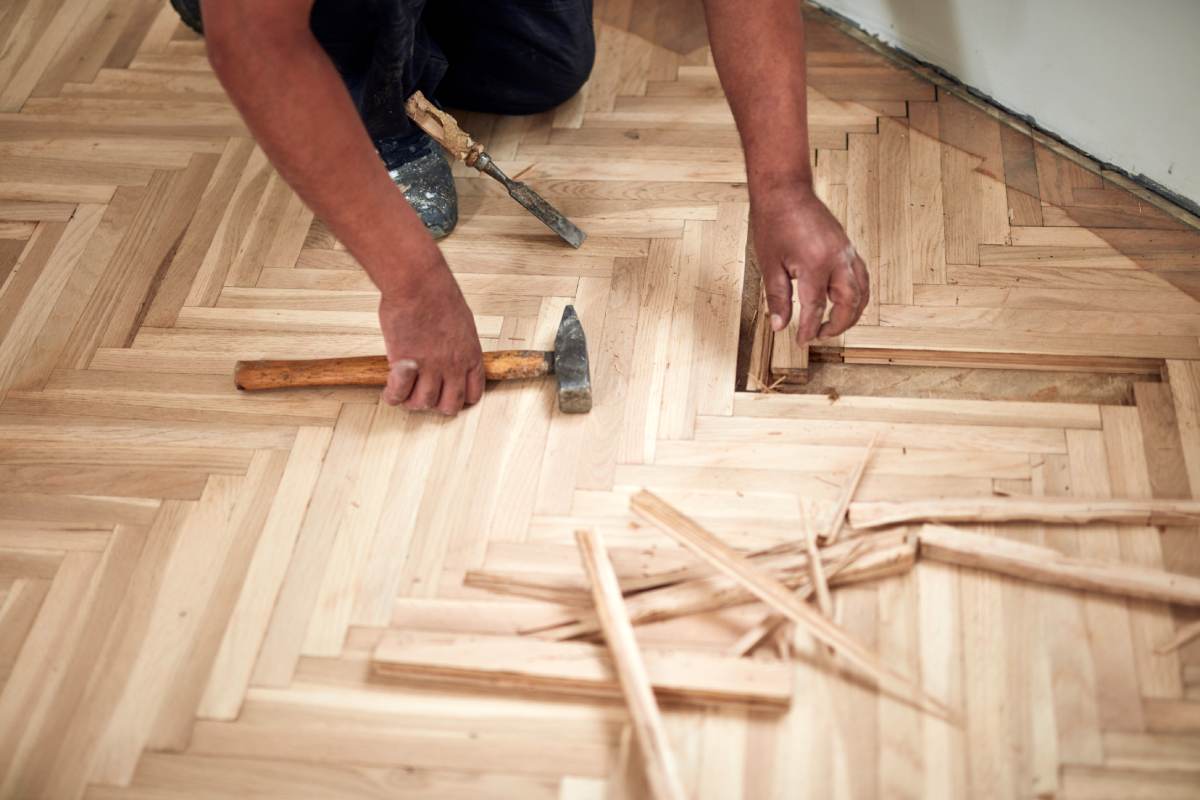
The fix starts under the boards. Loose pieces come up, the substrate gets fastened flat, and only then does the surface go back together.
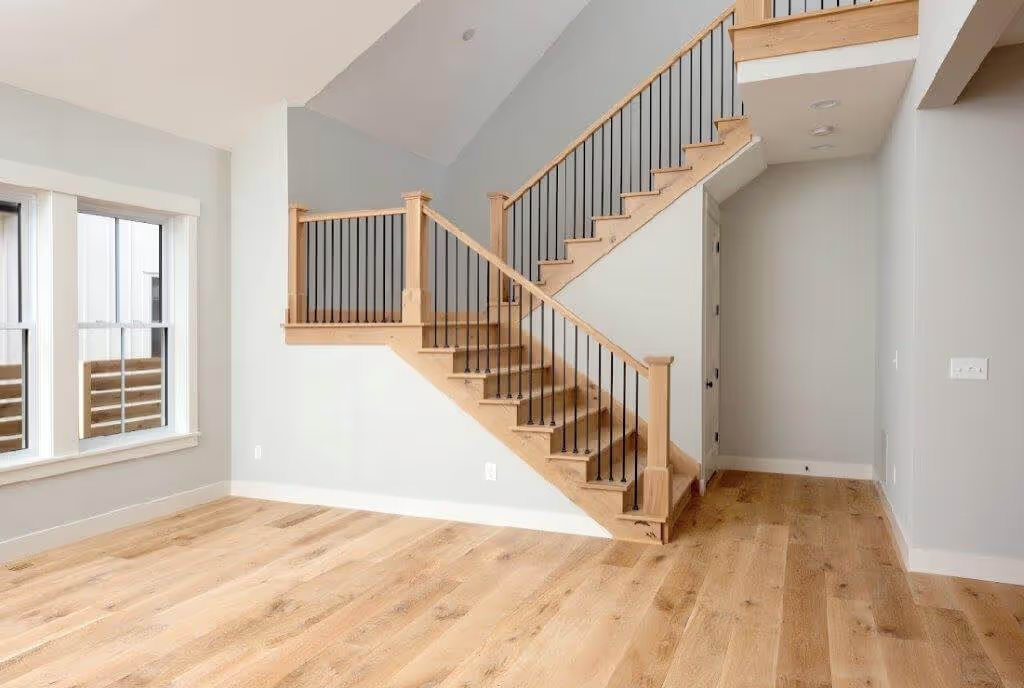
Stairs take the traffic of a hallway on a tenth of the wood. Treads, nosings and thresholds wear out years before the rooms around them — and they can be repaired one piece at a time.
Every early shift out to Paine Field, every school run, every wet dog coming back up from the waterfront lands on the same few square feet of wood. In a two-story Silver Lake or Cascade View house the staircase is the busiest floor in the home, and the nosing on each tread takes the full strike of every step — as do the original fir stairs still working in the Rucker Hill houses. These are the repairs people put up with for years because they assume the whole staircase has to come apart. It does not.
Photograph the damage on your phone — a close-up of the worst spot, one from a few feet back, and one of the whole room. One of our estimators looks at every photo personally and emails you a written price the same business day. No visit, no sales call, no obligation.