1,000+ Floors Installed & Restored Across Washington
Searching for floor repair near me in Snohomish? We repair hardwood, engineered flooring, laminate, and LVP while leaving undamaged flooring in place. Call (425) 595-1079 for a free in-home estimate.
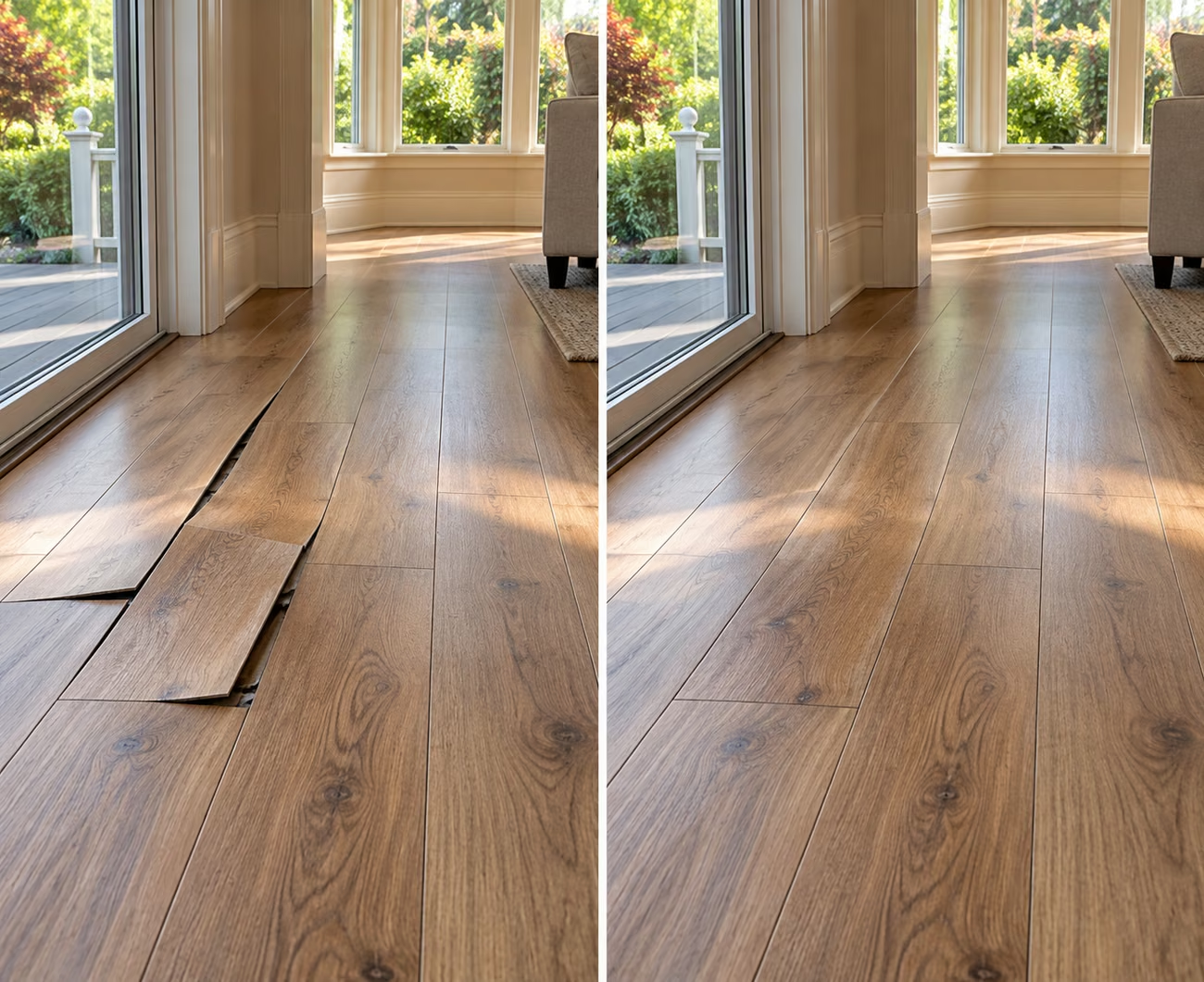




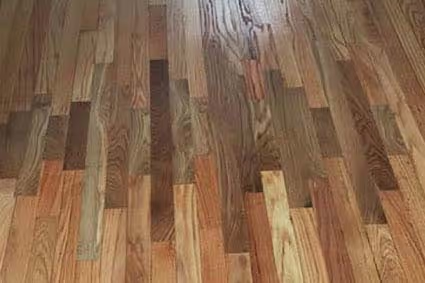
A patch that announces itself. The wood is close but not right, and the grain runs the wrong way. Matching properly is most of the skill in a board repair.
The oldest flooring in Snohomish and the newest are a few minutes apart, fir down near the water where the town started and click-lock plank up on Dutch Hill where it kept going. What separates them on a repair day is not how they look, it is how a damaged board leaves the room. Nailed fir and oak strip get cut free and lifted out one piece at a time, with the boards on either side left where they are. A floating floor is fastened to nothing beneath it, so the work runs in from the closest free edge, and where the damage sits counts for as much as how much of it there is.
Floors here meet water more often than they do a few miles uphill. When the Snohomish and the Pilchuck back up in winter, or a supply line lets go under a sink, boards cup, seams swell and laminate edges blow out. We take moisture readings before anything gets cut, let the area dry down to a stable number, then pull only the boards that stayed swollen or came apart. A lot of cupped hardwood flattens on its own once the moisture behind it is gone. We would rather wait two weeks and replace six boards than replace sixty in a hurry and watch the patch move.
The blocks climbing north off First Street, along Avenue B and Avenue D, are full of houses built between 1890 and 1910 in a town whose first sawmill opened on the riverbank in 1878. What we find under the carpet is vertical-grain Douglas fir: tight, narrow, beautiful, and soft enough to dent under a dropped cast-iron pan. Most of it has already been sanded two or three times. We match grain direction and ring spacing, buy salvage stock when new fir will not pass, and blend stain and sheen so the repair stops being the first thing your eye lands on.
LVP went into most of the newer building on the Cathcart and Seattle Hill side and into a great many kitchen and bath remodels downtown. When planks lift at an end joint or a seam opens across a hallway, the reason is usually heat through a south-facing slider, a floating floor pinned under a heavy island or a run of cabinets, or a high spot the floor is riding over. We find the cause first, ease the high spot or free the pinned edge, then swap the damaged planks and close the seam. A plank torn by a dragged appliance is often a short visit.
The median Snohomish house went up in 1978, and a wide band of the stock dates from the 1970s through the 2000s — a lot of it rented. Laminate is what went down in much of it, and laminate does not sand. Once a plank has swelled at the joint, chipped along the edge, or peaked where two rows are pushing against each other, replacement is the fix. We unlock click-lock rows back to the damage, set new planks and re-lock the run. Matching is the hard part when a line has been discontinued, so if a spare box ever went into the garage, bring it out.
Acreage out past Machias, Three Lakes and Cathcart means dogs, mud and boots coming in wet eight months a year. Surface scratches often abrade and recoat. Black pet stain that has gone through the finish and into the wood does not — those boards come out, get replaced with matched material and get restained to blend. Same story for the two or three boards inside the back door that took years of grit, and for thresholds and transition strips that have curled enough to catch a toe on the way through.
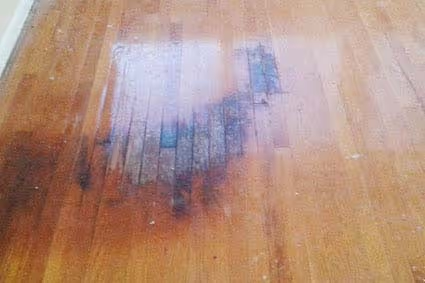
Finish is a film, and on narrow old fir the seams under that film are open in more places than anyone can see. Urine and clean water take the same road, down a side seam or an end joint and past the finish, into wood that holds a dark edge long after the surface feels dry. That is why the mark you find in March is usually wider than the spill you wiped up in December.
 1
1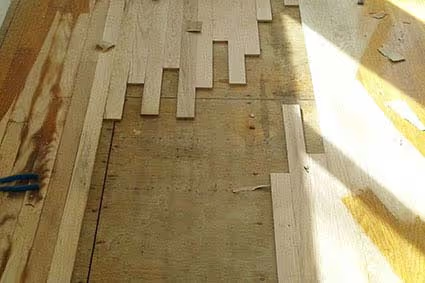 2
2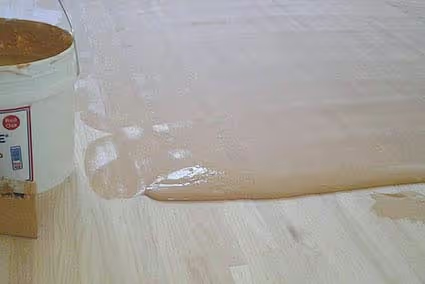 3
3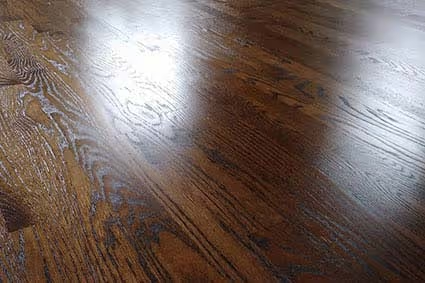 4
4Most pet-stain and water-damage repairs are finished in 1–2 days.
On the old fir down by the river the question is usually settled before we ask it, because that floor has already given up most of what sat above the tongue, and spending the rest to erase one stain is a trade nobody wins. Up on the hill it barely comes up, because the wear layer on engineered plank and LVP is not something a sander touches, so the damaged planks come out and everything around them stays. The floors in between, the oak strip and parquet in the mid-century houses, are the ones where a full refinish can finally be worth more than one more patch.
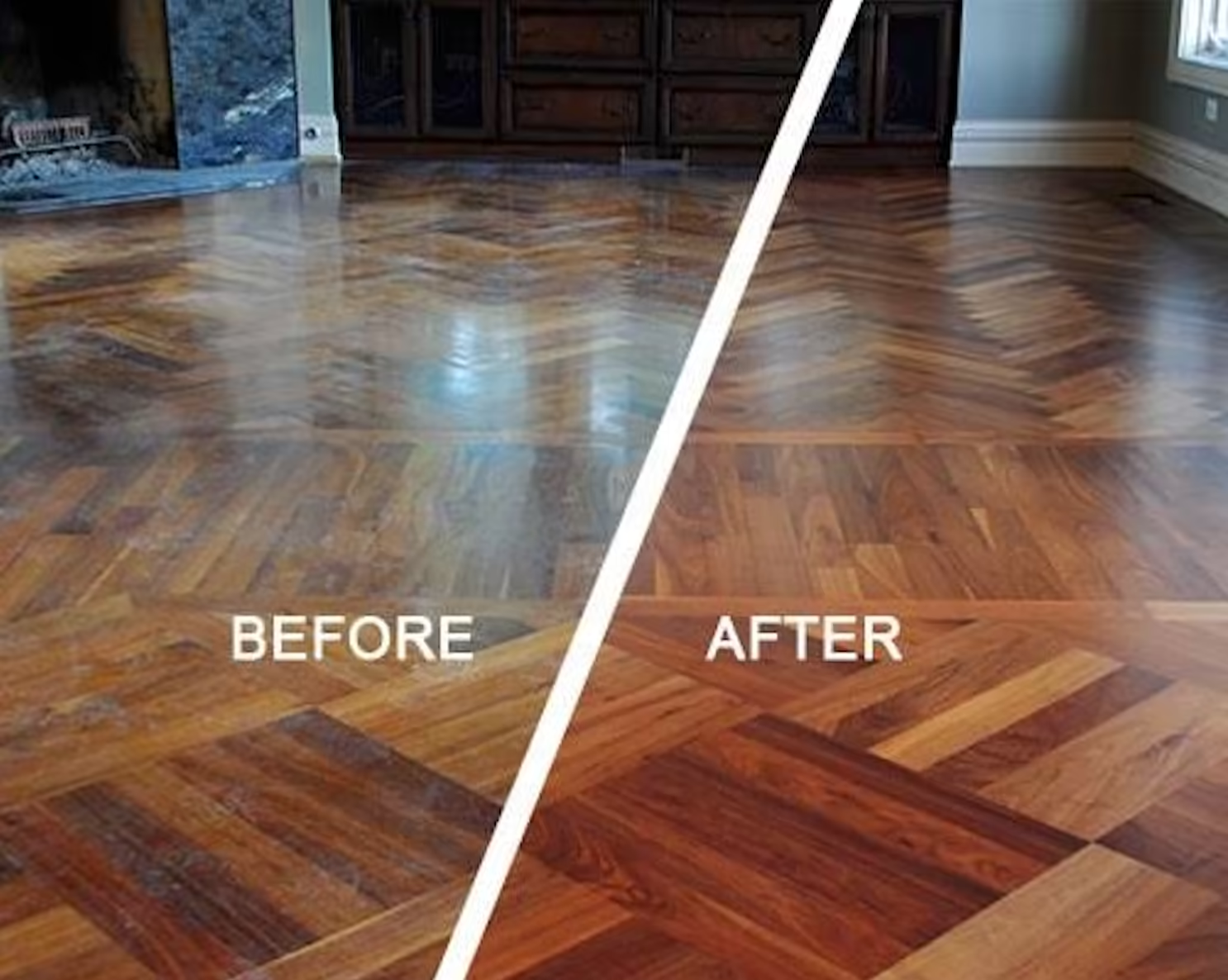
The same floor, split down the middle. Left: the finish is cloudy and worn through in the traffic path — no amount of patching fixes that. Right: sanded back and refinished.
Typically $200–$1,000 · most finished in 1–2 days
Board replacement is done first, so the whole floor is finished together
Water on the worn patch. If the drop sits up and beads, your finish still works and patching is sensible. If it sinks in and darkens the wood within a minute, that room needs sanding and refinishing, not a patch.
Look under the rug. Wood that is markedly darker beneath a rug than beside it has faded in the light. Fade runs across a whole zone, so swapping single boards there makes the mismatch worse, not better.
Still not sure? Send us a few photos of the floor and we will tell you which one you need, even when it is the cheaper answer.
This was Cadyville in 1859 and a city by 1890, and the 26-block Historic District that reached the National Register in 1974 is the receipt. Most of those structures were raised between 1890 and 1910, in a town whose founding family opened a sawmill on the Snohomish River in 1878 and framed and floored their own house from what it cut. That is why the flooring under the carpet on Avenue D is so often vertical-grain Douglas fir, and why, around the Historic District, we spend more time sourcing salvage fir than we do running a sander.
Then the town keeps going, and the flooring changes with it. Roughly a fifth of homes in Snohomish predate 1940, but another quarter went up between 1940 and 1969 and the median house here was built in 1978. That middle band is oak strip, parquet and sheet goods, frequently with a later engineered or laminate floor laid over the top of it. Climb out of the valley and the lots grow: Dutch Hill, Fobes Hill and the roads toward Machias and Three Lakes are 1990s and 2000s houses on acreage, engineered hardwood at the entry and LVP wherever the dogs go. The Cathcart and Seattle Hill side is newer still, mostly plank floors with wear layers too thin to ever sand.
What separates Snohomish from Seattle, and from Everett and Monroe, is water — and not the rain. The city sits at 66 feet where the Pilchuck joins the Snohomish, behind dikes that have given way before. December 1975 damaged something like 300 homes and put a 50,000-acre lake between Everett and Monroe when the French Slough dike tore open a mile upriver. In December 2025 the river crested at 34.1 feet, past the November 1990 record, crews pulled families off Lincoln Avenue by inflatable kayak, and the city's own public works complex sat under water.
Everett and Monroe get high water too. Snohomish is the town where the flood levels are painted up the side of a downtown building for anyone to read. That is why we arrive with a moisture meter instead of a pry bar, why we wait out cupped fir rather than cut it, and why so many calls from this ZIP code are about swollen seams and lifted plank edges instead of a dull finish.
One more thing worth naming: more than 40 percent of occupied homes in Snohomish are rentals, well above the surrounding county. Property managers and small landlords here call us between tenants for exactly the work on this page — a handful of gouged planks, a stained board by the slider, a threshold that has become a trip hazard. It costs less than a floor and it takes days instead of weeks.
Usually not the whole floor. What matters is how long the water sat and how much of it is still in the wood. We take moisture readings across the room and in the boards themselves, and nothing gets cut until those numbers come down and hold. Cupped hardwood very often flattens on its own over a few weeks of drying, and replacing it while it is still wet is how people end up doing the job twice. The boards that get replaced are the ones that stay swollen, the ones that have come apart, and laminate that has blown out at the joints. If an area has to dry before we can work, we will tell you that rather than seal moisture in under a new finish.
Most repairs run between $200 and $1,000. The number moves with how many boards come out, whether matching material can simply be bought or has to be hunted down as salvage for an older house, and how much finish blending the patch needs to disappear. A few gouged vinyl planks in a hallway sit at the low end. Fifteen boards of vertical-grain fir in a 1900s house with a stain that has to be mixed and tested on site sits at the high end. You get an itemized written price before we start, and if the honest answer is that a repair will not satisfy you, we say so before you have spent anything.
Snohomish design review is aimed at exterior building changes and site work in the district — what the street sees. Replacing flooring inside your house is not what that process is built to review. If your house carries its own local or National Register designation, or if the floors are part of something larger you are planning, one call to the city's planning department will settle it before you book any contractor. We work in these houses regularly and we treat original material as worth saving rather than worth ripping out.
Often yes, and it is the right question to ask — plenty of the 1890 to 1910 houses in town are on their third or fourth sanding. We check the wear layer where the edge of a board is visible, usually at a floor register or a threshold. If the tongue is close to daylight or nail heads are starting to surface, sanding is off the table. Board replacement usually is not: we can pull the worn or damaged boards, set matched fir in their place and blend the finish without disturbing the rest of the room. When a floor really is finished, we tell you that instead of selling you a sanding it cannot survive.
Both can be repaired. Neither can be refinished, which is why the method is different. On a floating click-lock floor we unlock rows back to the damage, drop in new planks and re-lock the run. On a glue-down floor we cut out the bad planks and bond replacements in their place. The real obstacle is matching, because LVP and laminate lines get discontinued quickly. If a partial box or a few spare planks went into the garage when the floor was installed, that is the single most useful thing you can hand us. When nothing matches closely enough, we will sometimes harvest planks from a closet or from under an appliance and put the mismatched material there instead.
We are in Snohomish regularly — the Historic District and the streets off First, Blackmans Lake, Riverview, up on Dutch Hill and Fobes Hill, and out toward Machias, Three Lakes and Cathcart. We are based at 13343 NE Bel Red Rd #210 in Bellevue and have served King and Snohomish County since 2013, so this is normal territory rather than a special trip. If you would rather not schedule a visit yet, send photos of the damage with a short note about what happened and we will send a written price back by email.
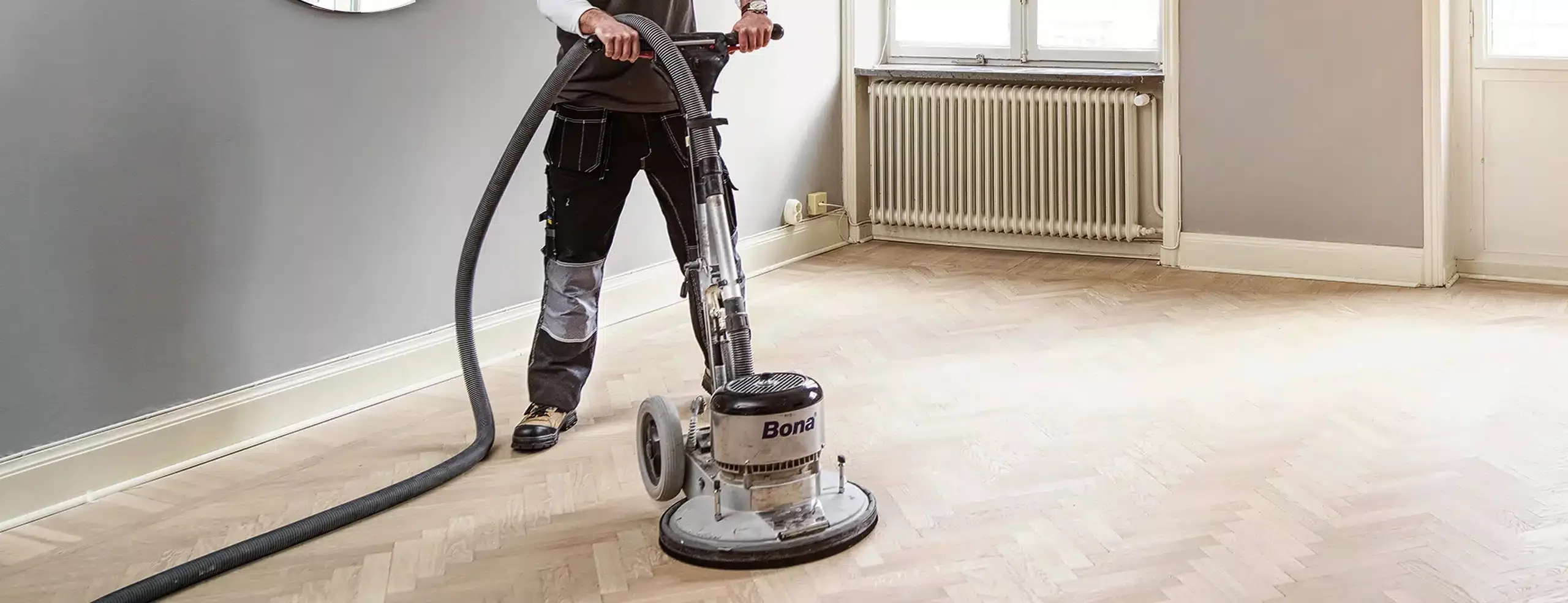
Solid wood keeps a reserve. A solid oak or fir board carries enough thickness to sand a problem out completely — which is why deep damage in an older Snohomish floor is often repaired in place instead of replaced.
Solid hardwood is the one floor with margin built in. Where a click-lock plank from Dutch Hill has a wear layer no sander can touch, the oak strip and parquet in a 1950s house off Blackmans Lake can give up a full pass of sanding and still have decades left. So before we quote a board swap, we ask whether the damage actually goes deeper than the finish — because a surprising amount of it does not.
When a floor develops a gap or a soft spot, the boards you see are rarely the ones at fault. The problem lives underneath — a fastener that has let go of its joist, a subfloor panel rubbing its neighbor, or framing that has dried and shrunk a hair since the house went up. Snohomish gives us both ends of that: houses framed between 1890 and 1910 on the river flat, and a median build year of 1978 up the hill. Sitting this close to the water only makes the movement bigger. We chase the problem to its source instead of patching the symptom.
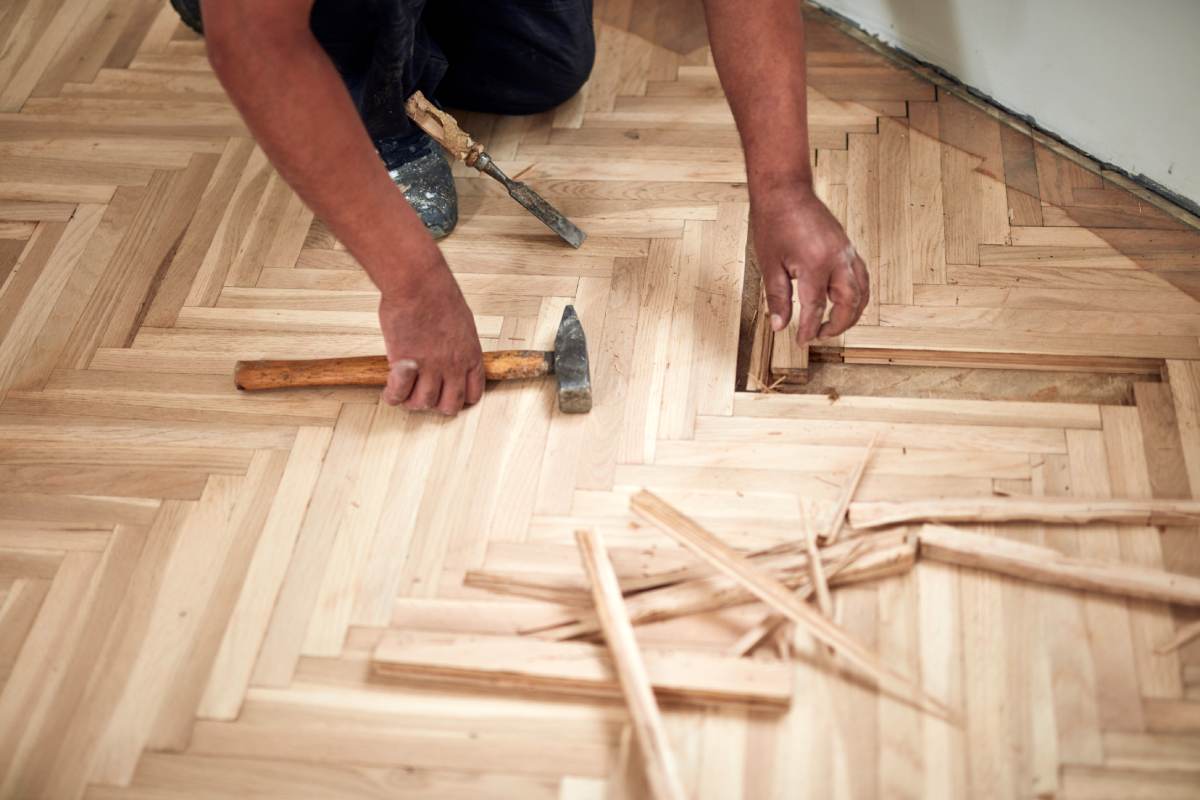
The fix starts under the boards. Loose pieces come up, the substrate gets fastened flat, and only then does the surface go back together.
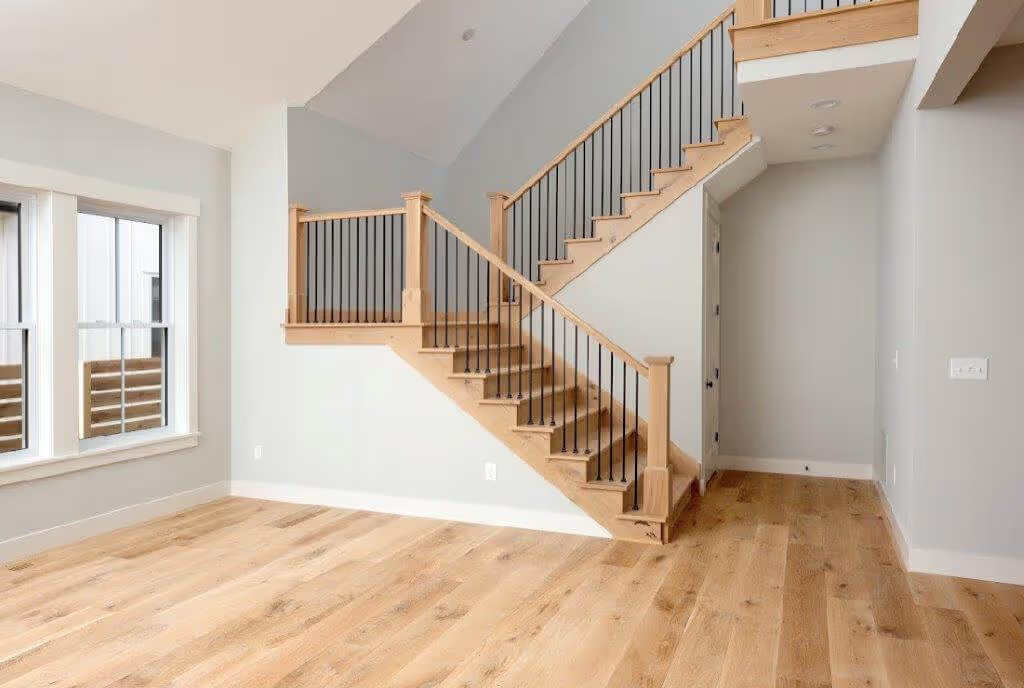
Stairs take the traffic of a hallway on a tenth of the wood. Treads, nosings and thresholds wear out years before the rooms around them — and they can be repaired one piece at a time.
Every school run, every trip up from the yard, every wet dog coming in off acreage out past Machias lands on the same few square feet of wood. In a two-story house on Dutch Hill the staircase is the busiest floor in the home, and the nosing on each tread takes the full strike of every step — as do the original fir stairs still working in the tall houses off Avenue D. These are the repairs people put up with for years because they assume the whole staircase has to come apart. It does not.
Photograph the damage on your phone — a close-up of the worst spot, one from a few feet back, and one of the whole room. One of our estimators looks at every photo personally and emails you a written price the same business day. No visit, no sales call, no obligation.