1,000+ Floors Installed & Restored Across Washington
Searching for floor repair near me in Sammamish? We replace damaged hardwood, engineered wood, and vinyl planks, then match stain and sheen to the surrounding floor. Call (425) 595-1079 for a free in-home estimate.




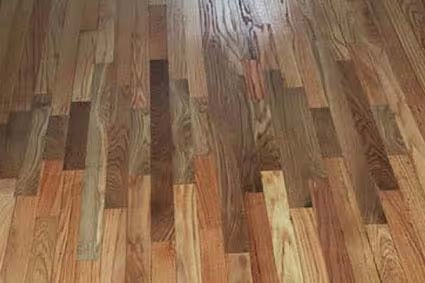
What a bad repair looks like. Wrong species, wrong grain, wrong color — patched by someone who didn't match the wood. You see it from the doorway, permanently.
Builder oak, thin-veneer engineered and floating LVP fail in three different ways here, and every one of them ends at the same job: making a new board sit beside the old ones without announcing itself. That is rarely decided by the damage. It is decided before anything is cut - where the replacement stock comes from, which rows the new end joints land in, and where the repair is allowed to stop. A factory-finished floor gives you no way to correct those choices afterward, so they have to be right the first time.
The everyday hardwood job on the plateau is a strip oak floor, usually two and a quarter or three and a quarter inch, that a builder bought by the pallet somewhere between 1988 and 2001. Two details decide whether a patch reads as a patch: the factory micro-bevel along each board edge, and the factory sheen. Square-edged replacement stock sitting next to beveled originals is visible from the doorway. We identify what is actually down, match width, thickness and bevel profile from current stock or by milling, then test stain and sheen on your own floor before a drop of finish goes on.
Roughly a fifth of Sammamish houses went up between 2000 and 2009, and those homes brought engineered wood with a sawn veneer only two or three millimeters thick. Once it has been screened and recoated a time or two, there is no sanding life left, so repair means replacement of the affected planks rather than refinishing. Glued-down engineered comes up in sections without disturbing the field; floating engineered unlocks and relocks. If the builder left a spare box in the garage or crawlspace, that makes the match exact.
The newer streets off Duthie Hill, the Trossachs side, rebuilt lots on Inglewood Hill and the Town Center townhomes are almost all rigid-core vinyl plank, and a floating floor is free to move. We diagnose the reason before we touch a plank: heat load through big west-facing glass, a floor pinned by a heavy island or by trim nailed through it, or a high spot underneath that we take down so the run can sit flat. Then damaged planks come out, new ones click in, and the seams close. Skip the cause and it lifts again by next summer.
Refrigerator lines, dishwasher hoses and the door to the deck account for most of the wet floors we see in Sammamish, and lakefront and lakeside homes on Pine Lake, Beaver Lake and the East Lake Sammamish shore push a lot of wet traffic across the same three feet of board. We take moisture readings in the damaged boards and the ones around them, let the area come back down to the readings for the rest of the house, then cut out the ruined boards, fill seams with tinted filler and blend the finish. Most of these are done in one to two days.
Laminate went into a lot of plateau kitchens, entries and laundry rooms in the late nineties and 2000s, and its weak point is the edge: once water gets into the core the plank swells and will not go back. It cannot be sanded, so we unlock the run, replace only the affected planks and relock it. The same visit usually covers the thresholds — the strips where hardwood meets tile, carpet or LVP that have lifted, cracked or started catching feet get re-cut or replaced so they sit flat and hold the plank edges down.
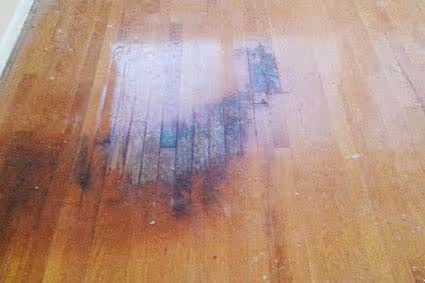
The micro-bevel that makes a prefinished floor look crisp is also a channel. Water and urine run along that groove to the raw edge of the board and wick down the tongue where no finish ever reached, so by the time a dark ring shows on the surface the wood beneath it has been wet for a while. That is why the ruined area is almost always wider than the stain looks, and why we establish how far past the ring it runs before deciding how many boards come out.
 1
1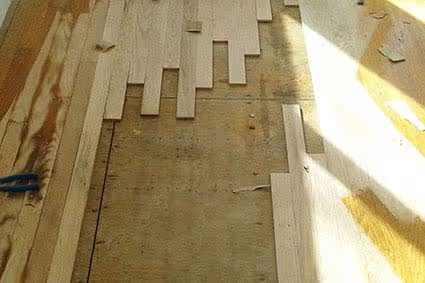 2
2 3
3 4
4Most pet-stain and water-damage repairs are finished in 1–2 days.
On the prefinished oak that builders ran through these subdivisions in the nineties the question is real, and it carries a catch: sanding takes off the micro-bevel and the factory coating along with the damage, so the floor comes back as a site-finished floor and every room it runs into has to come along with it. Engineered plank and floating vinyl rarely offer that choice at all, so there the decision is about how many planks come out and where the run stops. We look at how deep the damage actually goes and how far it has traveled, then tell you which of the two conversations you are having.
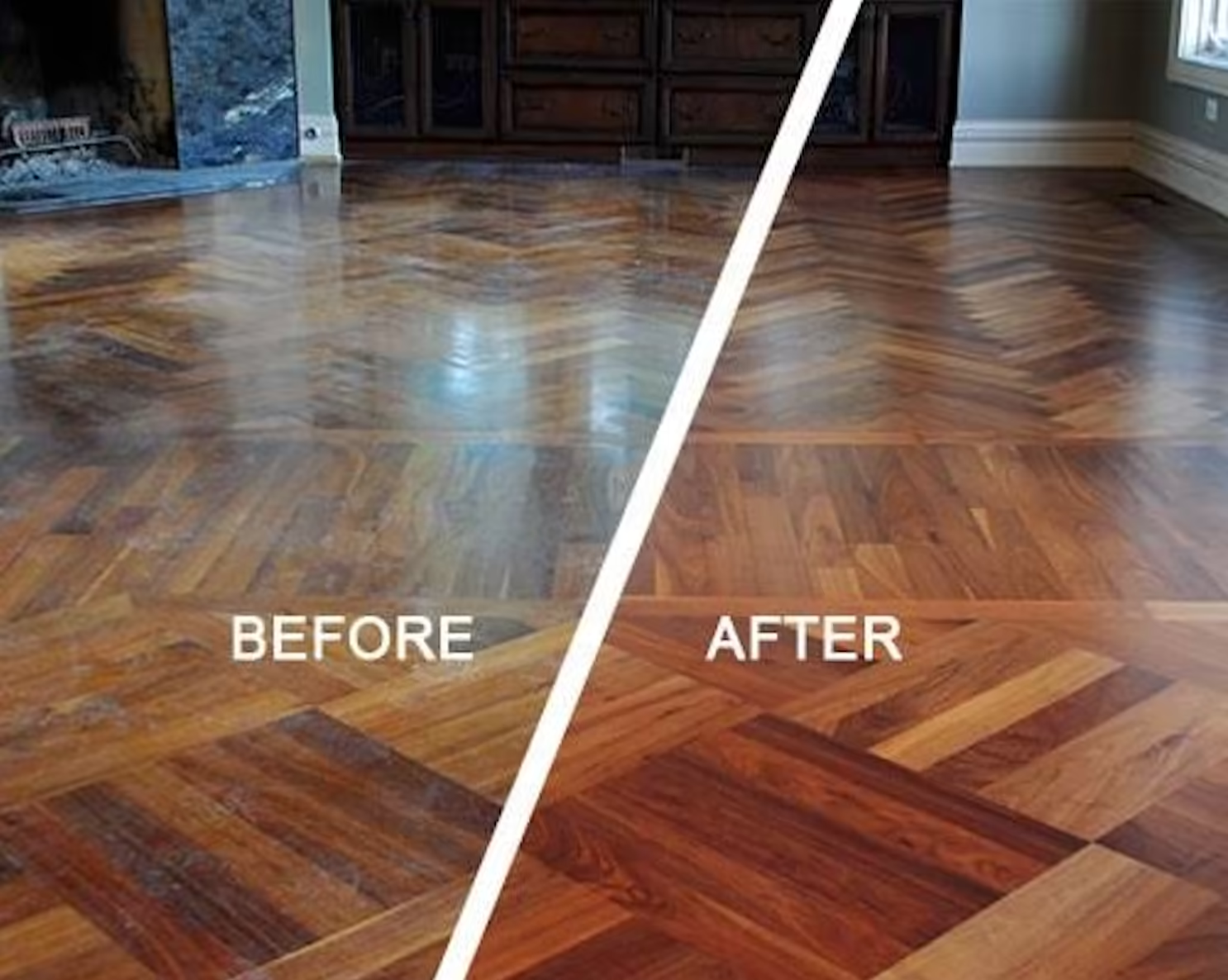
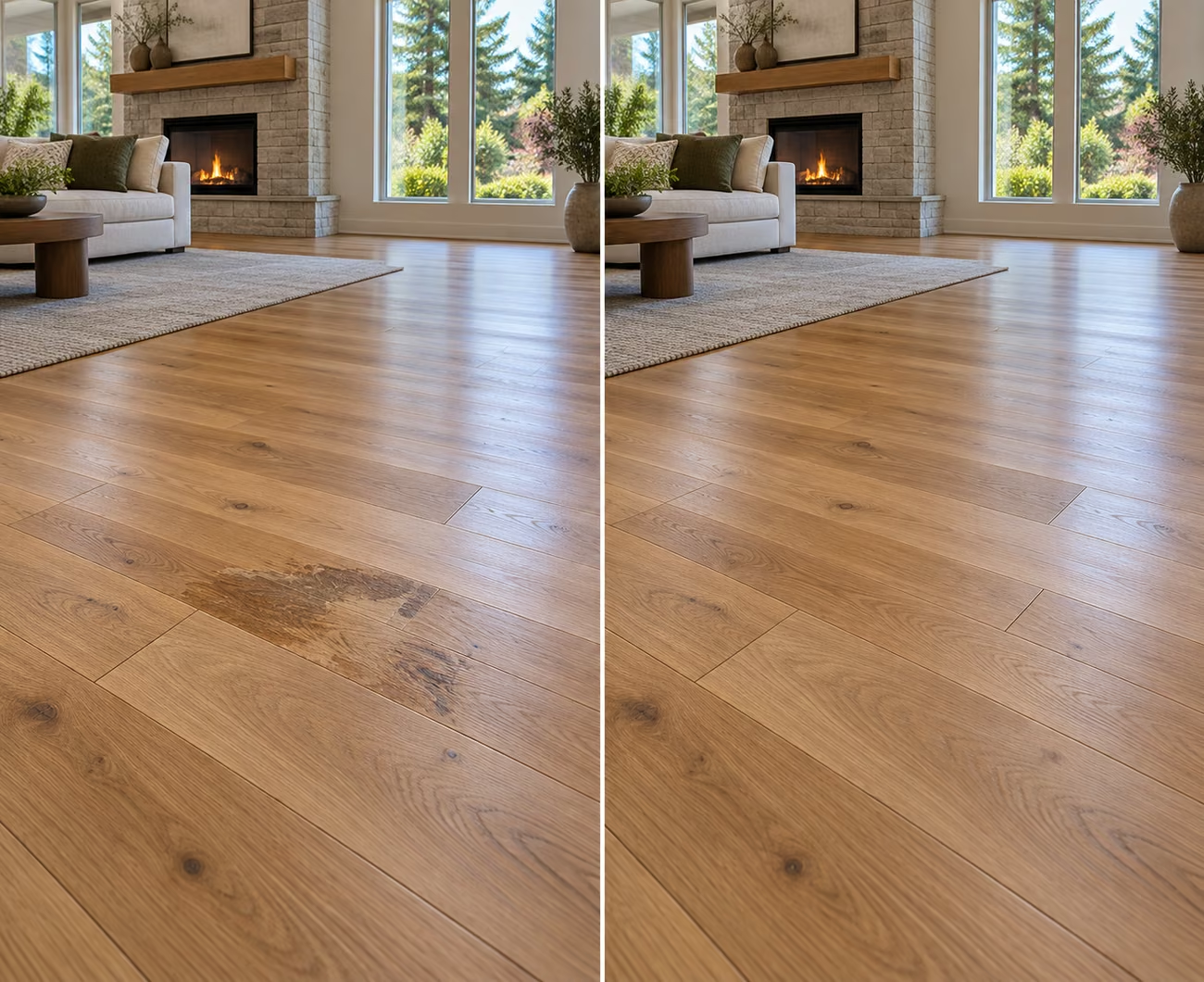
The same floor, split down the middle. Left: the finish is cloudy and worn through in the traffic path — no amount of patching fixes that. Right: sanded back and refinished.
Typically $200–$1,000 · most finished in 1–2 days
Board replacement is done first, so the whole floor is finished together
The water drop. Put a drop of water on a worn spot. If it beads, your finish is still doing its job — a spot repair is fine. If it soaks in within a minute, the finish is gone there and the floor is due for a refinish.
The rug test. Lift an area rug near a bright window. If the wood underneath is noticeably darker than the wood around it, that is sun fade rather than damage — and fade does not patch out board by board.
Still not sure? Send us a few photos of the floor and we will tell you which one you need, even when it is the cheaper answer.
Sammamish is a young city on old ground. The plateau stayed rural long after the rest of the Eastside filled in; the Sahalee golf course opened in 1969 and the serious subdividing did not arrive until the 1970s and 1980s. Klahanie broke ground in 1985 and took until 1997 to finish out its 3,091 homes, and by the time voters made Sammamish a city on August 31, 1999, about 34,000 people already lived here. That history shows up underfoot. The average Sammamish house dates to roughly 1994, and fewer than one home in a hundred was built before 1940. We almost never go hunting salvaged old-growth fir in this city — that is Seattle and Ballard work. Here the difficult part is matching a discontinued prefinished oak that a production builder installed across an entire plat thirty years ago.
The next two waves layered different problems on top. Homes built between 2000 and 2009 added about a fifth of the city's housing and introduced thin-veneer engineered plank, which looks superb and forgives nothing once a supply line lets go. The 2010s added roughly another eighth, and those floors are overwhelmingly floating vinyl plank — the material that opens at the seams in a dry August, peaks where the afternoon sun lands, and refuses to lie flat where a heavy island or a nailed-through baseboard has pinned it. The apartments and townhomes now going up at Town Center are the first real block of attached housing in a city built almost entirely of detached homes, and they are LVP from the front door back.
Where you live inside Sammamish changes what we find. Streets between 228th Avenue SE and the lake drain through the Pine Lake Creek basin, and Ebright Creek runs through neighborhoods on its way down to Lake Sammamish, so a failed gutter or a saturated crawlspace shows itself as a dark board inside the entry long before anyone suspects a plumbing leak. The plateau also carries one of the densest tree canopies on the Eastside — Douglas fir, western red cedar and bigleaf maple over much of Sahalee, Beaver Lake and Trossachs — which keeps lots shaded and slow to dry and is exactly why we meter a floor instead of guessing at it.
The November 2024 windstorm is worth remembering for the same reason: when a house on the plateau sits four days without heat in November, its wood floor spends those days at a humidity nobody designed it for, and the cupping or gapping that follows is a real repair, not bad luck. Add to that a city where more than four out of five homes are owner-occupied, and you get floors people have walked on for twenty-five years and fully intend to keep.
Most repairs land between $200 and $1,000. What moves the number is how many boards have to come out and how hard the match is. A gouged board in a hallway sits at the low end. A 1990s prefinished oak in a wide-open great room, where we have to source discontinued stock and blend sheen across a big uninterrupted floor, sits higher. You get the price in writing before we start, and most jobs are done in one to two days.
Usually yes, and it is the most common request we get on the plateau. Three things have to line up: board width, board thickness, and the bevel profile along the edges. A square-edged replacement dropped between factory-beveled originals is obvious from across the room, which is why we either identify and source the original product, find current stock that matches the profile, or mill to match. Stain and sheen are then tested on your own floor before we commit to anything.
It can be repaired, and it very rarely all needs to go. LVP unclicks, so damaged planks lift out and new ones go in without touching the rest of the floor. The step that matters comes first: finding out why it moved. In newer Sammamish homes that is normally heat through large west-facing windows, a floating floor pinned by a heavy island or by trim nailed through it, or a high spot underneath. Replace the plank without addressing the cause and you will be looking at the same seam again.
Yes, but through replacement rather than sanding. A two to three millimeter sawn veneer has effectively no refinishing life once it has been screened, so trying to sand out damage takes you through the veneer into the core. We remove the affected planks and set matching ones in their place. Glued-down engineered comes up in sections; floating engineered unlocks. If there is a leftover box in the garage or crawlspace from the original install, pull it out for us — that makes the match perfect.
Until the meter says it is ready, not until the calendar says so. We take moisture readings in the damaged boards and in the surrounding field, and we want the wet area back near the readings for the rest of the house before new wood goes down. Setting boards into a floor that is still carrying moisture is how you end up with cupping and a second repair. Depending on how far the water traveled, that can mean a few days of drying, and we will tell you plainly when it is ready rather than rushing the visit.
All of it — Klahanie, Trossachs, Pine Lake, Beaver Lake, Sahalee, Inglewood Hill, the Town Center area, the streets off Duthie Hill and Soaring Eagle, and the waterfront homes along East Lake Sammamish Parkway. Our shop is on NE Bel-Red Road in Bellevue, so the plateau is a short drive and in-home estimates cost nothing. Call (425) 595-1079, or send photos first if you would rather have a rough range before anyone comes out.
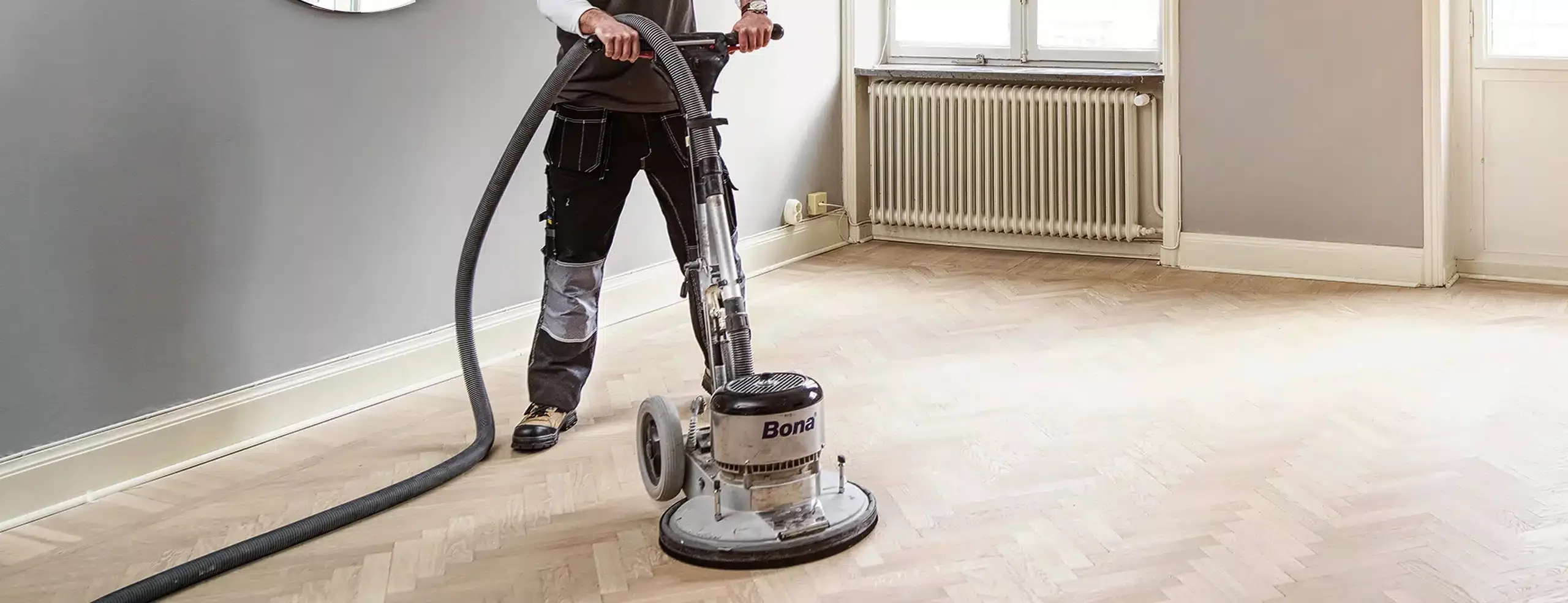
Solid wood keeps a reserve. A solid oak board carries enough thickness to sand a problem out completely — which is why deep damage in a builder-oak Sammamish floor is often repaired in place instead of replaced.
Solid hardwood is the one floor on the plateau with margin built in. Where the thin-veneer engineered in a mid-2000s build has two or three millimeters of real wood on top, the builder strip oak that went into Klahanie, Pine Lake and Sahalee between 1988 and 2001 has thickness to spare. The catch here is the factory finish: sanding a spot also takes the micro-bevel off those boards locally, so we tell you that before we start rather than after. Where the bevel matters, the board comes out instead.
The average Sammamish house dates to about 1994, and a plat like Klahanie finished out in 1997, which puts most of this city right at the age when fasteners start letting go.
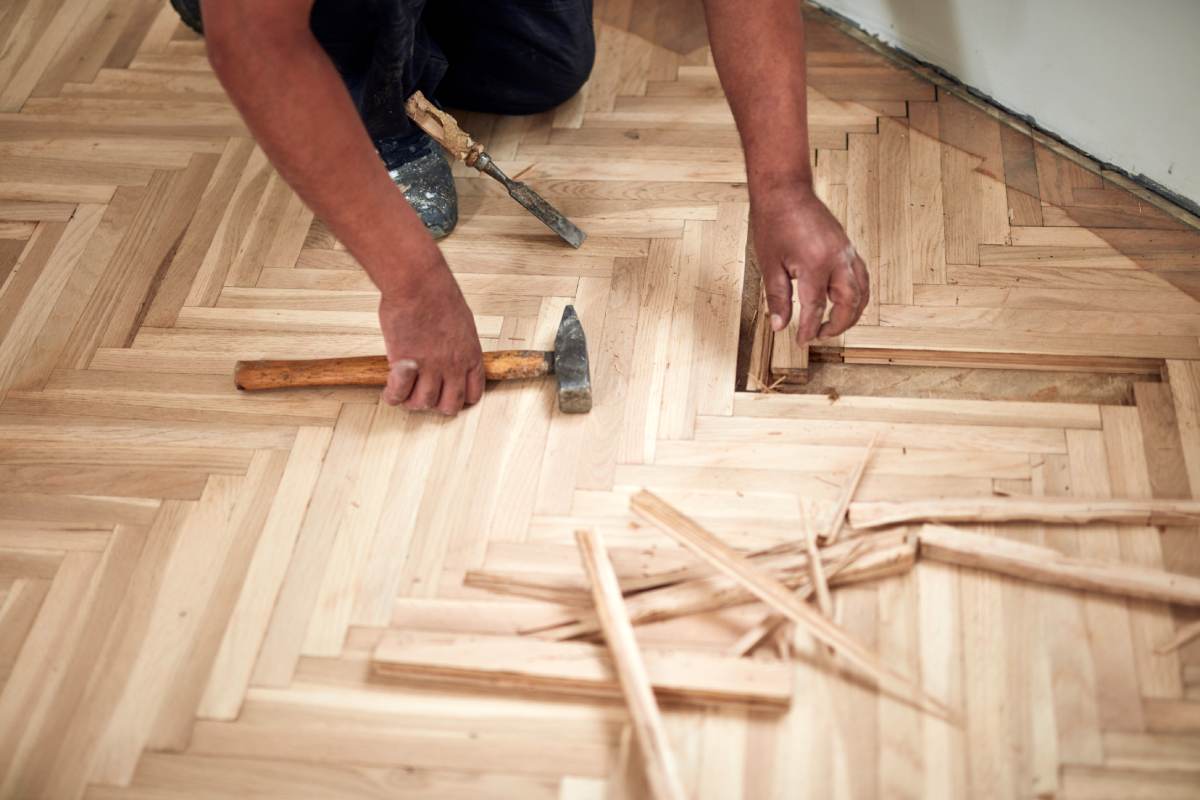
The fix starts under the boards. Loose pieces come up, the substrate gets fastened flat, and only then does the surface go back together.
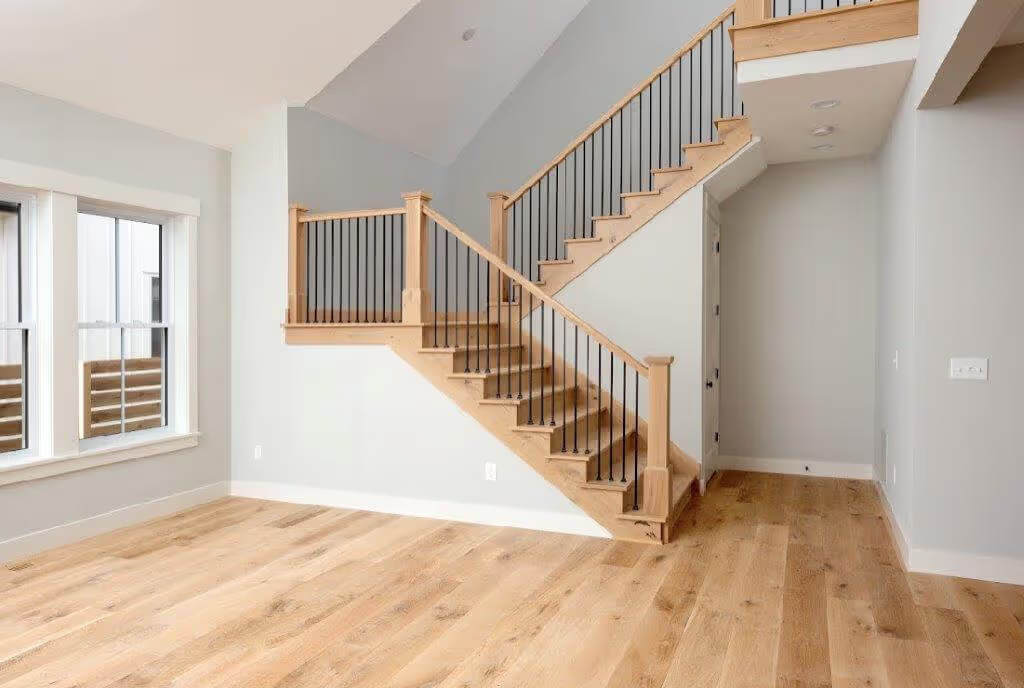
Stairs take the traffic of a hallway on a tenth of the wood. Treads, nosings and thresholds wear out years before the rooms around them — and they can be repaired one piece at a time.
Every morning run down 228th, every school drop-off, every wet dog coming back off the Soaring Eagle trails lands on the same few square feet of wood. In a two-story plateau house the staircase is the busiest floor in the building, and the nosing on each tread takes the full strike of every step. These are the repairs people put up with for years because they assume the whole staircase has to come apart — which, on a floor a family has walked for twenty-five years and means to keep, is a costly assumption. It does not.
Photograph the damage on your phone — a close-up of the worst spot, one from a few feet back, and one of the whole room. One of our estimators looks at every photo personally and emails you a written price the same business day. No visit, no sales call, no obligation.