1,000+ Floors Installed & Restored Across Washington
Searching for floor repair near me in Issaquah? Most floors in Issaquah went down after 2000 — engineered hardwood, laminate and vinyl plank through the Highlands, Talus, Montreux and the Providence Point villages — and floors like that get repaired plank by plank, not sanded. The older side of town, the blocks off Front Street and the houses on Squak Mountain, still has solid oak and fir we can cut in and blend by hand. Call (425) 595-1079 for a free in-home estimate anywhere in Issaquah.



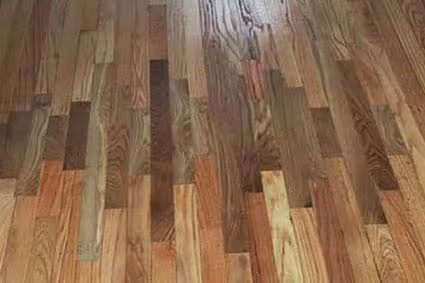
What a bad repair looks like. Wrong species, wrong grain, wrong color — patched by someone who didn't match the wood. You see it from the doorway, permanently.
The difference that matters here is whether the floor is locked together or nailed down board by board. On everything laid since the Highlands and Talus went up, no plank is independent of its neighbors, which is why two identical scratches in the same house can turn out to be two different jobs. In Olde Town and Sycamore a board comes out where it stands, and from there the work stops being carpentry and turns into color.
This is the most common wood floor in Issaquah and the one written off too early most often. Engineered boards carry a veneer of real wood over a plywood or HDF core, and on builder-grade product that veneer can be thin enough that sanding is off the table entirely. So we take damaged planks out one at a time — unclicking a floating run back to the board, or cutting and lifting a glued or nailed one — and set matched planks in their place. Matching means width, thickness, bevel profile, veneer species, gloss level and the shade the floor has actually aged into, not the shade it was sold as. When a line is discontinued we work backward from the plank itself, source the closest current equivalent, and blend the seam so the eye does not stop on it.
Vinyl plank is the default in Issaquah's newest houses, most of its rental units and nearly every recent remodel, and the failures repeat themselves: ends curling up off the floor, seams opening into thin dark lines, a board split under a chair leg or a dropped pan. Very little of that is the plank's fault. A floating LVP floor has to be free to move, and it lifts when something stops it — a heavy island pinning one edge, a threshold screwed down tight, a south-facing slider baking one stretch all afternoon, or a spot in the slab that was never flat. We find the cause first and correct it, then replace the damaged planks. Do it in the other order and the same boards lift again by spring.
Issaquah has genuine flood history and plenty of ordinary leaks besides — dishwasher supply lines, fridge lines, a bathroom that wicked under the threshold for a whole season. What we do next depends entirely on the material. Laminate that stayed wet swells at the joints and will not come back, so those planks come out. Vinyl plank usually survives the water itself, but whatever sat underneath has to be opened, checked and dried. Solid and engineered wood cup first and sometimes flatten on their own once the moisture leaves, which is why we take meter readings before cutting anything — pulling boards that would have recovered is money thrown away. Pet urine is the same problem on a smaller footprint: once it is into the wood, no cleaner reaches it, and the stained boards get replaced and blended.
Laminate went into a lot of Issaquah houses, townhomes and condos during the 1990s and 2000s building wave, and it has now reached the age where it fails in predictable ways. Dark swollen edges around a dishwasher or an entry mat. A row that has peaked into a ridge because the floor expanded and had nowhere to go. A plank cracked clean through the wear layer. Laminate cannot be sanded or filled convincingly, so the repair is mechanical: unlock the run from the nearest wall, remove only the bad planks, re-lock the rest. If there are leftover boards in the garage or the crawlspace from the original install, hand them over — on a discontinued laminate that box is worth more than any catalog.
Older Issaquah — the streets around Front Street, Sycamore south of town, the lower slopes of Squak Mountain — still has solid oak and fir, and that wood gets repaired the traditional way: cut the damaged board out, mill a replacement to the same width and thickness, set it in, then stain and finish it into the floor around it. On any floor here, new or old, the front entry takes the worst punishment. Boots coming off the Tiger and Cougar trails carry grit, grit cuts finish faster than anything else in a house, and thresholds between wood, tile and carpet work loose and start catching. We recoat worn lanes, replace boards that are past recoating, and re-cut transitions so they sit flush instead of levering a plank edge every time someone walks over them.
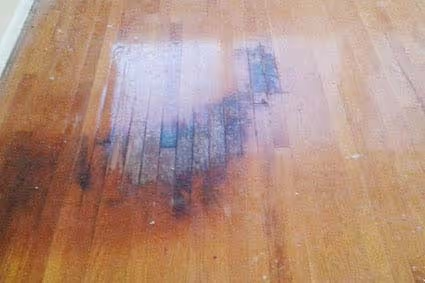
Finish is a film, not a seal. Give water a beveled edge, a threshold or a hairline at the end of a plank and it goes underneath, where it sits in the dark against material that still looks dry from above. Pet urine takes the same road more slowly and in one spot, and it keeps working after the surface has been wiped, so the mark you can see is almost always smaller than the one you cannot.
 1
1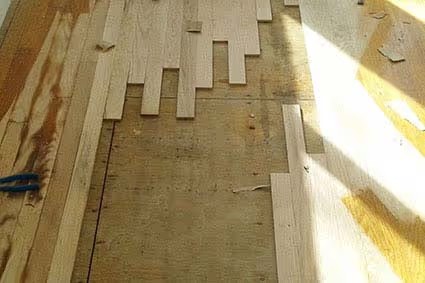 2
2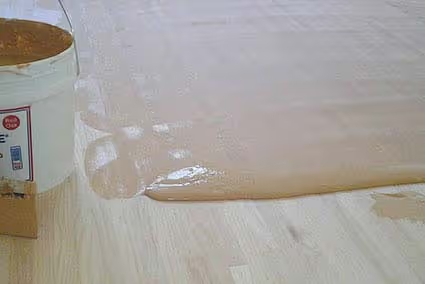 3
3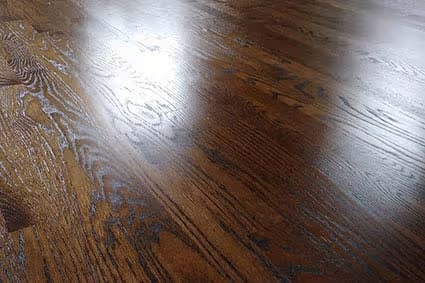 4
4Most pet-stain and water-damage repairs are finished in 1–2 days.
The useful question is not how bad the floor looks but how deep the damage goes. Anything that stops in the finish is a coating problem and gets solved with a coating, on any floor in this city. Anything that has reached the material itself has to come out, and on laminate, vinyl plank and thin builder-grade veneer there is nothing to sand it out of, which is why we measure what is left above the core before we answer.
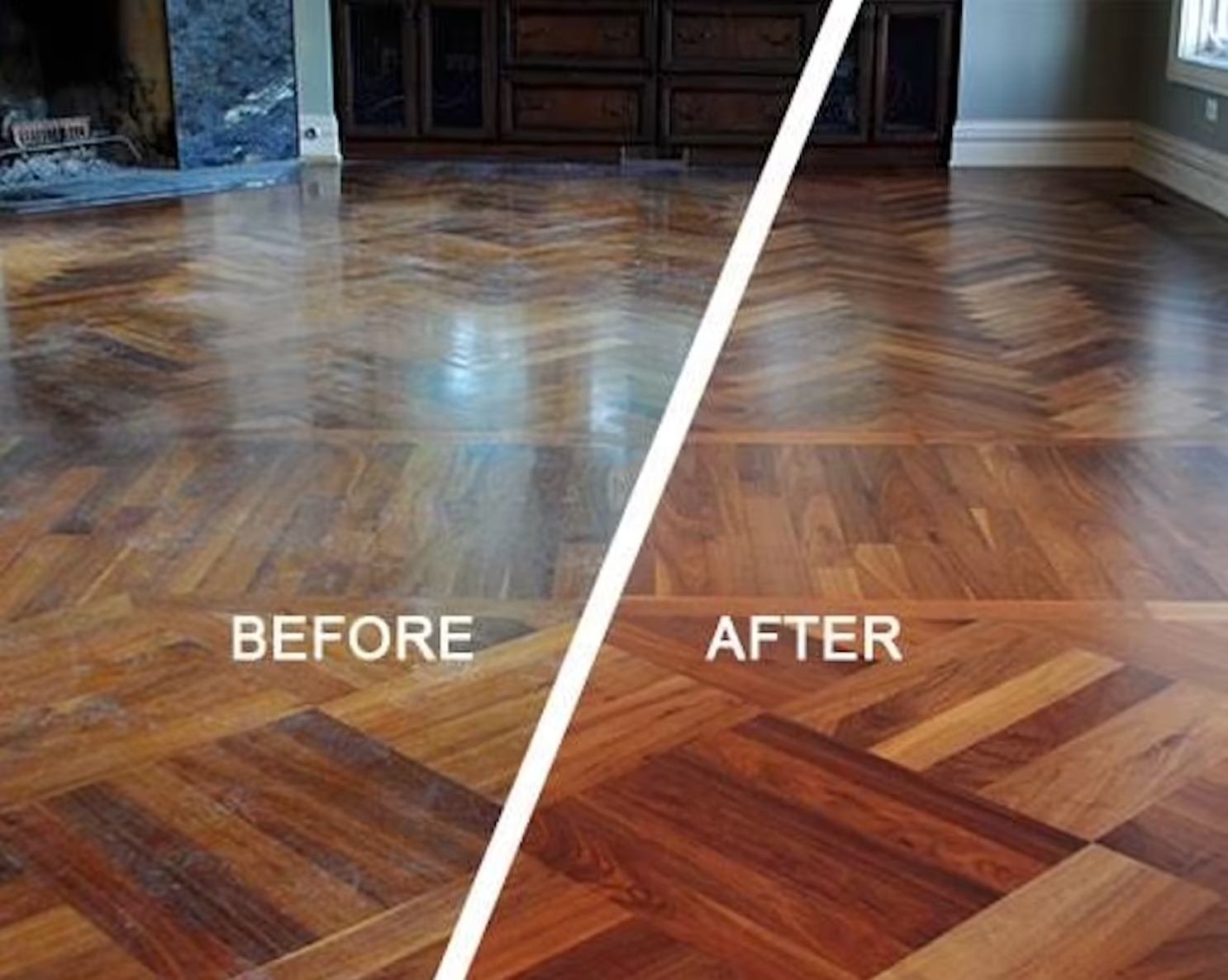
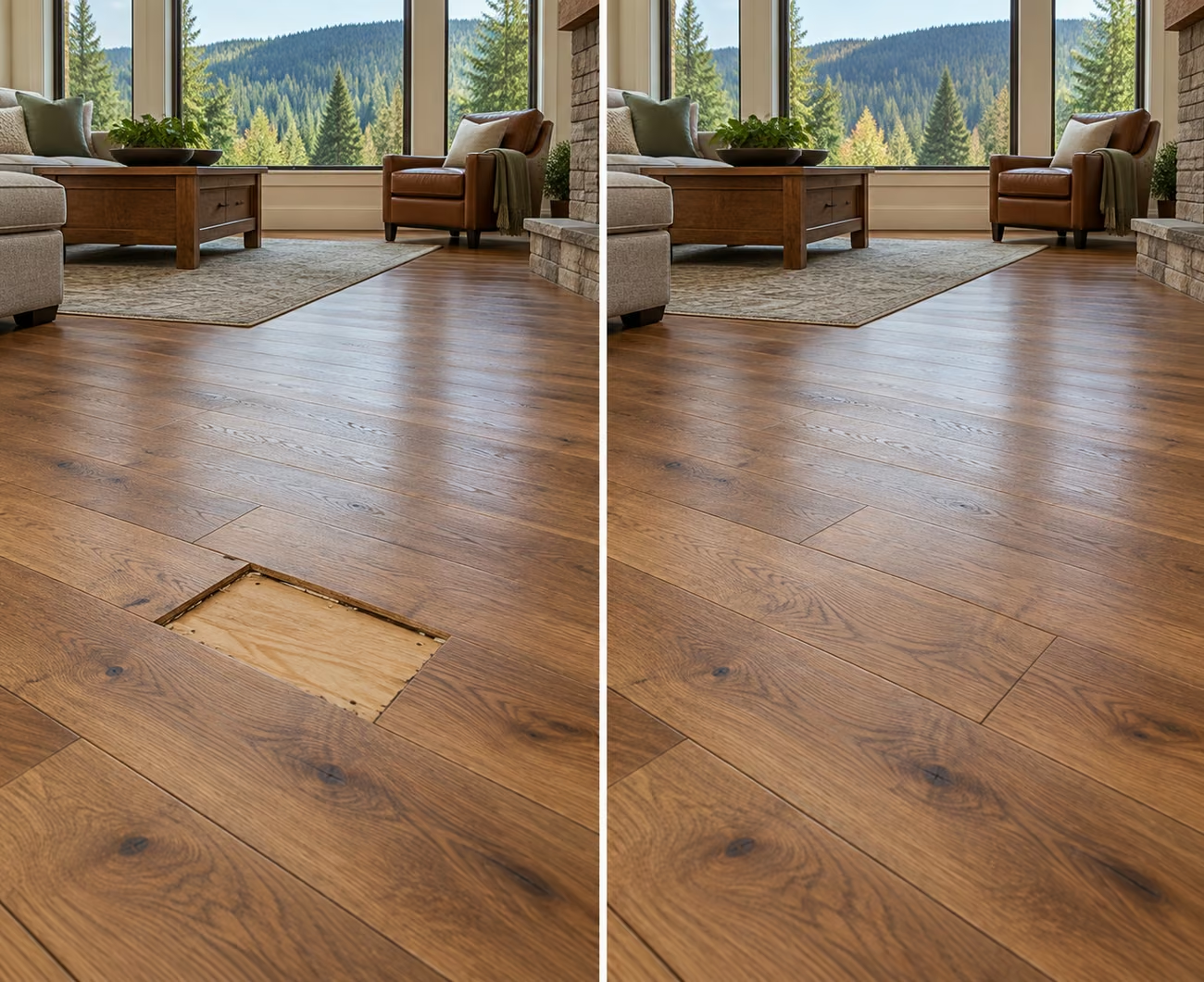
The same floor, split down the middle. Left: the finish is cloudy and worn through in the traffic path — no amount of patching fixes that. Right: sanded back and refinished.
Typically $200–$1,000 · most finished in 1–2 days
Board replacement is done first, so the whole floor is finished together
The water drop. Put a drop of water on a worn spot. If it beads, your finish is still doing its job — a spot repair is fine. If it soaks in within a minute, the finish is gone there and the floor is due for a refinish.
The rug test. Lift an area rug near a bright window. If the wood underneath is noticeably darker than the wood around it, that is sun fade rather than damage — and fade does not patch out board by board.
Still not sure? Send us a few photos of the floor and we will tell you which one you need, even when it is the cheaper answer.
Issaquah is not an old-house town. The median home here was built around 2002, roughly 57 percent of the housing stock went up after 2000, and fewer than two houses in a hundred predate 1940 — close to the reverse of the pre-war Douglas fir stock we work on across the lake in Seattle. That one statistic decides most of what we do in this city. Homes floored in that window got engineered hardwood, laminate and vinyl plank instead of solid strip oak, and those materials are repaired by swapping boards, not by sanding a room flat.
Broken down by neighborhood it splits cleanly. Issaquah Highlands opened in 1998 on Port Blakely's 2,300 acres and now holds more than 4,000 homes, with townhomes and multifamily buildings mixed in among the detached houses. Talus, the 630-acre plan on the Cougar Mountain side, filled in over roughly the same stretch with multi-level houses and townhomes. Providence Point's seven villages went up between 1984 and 2004 — 1,008 attached and condominium homes on 161 acres — so a unit there that has never been redone is still running on flooring from that build window. Issaquah also carries a high condominium share for the Eastside, and about 78 percent of those condos are townhomes rather than stacked flats, which means most repairs inside them are ordinary floor work rather than building work.
Then there is the older layer, and it is small but real. Olde Town grew up around the coal mines; the town incorporated as Gilman in 1892 and took the name Issaquah in 1899, and the blocks off Front Street still hold craftsman and bungalow houses with mid-century ranches behind them. Sycamore, tucked between Tiger and Squak Mountains at the south end of the city, is largely 1960s and 1970s houses on large lots. Squak Mountain runs ranches and split-levels from that same era up into 2000s contemporaries. Those are the Issaquah addresses where we are still milling solid oak and fir and matching grain and sheen the old way.
The creek is the condition no neighboring city shares in quite this form. Issaquah Creek, its East and North Forks, Tibbetts Creek and the Lake Sammamish shoreline all carry mapped flood hazard areas through town, and the city runs a four-phase warning system off the Hobart gauge with only three to four hours of lead time. January 2009, February 2020 and January 2022 all put water across Olde Town streets and into ground-floor units of creekside apartment and condo buildings. A day of standing water swells laminate joints permanently; vinyl plank often comes through it if the water is pulled and the space dried quickly; solid wood cups and may well flatten back out if someone gets to it early. Timing matters more on Issaquah floors than almost anywhere else we work.
One last local detail that shows up on nearly every entry hall here: the trailheads. Poo Poo Point, the Chirico Trail and West Tiger #3 are among the busiest hikes in the state, with the lots filling before eight on weekends, and there are more than 125 miles of trail across the Issaquah Alps. Households that use them bring grit home, and grit is sandpaper. We regularly see finish worn through in a narrow lane running from the front door while the rest of the floor has barely aged — which calls for a spot recoat or a few replaced boards, not a whole-house refinish.
Often yes, and how quickly you move largely decides it. Solid and engineered wood cup when they take on water and frequently flatten back out once the moisture leaves, so we meter the boards before removing anything. Vinyl plank generally survives the water itself; the work is lifting it, drying what is underneath, and relaying or replacing only the planks that were actually damaged. Laminate is the exception — once those joints swell they stay swollen, and the planks come out. Get standing water off and air moving the same day, then have someone read the moisture before the decision gets made for you. If the loss is going through insurance, our written estimate is itemized so it can be handed straight to the adjuster.
Usually. We do not need the original order, because we work from the plank in front of us. Width, thickness, core construction, veneer species, the bevel on the edge and the sheen all tell us what family it came from, and we source the closest current product, then adjust stain and sheen on the replacement so it reads as part of the floor rather than a patch. Where no exact match exists there is a second route: pull planks from inside a closet, a pantry or under an appliance where nobody looks, use those for the visible repair, and put the near-match in the hidden spot. If we think the result will still be obvious, we tell you that before you spend anything.
It can be repaired, and on an open floor plan that matters a great deal, because one continuous run through kitchen, dining and living space is exactly the layout that makes replacement expensive. Glue-down LVP comes up plank by plank. A floating click-lock floor gets unlocked from the nearest wall or free edge back to the damage, the bad boards come out, and the run goes back together. The step people skip is the cause. If a plank cracked because there is a high spot in the slab beneath it, or a run lifted because the island is pinning one edge, replacing the plank on its own just buys a few months.
Most of our repairs land between $200 and $1,000, and the large majority are finished inside one or two days. What moves the number is how many boards are involved, how difficult the material is to source, whether the repair needs staining and finishing to blend, and whether it is a floating floor that has to be opened up to reach the damage. We do not price over the phone from a description. You get a written, itemized figure — either from an in-home visit, which is free anywhere in Issaquah, or from photos you send us, which an estimator reviews personally and answers the same business day.
Run two checks yourself before anyone quotes you. Put a drop of water on the worn lane: if it beads up, the finish is still working and you want a spot fix, not a refinish. If it soaks in within about a minute, the finish is gone in that area. Then crouch at the far end of the room and look along the floor toward a window — scratches that catch the light everywhere point to refinishing, scratches confined to the traffic lane point to a recoat of that area only. This comes up constantly in Issaquah, because households that use the trails track grit in, and grit wears a narrow path from the front door long before the rest of the floor is tired.
In several ways it is easier. Solid oak and fir from that era have real thickness to work with, so a damaged board can be cut out, replaced with wood milled to the same dimensions, and then stained and finished into the surrounding floor — none of which depends on a manufacturer still producing the product. The harder part is color. Fifty or sixty years of daylight changes wood, and a fresh board dropped into an aged floor will stand out until it is toned to match. On older Issaquah houses we also look at the condition of the finish overall, because if the whole floor is close to due anyway, doing the board repairs first and then finishing the room as one piece is usually the cheaper path.
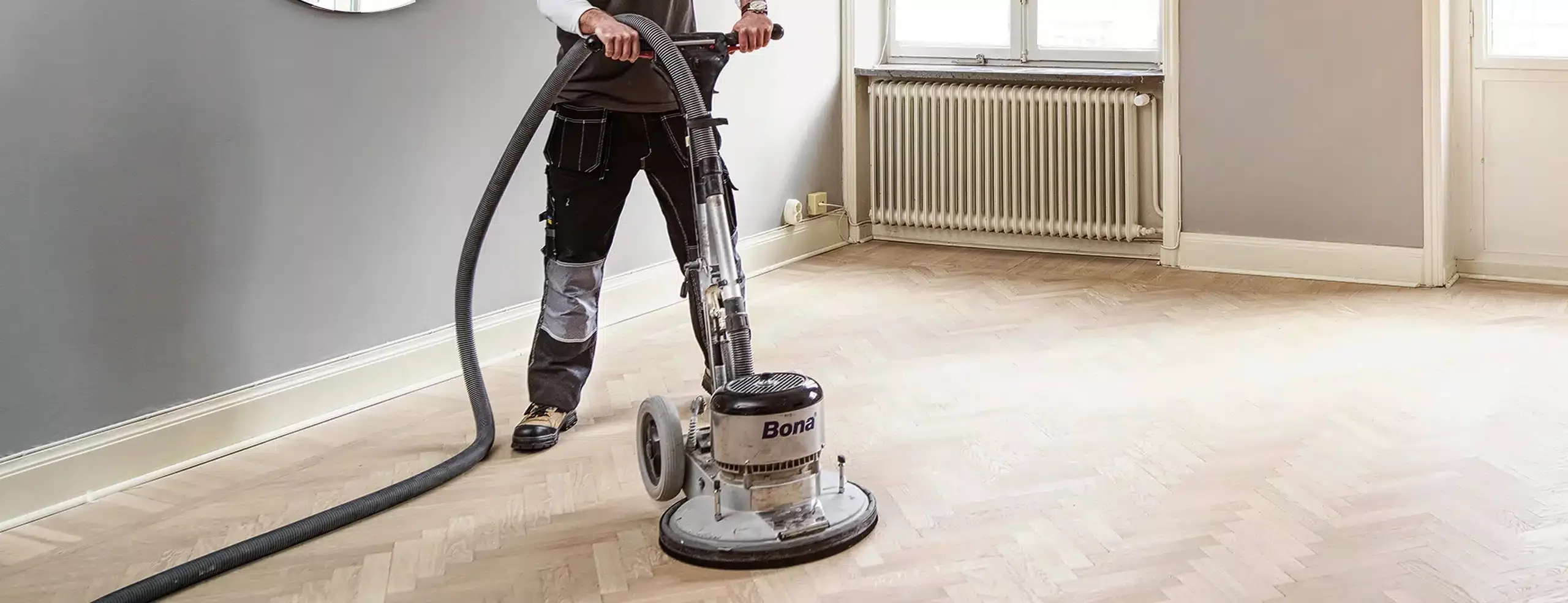
Solid wood keeps a reserve. A solid oak or fir board carries enough thickness to sand a problem out completely — which is why deep damage in an older Issaquah floor is often repaired in place instead of replaced.
Most Issaquah floors are engineered, laminate or vinyl plank, with a millimeter or two of real wood on top at best and nothing to sand. Solid wood does turn up, though — the craftsman and bungalow houses off Front Street, the mid-century ranches behind them, the 1960s and 70s places in Sycamore, and the ranches and split-levels up Squak Mountain. Those boards have genuine thickness, and on them we ask a different question first: does the damage actually go deeper than the finish? A surprising amount of it does not.
The Highlands opened in 1998 and Providence Point finished out in 2004, so a great deal of Issaquah framing is now twenty-five years past its build, which is exactly when fasteners start letting go.
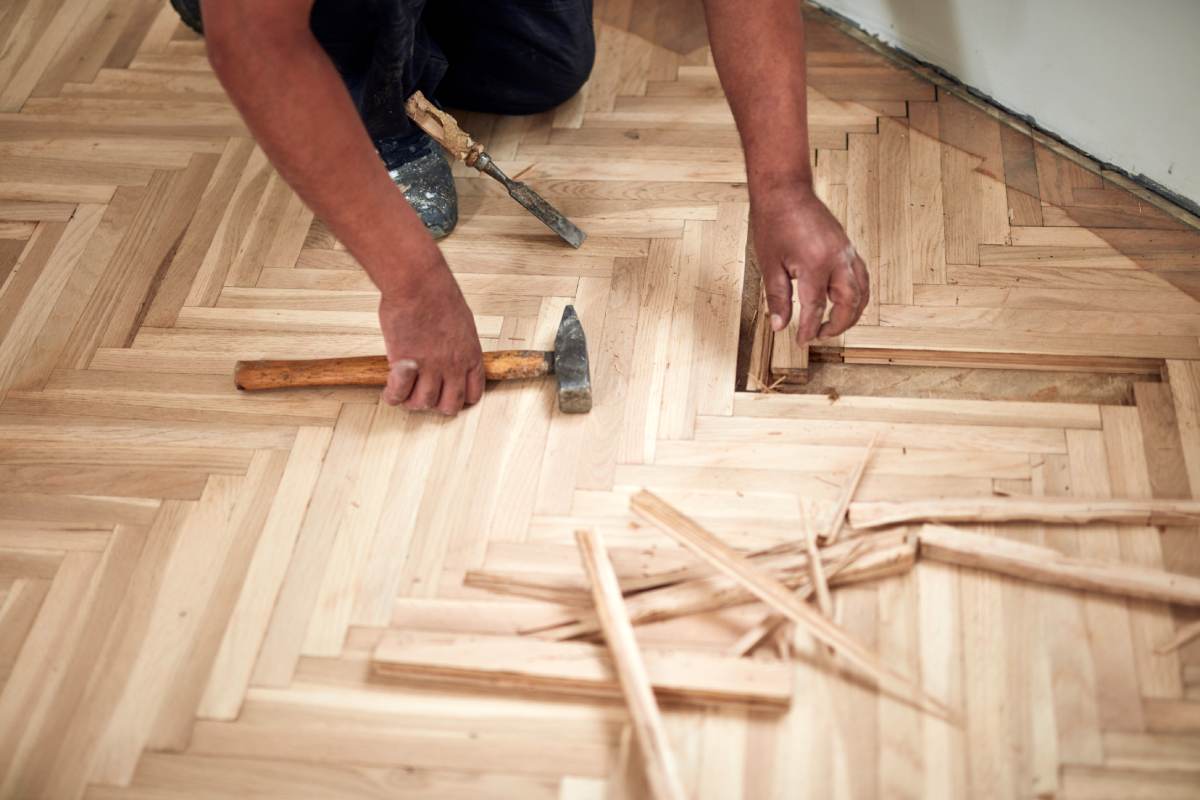
The fix starts under the boards. Loose pieces come up, the substrate gets fastened flat, and only then does the surface go back together.
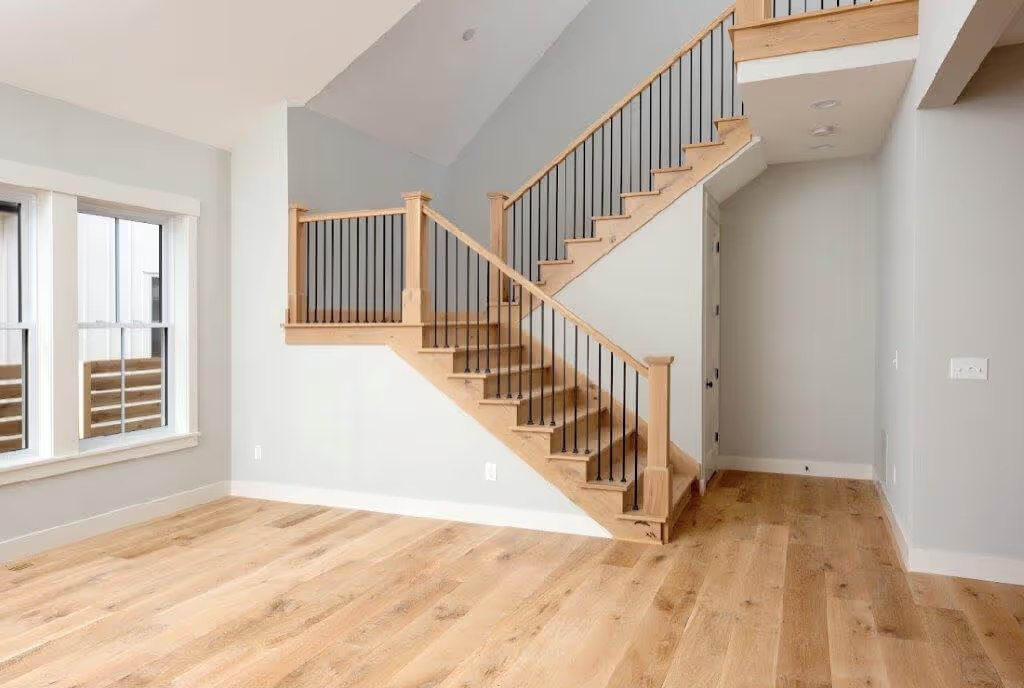
Stairs take the traffic of a hallway on a tenth of the wood. Treads, nosings and thresholds wear out years before the rooms around them — and they can be repaired one piece at a time.
Every Saturday coming down off Poo Poo Point, every school run, every wet dog back from West Tiger lands on the same few square feet of wood. In the multi-level houses and townhomes through Talus and the Highlands the staircase is the busiest floor in the building, the nosing on each tread takes the full strike of every step, and boot grit off 125 miles of Issaquah Alps trail does the work of sandpaper. People put these repairs off for years assuming the whole staircase has to come apart. It does not.
Photograph the damage on your phone — a close-up of the worst spot, one from a few feet back, and one of the whole room. One of our estimators looks at every photo personally and emails you a written price the same business day. No visit, no sales call, no obligation.