1,000+ Floors Installed & Restored Across Washington
Searching for floor repair near me on Whidbey Island? We replace cracked and stained boards, flatten cupped hardwood, and swap out lifting vinyl plank in homes from Oak Harbor and Coupeville down through Greenbank, Freeland, Langley and Clinton. Most of what we touch is one room or one hallway rather than the whole house, and most jobs wrap up inside a day or two. Call (425) 595-1079 for a free estimate.




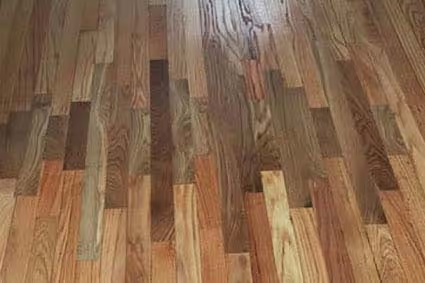
This is what we are hired to avoid. New boards dropped in without matching species or grain direction. It never blends in later; it just stays the first thing you notice.
Every board that goes into a Whidbey Island floor crosses the Deception Pass Bridge or rides over on a ferry, and that reorders the work. The match gets settled first, from photos or on a first visit, so the replacement stock travels with the crew instead of arriving a week later and holding a room open in the meantime. On a floor laid in the last fifty years, which covers most of the island, that is a sourcing question and a solvable one. On the small share of houses built before 1950 it is slower, and the answer is rarely something anyone can order.
Raised edges with a low center mean the underside of the wood took on more moisture than the top. We meter the boards before we quote anything, because a floor that gets sanded and coated over damp wood will cup again by February. Boards that have dried flat can be abraded and recoated in place. Boards still dark through the grain, or still carrying an odor, come out and get replaced with matched stock.
A split plank, a burn mark, a gouge at the end of a run — we cut out the damaged piece and set in wood matched on species, width, thickness and grain direction. Strip oak from the subdivisions that filled in around Oak Harbor in the 1970s and 1980s is usually sourceable. The tight-grained fir in older Coupeville and Ebey's Landing houses we tend to fill from salvaged stock, because nothing milled today lands on the same grain.
LVP lifts for a reason, and swapping a plank without finding that reason only buys a few months. We look at where the afternoon sun lands, whether a heavy piece of furniture is pinning the field while the rest of it moves, and whether a high spot underneath is levering a joint open. Then the damaged planks come out, the seam closes, and the run sits flat again.
Click-lock laminate comes apart and goes back together, so a chipped plank in front of the fridge does not mean a new floor. The hard part is the decor — most laminate sold here through the 2000s is long discontinued. Leftover planks from the original install, still sitting in a shed or under the house, rescue more of these jobs than anything we can order new.
Sand carried in from Bush Point or Double Bluff behaves like sandpaper, and it shows up first inside the door and along the main walking line. Fine scratching that has not reached the wood gets abraded and recoated in that area only. Thresholds and transition strips that have lifted, split or worked loose get re-cut or replaced so the edge lies flat and nobody catches a toe on it.
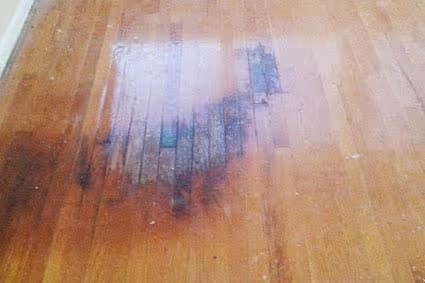
A finish keeps liquid out only while somebody is there to wipe it up. In a house nobody has walked through since fall, a pet accident or a slow weep at a supply line sits on cold wood for weeks, and a closed, unheated room gives it all the time it needs to travel down the grain. By the time the door opens in spring the stain is not on the surface, it is through the board, and nothing that goes on top of it will hide that.
 1
1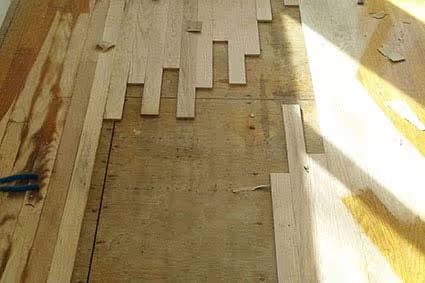 2
2 3
3 4
4Most pet-stain and water-damage repairs are finished in 1–2 days.
Refinishing is a real option on solid hardwood and on nothing else. Laminate and LVP cannot be sanded at all, and a 1990s engineered plank often carries a wear layer too thin to take a pass, so on most island floors the honest choice sits between replacing the damaged boards and leaving them alone. Where the floor is solid oak or tight-grained fir, the question becomes how many sandings the boards have left and whether the damage sits in one area or runs through every room.
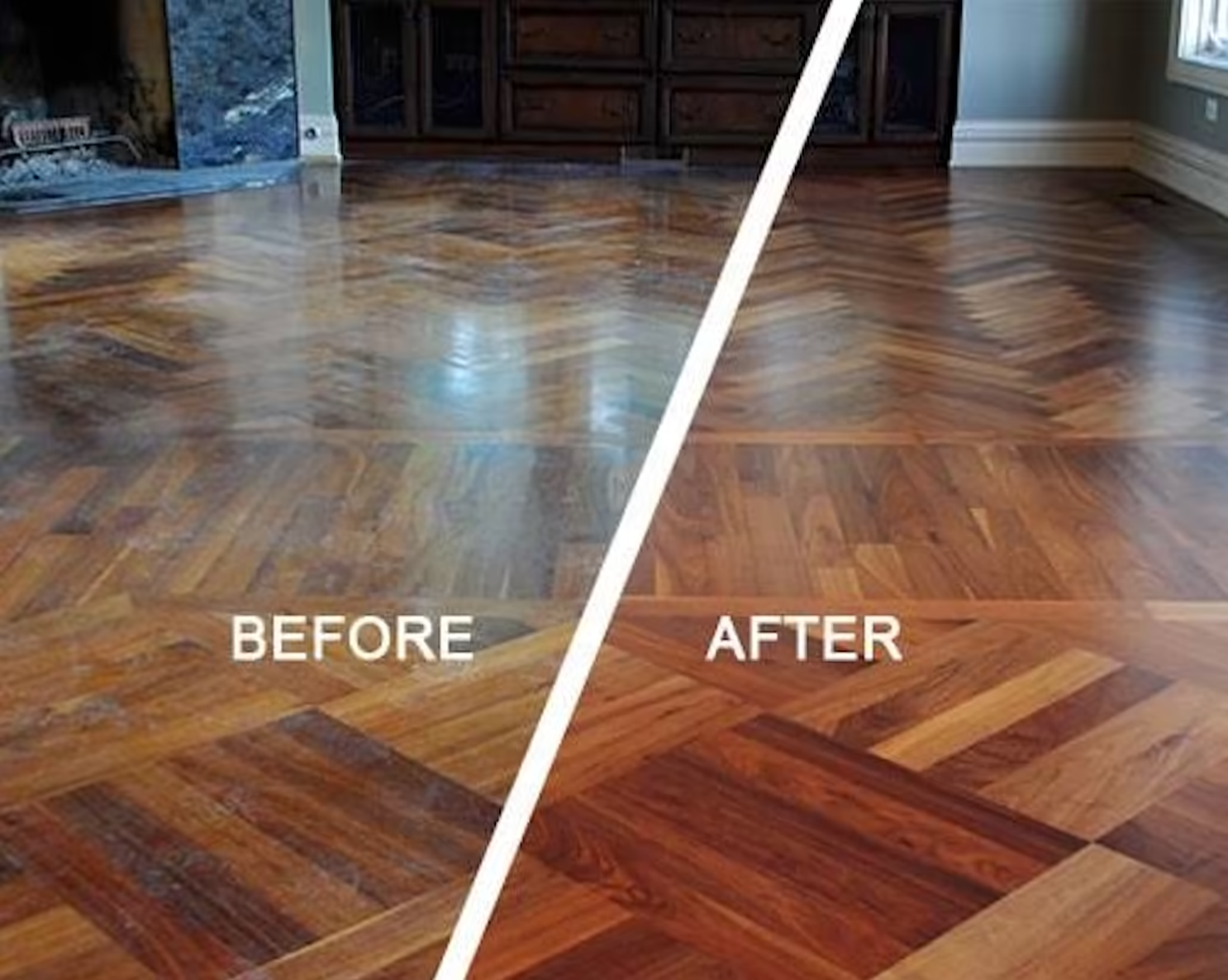
The same floor, split down the middle. Left: the finish is cloudy and worn through in the traffic path — no amount of patching fixes that. Right: sanded back and refinished.
Typically $200–$1,000 · most finished in 1–2 days
Board replacement is done first, so the whole floor is finished together
The bead test. Drip a little water onto the tired-looking area. Beading means the coating is intact and a spot repair will hold. If it darkens and soaks in, the finish has worn through and the room wants refinishing.
The furniture test. Slide a rug or a side table aside. A clear color step between the covered wood and the exposed wood is sun fade, and replacing individual boards there only adds a third shade.
Still not sure? Send us a few photos of the floor and we will tell you which one you need, even when it is the cheaper answer.
Island County holds roughly 42,954 housing units, and about seven in ten went up between 1970 and 2009. In Oak Harbor the figure is 68.5 percent, with only 23.3 percent of the city's homes predating 1969. So the typical island repair is not a 1920s fir floor. It is strip oak in a subdivision that filled in after the base grew, parquet squares in an entry, 1990s engineered plank laid over a crawl space, or laminate and LVP from the last twenty years. Older wood does exist, and it sits where you would expect: Coupeville, founded in 1852, keeps its Territorial-era houses and its 1880s and 1890s Lovejoy Victorians inside Ebey's Landing National Historical Reserve, where most of the 19,333 acres remains private land and working farm. Langley, platted in 1890 on the bluff above Saratoga Passage, has a pocket of the same vintage.
Two island conditions change how all of it behaves. Rain is the first. Whidbey sits partly in the Olympic rain shadow, so Coupeville sees 20 to 22 inches a year while the south end around Freeland and Clinton takes about 36. A floor on Penn Cove and a floor on Holmes Harbor are not moving through the same twelve months, and a gap that is ordinary at one end of the island is a real problem at the other. How the houses get used is the second. Around 16 percent of Island County housing sits vacant, double the state rate, and more than 60 percent of that is seasonal or occasional. Cabins at Lagoon Point, Bush Point, Admirals Cove, Sandy Hook and Useless Bay go cold and shut for months, then get heated hard on a Friday night, and the wood pays for the swing.
Oak Harbor is its own case again. Naval Air Station Whidbey Island counted 10,800 employees in 2022, and 52.7 percent of Oak Harbor households rent rather than own. Floors there turn over on orders, not on remodels, and a fair share of our calls are move-out calls with a walkthrough date attached. Manufactured homes are over 11 percent of the county's stock, and those get a different hand entirely — thin vinyl or laminate over particleboard decking, where the patch has to be light, precise, and not overworked.
We work on the island. We are based in Bellevue and come up either over the Deception Pass Bridge on Highway 20 or on the Mukilteo–Clinton ferry, depending on which end you are on. Call (425) 595-1079 and we will tell you what dates we can get a crew to you. You can also send photos of the damage first and get a number back without waiting on a visit.
Usually not. Wood in an unheated, closed-up house gives up moisture and the boards shrink away from each other, then close back up once the place is warm and lived in again. Filling those gaps at their widest point is the classic mistake — the filler gets crushed when the boards swell and you are left with a worse-looking seam. We take moisture readings first. If a gap measures the same in July as it did in January, it is a real gap, and we shim it with matching wood rather than putty.
Ridges with high edges mean the underside of the boards is wetter than the top. Before we quote any wood, we take moisture readings across the floor and look underneath for the source — a torn vapor barrier, standing damp, poor airflow. Once the source is handled and the wood is genuinely dry, some floors flatten back out on their own and only need sanding and a fresh coat. Boards that stay cupped or have gone dark through the grain get replaced.
It can be repaired. Individual planks come out and get replaced without disturbing the rest of the floor, provided we can match or source the product. Click-together floors sometimes need a few rows unlocked to reach the damaged plank; glue-down planks lift on their own. The more important question is why it failed — sun through south-facing glass, a high spot underneath, or furniture holding one section still while the rest of the field moves.
Often, yes. Most repairs are a one or two day job once we are on site. Send close-up photos of the damage plus a wide shot of the room so we can see which way the floor runs, and we will come back the same day with what it takes and what it costs. The part that adds time is sourcing a discontinued product, so the earlier you call, the better the odds.
Tight-grained old fir is usually worth keeping. It is soft, so it dents and shows traffic, but it is also thick — far thicker than any engineered wear layer — and it will take both a repair and a sanding if it has not already been sanded down too many times. What we check is how much wood remains above the tongue and whether earlier work took it near the nails. For the replacement pieces we use salvaged fir, because new material will not match the grain of what is already down.
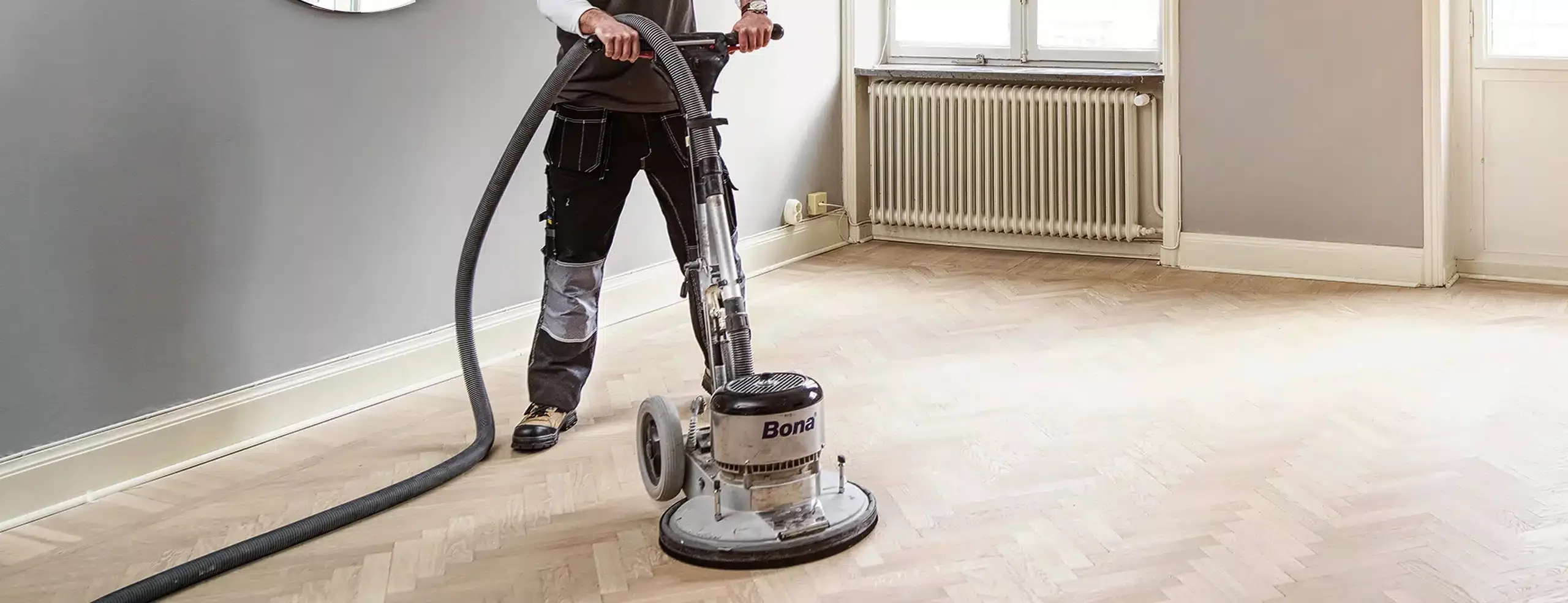
Solid wood keeps a reserve. A solid oak or fir board carries enough thickness to sand a problem out completely — which is why deep damage in an older Whidbey Island floor is often repaired in place instead of replaced.
Most island floors are laminate, LVP or engineered plank, and none of those give you a second chance at the surface. But solid wood does turn up here — tight-grained fir in the Coupeville and Langley houses, strip oak in the subdivisions that filled in around Oak Harbor — and solid wood is the one floor with margin built in. Before we quote a board swap on it, we ask whether the damage actually goes deeper than the finish, because a surprising amount of it does not.
The boards you see are rarely the ones at fault. The problem lives underneath — a fastener that has let go of its joist, a subfloor panel rubbing its neighbor, or framing that has dried and shrunk a hair since the house went up. About seven in ten island homes went up between 1970 and 2009, which is exactly the age when those fasteners start letting go. We chase the problem to its source instead of patching the symptom.
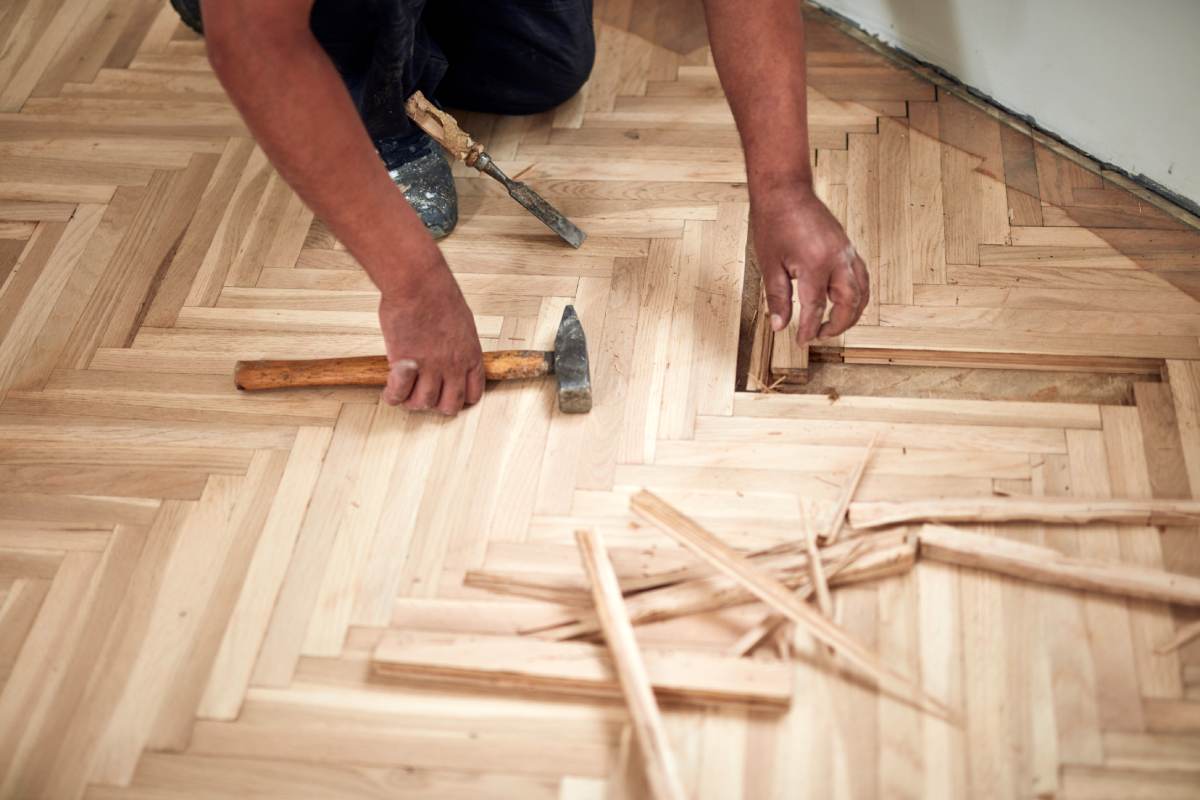
The fix starts under the boards. Loose pieces come up, the substrate gets fastened flat, and only then does the surface go back together.
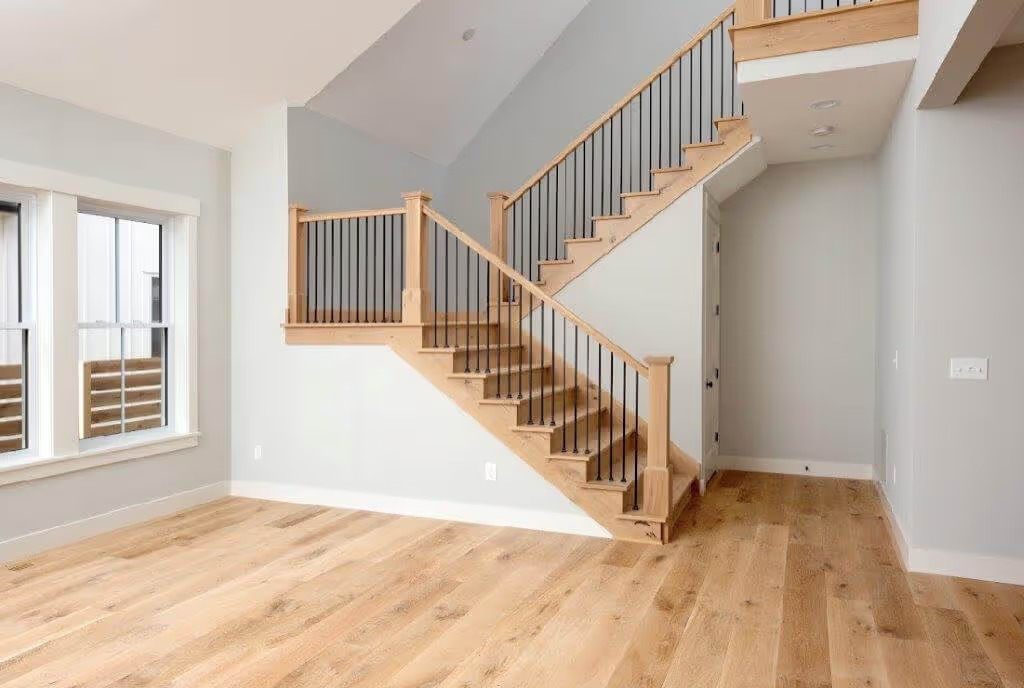
Stairs take the traffic of a hallway on a tenth of the wood. Treads, nosings and thresholds wear out years before the rooms around them — and they can be repaired one piece at a time.
Every early run for the Clinton boat, every school morning, every trip back up from Bush Point with sand still in the treads lands on the same few square feet of wood. In a two-story Oak Harbor house the staircase is the busiest floor in the building, and the nosing on each tread takes the full strike of every step. These are the repairs people put up with for years because they assume the whole staircase has to come apart. It does not.
Photograph the damage on your phone — a close-up of the worst spot, one from a few feet back, and one of the whole room. One of our estimators looks at every photo personally and emails you a written price the same business day. No visit, no sales call, no obligation.