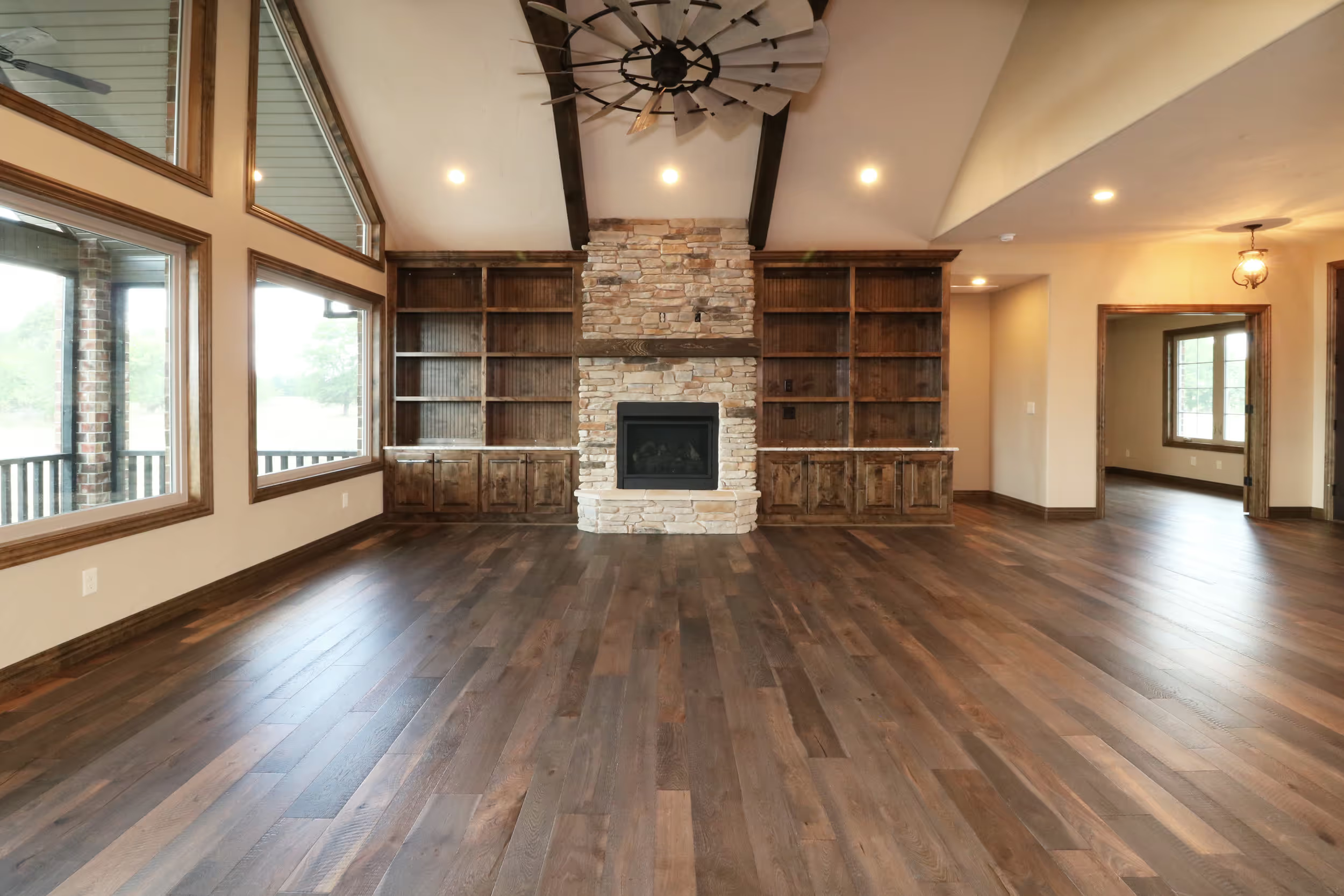



Yes — most prefinished hardwood can be refinished. Solid prefinished planks refinish many times, just like site-finished wood; engineered versions qualify only if the real-wood veneer is thick enough to sand. Two catches to know: factory aluminum-oxide finishes are brutally hard to sand off, and the beveled edges between planks disappear, trading the plank-by-plank look for a flat, seamless, site-finished one. A look at a floor vent usually settles what your floor can handle.
Need help with your existing floor? OC Flooring provides hardwood floor refinishing in Seattle, Bellevue and nearby communities. Our service page explains sanding, repairs, finish choices and estimate scope. For a Seattle home, see local dustless refinishing and project planning. This guide below focuses on whether a factory-finished floor is suitable for the work.
Prefinished hardwood — planks that arrive stained and finished from the factory — took over new construction in the 1990s and 2000s, which means an enormous number of Eastside, Mill Creek, and Marysville homes are now living on twenty-year-old factory finishes that are finally wearing out. The question lands in our inbox weekly: can these floors be refinished, or is worn-out prefinished a tear-out? The answer is usually the happy one, but it comes with two catches worth understanding before anyone quotes you anything.
The Three Facts That Decide It
the era prefinished plank took over American new construction. It's why so many Eastside, Mill Creek, and Marysville homes are reaching factory-finish end-of-life at the same time — and why we field this question weekly.
what many factory finish lines advertise: thin, flash-cured layers stacked in seconds each on the production line. Impressive durability math — and exactly why the first sanding pass through it is the slowest work of the week.
the fastest identity check there is: pull a floor vent and look at the plank edge. Three-quarter-inch solid wood refinishes for generations; a thin engineered veneer may have one careful sanding in it — or none.
Catch #1: The Factory Finish Fights Back
Prefinished planks are coated in ovens with finishes loaded with aluminum-oxide particles — a big reason factory finishes last as long as they do, and the whole reason they're miserable to remove. That hardness doesn't make refinishing impossible; it makes it slower and more abrasive-hungry, which is professional-equipment territory even more than usual. A rented sander that struggles on ordinary polyurethane simply glazes over aluminum oxide. If your refinishing quotes note the floor is prefinished, this is what they're pricing: the first pass through the factory coat is the hardest work of the week.
Catch #2: Your Bevels Are Leaving
Run a sock across your prefinished floor and you'll feel the shallow grooves at every plank edge. Sanding a floor flat means those bevels go — partially on a light cut, completely on a standard one. What replaces them is the flat, continuous, furniture-grade surface of a site-finished floor, with old plank lines gone and the whole field reading as one piece of wood. In our experience homeowners overwhelmingly love the upgrade — it's the more expensive look — but it is a change, and you should choose it rather than discover it. If keeping the beveled, plank-defined look matters to you, say so early: it changes the recommendation.
The Question Under the Question: What's Your Floor Made Of?
| Your floor | Can it be refinished? | Notes |
|---|---|---|
| Solid prefinished (¾″) | Yes — many times | Same sanding budget as site-finished solid; the factory coat is just pass one |
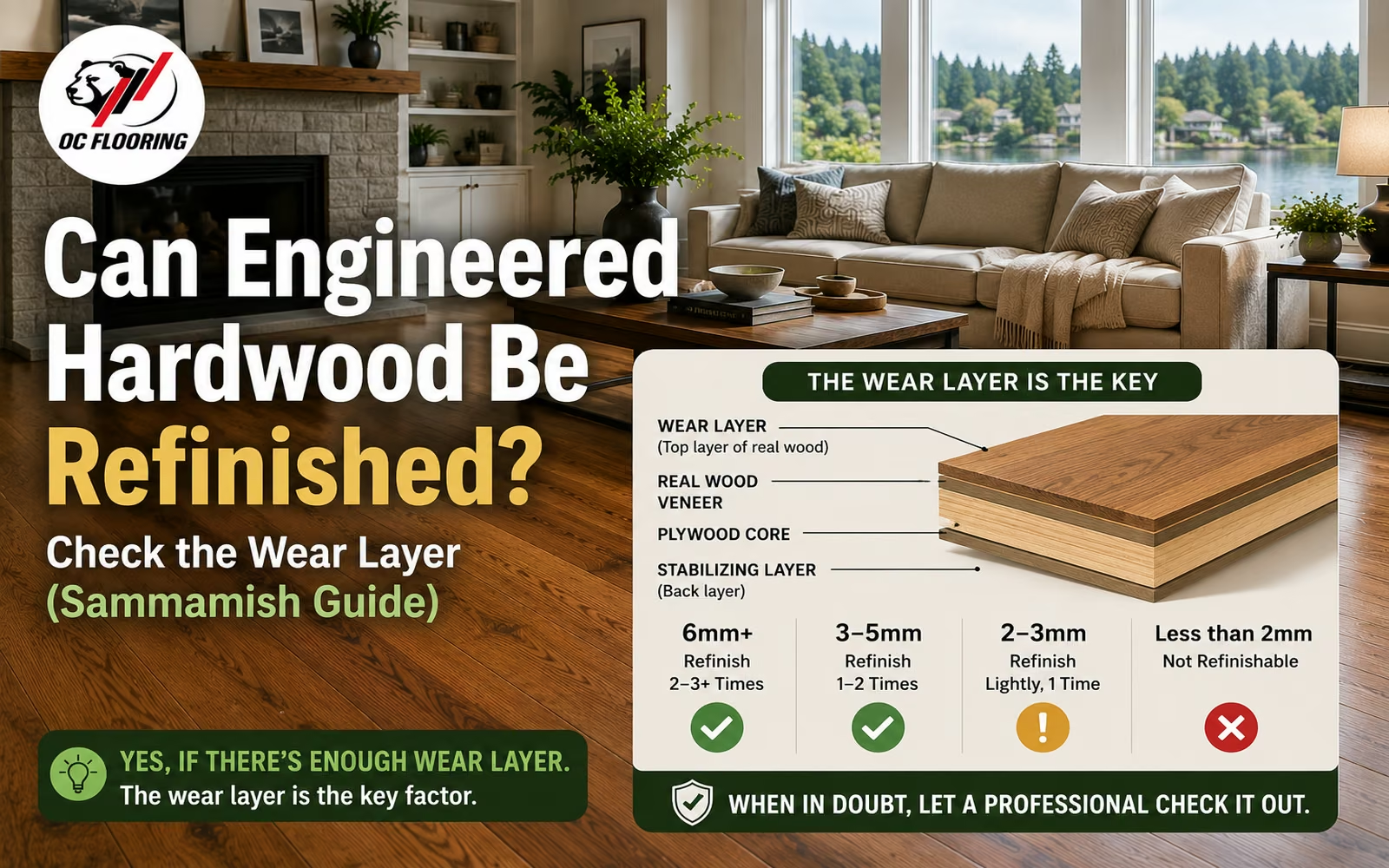
| Engineered, thick veneer | Usually once | Needs enough real-wood veneer for a careful professional sand |
| Engineered, thin veneer | No — recoat or replace | Sanding would cut through the thin wood layer into the core |
| Unknown | Find out first | Vent-register check, closet transitions, leftover planks in the garage |
Identifying which row you're in costs nothing: pull a heat register and read the plank edge like a bookend — solid wood is one material top to bottom, engineered shows layers like plywood. Leftover planks from the original install (check the garage rafters — builders often leave a box) tell the whole story instantly. When none of that settles it, we verify thickness during the free estimate before any recommendation gets made. The deeper dive on veneers and sanding budgets is in how many times can a floor be sanded.
The Middle Path: Recoating a Prefinished Floor
If the factory finish is dulling but not worn through, a screen & recoat can extend it for a fraction of the cost — with one honest asterisk. New finish must bond to that same ultra-hard aluminum-oxide surface, which demands the right abrasion system and adhesion promoters, and even then some factory coatings are uncooperative. This is a test-patch situation, never a guess: we abrade and coat a closet-sized area first, and let the bond — not the brochure — make the call. When the patch holds, you get the cheapest years of floor life money buys; when it doesn't, you've spent almost nothing to learn the real answer.
What a Refinished Prefinished Floor Gets You
Beyond erasing twenty years of wear: the bevel-free surface upgrades the look, the color becomes yours to choose ($3.99/sq ft natural, $6.50 with stain), and the factory's gloss — often shinier than anyone would pick today — gives way to a modern satin or matte. In the 90s-and-2000s subdivisions from Sammamish to Mill Creek, that's often the single highest-impact update the main floor can get, at a fraction of replacement. The broader decision framework — refinish, recoat, or when a floor truly can't be saved — lives in our complete refinishing guide and when floors can't be refinished.
Prefinished Floor Refinishing Questions, Answered
Can prefinished hardwood floors be sanded and refinished?
Why is sanding a prefinished floor harder than a site-finished one?
What happens to the grooves between planks when the floor is sanded?
How can I tell if my prefinished floor is solid or engineered?
Will the floor look different after the factory finish comes off?
Can a prefinished floor get a recoat instead of a full sand?
Which prefinished floors should never be sanded?
Does refinishing a prefinished floor void its factory warranty?
Not Sure What Your Prefinished Floor Can Handle? We'll Check
Bring us a floor vent's worth of curiosity — we'll confirm solid or engineered, test what the factory finish will accept, and quote refinish and recoat honestly. Free estimates, King & Snohomish County.
Related reading: Hardwood refinishing: the complete guide · How many sandings does a floor have? · Recoat vs refinish · Floor refinishing service