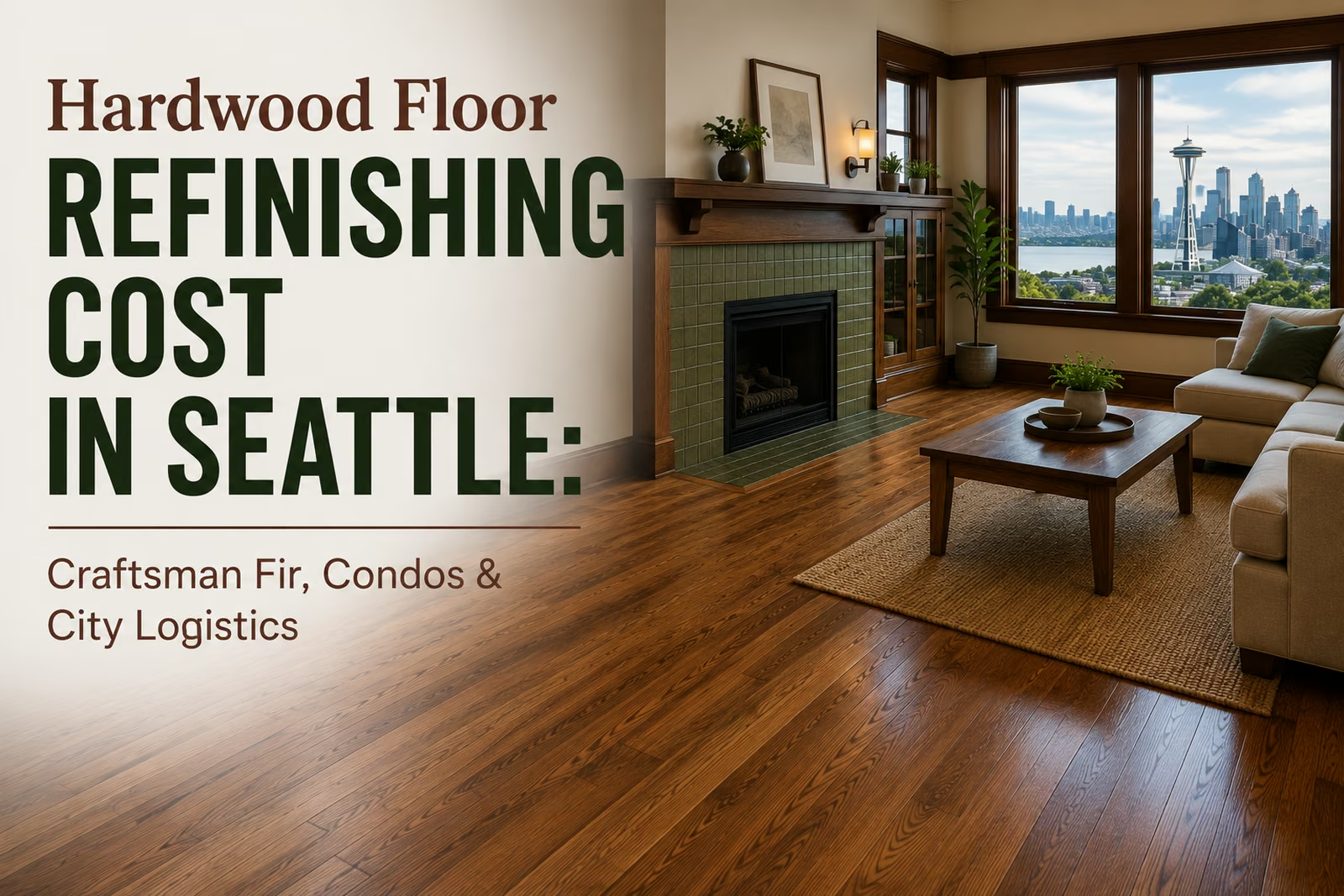



Refinishing hardwood floors in Seattle costs the same as everywhere we work: $1.99/sq ft for a screen & recoat, $3.99/sq ft for a natural refinish, and $6.50/sq ft with a custom stain (500 sq ft minimum). What's different in the city is everything around the price — Craftsman-era fir that needs a gentler hand, condo HOAs, elevators, and parking. This guide covers the Seattle-specific side; our complete cost guide and calculator has the full price list.
Refinishing a floor in Wallingford is not the same job as refinishing one in a Sammamish two-story, even at the same rate per square foot. Seattle proper means century-old Douglas fir, radiators and painted borders, condo towers with freight-elevator rules, and streets where crew parking takes actual planning. We're OC Flooring — refinishing floors across King and Snohomish County since 2013, with plenty of those 1,000+ projects inside city limits — and this is what Seattle homeowners specifically should know before getting bids.

Why Seattle Floors Are Their Own Category
growth rings per inch in the old-growth Douglas fir laid in Seattle's early-1900s homes — wood so tight-grained it literally cannot be bought new today.
between coats with the Bona waterborne finishes we use — a practical necessity in occupied city condos where oil-based odor lingers for days.
the standard thickness of solid strip flooring for over a century — which is why a 1920s Seattle floor can still have sandings left in it.
Seattle Pricing at a Glance
Our rates don't change at the city line: $1.99/sq ft screen & recoat, $3.99/sq ft full sand with natural finish, $6.50/sq ft full sand with custom stain, stairs at $55–$75 per tread, 500 sq ft minimum billed. What changes inside Seattle is the shape of the projects — smaller footprints, older wood, more logistics. The size-by-size price tables and the instant calculator live in our flagship refinishing cost guide; below is how those rates play out on real Seattle floor plans.
| Seattle project | Size | Service | Worked total |
|---|---|---|---|
| Wallingford Craftsman main floor (fir) | 900 sq ft | Natural refinish | $3,591 |
| Capitol Hill condo | 650 sq ft | Natural + dust containment | $2,844 |
| Belltown high-rise refresh | 750 sq ft | Screen & recoat | $1,493 |
| Queen Anne color change | 1,200 sq ft | Stain refinish | $7,800 |
Craftsman Fir: The Floor Seattle Is Built On
Walk into almost any pre-1950 home in Wallingford, Ballard, Ravenna, or West Seattle and there's a strong chance old-growth Douglas fir is under the carpet or the paint. It's beautiful wood — amber-toned, straight-grained, irreplaceable — and it's also soft. Fir demands a different sanding discipline than oak: finer starting grits, lighter machine pressure, and real experience with how it takes finish. An aggressive sanding that oak would forgive can eat a visible fraction of a fir floor's remaining life.
Two fir-specific budget notes. First, fir often hides surprises that get quoted at the estimate rather than guessed at: painted borders from the era when rugs covered the center of the room, filled gaps, old repairs around removed radiators. Second, fir usually looks its best with a natural finish rather than stain — softwoods absorb stain unevenly — which happens to make the $3.99/sq ft natural service the right call both aesthetically and financially for most Craftsman projects.
Refinishing in Seattle Condos and High-Rises
A large share of our city work is condos, and the building matters as much as the floor:
- HOA approval first. Most buildings require a contractor's certificate of insurance and advance notice before work starts. We're licensed and insured and handle the paperwork routinely — build a week into your timeline for board sign-off.
- Waterborne finish is effectively mandatory. Many HOAs restrict solvent-based products, and even where they don't, oil-based odor travels through shared hallways and ventilation. Our standard Bona waterborne system is low-odor and recoat-ready in hours, not days.
- Elevator and loading-dock reservations. Freight elevators book out, and quiet hours (often 9am–5pm work windows) compress the schedule. It doesn't change the per-square-foot price — it changes how many days the project spans.
- Dust containment earns its $250. In a shared building, the sealed-barrier option keeps common areas and your neighbors' patience intact. Our dustless sanding captures most dust at the source; containment closes the loop.
Street Parking, Power, and Other Only-in-Seattle Logistics
Small things that make city projects go smoothly: we plan crew parking around RPZ zones and load-in distance before day one; older Seattle homes sometimes have limited electrical service, and sanding equipment draws real power — we verify panel capacity at the estimate so nothing trips mid-floor. None of this costs you extra. It's the difference between a contractor who works in the city constantly and one who quotes it like a suburban driveway job and improvises later. One scheduling tip that helps city clients: if your building or block makes weekday access painful, say so at the estimate — sequencing the sanding days around your building's realities is free, but only if we know before the crew is booked.
When a Seattle Floor Shouldn't Be Sanded Again
Some century-old floors have been sanded many times, and eventually the wood above the tongue runs thin — telltale signs are exposed nail heads and feathered board edges near vents. Sanding a floor like that risks structural damage to the boards. The honest alternatives: a screen & recoat at $1.99/sq ft to protect what's left, targeted board repairs, or — as a last resort — replacement. We check thickness at a vent or transition during every free estimate and tell you which category your floor is in before anyone starts a machine.
Seattle Refinishing Questions, Answered
Do refinishing rates cost more inside Seattle city limits?
Can the Douglas fir in my Craftsman be refinished like oak?
What will my condo HOA require before floors are refinished?
Is oil-based polyurethane allowed in Seattle condo buildings?
How do crews handle parking and access for city jobs?
How do I know if my 100-year-old floor is too thin to sand?
What does refinishing typically total for a Seattle Craftsman main floor?
Should painted fir floors be stripped or sanded?
Get a Seattle-Smart Quote for Your Floors — Free
Craftsman fir, condo tower, or anything in between — we measure, check board thickness, sort the building logistics, and hand you a firm written price. Free in-home estimates citywide and beyond.
Related reading: The complete refinishing cost guide & calculator · 5 real refinishing budget scenarios · Dustless floor sanding · Floor refinishing service