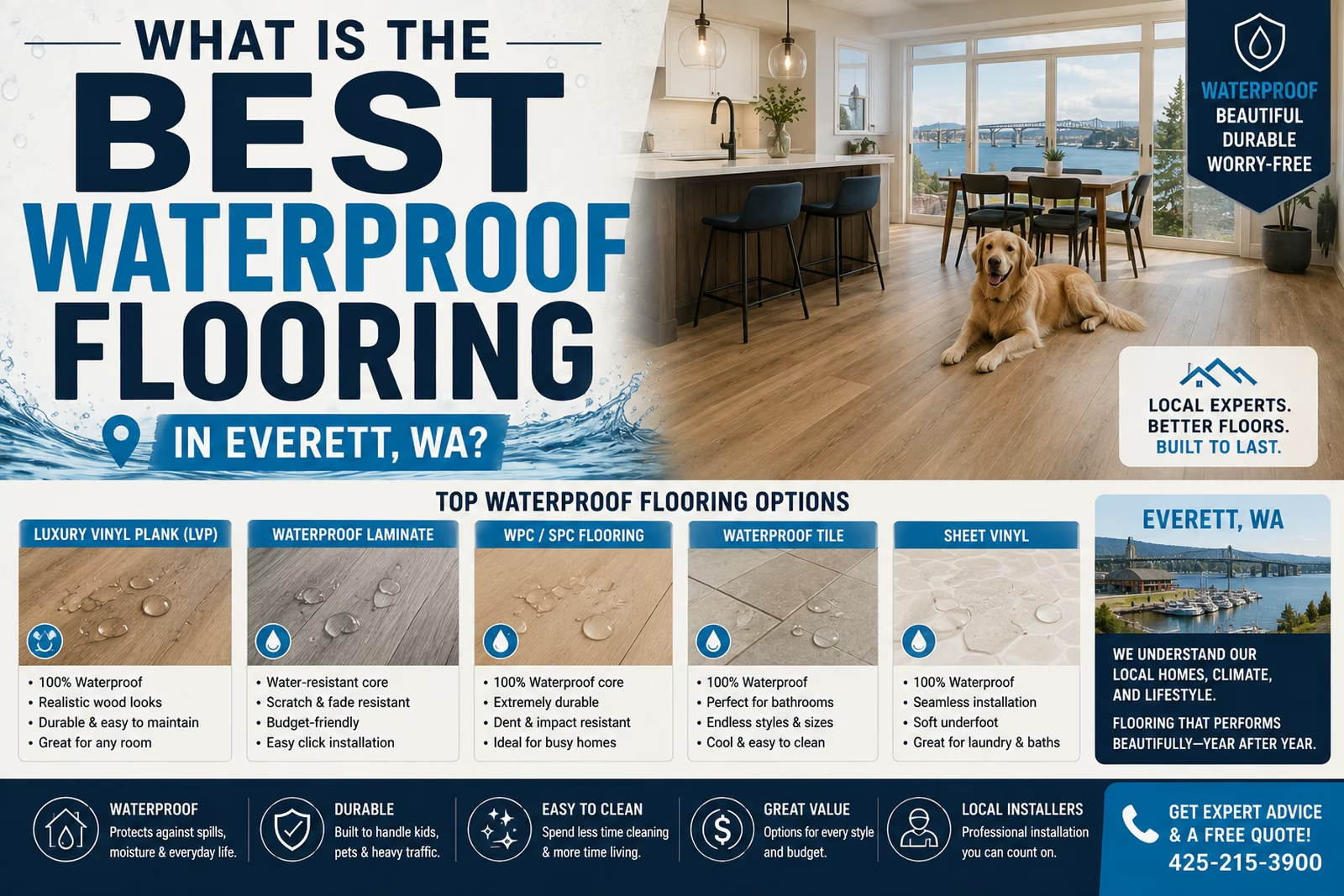




Buy the spec sheet, not the sample board. For most Seattle homes the right plank is a 20 mil wear layer on an SPC (rigid) core, 5–6 mm with an attached IXPE pad, embossed in register, and a name-brand locking system. At 2026 market rates that's roughly $2.50–$4.00 per sq ft in material plus $3–$4.25 per sq ft labor. Below: how to verify each number, and where cheap boxes save money. Still deciding whether vinyl is your floor? Start with the full case for vinyl plank in Seattle life, then come back to shop.
Two planks can look identical on a showroom rack, sit two dollars a square foot apart, and age nothing alike. The sample board won't tell you which is which; four numbers on the spec sheet will. We're OC Flooring, a hard-surface company installing around Puget Sound since 2013, and we've pulled up enough disappointing three-year-old plank to know which numbers matter.
Before You Shop: Three Numbers to Memorize
the wear layer that covers most Seattle homes — kitchens, entries, dogs and all. Below it you're gambling; far above it you're buying commercial specs you won't use.
the subfloor flatness nearly every brand requires. Miss it and you get hollow spots, clicking joints, and a warranty claim that goes nowhere.
a realistic installed price per square foot in the Seattle market in 2026 — quality plank plus labor, before prep and trim.
Spec One: The Wear Layer Is the Whole Ballgame
The wear layer is the clear, unprinted skin on top of the plank — all that stands between the printed image of wood and the sand you track in from Alki. It's measured in mils, thousandths of an inch rather than millimeters, so 20 mil is about half a millimeter. It is not overall plank thickness, and surface coatings are microns thick: a bonus on a real wear layer, never a substitute.
| Wear layer | Who it's for | Our verdict |
|---|---|---|
| 6 mil | Promo pallets, flip staging, closets | Skip it. Labor costs the same on a floor you replace twice. |
| 12 mil | Guest rooms, offices, quiet households | Low-traffic rooms only. Never an entry or kitchen. |
| 20 mil | Main floors, kitchens, entries, kids, dogs | The residential default — our spec unless there's a reason not to. |
| 22–30 mil | Rentals, ADUs, mudrooms, big dogs, gyms | Worth it where turnover or claws are constant. Overkill in a bedroom. |
Warranty length is tied directly to wear-layer thickness, so the mil rating and the "lifetime residential" badge are the same claim twice. If a seller quotes a warranty but won't quote a mil number, that's your answer.
Spec Two: SPC vs WPC vs Flexible LVP
Under the wear layer sits the core, where one category splits into three different products. It decides how the floor feels, how it takes heavy furniture and hot sun, and how flat your subfloor must be. The chemistry is in our guide to what SPC flooring is and whether it's good; here's the shopping version.
| Core | How it behaves | Honest verdict |
|---|---|---|
| SPC stone plastic composite, 4–6 mm | Best dent resistance under point loads and barely moves with temperature, but harder underfoot and unforgiving on a wavy subfloor | The default for most homes here — and the only core we'll put in a sunroom. |
| WPC foamed core, 5.5–8 mm | Warmest and quietest of the three and forgiving on minor waviness, but dents under fridge legs and casters | Buy it for feel, not toughness. Great upstairs, questionable in a mudroom. |
| Flexible LVP glue-down, 2–3 mm | No floating movement or hollow sound and the commercial standard for big spans, but it demands near-perfect prep | The pro's choice for large open plans — cheapest material, priciest prep. |
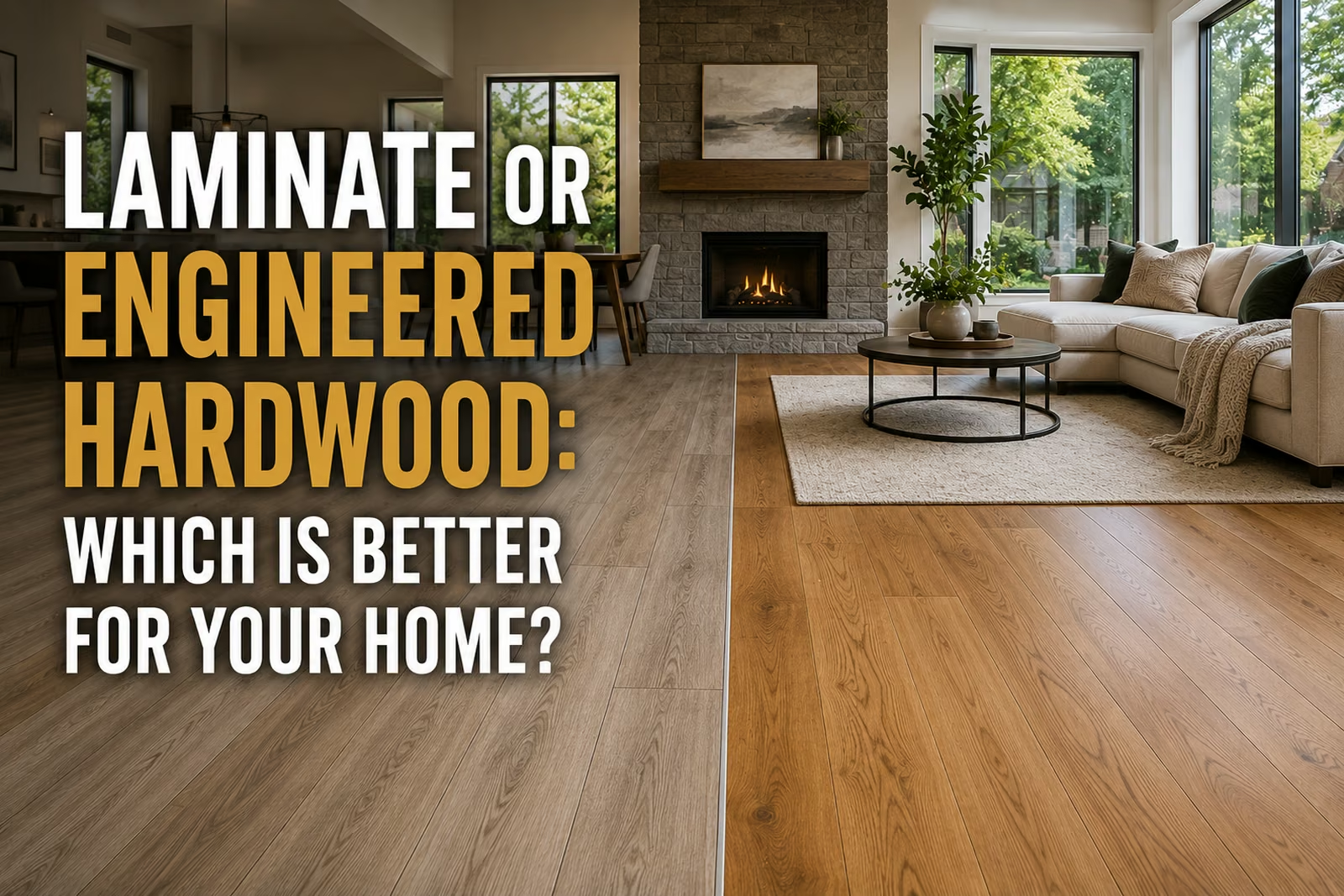
Peel-and-stick plank also sits on store shelves; the verdict there is short: temporary fixes only. Weighing the category against its closest rival? Our comparison of vinyl plank versus laminate covers where each wins.
Spec Three: Thickness, the Attached Pad, and the Click
Overall thickness is the number showrooms lead with and the one that matters least for durability. It governs fit and feel: how solid the floor sounds, how much height you add at doorways. Most planks run 4–8 mm, low enough to float over many existing hard surfaces without rebuilding transitions. Choose thickness for conditions, wear layer for abuse.

Buy the pad attached, then leave it alone
Better rigid-core lines include a factory-bonded pad, usually IXPE foam around 1–1.5 mm. It adds warmth and kills the hollow ring underfoot. Buy it attached — then obey the rule that voids more warranties than anything else here: never add a second underlayment under a plank that already has one. Stacked pads make the assembly spongy, flex the joints, and separate the seams. Over concrete, ask about vapor: some attached pads include a barrier, many don't, and if the spec sheet is silent, plan on 6 mil poly.
The hidden spec: who made the click
Locking profiles are engineered and licensed — Uniclic and Valinge are the names you'll see — and generic joints are where budget planks disappoint: harder to lock cleanly, easier to chip, likelier to work apart under a rolling chair. Ask which system a plank uses; a line proud of its answer prints it on the box.
How flat is flat enough
Most brands specify about 3/16″ over 10 feet, and rigid cores are the least forgiving product about it. Older Seattle houses with plank subfloors over joists routinely miss it, which means self-leveler or plywood first. An estimate that never mentions flatness isn't complete.
Spec Four: The "Does It Look Fake" Specs
Durability specs decide how the floor ages; these decide whether guests can tell.
- Embossed in register (EIR). Texture that lines up with the printed grain, so knots are where your fingers feel them. The biggest realism factor — run a hand over the sample and feel whether it wanders.
- Enough unique plank faces. Budget lines repeat four to eight printed boards and you'll spot the twin knot forever; better lines carry fifteen or more.
- Low sheen and four-sided bevels. Matte hides scuffs and the grit a rainy climate delivers eight months a year. Bevels on all four sides cast the shadow line real wood has.
- Size and tone. Seven to nine inches wide by four to five feet long is today's standard, but bigger boards magnify every dip in the subfloor. Mid-tone warm oak hides dust; dark and pale floors broadcast it.
Every vinyl core is waterproof in the sense that the board won't swell, but the assembly isn't — water still reaches the subfloor through seams. Look for a written wet-area warranty with a time limit, not the word "waterproof" on a sticker.
What Vinyl Plank Costs in the Seattle Market in 2026
Pricing splits into three tiers, and the first jump is the one that matters. Going from a 6 mil builder plank to a 20 mil rigid core with EIR texture usually costs about a dollar more per square foot — on a job where the labor bill doesn't change at all.
| Tier | Per sq ft | What you're getting |
|---|---|---|
| Promo / builder | $1.50–$2.50 | 6–12 mil wear layer, thin core, generic lock, no pad |
| Residential sweet spot | $2.50–$4.00 | 20 mil wear layer, 5–6 mm SPC, attached pad, licensed lock, EIR |
| Premium | $4.00–$7.00 | 22–30 mil, 9″+ boards, best visuals, longest warranties |
| Installation labor | $3.00–$4.25 | Our rate, materials separate |
That puts a properly specified floor around $5.50–$8.25 per square foot installed at current Seattle-area market rates — a figure to sanity-check bids against, not a quote. Outside it, and belonging on any honest estimate as its own line: demolition and haul-away, subfloor leveling, transitions and stair nosings, and new base if the old trim can't be reused. Our vinyl plank and laminate installation estimates are free and itemized.
Where the cheap boxes cut corners
- 20 mil wear layer, stated on the box
- Licensed locking system, named
- Attached pad, vapor spec in writing
- Embossed in register, 15+ plank faces
- A line you can still rebuy later
- Wear layer dropped to 6–12 mil
- Unbranded joints that chip and separate
- No pad, so the floor sounds hollow
- Four printed faces repeating across the room
- Closeout lots with no stock for repairs
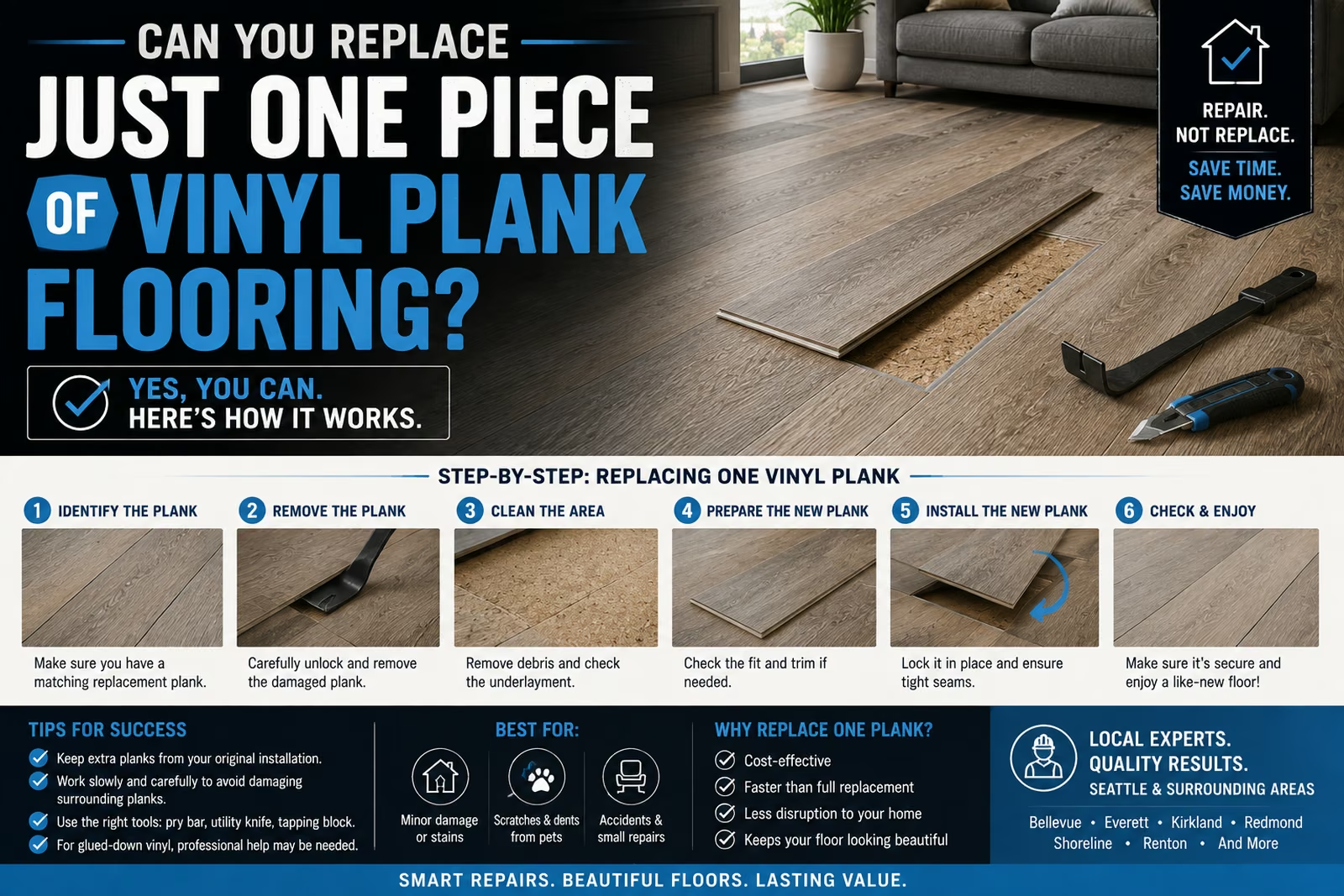
That last line costs people the most. Order 7–10% over your square footage and keep one extra box indoors — replacing a single damaged plank is simple with a matching board and impossible without one.
Match the Spec to the Room
The same house rarely wants the same plank everywhere. Here's how we spec it around King and Snohomish County.
| Room | Wear layer | Core | What decides it |
|---|---|---|---|
| Mudroom / back entry | 20–28 mil | SPC | Grit and standing water, eight months a year |
| Kitchen | 20 mil | SPC | Dropped pans, dishwasher leaks, chair legs |
| Basement over slab | 20 mil | SPC + vapor retarder | Slab moisture vapor and ceiling height |
| Main-floor living | 20 mil | SPC or glue-down | Looks lead here: EIR and wide boards |
| Upstairs bedrooms | 12–20 mil | WPC | Comfort and quiet outrank abrasion |
| ADU / rental | 22–30 mil | SPC | Turnover, plus a line you can rebuy |
| Sunroom or wall of glass | 20 mil | SPC only | WPC expands too much in direct sun |
Pricing a whole floor rather than one room? Details for city homes sit on our Seattle vinyl plank installation page.
Where We'd Talk You Out of Buying Vinyl Plank
Two situations, honestly. A house with original wood underneath: if your Wallingford or Ballard place hides old-growth fir or oak under carpet, no spec here beats it — refinishing that wood usually costs less than quality plank installed. The high-end main floor: in pricier neighborhoods buyers still expect real wood in the formal rooms, and premium plank can still read as a shortcut at appraisal; our honest pros and cons of luxury vinyl covers that trade-off.
After You Buy: Protecting the Spec
Walk-off mats catch the sand that does the slow grinding damage, and felt pads prevent the gouges a wear layer was never designed to stop. Past that, sweeping and damp-mopping with a neutral cleaner is the whole program.
Buying Vinyl Plank: Your Spec Questions, Answered
What wear layer thickness do I need for vinyl plank flooring?
Is SPC better than WPC?
Are thicker vinyl planks more durable?
What should vinyl plank flooring cost installed in the Seattle area?
Are big-box store planks worse than the ones at a flooring store?
Do I need a separate underlayment if my planks have an attached pad?
How flat does my subfloor have to be for vinyl plank?
Not Sure Which Spec Your Room Needs?
Tell us the room, the household and what's under the floor now — we'll spec the wear layer, core and pad, check subfloor flatness, and quote material and labor separately so you see exactly what you're paying for. Free in-home estimates across King and Snohomish County.