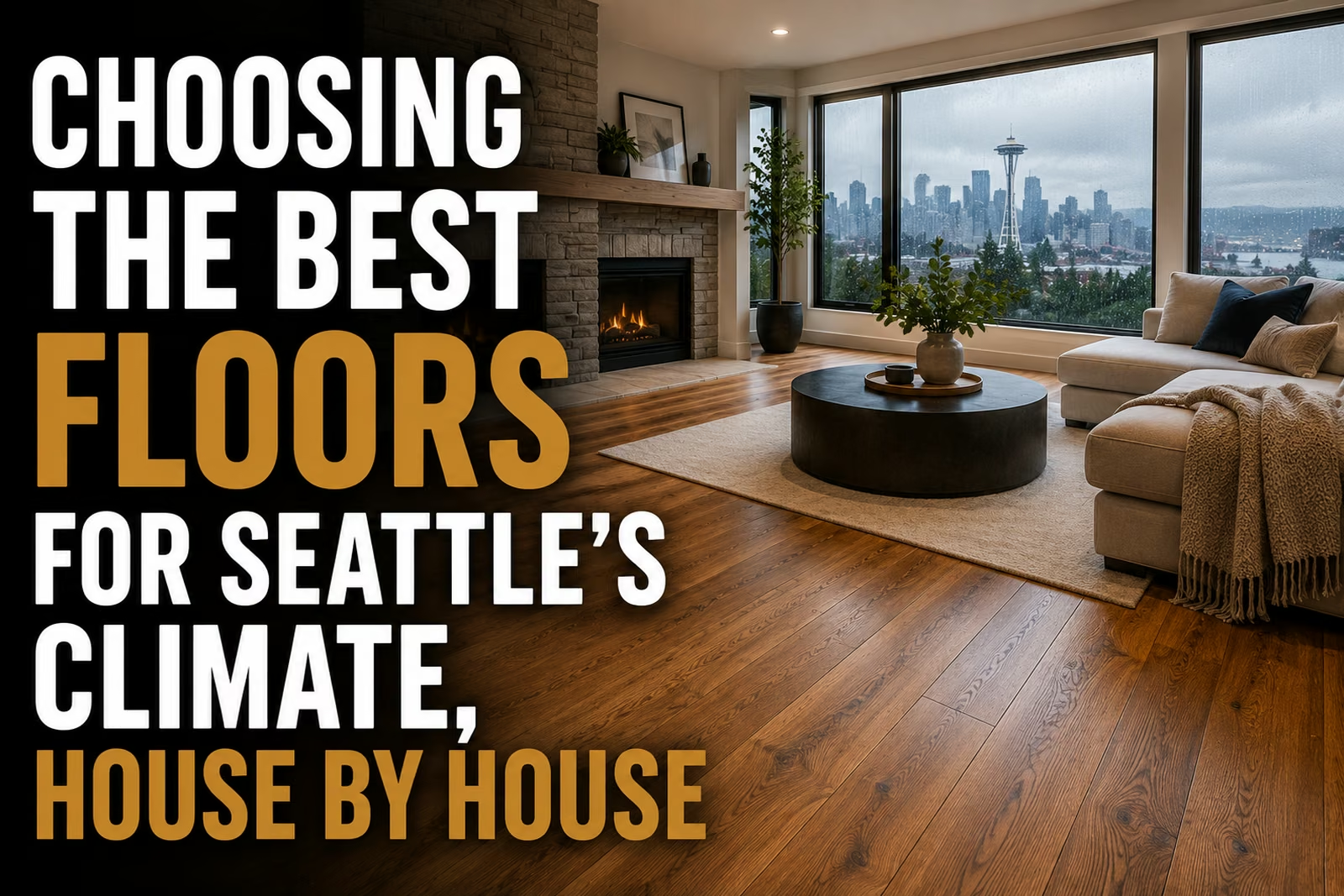



Seattle's climate is only half the flooring equation — your house is the other half. The city's housing stock sorts into three big families, each with its own right answer: pre-war Craftsman bungalows (refinish the fir, don't cover it), mid-century view homes (oak under the carpet, LVP in the daylight basement), and townhouses and condos on concrete (glue-down engineered or LVP, with HOA sound rules). For the region-wide science, start with our Pacific Northwest climate guide — this is its city companion.
We wrote a whole guide on what the Pacific Northwest climate does to flooring — the humidity swings, the crawlspaces, the winter gapping. This article is its Seattle-city companion, because inside the city limits the climate question quickly becomes a housing-stock question. A 1912 Wallingford bungalow, a 1958 View Ridge rambler, and a 2021 Ballard townhouse sit in the same weather and need three different flooring strategies. After a thousand-plus floors across the region since 2013, here's how we think about each Seattle house, by era.
Seattle's Three Housing Families
the year Seattle annexed Ballard and West Seattle. The bungalow boom that followed filled those neighborhoods with old-growth fir floors that are still under carpet today.
when the view neighborhoods — View Ridge, Magnolia bluffs, West Seattle's slopes — filled with ramblers and split-levels, most with oak strip flooring under later carpet.
the classic modern Seattle townhouse: garage level on a concrete slab, living space mid-level, bedrooms up top — three different flooring problems stacked in one skinny building.

Pre-War Craftsman Bungalows: You Probably Already Own the Best Floor
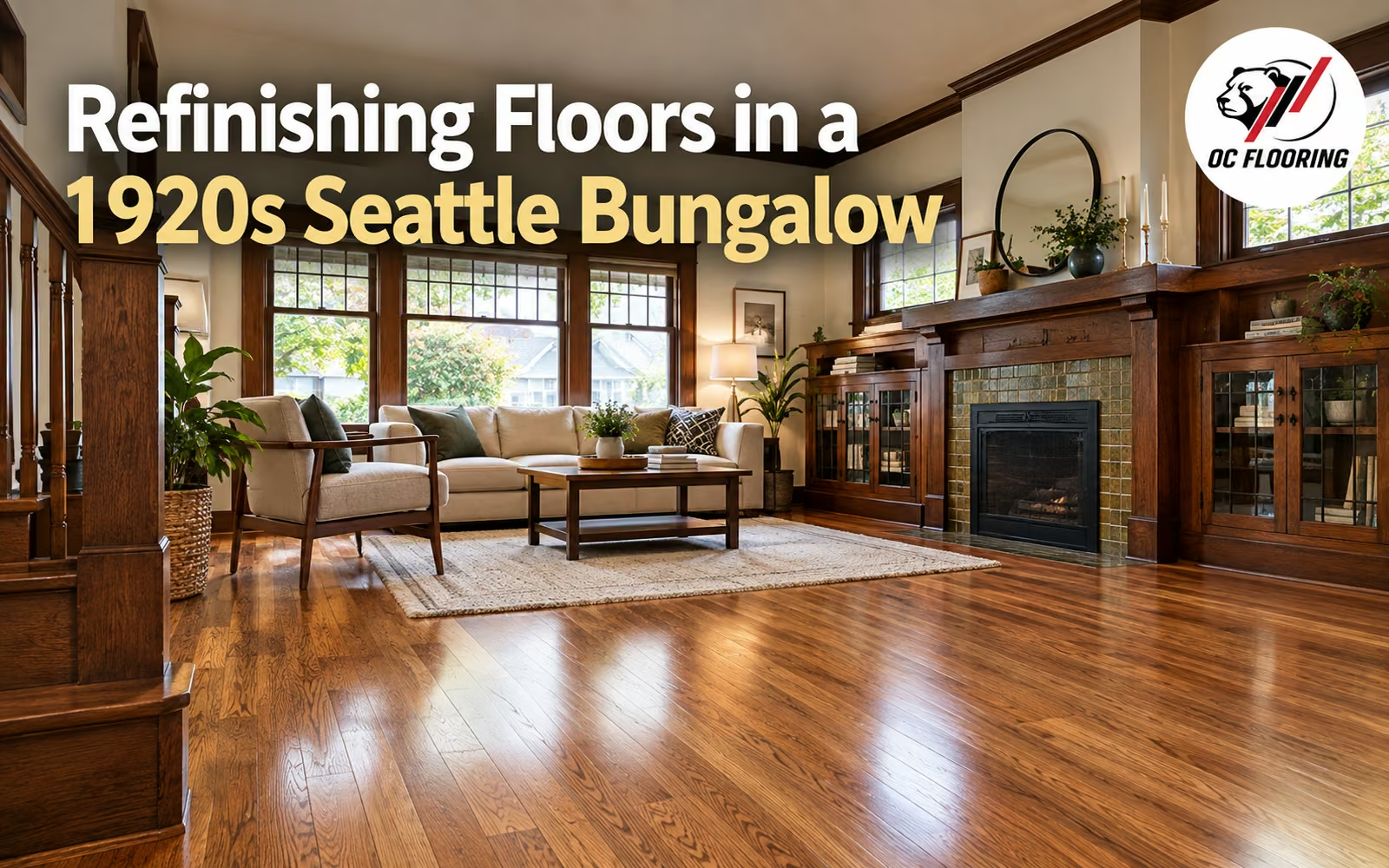
Wallingford, Ballard, Ravenna, Columbia City, Queen Anne's side streets: if your house predates roughly 1940, the odds are strong that tight-grained old-growth Douglas fir runs under whatever covers it now. That wood came from trees that no longer get harvested — you cannot buy it new at any price — and it was often laid as the finished floor upstairs and down. Our standing advice for these houses is to refinish the fir rather than cover it: it costs a fraction of new flooring and produces a floor with character nothing modern matches. Fir is softer than oak, so it earns its dents — but a century of Seattle bungalows proves it wears the dents well. Reserve new material for the kitchen and bath, where LVP or tile handles the water the fir never should.
Mid-Century View Homes: Work With the Split Levels
The 1950s–60s ramblers and split-levels of View Ridge, Magnolia, and West Seattle usually hide 2¼-inch oak under bedroom carpet — worth exposing and refinishing almost every time. Their real flooring puzzle is the lower level: daylight basements, slab-on-grade rec rooms, and the moisture that concrete quietly wicks year-round. The clean formula is refinished oak upstairs, waterproof LVP down — and a deliberate color choice so the two levels feel related rather than accidental. One more mid-century quirk: these homes often have their original radiant or in-slab heat replaced by forced air, leaving uninsulated slabs that make lower-level floors feel cold; LVP with a quality underlayment feels noticeably warmer underfoot than tile down there.
Townhouses and Condos: Concrete, Neighbors, and the HOA
| Situation | Best floor | Watch out for |
|---|---|---|
| Townhouse garage-level room on slab | LVP over a vapor-rated underlayment | Slab moisture; check for efflorescence before installing anything |
| Townhouse main level | Engineered hardwood or LVP | Subfloor flatness — fast-built framing often needs leveling first |
| Condo over another unit | Glue-down engineered or LVP with acoustic underlayment | HOA IIC sound rating requirements — get them in writing first |
| Top-floor condo, big glazing | Engineered hardwood | Sun fade; UV-filtering shades earn their keep |
| Any concrete-slab unit | Glue-down engineered / floating LVP | Nail-down solid hardwood is out — there’s nothing to nail into |
The townhouse-and-condo third of Seattle's housing is where flooring projects get won or lost on paperwork and prep rather than product. Buildings with units stacked above one another almost always specify a minimum impact-sound rating (IIC) for hard flooring, and the underlayment that satisfies it must be documented before installation — we handle that spec routinely, but it has to happen before materials are ordered, not after the neighbor complains. On the physical side, concrete rules everything: moisture testing first, then glue-down engineered hardwood or a floating waterproof floor. It's the same conclusion our climate guide reaches for slabs everywhere — city concrete just adds a lawyer.
The City-Specific Details That Bite
Smart moves in Seattle proper
- Refinish original fir and oak before considering replacement — it’s usually the best floor money can buy here
- LVP for basement ADUs and DADUs — waterproof, warm-feeling, tenant-proof
- Lighter, matte finishes: they flatter seven months of gray daylight
- Confirm HOA sound rules in writing before ordering materials
- Moisture-test every slab, even upper-floor concrete in mid-rises
Mistakes we get called to fix
- Solid hardwood glued to damp garage-level slabs
- Dark gloss floors in north-facing rooms — every speck of dust announces itself
- Covering old-growth fir with builder-grade laminate
- Skipping acclimation because “it’s a small condo”
- Floating floors pinned down by kitchen islands, unable to move with the seasons
Color and Light: The Underrated Seattle Decision
Seattle sits far enough north that from November through February, homes live on lamps and whatever the sky spares. That changes flooring aesthetics in a way national guides never mention: light-to-medium floor tones — natural white oak, blond fir, greige-washed LVP — bounce scarce daylight around a room, while espresso-dark floors absorb it and show every particle of winter mud-season dust in the low-angle light. Dark floors can be gorgeous here, but they belong in rooms with real windows and owners with real vacuuming discipline. Matte and satin sheens flatter our climate for the same reason; gloss turns seven months of sideways light into a scratch exhibit. (Choosing a stain? Our stain color guide goes deeper.)
Seattle Flooring Questions, Answered
What flooring works best in a Seattle Craftsman bungalow?
What floors suit a mid-century Seattle view home?
What flooring should I choose for a new Seattle townhouse?
Do Seattle condo buildings have flooring rules I should know about?
Why do older Seattle homes have fir floors instead of oak?
Which floor colors work best in Seattle's low winter light?
Does living near Puget Sound change what flooring I should buy?
Are heated bathroom floors worth it in Seattle?
Should a Seattle remodel match new flooring to 1920s original floors?
Tell Us Which Seattle House You Own — We’ll Match the Floor
Craftsman, split-level, townhouse, or condo: free in-home estimates across Seattle and the Eastside, with honest advice on refinishing what you have versus installing something new.
Related reading: Best flooring for the Pacific Northwest climate (the flagship guide) · Choosing hardwood for a Bellevue home · Red oak vs. white oak · Floor refinishing