


Yes — refinishing old hardwood is almost always worth it. A full refinish runs $3.99–$6.50/sq ft, while replacement stacks tear-out, disposal, new materials, and installation labor into a multiple of that. Old floors are frequently better wood than anything at the lumberyard today, and refinished hardwood consistently ranks among the highest-payback projects at resale. The exceptions: floors sanded to their limit, or moisture damage refinishing can't touch. Here's the whole decision, with numbers.
“Should we just replace them?” is the question we hear standing on tired, gray, scratched-up hardwood in Bothell and Mill Creek living rooms every week. It's a fair question — the floor looks dead. But worn finish and worn wood are different things: in most homes, everything you dislike about the floor lives in the top hair's width, and the wood below it is fine. That's what refinishing removes. Here's how we'd walk you through the decision if we were standing in your living room.
The Numbers That Frame the Decision
the cost recovery the National Association of Realtors' Remodeling Impact Report attributed to hardwood floor refinishing — one of the only home projects that has scored above breaking even at resale.
how long a solid hardwood floor can serve with periodic refinishing. The floors in Seattle's century-old Craftsman homes are on their fourth or fifth finish, not their fourth or fifth floor.
how deep most of what you hate about an old floor actually goes — worn finish, gray oxidation, scratches, sun fade. Everything below that line is the same wood it was on installation day.
The Money Math, Line by Line
| Refinishing | Replacing | |
|---|---|---|
| Labor & finish | $3.99/sq ft natural · $6.50 with stain | Install labor $3–$4.25/sq ft — before materials |
| New materials | None — the wood is already yours | New hardwood, underlayment, trim, transitions |
| Tear-out & disposal | None | Demolition, haul-away, and dump fees |
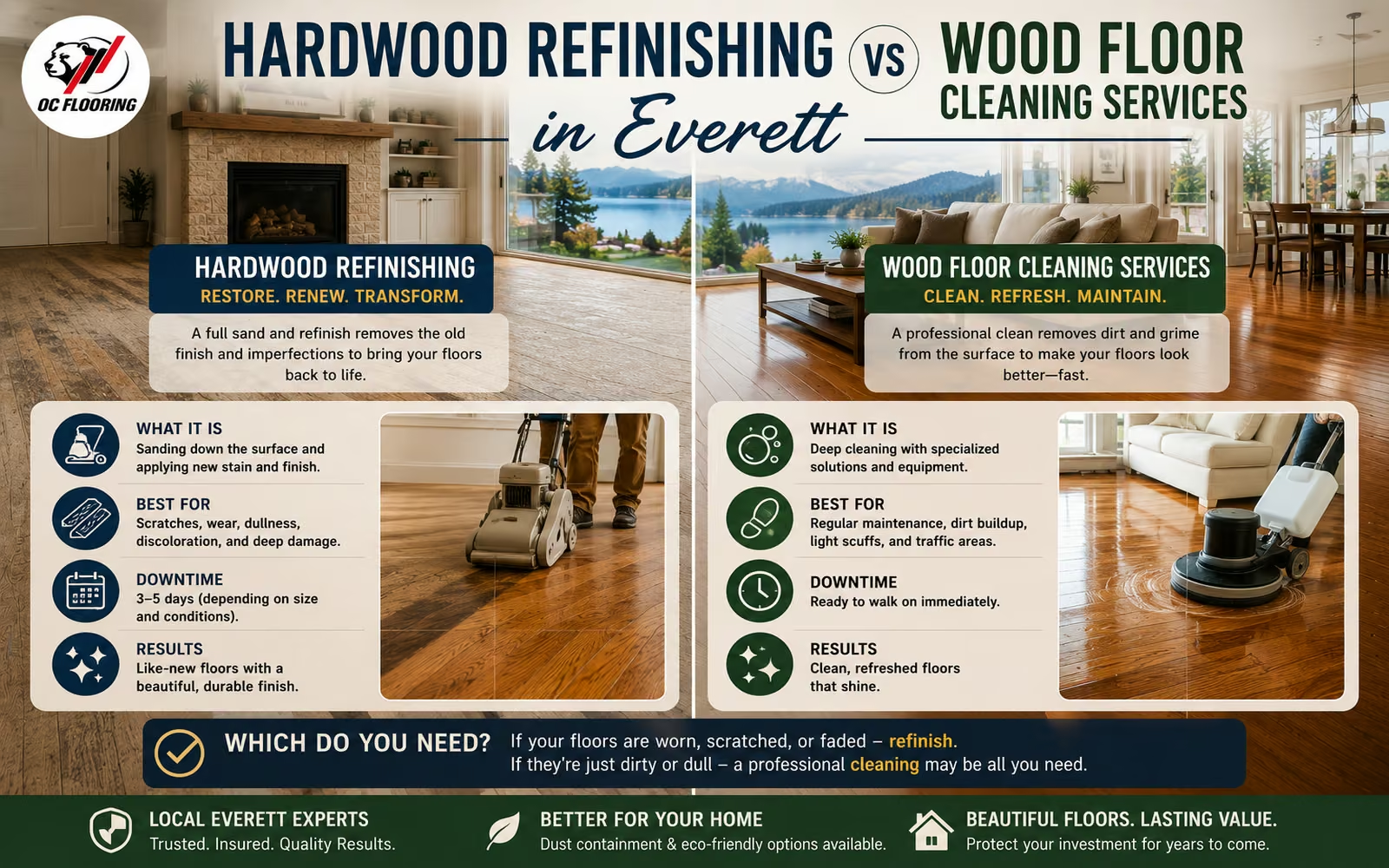
| Timeline | 3–5 days | Typically 1–2 weeks with tear-out and acclimation |
| What you end up with | Your original wood, reset | New (often thinner-veneer) product |
Stack replacement honestly — tear-out, disposal, materials, labor, trim — and it lands at a multiple of refinishing cost for the same square footage. That's why our first recommendation at estimates is usually to refinish, even though we also install new hardwood: we'd rather tell you the cheaper option is the better one when it's true. Full pricing detail lives in our 2026 cost guide.
When It's Worth It — and When It Honestly Isn't
Refinish when…
- The boards are solidly attached and flat
- Damage is cosmetic: scratches, dullness, fade, shallow stains
- The floor still has wood above the tongue (most do)
- You want a color change — stain day is included in the reset
- There’s hardwood under that carpet you’ve been meaning to pull
Think replacement when…
- Nail heads show across the floor — it’s sanded out
- Boards have buckled off the subfloor or gone spongy with rot
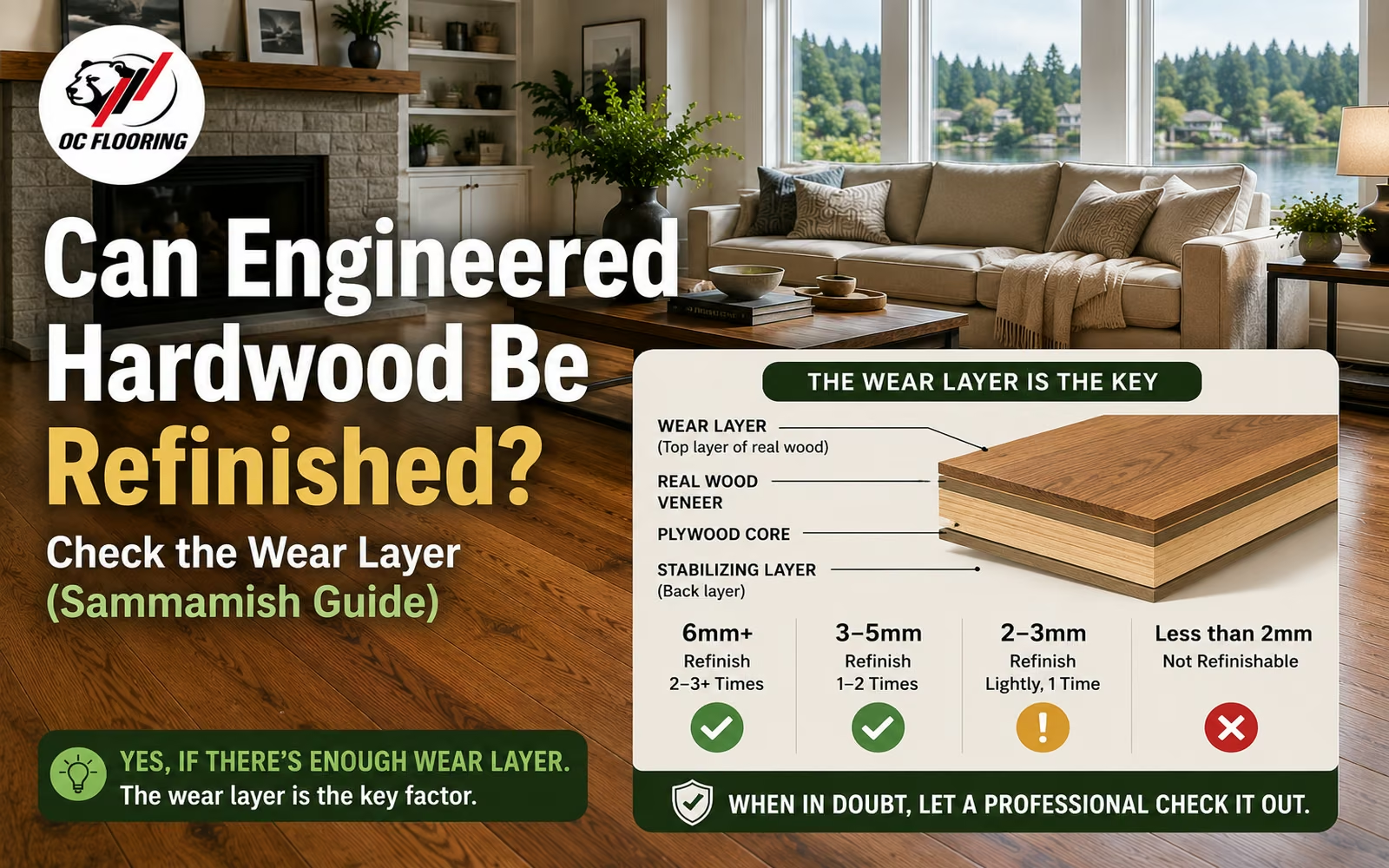
- It’s engineered wood with a veneer under 2mm
- Large areas need board replacement — past a point, new wins
- It’s laminate or vinyl pretending to be wood — nothing to sand
If several items in the right-hand column sound familiar, read our honest guide to when floors can't be refinished before spending anything.

What Refinishing Does at Resale
Hardwood is one of the few finishes that buyers reward almost universally, and refinishing existing hardwood is one of the rare projects with a track record of returning more than it costs — NAR's Remodeling Impact Report has scored it at 147% cost recovery, the top of its list. In the Seattle–Eastside market specifically, listing photos do heavy lifting, and refinished floors photograph like a renovation at a fraction of renovation cost. Agents routinely tell sellers to refinish before listing rather than credit the buyer; the credit gets negotiated down, the floors don't.
The Case for the Wood You Already Own
There's also a quality argument that has nothing to do with money. If your floor predates roughly 1950, it's likely old-growth timber — slower-grown, tighter-grained, more dimensionally stable than today's plantation lumber. You cannot buy that wood new at any reasonable price; you can only inherit it. Refinishing keeps it in service, keeps tons of material out of the landfill, and skips the footprint of manufacturing and shipping a whole new floor. The greenest floor, genuinely, is the one already nailed down.
The Under-the-Carpet Lottery (Locals Win It Constantly)
Around Bothell, Kirkland, and Mill Creek, thousands of 1980s–90s homes were carpeted over perfectly good 2¼-inch red oak within a decade of being built. In pre-1950 Seattle and Everett homes, the prize under the carpet is fir. Pull back a corner in a closet and look: staple holes, paint flecks, and decades of grime all sand away — those floors were often covered, not worn out. Finding hardwood under carpet is the single best version of the refinish-or-replace question, because you get a “new” floor for the price of a refinish and skip demolition entirely. We'll happily check during a free estimate; it takes two minutes and a corner of carpet.
A Five-Minute Self-Assessment Before You Call Anyone
You can rough out your own answer tonight. One: walk the floor in socks and mark the worst spots with painter's tape — if they're scratches, dull patches, and gray fade, that's finish damage, which refinishing erases. Two: press a fingernail into a dark stain; if the wood is hard, it likely sands or gets a board swap — if it's soft or spongy, that board is dead. Three: look across the floor at a low angle in evening light for exposed nail heads, the sign a floor is out of sandings. Four: pull a heating vent register and check the plank edge — solid wood or engineered, and how thick. If the tape marks outnumber the problems, refinishing wins; if you found nails, sponginess, or paper-thin veneer, read on before spending a dollar.
Refinish or Replace: The Questions Homeowners Weigh
Is it cheaper to refinish or replace hardwood floors?
Does refinishing hardwood floors increase home value?
How do I know if my old floors are worth saving?
Are the hardwood floors under my carpet salvageable?
How long do refinished hardwood floors last?
Is refinishing old floors better for the environment than replacing?
When is replacing hardwood better than refinishing?
Is it worth refinishing floors before selling a house?
Find Out What's Hiding Under That Wear and Tear
We'll assess your boards, measure what's left to work with, and give you the refinish-vs-replace math for your actual floor — in writing, for free, anywhere in King & Snohomish County.
Related reading: When floors can’t be refinished · 2026 refinishing cost guide · Our refinishing service · Fixing pet-stained boards