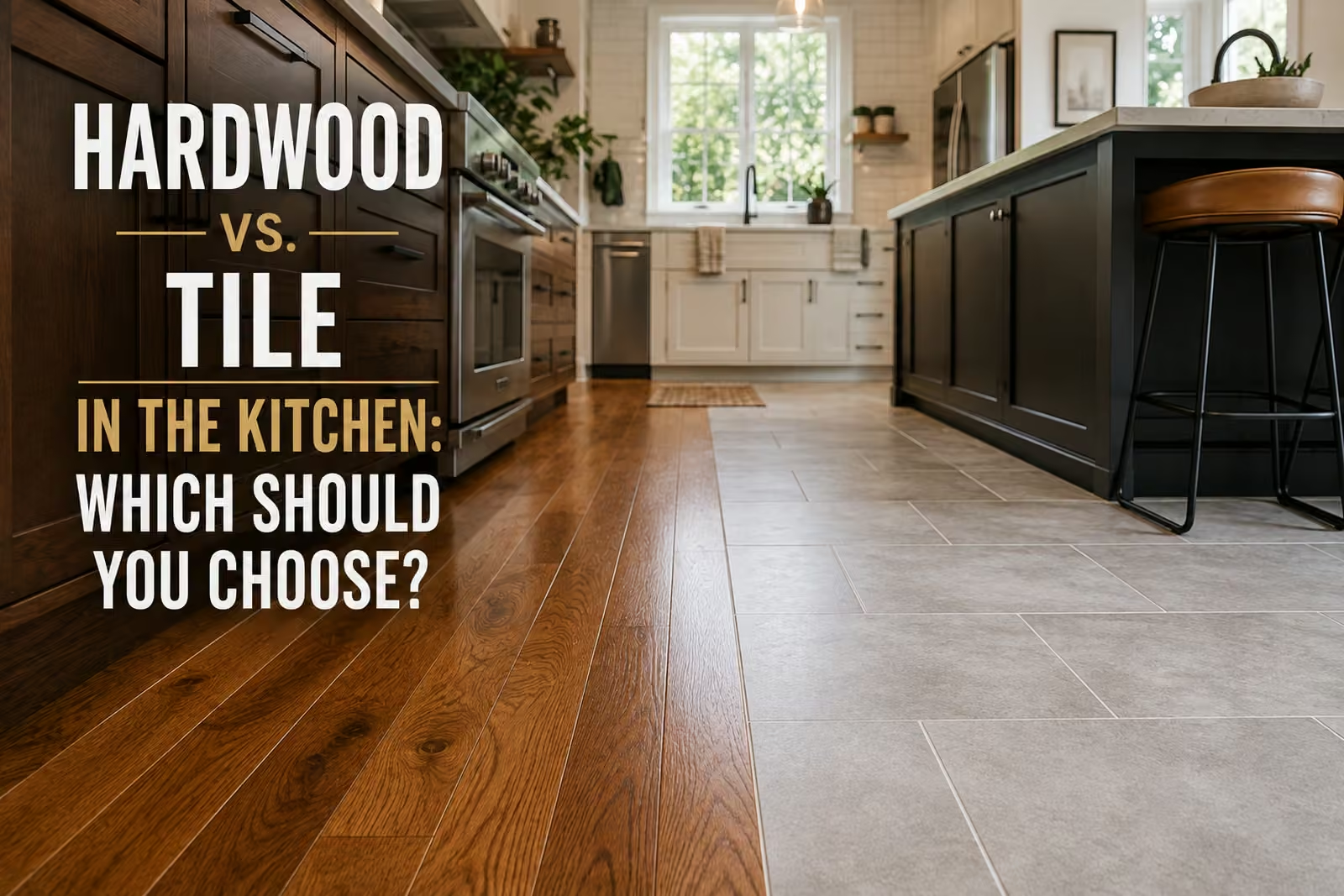



Tile is the kitchen's durability champion — impervious to water, immune to scratches; hardwood is its comfort champion — warmer, easier on your knees and dropped glasses, and continuous with open floor plans. In Seattle-area homes the tiebreaker is usually layout: open kitchens flow best in the same hardwood as the living space, while hard-used, self-contained kitchens justify tile. Site-finished wood handles kitchen life better than its reputation — and LVP quietly splits the difference for many remodels.
Hardwood versus tile is the longest-running debate in kitchen flooring, and most write-ups dodge the verdict with “it depends.” It does depend — but on knowable things, so let's name them: how your kitchen connects to the rooms around it, how hard your household cooks, and what your knees think about standing on stone. We've put both floors into Seattle and Eastside kitchens since 2013; here's the whole argument, ending with the hybrid option the either/or framing hides.
The Materials, Measured
roughly the kiln temperature porcelain tile is fired at — the reason a floor tile shrugs off dropped forks, dog claws, and rolling islands without a mark.
the maximum water absorption allowed for a tile to be classified porcelain. It is, for kitchen purposes, waterproof — grout is the only soft spot in the armor.
how many times a ¾-inch solid hardwood floor can typically be re-sanded. A wood kitchen floor is renewable; a tile one is only replaceable.

Round by Round
| The test | Tile | Hardwood | Winner |
|---|---|---|---|
| Dishwasher leak at 2 a.m. | Shrugs | Cupping risk if unnoticed | Tile |
| Dropped stockpot | Pot survives; tile may chip or crack | Dent you’ll find with your thumb | Draw — different scars |
| Dropped wine glass | Shatters, always | Often bounces | Hardwood |
| Two-hour cooking session | Hard on knees and backs | Noticeably more forgiving | Hardwood |
| Barefoot February morning | Cold without radiant heat | Warm-neutral underfoot | Hardwood |
| 20-year appearance | Grout darkens; tile itself timeless | Refinishable back to new | Hardwood (by renewal) |
| Open floor plan flow | Transition strip at the living room | One continuous surface | Hardwood |
| Resale story, our market | Fine, expected in some styles | What Seattle-area buyers gravitate toward | Hardwood |
Score it and hardwood wins more rounds — but notice tile wins the catastrophic one. That's the honest shape of the decision: tile is insurance against the worst day; hardwood is comfort on the other 7,300 days. Which one you weight is a personality question as much as a flooring one.
The Case for Wood Kitchens (It's Stronger Than Its Reputation)
Site-finished hardwood — boards sanded flat and coated in place so the finish films over the seams — handles kitchen reality far better than the horror stories suggest: routine splashes and steam are non-events on a sound finish, and the danger is specifically standing water from slow leaks. Housekeeping rules are modest: wipe spills when you see them, a mat at the sink, felt on the chair legs. And wood holds two structural advantages tile can never match: it's continuous with the open floor plans that dominate local remodels, and it's renewable — the kitchen takes the most wear in the house, and a refinish or a $1.99/sq ft recoat resets it. A quality rigid-core LVP, for completeness, buys tile's waterproofing at wood's warmth-and-price point — the honest compromise for hard-used kitchens on real budgets.
The Case for Tile, and Where It's Simply Right
Some kitchens should be tile, and pretending otherwise sells people the wrong floor: households that cook hard twice a day, kitchens that double as the dog's dining room and the wet-boot landing zone, self-contained kitchens with a natural doorway transition, and any kitchen getting in-floor radiant heat — where tile's conductivity turns its one weakness (cold) into the whole point. Choose porcelain over ceramic for floors, a textured matte surface over gloss (wet gloss tile is an ice rink), and modern narrow grout lines in a mid-tone gray that ages honestly. The grout is the maintenance story with tile: seal it, and re-seal it on the years you remember to.
The Hybrid Answers Nobody Mentions
Hybrids that work
- Hardwood through the open kitchen-living space, tile in the adjoining pantry/mudroom/laundry cluster where the real water lives
- Tile landing zone at the sink-dishwasher run in a galley layout, wood beyond — with a flush, deliberate transition
- Wood-look porcelain plank where you want tile physics with wood visuals — mind the hollow acoustics
- LVP throughout as the truce both sides can live with
Hybrids that don’t
- A tile “rug” island in the middle of a wood kitchen — dated the day it’s grouted
- Height mismatches that put a toe-catching ledge mid-kitchen
- Mixing wood-look tile directly against real wood — the fake reads instantly beside the real thing
- Tile picked to match today’s cabinets exactly — cabinets repaint, tile doesn’t
The pantry-mudroom split is the one we build most: it puts each material where its strengths are non-negotiable, and the transition lands at a doorway where it belongs. If your kitchen decision is really a whole-main-floor decision — as it usually is in open plans — start from the room flow and our Seattle housing-stock guide, then let the kitchen inherit the answer.
Kitchen Flooring Questions, Answered
Is hardwood or tile better for a kitchen?
Do dropped pots damage hardwood or tile more?
Is tile too cold for a Seattle kitchen?
Can a dishwasher leak ruin a hardwood kitchen floor?
Which is easier to keep clean in a kitchen, wood or tile?
Do Seattle-area buyers prefer hardwood or tile kitchens?
Can hardwood and tile be combined in one kitchen?
How long do hardwood and tile kitchen floors last?
Is grout really that much maintenance in a kitchen?
Kitchen Floor Decision? Bring Us the Tiebreaker
Free in-home estimates across King and Snohomish County — we’ll look at your layout, your cooking reality, and your budget, and tell you which side of the wood-tile line your kitchen lands on.
Related reading: Choosing laundry room flooring · Best floors for Seattle's climate, house by house · Hardwood installation · Floor refinishing