



No — you should not steam clean hardwood floors, sealed or not. Steam forces hot moisture into the seams between boards, where no finish protects the wood, and repeated use clouds and peels the finish itself. Most flooring and finish manufacturers void their warranties if a steam mop has been used. The safe routine: a microfiber dust mop, a pH-neutral hardwood cleaner, and a barely damp mop — never steam, never soaking water.
Steam mops are wonderful on tile. On hardwood, they're one of the most expensive cleaning mistakes a homeowner can make — and we say that as the people who get called when the damage shows up. We're OC Flooring; we've refinished and installed more than 1,000 floors across King and Snohomish County since 2013, and every year a handful of those jobs exist only because a "hardwood-safe" steam mop wasn't. Here's exactly why steam and wood don't mix, what the damage looks like, and what to use instead.
Why Steam and Hardwood Don't Mix
the temperature of the steam a steam mop drives at your floor. Heat plus moisture is the exact recipe used to bend wood on purpose in furniture shops.
where your floor's finish lives. Polyurethane seals the face of each board — the four edges and the underside are raw, absorbent wood.
what happens to most flooring and finish warranties once a steam cleaner has been used — manufacturers explicitly exclude steam damage.
The word "sealed" does a lot of misleading work in steam-mop marketing. A polyurethane finish seals the top face of each board. But a hardwood floor is hundreds of boards, and every one of them has seams on all four sides. Pressurized steam is very good at finding those seams — that's what pressure does. Once hot vapor is below the finish line, it soaks into raw wood edges, and the board swells. Do it weekly and you're cycling the wood through swell-and-shrink every time you clean.
The finish itself takes damage too. Repeated heat cycles break down the bond between finish coats and between the finish and the wood. The early symptom is a hazy, milky cloudiness in the finish; the late symptom is finish that whitens and peels in flakes.
What Steam Damage Looks Like (In the Order It Appears)
| Stage | What you see | What's happening | Fixable? |
|---|---|---|---|
| 1. Clouding | Milky or hazy patches in the sheen | Moisture trapped in and under the finish | Often — screen & recoat |
| 2. Raised grain / edge fuzz | Board edges feel rough underfoot | Steam swelled the raw wood at the seams | Sand & refinish |
| 3. Cupping | Board edges sit higher than centers | Moisture imbalance across the board thickness | Sometimes, after full drying |
| 4. Peeling finish | Finish flakes off in traffic areas | Heat broke the finish-to-wood bond | Sand & refinish |
| 5. Buckling / delamination | Boards lift; engineered plies separate | Repeated saturation of the wood core | Board replacement |
The frustrating part is the delay: floors rarely fail after one pass. Steam damage is cumulative, so a floor can look fine for the first months of steam mopping and then cloud, cup, and peel seemingly all at once — usually right around the time the mop's return window and the floor's warranty coverage are both long gone.
"But My Steam Mop Says It's Safe for Sealed Hardwood"
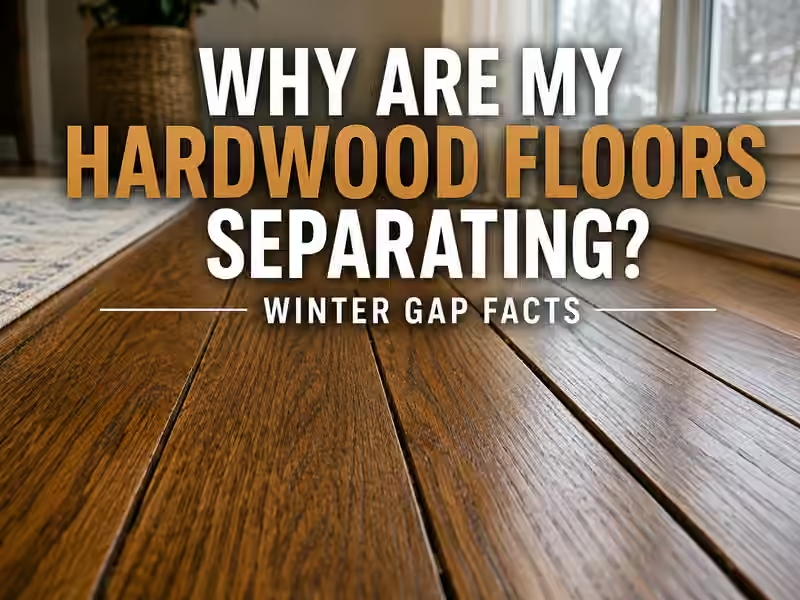
That claim is on the mop's box, not your floor's warranty. The companies that make and finish wood floors — including the makers of the Bona waterborne finishes we use — consistently advise against steam on wood, and most exclude steam damage from coverage outright. Notice who carries the risk: if the mop maker is wrong, you buy the refinish. A "sealed floor" in mop marketing also assumes a flawless, recently applied finish. Real floors have micro-scratches, worn traffic lanes, and hairline seams — every one is a door for steam. And in Western Washington, winter furnace season opens small seasonal gaps between boards (they show up around Thanksgiving and tighten again in spring), which gives steam even more raw edge to soak into. If you're seeing those gaps, that's a normal humidity story — we cover it in why hardwood floors gap in winter — but it's one more reason steam is the wrong tool here.
What to Use Instead: The 3-Step Routine
- Microfiber dust mop for daily grit — dry, no spray needed.
- pH-neutral hardwood cleaner lightly misted, worked with a microfiber pad.
- Barely damp mop — wrung until it stops dripping entirely; the floor should air-dry in about a minute.
- Wipe spills when you see them — liquid sitting on seams is the same problem as steam, minus the heat.
- Steam mops — on any wood floor, solid or engineered, any finish.
- Vinegar or ammonia mixes — acids and alkalis dull polyurethane over time.
- Soaking-wet string mops — slow-motion steam mopping.
- Oil soaps and polish products — they leave residue that smears and interferes with future recoats.
That's genuinely the whole routine. Hardwood is one of the lowest-maintenance floors ever made when you clean it dry-first and damp-second — the full schedule is in our guide to cleaning and maintaining hardwood floors.
What About Sanitizing? The Honest Answer
The main argument for steam is that it kills germs without chemicals. True — but on hardwood it's solving a problem the floor doesn't have. Wood isn't grout: there are no porous lines harboring grime, and a finished floor wipes clean with a pH-neutral cleaner. If you have a specific sanitizing need — a pet accident, a sick kid, raw-chicken splatter — spot-clean that area with an appropriate cleaner and dry it promptly. Trading a theoretical hygiene upgrade for actual structural moisture damage is a bad deal every time. (Pet messes on hardwood are their own topic — see our guide to hardwood floors with urine stains.)
Already Steam-Mopped for Months? Here's Your Damage Check
Don't panic — assess. Get low with a flashlight held at a shallow angle and look across the floor: haze or milkiness in the sheen, rough "fuzzy" board edges, or edges sitting higher than board centers (cupping). Then stop steaming and let the floor stabilize for a few weeks at normal indoor humidity; mild moisture swelling often relaxes on its own. If the finish is dulled or clouded but the boards are flat, you likely don't need a full refinish — a screen and recoat ($1.99/sq ft) abrades the damaged finish surface and lays down a fresh coat. If boards are cupped, peeling, or gray at the seams, that's sand-and-refinish territory, and it's worth having someone with a moisture meter confirm the wood has dried before any sanding happens — sanding cupped boards flat while they're still wet locks in a crowned floor later.

Steam Mops & Hardwood: Your Questions, Answered
Is it ever safe to use a steam mop on hardwood floors?
My steam mop is labeled safe for sealed hardwood — who's right?
What does steam damage on a wood floor look like?
Can I steam clean engineered hardwood instead?
Doesn't steam sanitize floors better than mopping?
How do I deep-clean hardwood without a steam mop?
Can steam-damaged hardwood floors be repaired?
Will using a steam cleaner void my floor's warranty?
Steam Mop Got There First? We Can Fix It
From a $1.99/sq ft screen & recoat to a full refinish, we'll tell you honestly which one your floor actually needs. Free in-home estimates across King & Snohomish County.
Related reading: How to clean & maintain hardwood floors · Why hardwood floors gap in winter · Screen & recoat service · Hardwood floor refinishing