



Five habits protect a hardwood floor better than any product: felt pads under every furniture leg, walk-off mats at every exterior door, trimmed pet nails, indoor humidity held steady, and a recoat before the finish wears through. The enemy isn't foot traffic — it's grit ground underfoot and moisture swings. Get those five right and the floor's finish does the rest, with a screen & recoat every 4–7 years resetting it for $1.99/sq ft.
After 1,000+ floors across King and Snohomish County since 2013, we can usually tell how a hardwood floor was treated within ten seconds of walking in: chair-leg gouges by the dining table, a sandpapered path from the garage door, sun-faded rectangles where rugs used to be. None of it is bad luck — all of it is preventable, cheaply. Here are the five protections we'd put in place in our own homes, in the order they pay off.
First, Know What Actually Damages a Floor
the point pressure a stiletto heel can put on a floor — more pressure per square inch than an elephant's foot, because all the weight lands on a dime-sized spot.
how fast direct sun visibly shifts some woods — Brazilian cherry darkens dramatically with UV exposure, which is why rug-shaped "ghosts" appear on exotic floors.
how long a freshly refinished floor needs before rugs go down — waterborne finishes are walkable in hours but keep curing for days, and a rug traps that process.
Notice what's not on the damage list: normal walking in socks or house shoes. A modern polyurethane finish is engineered for decades of that. What kills floors is concentrated pressure (narrow hard contact points), abrasion (grit acting as sandpaper under shoe soles), moisture (spills, wet shoes, humidity swings), and UV. Every tip below targets one of those four.
1. Felt Pads Under Everything That Touches the Floor
The cheapest insurance in this entire trade. Every chair, table, sofa, and barstool leg gets a felt pad — the stick-on kind works, but the nail-in or screw-in type stays put on chairs that move daily. Two habits make the difference: check pads every few months (they wear down, fall off, and collect grit that turns them into sanding blocks), and never drag furniture, even padded — lift or use hard-floor sliders for big pieces. For rolling office chairs, swap the standard hard casters for rubber soft-wheel casters or use a chair mat; standard casters plus grit will chew a circle into any finish in a season.
2. Walk-Off Mats at Every Door (Double Them in the Rainy Season)
Grit tracked in on shoes is the number-one finish abrader we see — traffic lanes from the entry are where finish dies first on almost every floor we recoat. The fix is a two-mat system: a coarse scraper mat outside the door, an absorbent mat inside. In Western Washington that inside mat earns its keep from October to May — 150+ rainy days means wet shoes, wet dog paws, and grit in a slurry. One caution: skip rubber- or latex-backed mats directly on hardwood. They trap moisture against the boards and some discolor the finish; choose mats and rugs with breathable backing, and lift entry mats to dry out after soaking days.
3. Rugs in the Right Places — With the Right Pads and Timing
Area rugs belong wherever concentrated wear happens: under dining sets (big enough that chairs stay on the rug when pulled out), hallway runners, and landing zones at the bottom of stairs. Under every rug goes a breathable, hardwood-rated pad — felt or natural rubber-and-felt combination — never cheap PVC waffle pads, which can chemically bond to and mar the finish over time. Two timing rules: after a refinish, wait 7–14 days before laying rugs so the finish fully cures, and rotate rugs a couple of times a year. Wood changes color with light exposure — dramatically so with woods like Brazilian cherry — and a never-moved rug leaves a picture-frame outline that only sanding removes.
4. Manage Pets, Heels, and the Other Point-Loads
Dog nails don't usually cut through a quality finish, but long nails plus a hallway sprint equals thousands of micro-scratches that dull the sheen — keep nails trimmed so they don't click on the floor, and put a runner on the zoomies route. Park hard-wheeled toys and keep stiletto-style heels off the floor (a worn heel tip concentrates more pressure than an elephant's foot — genuinely). And water bowls: put a waterproof tray under them. The slow drip-and-slop around a dog bowl is one of the most common black-stain locations we sand out. If a pet accident does soak in, speed matters — we wrote a full guide to hardwood floors with urine stains.
5. Control What's in the Air, Not Just What's on the Floor
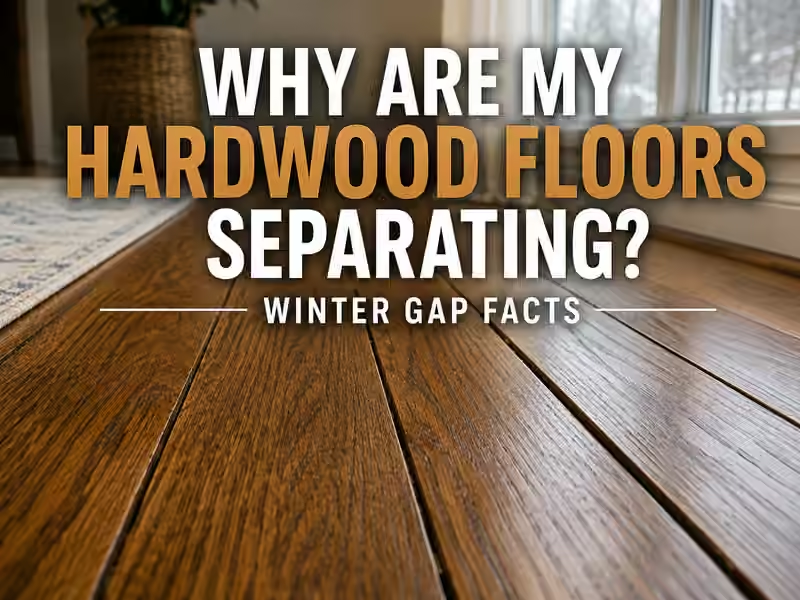
Wood moves with moisture year-round. In our climate the pattern is specific: damp falls, then a furnace season that dries houses out — which is why local floors gap in winter, not summer. Keep indoor relative humidity in the 35–50% band (a $20 hygrometer tells you where you are), run bath and kitchen fans, and don't let the house sit sealed and damp for weeks in fall. If your boards are already opening up seasonally, that's usually normal physics, not failure — the full explanation is in why hardwood floors get gaps.
The Sixth Way: Recoat Before It's Too Late
Even a perfectly protected floor slowly wears its finish thin. The trick is acting while the wear is still in the finish: a screen & recoat every 4–7 years costs $1.99/sq ft, takes about a day, and makes the wear clock restart. Wait until gray bare wood shows in the traffic lanes and you've graduated to a full sand-and-refinish at $3.99+/sq ft. A quick self-test: drip a teaspoon of water in your busiest lane. If it beads, your finish is protecting; if it soaks in and darkens the wood within a few minutes, you're overdue — call sooner rather than later.
| Protection | Defends against | Effort | Check-in |
|---|---|---|---|
| Felt pads + soft casters | Gouges, scratches | One afternoon | Every few months |
| Two-mat entries | Grit abrasion, rain moisture | Buy twice, done | Dry out after wet weeks |
| Rugs + breathable pads | Traffic-lane wear, UV ghosting | Low | Rotate 2×/year |
| Pet & point-load habits | Micro-scratches, water stains | Ongoing | Nail trims monthly |
| 35–50% humidity | Gaps, cupping | A hygrometer | Glance in winter |
| Recoat every 4–7 yrs | Finish wear-through | One day, $1.99/sq ft | Water-drop test yearly |
Protecting Hardwood Floors: Common Questions
What kind of felt pads work best under furniture?
How soon after refinishing can I put area rugs back down?
Will my dog's nails destroy a hardwood floor?
Do I really need a special rug pad on hardwood?
Does sunlight actually damage wood floors?
What's the best entry setup for our rainy months?
Are rolling office chairs bad for wood floors?
How can I tell if my floor's finish is still protecting the wood?
Traffic Lanes Looking Tired? Catch It at the Recoat Stage
A $1.99/sq ft screen & recoat now beats a full refinish later. We'll check your finish and tell you exactly where it stands — free, anywhere in King & Snohomish County.
Related reading: How to clean & maintain hardwood floors · Why steam mops and hardwood don't mix · Why hardwood floors get gaps · Screen & recoat service