


Pallmann is a German professional-grade wood floor finish brand, best known for two very different product families: waterborne polyurethanes and penetrating hardwax oils. Which family a floor gets matters far more than the logo on the pail — film finishes protect with a renewable plastic wear layer; oils soak into the wood and are spot-repairable but need more frequent care. Our own crews apply Bona waterborne systems daily, and we'll tell you honestly which system type fits your floor.
Pallmann comes up in our estimate conversations a few times a year, usually from homeowners who've done real research — it's a name you meet on flooring forums, not in big-box aisles. It deserves the respect: Pallmann is a professional German finish system used by wood-floor specialists worldwide. But the useful question isn't “is Pallmann good?” (it is) — it's “what kind of finish system does my floor need?” Because Pallmann's catalog, like Bona's, spans two fundamentally different technologies, and that choice changes how your floor looks, wears, and gets maintained for the next decade.
Some Context Worth Knowing
the year Otto Bayer first synthesized polyurethane in Leverkusen, Germany. Every modern floor finish — Pallmann's included — descends from that German lab work, so “German-engineered finish” is almost redundant.
matte, satin, and gloss versions of the same finish protect identically. The difference is flatting agents that scatter light — you're choosing a reflection level, not a durability level.
a penetrating oil can often be refreshed one board or one room at a time; a film finish is renewed wall-to-wall. Neither is better — they are different maintenance contracts you sign at finishing time.
Who Pallmann Is
Pallmann is a German brand focused entirely on professional wood-floor products — finishes, adhesives, sanding machines, and care lines sold through flooring trades rather than retail. In practice you'll encounter two flagship families: Pall-X, its waterborne polyurethane range topping out in two-component commercial grades, and Magic Oil, one of the better-known hardwax oil systems in the trade. That split — film finish versus penetrating oil — is the real decision, so let's take it head-on.
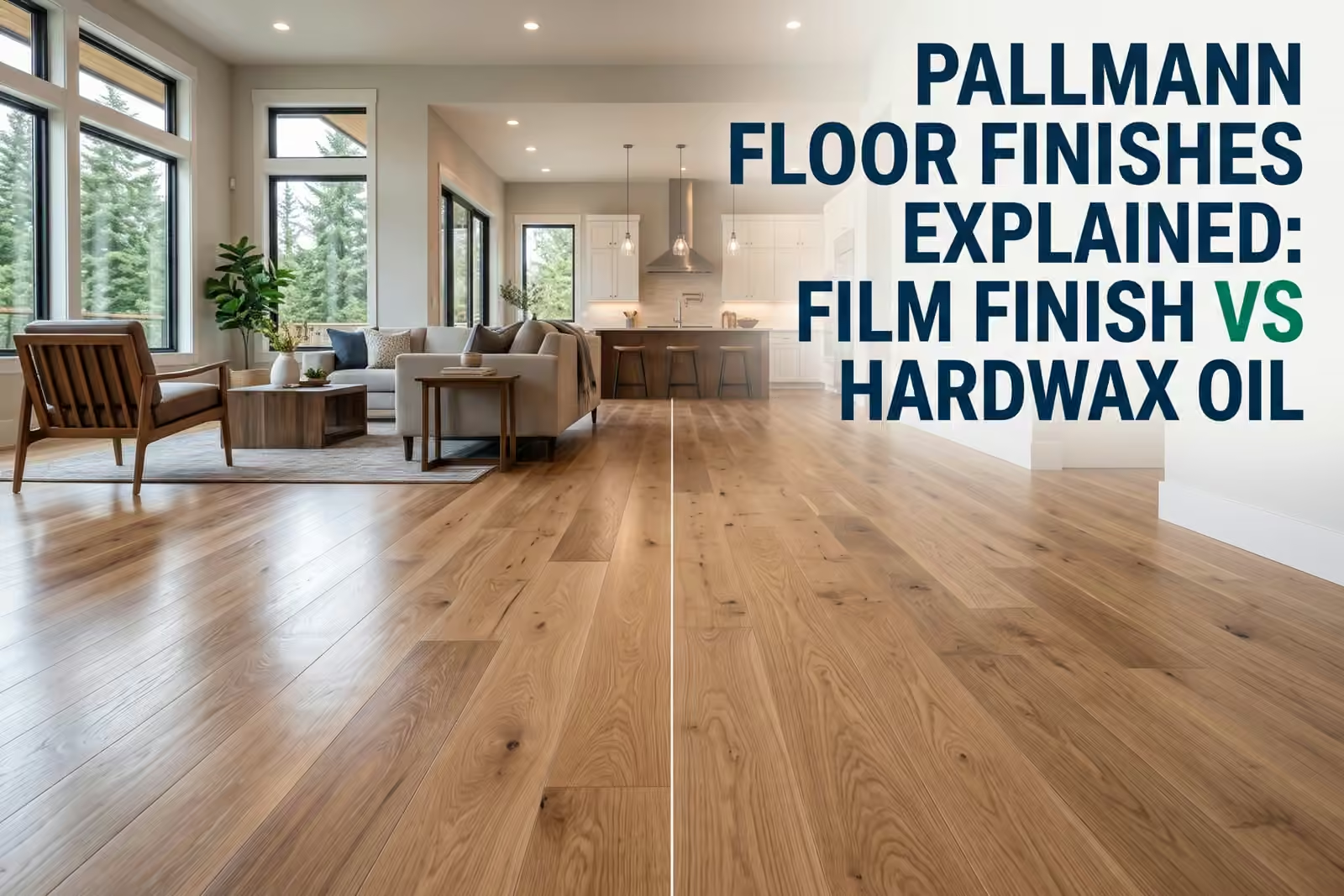
Film Finish vs Hardwax Oil: The Actual Choice
| Waterborne polyurethane (film) | Hardwax oil (penetrating) | |
|---|---|---|
| How it protects | Builds a clear wear layer on top of the wood | Soaks into the fibers and hardens; wood surface stays exposed |
| Look & feel | Smooth sealed surface, matte to gloss | Ultra-matte, natural, you feel wood texture |
| Water & spills | Strong protection while the film is intact | Decent repellency, less forgiving of standing water |
| Maintenance | Clean gently; screen & recoat every several years | Re-oil traffic areas periodically; specific care products |
| Repairs | Wall-to-wall recoat; spot fixes show | Spot-repairable — a board or a corner can be re-oiled invisibly |
| Best fit | Busy family homes wanting low-touch floors | Design-driven projects; owners committed to a care ritual |
Here's the honest framing we give clients: a film finish is low attention, higher stakes — it asks almost nothing of you for years, but when it finally wears, renewal is a whole-floor event. A hardwax oil is higher attention, lower stakes — it wants periodic re-oiling and its own soap, but damage can be fixed locally without machines. Households with dogs, kids, and no appetite for floor rituals are film-finish households roughly every time. Design-forward projects that want wood to look and feel raw — and owners who'll actually do the maintenance — are where oils shine.
Does the Brand Matter Less Than You'd Hope?
Between top professional lines — Pallmann, Bona, and a handful of peers — the honest answer is that the applicator and the prep decide more than the pail. A flawless sanding sequence under a mid-tier finish beats a rushed sand under the finest finish made, every time. Adhesion failures, sidebonding, applicator marks, and premature wear are almost always workmanship stories, not chemistry stories. That's why our advice on choosing a refinisher starts with process questions — sanding grits, dust control, coats, and how the whole refinishing process works — before brand talk.
Our own answer to the brand question: we standardized on Bona waterborne systems years ago because consistency breeds quality — crews that apply the same system daily stop making discoveries on your floor. If you're set on a specific product or a hardwax-oil look, raise it at the free estimate; we'll tell you plainly what we apply with full confidence and what we'd refer to a specialist rather than experiment with on your home.
A Local Note on Oiled Floors
Western Washington adds one practical wrinkle: our long wet season means entries and kitchens see damp traffic for eight months a year. Oiled floors handle that fine when the re-oiling schedule is respected, but they're less forgiving of neglect here than in drier climates — a film finish carries a lapsed-maintenance household much more gracefully. If your last floor's care routine quietly died after year one, let that inform the system you pick this time. It's also worth knowing that switching systems later is possible but not free: converting an oiled floor to polyurethane means sanding back to bare wood so the film can bond.
The rest of the decision — cost, timeline, sheen, and whether your floor needs full sanding at all — follows the same path as any refinish, mapped in our 2026 cost guide. Whatever the pail says, insist on the same three things: careful prep, an applicator who uses that system daily, and a written scope. Those three predict your floor's next decade better than any brand comparison chart ever will.
Pallmann and Finish-System Questions, Answered
What is a Pallmann finish?
How does Pallmann compare with Bona for floor refinishing?
What does a two-component floor finish mean?
What is hardwax oil and how is it different from polyurethane?
Can an oiled floor be spot-repaired without redoing the room?
Can I switch my floor from oil finish to polyurethane later?
Do matte finishes wear out faster than glossy ones?
Can I ask for a specific finish brand on my project?
Let's Match the Right Finish System to Your Floors
Film finish or oiled look, modern matte or classic satin — we'll walk the options on your actual boards and quote it straight. Free in-home consultations across King & Snohomish County.
Related reading: Bona HD explained · Hardwood refinishing: the complete guide · Choosing a stain color · Floor refinishing service