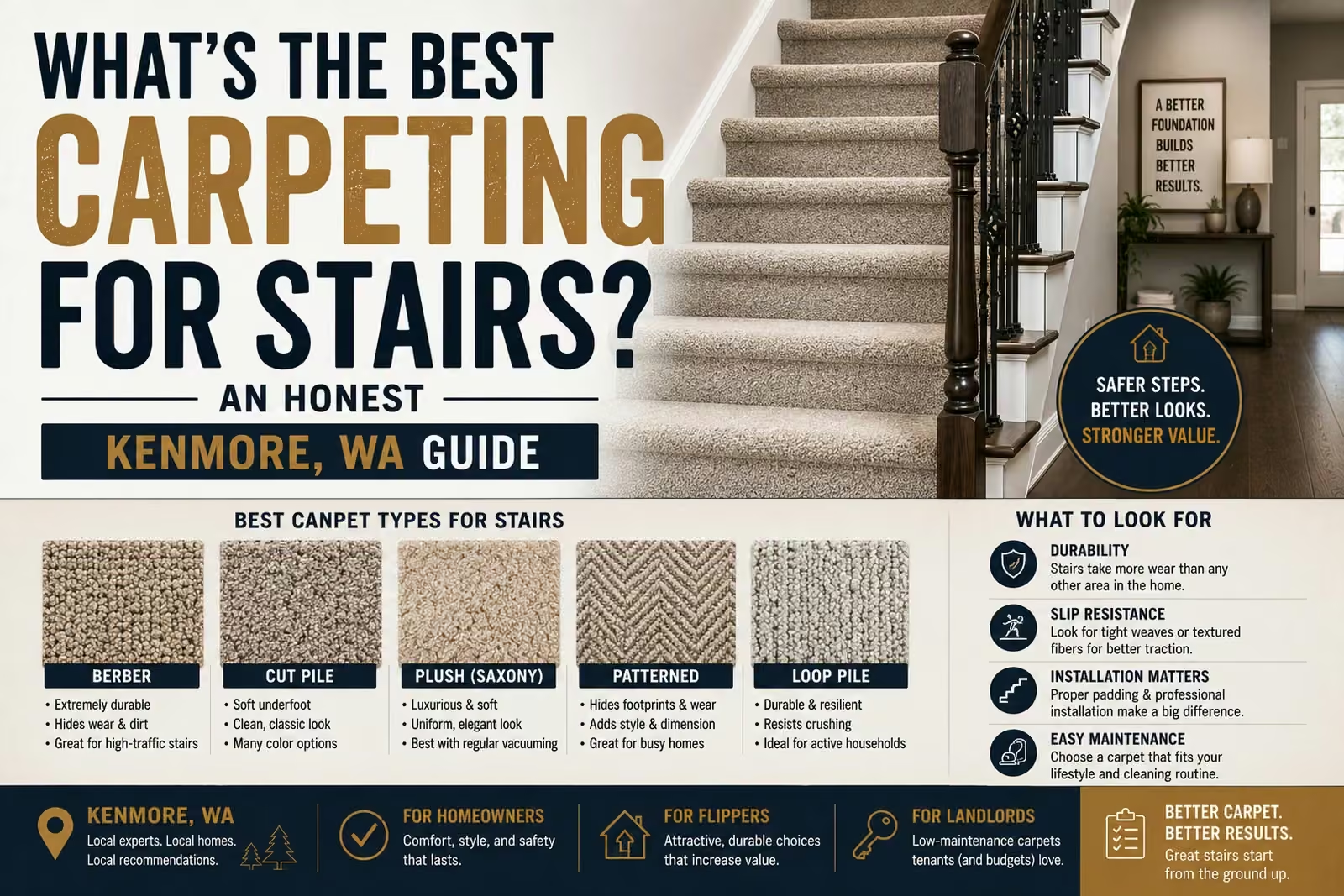



Choose carpet approved for stair use, with a secure installation and a pad that meets the carpet manufacturer’s requirements. Compare pile height, density, traction, cleaning needs and how the pattern turns over the stair edge. OC Flooring offers carpet installation, stretching and repairs. Explore OC Flooring carpet services in Kenmore, compare samples at home and request a written estimate for the selected material, pad and preparation.
Stairs concentrate wear at the front edge of each tread. Low-pile options can be easier to secure neatly, but the right product depends on its stair rating, construction and your household. OC Flooring offers carpet installation in Kenmore and stair remodeling, so you can compare carpeted steps with wood and a suitable runner.
Why Stairs Chew Through Carpet Faster Than Any Room
per step installed — the typical 2026 market range for decent carpet on a straight staircase. Stairs price per step, not per square foot; the labor is in the folding and stapling.
steps in a typical staircase. Per-step pricing scales fast, and shaped steps — winders, pies, landings — cost more than straight ones.
how much faster stair carpet visibly wears versus the same carpet in a bedroom. The nosing — the front edge of each tread — takes nearly all of it.
Three things make stairs brutal on carpet. Concentrated traffic: a hallway spreads footsteps across its width; a staircase funnels every one onto the same narrow strip. The nosing: carpet stretched over each tread's front edge gets ground between shoe and hard edge on every step — stair carpet always fails there first, fuzzing, then flattening, then bare backing. No rotation: you can turn a rug to spread wear; a staircase offers no mercy. So buy one grade tougher than the connected hallway, and treat "soft luxury" samples with suspicion — softness and stair survival pull in opposite directions.
The Winning Spec: Dense, Low, and Tightly Twisted
On stairs, construction beats color every time. You want a cut pile under about 3/4" tall, with high twist and high density — a short frieze or firm textured plush. Twist is what lets fibers spring back after being crushed against the nosing all day. Do the finger test on any sample: press into the pile and try to reach the backing — the harder that is, the better it will hold its shape bent over a step. Here's the showroom, stair-rated:
| Carpet option | On stairs | Verdict |
|---|---|---|
| Frieze / high-twist nylon | Best crush recovery at the nosing; hides wear | First choice |
| Dense textured plush | Softer look, very good recovery if density is high | Solid choice |
| Small-loop nylon berber | Wears well but loops can snag and run | Pet-free homes only |
| Big-loop olefin berber | Snags, zippers, crushes flat at the nosing | Avoid |
| Deep saxony / shag | Mats fast; thick pile makes footing vague | Avoid |
| Wool | Beautiful, resilient, premium price, careful cleaning | A splurge that works |
On fiber: nylon first. It's the most resilient carpet fiber made, and stairs are the one place we'd never substitute away from it. Triexta is an acceptable second, with better stain resistance for kids. Polyester belongs in bedrooms — it mats at the nosing years early. Our carpet brand review helps decode sample books, but on stairs the fiber and density lines matter far more than the brand on the spine.
The Loop-Pile Warning Every Dog Owner Should Read
Loop carpet has one failure mode stairs make worse: snagging. A dog's claw — or a vacuum edge — catches one loop, and because loops run in continuous rows, one pull can zipper a run across the step like a snagged sweater. On flat floors that's an annoyance; on a stair nosing, where claws dig in on every descent, it's a matter of months. If your household includes animals, choose a cut pile, full stop — and see our guide to flooring for kids and pets for how the rest of the house shakes out.
Pad Choice: Firm and Thin Beats Soft and Thick
This is the most common stair mistake we see, because it feels backwards: the plush pad that makes a bedroom feel luxurious will ruin a staircase. Thick, soft pad lets carpet flex and shift over the nosing with every footfall — accelerating backing fatigue and making steps feel mushy underfoot, a real problem for anyone unsteady. The spec that works: 8 lb density rebond, 3/8" to 7/16", and no thicker. On stairs, durability comes from density, not cushion. Upgrading a bargain 6 lb pad costs a few dollars a step and is the best money on the whole job.
Runner vs. Full Wrap: The Two Ways to Carpet a Staircase
A full wrap covers every inch of tread and riser, two ways: waterfall, where carpet flows over the nosing and down the riser in one piece (faster, cheaper, rounded look), or cap-and-band — Hollywood style — tucked tight under each nosing for a tailored profile (more labor, better looking). A runner covers the center walking path in a standard 27", 32", or 36" width, leaving finished wood at the edges.
The runner is the option to think hardest about, for one practical reason: it's replaceable. When the walking path wears out — on stairs, it will — you swap the runner instead of re-carpeting the staircase. It also splits every trade-off: wood looks and resale appeal at the edges, traction and quiet down the middle.
The Honest Alternative: Hardwood Stairs with a Runner
Here's where we do have skin in the game, so we'll flag it plainly. A large share of our stair remodeling work in Kenmore is exactly this: replace worn carpeted stairs with solid hardwood treads and clean risers — matched to the hardwood flooring nearby — then let the homeowner add a runner from any carpet shop. You get carpet's safety where feet land, wood's durability and resale appeal everywhere else, and a wear layer you renew for the cost of a rug. Two honest notes: some older staircases hide solid treads that can be refinished rather than replaced — we check at the estimate — and our stair installation overview shows what a remodel involves. Bare polished treads plus socks are slippery, so if you go wood, the runner is part of the plan, not optional decor.
Safety: Kids, Grandparents, and the Dog
Stair falls are the household accident that matters most. Carpet helps two ways — traction and softer landings — but only if you spec it right:
- Low, dense pile — firm footing, clear step edge
- Firm thin pad, stretched drum-tight
- Runners secured with gripper rods or staples, never loose treads
- Good lighting and a solid handrail — cheap and proven
- Thick plush or shag — it blurs the step edge
- Soft 6 lb pad that shifts underfoot
- Big-loop berber in homes with pets or heels
- Bare polished treads if anyone unsteady uses the stairs
What Stair Carpet Costs in the Kenmore Market (2026)
| Job | Typical 2026 market price |
|---|---|
| Budget polyester, waterfall install | $10–$15 per step |
| Mid-grade nylon, waterfall | $14–$20 per step |
| Premium carpet, cap-and-band | $20–$45 per step |
| Tear out old carpet and replace | $22–$65+ per step |
| Hardwood treads + your own runner | More upfront — priced per staircase; ask us, free |
Figures in this table are planning examples, not verified current prices or a binding OC Flooring quote. Material, pad, preparation, stairs, removal and furniture handling can change the total. Request an itemized estimate.
Notice the math a 14-step staircase produces: even premium cap-and-band lands in the hundreds, not thousands. The catch is the replacement cycle — stair carpet in a busy household looks tired in 5–8 years, so you buy the job repeatedly. That recurring bill is what makes the wood-plus-runner math interesting over a decade, the same logic we walk through in what carpet should cost in the Seattle market.
Kenmore Stairs, Specifically
Kenmore's housing stock makes this topic unusually relevant. The neighborhoods that filled in from the 1950s through the 1970s — Moorlands, Inglewood, the streets above the Burke-Gilman — are full of split-entries and tri-levels, and a split-entry puts its staircase two feet from the front door. It's the first thing every guest sees, so worn stair carpet drags down the whole entry — and this one staircase punches far above its square footage at resale.
Kenmore life is also hard on stairs in a specific way: this is a trail-and-lake town. Wet shoes from the Burke-Gilman, sandy feet from Log Boom Park, muddy paws from Saint Edward's trails — much of it headed straight up from the front door. That argues for nylon over anything absorbent, flecked colors over pale ones, and honestly for wood treads with a washable runner in the busiest households. Newer three-story townhomes near downtown have the opposite problem — the staircase is the home's hallway — so spec it like a corridor: dense, low, dark, nylon.
Stair Carpet Questions, Answered Honestly
What is the best carpet for high-traffic stairs?
How much does it cost to carpet stairs in 2026?
Is berber carpet OK on stairs if we have a dog?
What pad should go under stair carpet?
Are carpeted stairs safer than wood stairs?
How long does carpet last on stairs?
Does OC Flooring install carpet?
Thinking About Wood Under That Stair Runner? Let's Look — Free
We can assess your staircase, discuss suitable carpet and pad, or explain whether the existing wood treads can be refinished. Request an in-home estimate in Kenmore and compare a written scope for the option you choose.
Related reading: Our stair installation services · What carpet should cost in Seattle · The 10 best carpet brands · Stair installation & remodeling