Hardwood, Laminate & Vinyl Floor Repair in King & Snohomish County

A repair-first crew for King & Snohomish County, licensed and working since 2013

Broken boards cut out and replaced with wood matched to what you already have. Scratches, pet stains, water damage, open gaps and lifting planks fixed in place — hardwood, laminate or vinyl plank — without tearing out a floor that is mostly still good. Call (425) 595-1079 for a free in-home estimate anywhere in King or Snohomish County.

Hardwood floor repaired and refinished by OC Flooring in King and Snohomish County, WA
Est. 2013
National Wood Flooring Association member badge
Bona Certified Craftsman Program badge
National Wood Flooring Association member badge
Better Business Bureau accredited business badge
UL GREENGUARD certified finishes badge
No appointment needed

Send photos of your floor. Get a real quote by email today.

Photograph the damage on your phone or upload from your computer. One of our estimators looks at every photo personally and emails you a written price the same business day — no visit, no sales call, no obligation.

Drag your photos here, or tap to browse
Even one photo helps. Three is ideal: a close-up of the worst spot, one from a few feet back, and one of the whole room. Up to 8 · JPG, PNG or HEIC.
Add a photo and we'll ask for your name, email and phone next — two more taps.
Same dayA written price in your inbox, not a callback
A person, not a botEvery photo reviewed by one of our estimators
No obligationLicensed and insured · 1-year workmanship warranty
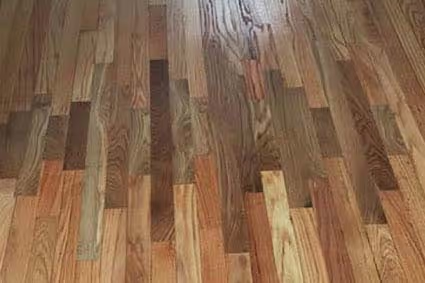
A poor hardwood floor repair with replacement boards that do not match the color or grain of the original wood

What a bad repair looks like. Wrong species, wrong grain, wrong color — patched by someone who didn't match the wood. You see it from the doorway, permanently.

Board & plank replacement · King & Snohomish County · since 2013

Board & Plank Replacement — Why Matching Matters

Anyone can pull a damaged board and screw a new one down. The difference between a repair you notice every day and one you forget about is entirely in the matching — species, grain, board width, thickness, stain and sheen. It's the part most handymen skip, and it's the part we won't.

  • We identify what you actually have. Old-growth vertical-grain fir, 2¼" red oak, white oak, maple, or engineered with a thin wear layer — each takes a different replacement board and a different approach.
  • We source to match, including salvage. New fir doesn't look like 1920s fir. For older houses across both counties we use reclaimed stock so the grain and color belong.
  • We blend the finish, not just the board. Stain is mixed and tested on your floor, then the repaired area is sanded and coated to match the sheen around it.
  • We'll tell you when not to patch. If matching isn't realistic, or the whole floor is due, we'll say so instead of selling you a repair you'll regret.

What We Repair

Damaged & Broken Boards Replaced

Cracked, split, cupped, burned or badly stained boards cut out one at a time and replaced with wood matched to the floor around them — species, width, thickness and grain direction. On laminate and vinyl plank the run is unlocked, the bad planks come out, and the floor is locked back together.

Scratches, Dents & Worn Finish

Dog claws, dragged chair legs, and grit walked in off a wet driveway. Marks in the finish are abraded and recoated in that area only. Anything that reached the wood is filled and color-matched, or the board is swapped and blended in.

Pet Stains & Water Damage

Urine and standing water pass through the finish and stain the wood itself, which is why cleaning never lifts them. Ruined boards are cut out, the area underneath is checked with a moisture meter and dried, then matching boards go in and are stained to disappear into the floor.

Gaps, Lifting & Buckling

Boards that have pulled apart and stayed apart, plank ends that have curled, click-lock seams that have crept open, LVP that has risen off the floor. We work out what moved it first — because a plank replaced without fixing the cause moves again the same way.

Thresholds & Transitions

The joint where hardwood meets tile, carpet or vinyl plank, and the doorway strips that have lifted, split, gone hollow underfoot, or never matched. Re-cut or replaced so they sit flat, hold the plank edges down, and stop catching shoes and vacuum wheels.

Pet Stains & Water Damage

Pet urine and water rings soak through the finish into the wood itself, which is why cleaning never removes them. This is the actual sequence we run, photographed on our own jobs.

From black stain to invisible repair

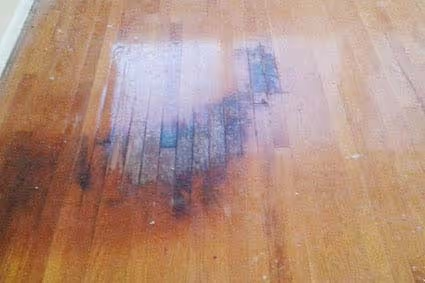
Black pet urine stains soaked through the finish into hardwood boards before repair1
The damageDark pet stains and water marks that have gone through the finish and into the grain. Before quoting we probe the boards and take a moisture reading underneath — covering damp wood is how a repair fails a season later.
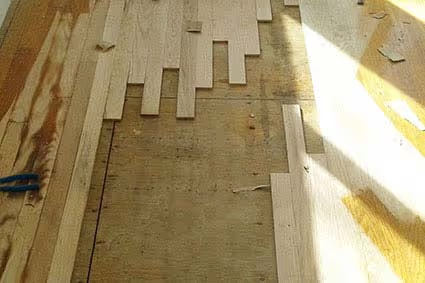
Pet-stained hardwood boards cut and lifted out individually during a floor repair2
Removing the ruined boardsStained boards are cut and lifted out one at a time, leaving the surrounding floor untouched. If moisture got underneath, that area is dried out before anything new goes down.
Color-matched wood filler packed into seams and gaps of a repaired hardwood floor before sanding3
Color-matched fillerMatching boards go in, then seams, nail holes and hairline gaps are packed with filler tinted to your wood. The area is sanded flat with the floor around it — no ridge or dip where new meets old.
Finished hardwood floor repair with stain and sheen blended to match the original floor4
Stained, finished, invisibleStain is mixed and tested on your own floor, then the repaired area is coated to match the surrounding sheen. Done right, you shouldn't be able to point to where the stain used to be.

Most pet-stain and water-damage repairs are finished in 1–2 days.

Repair or Refinish? How to Tell

Two different jobs at two very different prices. Here is how to tell which one your floor actually needs — before anyone quotes you.

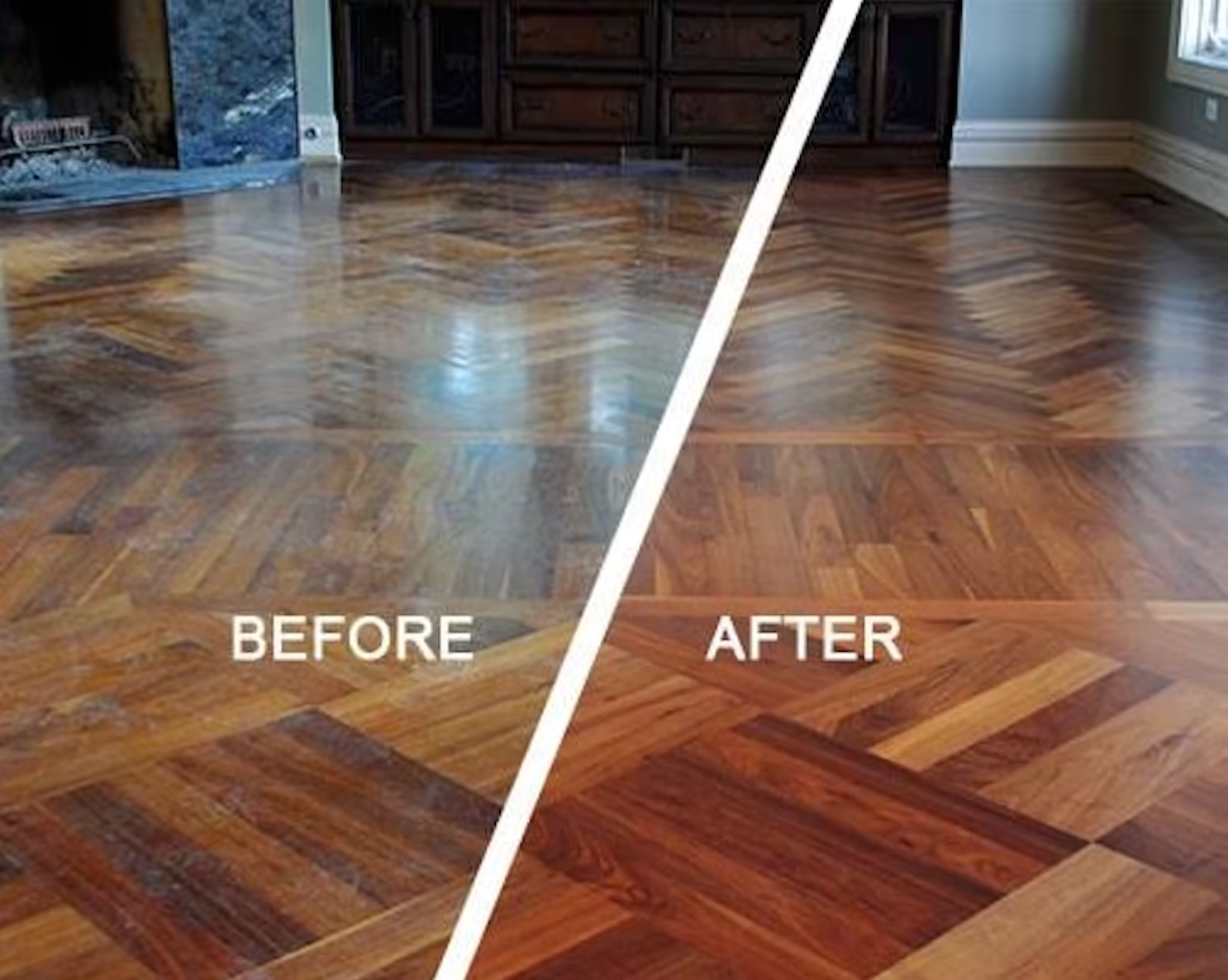
Before and after of a parquet hardwood floor: dull, cloudy, worn finish on the left and the same floor sanded and refinished on the right

The same floor, split down the middle. Left: the finish is cloudy and worn through in the traffic path — no amount of patching fixes that. Right: sanded back and refinished.

Spot repair

Repair it if…

  • The damage is in one place — a few boards by the dishwasher, a dog-stained corner, a gouged entry
  • The finish everywhere else still looks and feels intact
  • A plank or two is lifting, cracked or swollen
  • You want the lowest-cost fix that still lasts

Typically $200–$1,000 · most finished in 1–2 days

Full refinish

Refinish it if…

  • The floor is dull everywhere, not just in one spot
  • Scratches run across every room
  • You can see traffic paths worn through the finish
  • You are changing the color of the whole floor

Board replacement is done first, so the whole floor is finished together

Two quick tests you can do right now

The water drop. Put a drop of water on a worn spot. If it beads, your finish is still doing its job — a spot repair is fine. If it soaks in within a minute, the finish is gone there and the floor is due for a refinish.

The window check. Crouch down and look along the floor toward a window. If scratches catch the light across the entire room, patching will not help — that is a refinish. If they are only in one area, repair that area.

Still not sure? Send us a few photos of the floor and we will tell you which one you need, even when it is the cheaper answer.

Floor Repair Across King & Snohomish County

We work out of one shop in Bellevue and cover both counties from it. In King County that means Seattle and Shoreline, the Eastside from Medina and Mercer Island through Bellevue, Kirkland, Redmond, Sammamish, Issaquah, Newcastle and Renton, the north end through Kenmore, Woodinville and Cottage Lake, and the Snoqualmie Valley towns of Duvall, Snoqualmie and North Bend. In Snohomish County it covers the south-county cities of Edmonds, Lynnwood, Mill Creek and Mukilteo, Everett itself, and then Snohomish, Monroe, Lake Stevens, Marysville and Arlington further north and east. Bothell sits on the line between the two counties, and we work both halves of it.

One thing holds true of every floor in both counties: it moves. We get a long wet season and a genuinely dry summer, and indoor humidity swings far enough between the two that solid wood flooring expands and contracts on an annual cycle you can measure. Boards shrink through the dry months and take some of it back once the rain returns, which is why a gap that looks alarming in late August can be half its width by December. It is also the reason we will not pack a gap at its widest — filler pushed in during the open season gets crushed and spat back out when the boards swell.

After that, what drives the repair is what the floor is made of rather than which city it is in. Older housing across both counties tends to be solid hardwood — vertical-grain Douglas fir in the pre-war houses, narrower strip oak in the post-war ones. Newer construction is a different problem: the Eastside build-out and the subdivisions spreading north through Snohomish County are largely engineered hardwood, laminate and LVP. Those do not sand — engineered wear layers are frequently thinner than a credit card — so the fix is nearly always plank replacement, and the difficult part shifts from carpentry to sourcing a product that may have been discontinued years ago.

Every city we serve has its own floor repair page covering the housing there and the failures that keep coming up. If yours is on the list, start there. If it is not, the same crew, the same matching process, the same written pricing and the same 1-year workmanship warranty apply anywhere in King or Snohomish County. Call (425) 595-1079 and we will come out and look at it.

A repair company first — serving King and Snohomish County since 2013

Why Homeowners Call Us Before They Replace a Floor

Most flooring companies treat repair as the small job they squeeze in between installs. We treat it as the work. That distinction matters more than it sounds, because a repair is overwhelmingly a matching problem rather than a carpentry one. Pulling a ruined board and fastening a new one down is the easy half. Getting the species, the board width, the grain, the stain and the sheen to agree with a floor that has been quietly ageing in your house for thirty years is the half that decides whether you notice the patch every single day or forget within a week where it used to be.

We repair hardwood, laminate and vinyl plank: replacing boards and planks one at a time, filling and shimming gaps that stay open, cutting out pet and water damage, and re-cutting thresholds that have lifted. Because we also refinish floors, we can blend a repaired area into the surrounding finish instead of leaving a bright new rectangle in the middle of a living room. And because we refinish, we will also tell you when a repair is the wrong answer. That answer is sometimes the cheaper one and sometimes the more expensive one; either way you get it before anyone starts work.

Locally owned, licensed and insured, working out of 13343 NE Bel Red Rd #210 in Bellevue since 2013. Written pricing before we begin, a 1-year workmanship warranty on everything we repair, and 103 five-star Google reviews from the two counties we serve.

Floor Repair — Common Questions

Do I need a repair, a recoat, or a full refinish?

Three different jobs at three different prices, and the deciding factor is how far the damage has travelled. Repair it when the problem is in one place and the finish everywhere else is still doing its job. Recoat it when the surface is dull and lightly scuffed across the whole floor but nothing has worn through to bare wood. Refinish it when traffic paths have worn through, when scratches run into the timber across entire rooms, or when you are changing the color. If boards need replacing as well, the board work is done first so the whole floor gets finished together.

How do you match replacement boards to a floor that is no longer sold?

Solid hardwood is a question of species and milling: identify the wood, the width, the thickness and whether it is flat-sawn or vertical-grain, then find stock that matches. For pre-war fir that usually means reclaimed boards, because newly milled fir simply does not read like century-old fir next to it. Engineered, laminate and LVP are a product problem instead — we work backwards from the plank itself and the manufacturer or decor name. Leftover planks from the original installation are by far the most useful thing you can hand us.

Can you fix scratches without refinishing the whole room?

Usually, and the test is how deep they go. Run a fingernail across one: if it glides over, the scratch is in the finish and that area can be abraded and recoated without touching the rest of the room. If your nail catches, it has reached the wood, and that needs filling and color-matching or the board swapped and blended. Where spot work does not pay is a floor where scratches run everywhere — repairing one patch tends to make the untouched areas look worse by comparison.

Can engineered hardwood be repaired, or does it have to be replaced?

It can be repaired, it just cannot be sanded. Engineered flooring is a real-wood wear layer bonded over plywood, and on a lot of newer homes that layer is thin enough that sanding would cut straight through into the ply. So damaged engineered boards get replaced plank by plank, and the hard part is sourcing a match rather than the carpentry. One exception: if a board has delaminated and the wear layer is peeling from the core, it cannot be glued back down in a way that lasts and needs to come out.

Is it cheaper to repair a floor or replace it?

Repair, in almost every case where repair is honestly on the table — you are paying for a few boards and a day or two of labour rather than a whole new floor plus tear-out, disposal and emptying the rooms. Where that stops being true is when there is not enough floor left to work with: boards sanded so thin that the tongue-and-groove or nail heads are surfacing, or damage spread across so much of the room that you would replace most of it anyway. We would rather tell you that at the estimate than have you calling us back a year later.

How quickly does water damage need to be dealt with?

Sooner is cheaper, and the difference is measured in weeks rather than months. Wood that has only just got wet will often flatten back out once the source is stopped and the area dries properly. Wood that has been sitting wet cups, buckles and stains through the grain, and at that point it has to come out. Before we quote anything we take a moisture reading underneath, because laying a fresh repair over damp wood is exactly how a repair fails the following season.

Send Us Photos of Your Floor

Photograph the damage on your phone — a close-up of the worst spot, one from a few feet back, and one of the whole room. One of our estimators looks at every photo personally and emails you a written price the same business day. No visit, no sales call, no obligation.

Upload Your Photos

Proudly Serving Homeowners Across King & Snohomish Counties