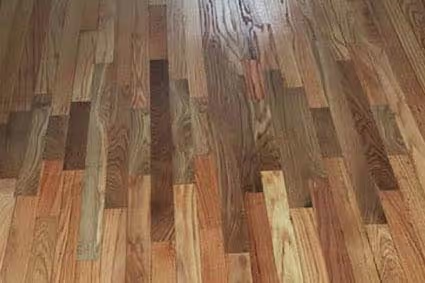
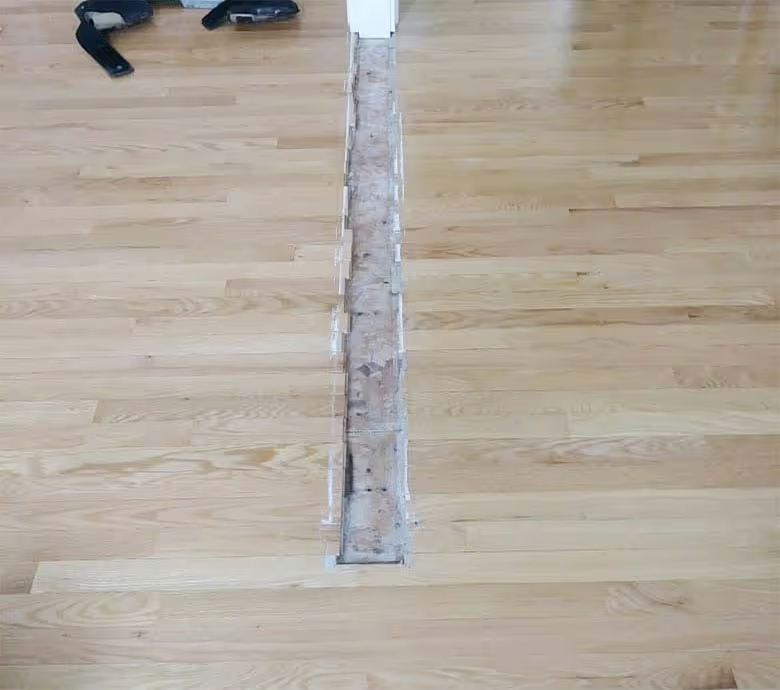
Arlington incorporated in 1903 as a shingle-mill town, but the median home here was built in 1996. That gap explains almost everything we find under people's furniture. The bulk of Arlington floors are now twenty-five to thirty years old: builder-grade red oak strip, early engineered hardwood with a thin wear layer, and first-generation laminate. Gleneagle filled in around a golf course that opened in 1993, and those houses reached their repair years together — finish worn through down the hallway, a cupped board near the slider, an engineered floor with nothing left to sand.
North of that, Smokey Point came into the city in 1999 after a long court fight with Marysville, and the I-5 corridor and the Cascade Industrial Center have kept new houses and new rentals going up ever since. Nearly all of that is vinyl plank, and vinyl plank fails on its own terms: seams opening, ends curling, planks tenting where nobody left room to expand. With close to four in ten Arlington homes rented, a lot of that damage shows up between tenants.
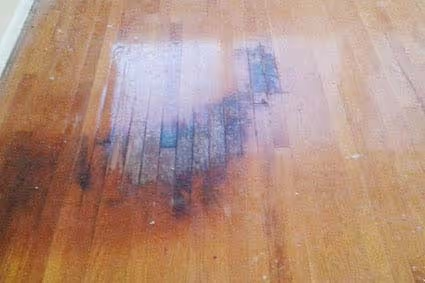
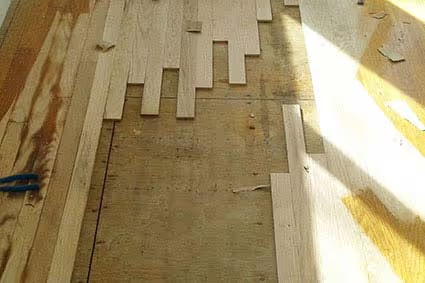
Then there is the river. The North and South Forks of the Stillaguamish meet at the edge of downtown, and on December 5, 2023 the gauge at Arlington crested at a record high, closing Highway 530 by Twin Rivers Park and cutting Silvana off entirely. Island Crossing, the low ground around Haller Park and the valley roads all take water. Those calls come in every wet winter, and the answer is almost never to pull the whole floor.
The oldest pocket is small — under five percent of Arlington homes predate 1940. Those are the blocks off Olympic Avenue with original vertical-grain fir, and matching that wood is a hunt, not an order.