



Yes, you can live in your home during a refinish — most of our Redmond clients do — and the way it works is phasing: we split the house into zones, refinish one while you live in the other, then swap. Waterborne finishes make it possible (socks the same evening, ~65 g/L VOCs instead of oil’s 450–550), and the price per square foot doesn’t change. What phasing costs you is calendar — two shorter disruptions instead of one — and it has honest limits we’ll spell out, including the one floor plan where we’ll recommend a hotel anyway.
The question behind the question, when someone asks about living through a refinish, is usually “do we have to move out, board the dog, and eat takeout on the porch for a week?” Twenty years ago the honest answer was close to yes — oil-modified finishes made occupied refinishing miserable. With the waterborne systems we run now, the honest answer is that occupancy is a scheduling problem, not a chemistry problem, and scheduling problems have solutions.
This post is the solution we use most: room-by-room phasing. It’s how a family of four keeps sleeping in their own beds while every floor in the house gets done. It works. It also has real trade-offs — a longer total calendar, some furniture Tetris, and a couple of floor plans where it’s genuinely the wrong call — and you deserve those up front, not at the kitchen-table estimate.
VOC content of the Bona Traffic HD system we use — GREENGUARD Gold certified, low-odor enough that families routinely sleep home the night a coat goes down. Oil-modified poly runs 450–550 g/L; phasing an occupied home around that is not something we’d sell you.
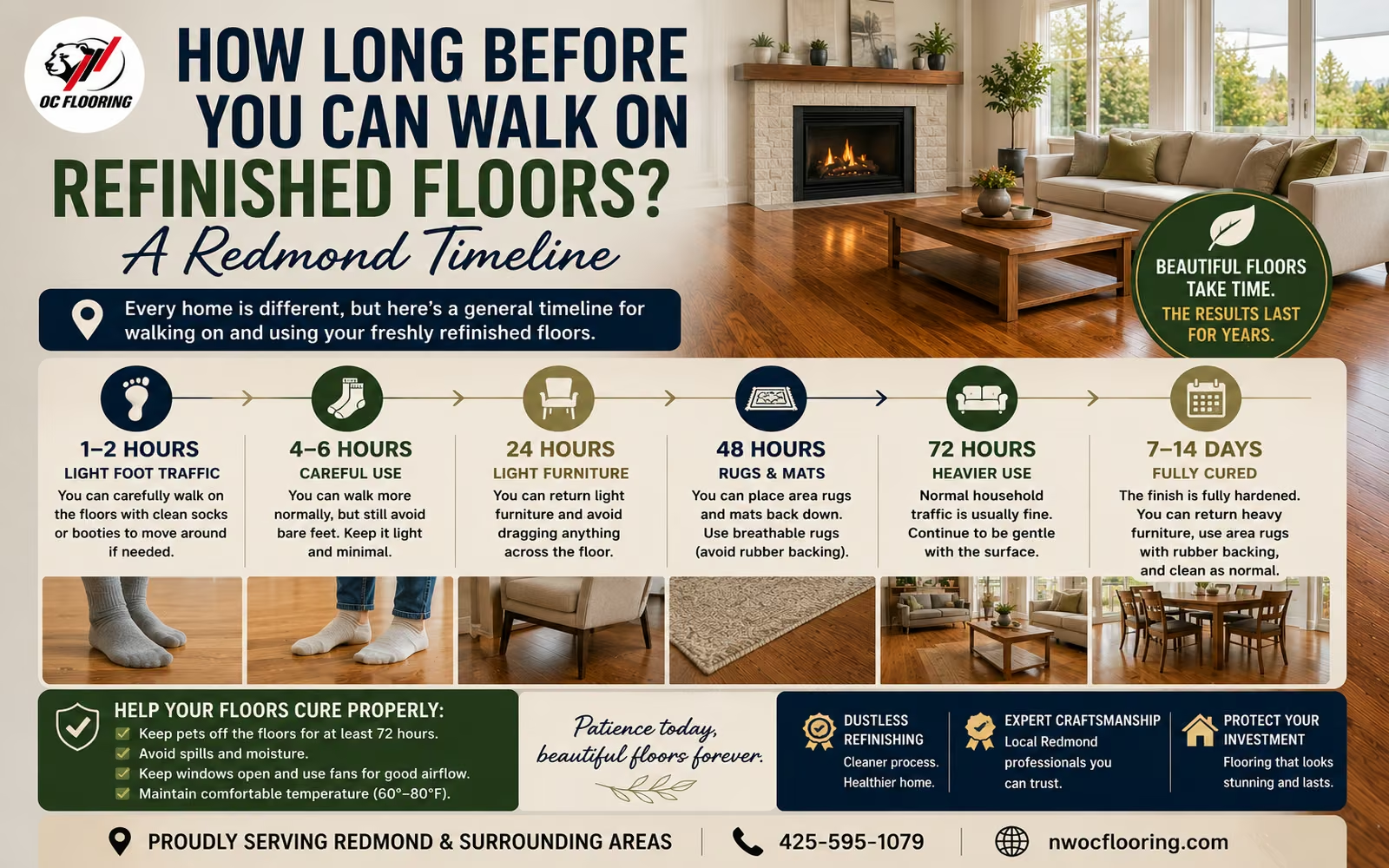
before furniture returns to a finished zone — the number the whole phasing schedule is built around. Sock traffic is fine the same evening.
is the typical split for a phased refinish: bedrooms-and-hall as one, living areas as the other. Each zone takes 2–4 days of work; the swap happens when zone one is furniture-ready.
Why Living Through a Refinish Became Reasonable
Three things had to change, and all three did. Finish chemistry first: the commercial waterbornes we use cure fast and low-odor — recoat in 2–3 hours, sock traffic the same evening, and VOCs in the tens of grams per liter rather than the hundreds, which is the difference between “the house smells faintly of nothing much” and “book a hotel.” Our guide to low-VOC refinishing with kids and pets covers the health side in depth. Second, dust: modern vacuum-assisted sanding captures the overwhelming share at the machine, and for occupied homes we offer full dust containment — plastic barriers, sealed doorways, protected HVAC returns — for a flat +$250. Third, timelines: a waterborne system goes down in days, not the week-plus of one-coat-per-day oil work, so each phase of a phased job is mercifully short.
What hasn’t changed: sanding is loud, the crew is in your house, and a floor with wet finish on it is a room you don’t own for the evening. Phasing manages that reality; nothing eliminates it.
How Room-by-Room Phasing Actually Works
The house splits into zones along natural doorway lines — most commonly bedrooms-plus-hallway as zone one and kitchen-living-dining as zone two. Everything from zone one moves into zone two (or the garage), and we refinish zone one: sand, TRIO flattening pass, and 2–3 coats of waterborne, typically 2–4 days depending on footage. You live in zone two the whole time — kitchen working, sofa available, one bathroom always reachable, because we sequence around that on day one.
Then the swap. Zone one takes sock traffic the evening of its final coat and furniture at 48–72 hours — so beds go back, the family moves in, and zone two empties for its own 2–4 days. Rugs stay off everything for 7 days per zone while the finish cures, and the walk-on timeline governs each zone independently. Total calendar: usually 7–10 days for what would be a 3–5 day empty-house job. That’s the price of sleeping in your own bed, and most families consider it a bargain.
A typical phased week (1,600 sq ft, two zones)
| Day | Zone 1: bedrooms & hall | Zone 2: kitchen & living | You |
|---|---|---|---|
| 1 | Furniture out, sanding | Your temporary apartment | Living in zone 2 |
| 2 | Final sanding, first coats | — | Living in zone 2 |
| 3 | Final coat by midday | — | Zone 1 sock-walkable by evening |
| 4–5 | Curing; furniture returns day 5 | Furniture migrates out | Moving back into zone 1 |
| 6–7 | Back in service | Sanding, first coats | Living in zone 1 |
| 8 | — | Final coat | Kitchen back in socks that evening |
| 9–10 | Rugs at day 10 | Curing; furniture at 48–72h | House fully yours; rugs wait 7 days per zone |
The Honest Trade-Offs
The seam. Where two phases meet — usually a doorway — we stop one phase’s sanding and finishing at the threshold and pick up there in the next. Done carefully, at a natural break, the transition is invisible; done mid-room it wouldn’t be, which is why zones follow doorways and we won’t split an open-concept great room into two phases. That single fact decides more phasing plans than any other: a Redmond home with a fully open main level phases the upstairs fine, but the main level itself is all-or-nothing.
The calendar. Two mobilizations take longer than one, and the crew’s schedule has to line up twice. Pricing stays $3.99/sq ft for a natural refinish or $1.99 for a buff and coat either way — with the note that each phase needs enough footage to make sense, since our 500 sq ft job minimum applies to the project and tiny phases serve nobody.
The furniture. Phasing means moving everything twice — into the living zone, then back. We move furniture as part of the job (appliances are the line item: $80 each, $160 for a washer/dryer pair), but a phased house lives crowded for a week; our furniture storage guide has the survival plan. Households that can’t tolerate a crowded week — or that have a piano — sometimes conclude a short move-out for a single-phase job is simpler, and they’re not wrong.
When We’ll Recommend Against Phasing
Some jobs shouldn’t phase, and we’d rather lose the booking than pretend. Open floor plans with no doorway to break at, as above. Whole-house stain jobs — color consistency across phases is achievable but unforgiving, and if you’re staining dark we’d push hard for a single-phase job with the house empty; stain color choices are stressful enough without a seam risk. Homes where the only bathroom sits inside the work zone. And any job where the client wants oil-modified poly — the fumes make occupied phasing a bad idea at any schedule, which is one more reason the finish chemistry choice comes first.
The alternative isn’t always a hotel. Some families phase by floor (live downstairs while upstairs cures), some borrow a week at grandma’s for a single-phase blitz, and empty-nesters with flexible timing sometimes just do one room a year on a maintenance cadence. The right plan is the one that matches your floor plan and your tolerance — that’s a conversation, not a formula.
The Redmond Version of This Problem
Redmond is where we run more phased jobs than anywhere else, and the reason is demographic: tech-schedule households where nobody can relocate for a week, in houses that phase well. The 1980s–90s stock in Education Hill, Grass Lawn, and English Hill mostly has compartmentalized main floors — kitchen, dining, living as separate rooms with real doorways — plus oak upstairs, which is close to the ideal phasing layout. The newer construction toward Redmond Ridge trends open-concept, where the main level usually has to run as a single phase even if the bedrooms split off cleanly. And for the remote workers: sanding days are loud beyond any headset’s ability to pretend otherwise. Plan calls from the office or a café on days one and two of each phase; finish days are quiet by comparison.
Every phased job starts with a walkthrough where we map the zones, the bathroom logistics, and the seam lines on your actual floor plan — details for the area on our Redmond refinishing page.
Living Through a Refinish: What Redmond Homeowners Ask
Can we really stay in the house the whole time?
Does refinishing room by room cost more?
Will we see a line where one phase ended and the next began?
How long is each room out of service?
What about the kitchen? We have to eat somewhere.
Can the kids and the dog stay during the work?
How much dust should we actually expect?
Is it better to just move out for a few days?
Want the Floors Done Without Moving Out?
Bring us your floor plan and your calendar — we’ll map the zones, the seams, and the schedule so the house keeps working while the floors get new. Free estimates across King & Snohomish County.
Related reading: Low-VOC refinishing with kids and pets · Where the furniture goes · When you can walk on new floors · Hardwood floor refinishing in Redmond · Book a free estimate