




Gym floor refinishing comes in two sizes: an annual screen-and-recoat that closes the court for a few days, and a full resand — new game lines and all — that takes one to two weeks including line painting and cure. The craft is real, but scheduling is the actual project: matching the work to school breaks, league calendars, and building use. Here’s how we run gymnasium floors for Seattle schools, churches, and community centers — process, order of operations, and honest timelines.
Gymnasiums are the professional league of floor finishing. The wood is almost always hard maple, the square footage is measured in thousands, the flatness expectations are set by a bouncing ball, and the floor takes more traffic in a season than a living room sees in a generation. It’s also, frankly, where the products we use every day earned their reputations — the commercial two-component waterbornes we put in Seattle houses are gym-floor finishes that moved into residential work, not the other way around. Our Bona Traffic HD writeup tells that story.
What makes gym work genuinely different isn’t the sander — it’s the calendar. A school gym has roughly one honest maintenance window a year, a church gym has six days a week if you plan around the seventh, and every facility manager we work with is juggling leagues, rentals, assemblies, and a building that can’t simply close. So this guide covers both halves: what happens to the floor, and how it fits into a building that’s still alive around it.
Janka hardness of the hard maple under nearly every gym floor — one of the toughest domestic species there is, chosen a century ago for exactly this job and still the standard.
coats of commercial two-component waterborne finish in a full system — the same grade of product specified for gym floors is what we run on residential jobs every week.
to full cure before league play resumes at full intensity. Finish that feels dry on day two is still hardening all week — and a gym floor’s first week sets up its next decade.
Why Gym Floors Are Their Own Discipline
Three things separate a gymnasium from a very large living room. First, the construction: most gym floors are built as floating systems — maple over sleepers or resilient pads, engineered to flex under athletes — which means the floor moves underfoot and the sanding approach has to respect that. Second, the optics: thousands of square feet of pale maple under high, even lighting is the most unforgiving canvas in our trade, where a wave or sanding mark that a furnished room would swallow is visible from the bleachers. Flatness is why we finish every sand with the Lägler TRIO — the machine we bought for exactly this problem. Third, the duty cycle: court shoes, folding chairs, rolling bleachers, and the occasional forklift pallet of chairs at a community hall. Maple at 1450 Janka shrugs off most of it; the finish is what wears, which is the entire logic of the maintenance rhythm below.
The Two Services, and the Rhythm Between Them
Healthy gym floors live on a cycle: recoat often, resand rarely. The annual (or every-other-year) screen and recoat abrades the existing finish and lays fresh wear coats — no wood removed, court closed for days, not weeks. It’s the same honest logic as the residential version in our screen-and-recoat guide, scaled up: you spend the sacrificial layer, not the maple. The full resand — down to bare wood, new lines, new finish system — happens roughly once a decade, or when the coating stack has grown heavy and uneven, when boards need repair, or when the lines themselves need to change for new league requirements. Skipping recoats to save budget is the classic false economy: it converts several cheap closures into one long, expensive one, plus the millimeter of maple a premature resand spends.
Recoat vs full resand, side by side
| Annual screen & recoat | Full resand & refinish | |
|---|---|---|
| What happens | Abrade finish, apply fresh coats | Sand to bare maple, repaint lines, full system |
| Wood removed | None | ~1 mm |
| Game lines | Preserved under new coats | Repainted from scratch — any layout you need |
| Court closed | A few days plus early cure | 1–2 weeks including line work and cure |
| Frequency | Every 1–2 years | Roughly once a decade |
| Full-intensity play | After about a week | After about a week from final coat |
| Budget scale | A fraction of a resand | The big one — plan a season ahead |
Game Lines, Logos, and the Order of Operations
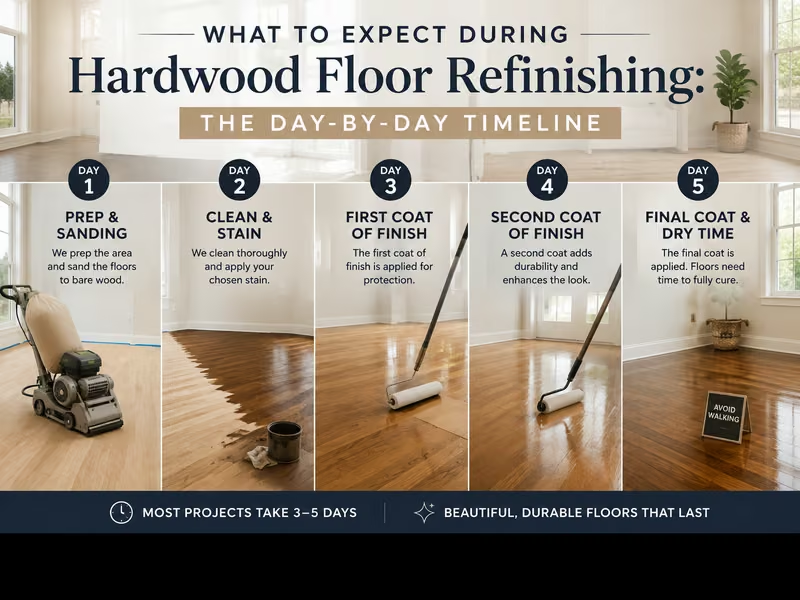
The part facility managers ask about most: what happens to the lines? In a recoat, nothing — they’re part of the existing finish stack and the new coats go over them. In a full resand, everything: lines, logos, and keys sand away with the old finish, and that’s an opportunity as much as a cost, because the new layout gets painted fresh — updated league dimensions, added pickleball or volleyball courts, a new center-court logo. The order of operations matters and can’t be rushed: sand, seal the bare maple, paint lines and graphics on the sealed surface, then bury everything under the finish coats so the lines wear as long as the finish does. Line work adds real days to the schedule — paint needs its own dry time before it can be coated — which is why a resand is a one-to-two-week commitment and why we map the calendar with you before anyone unloads a machine.
Scheduling: The Actual Hard Part
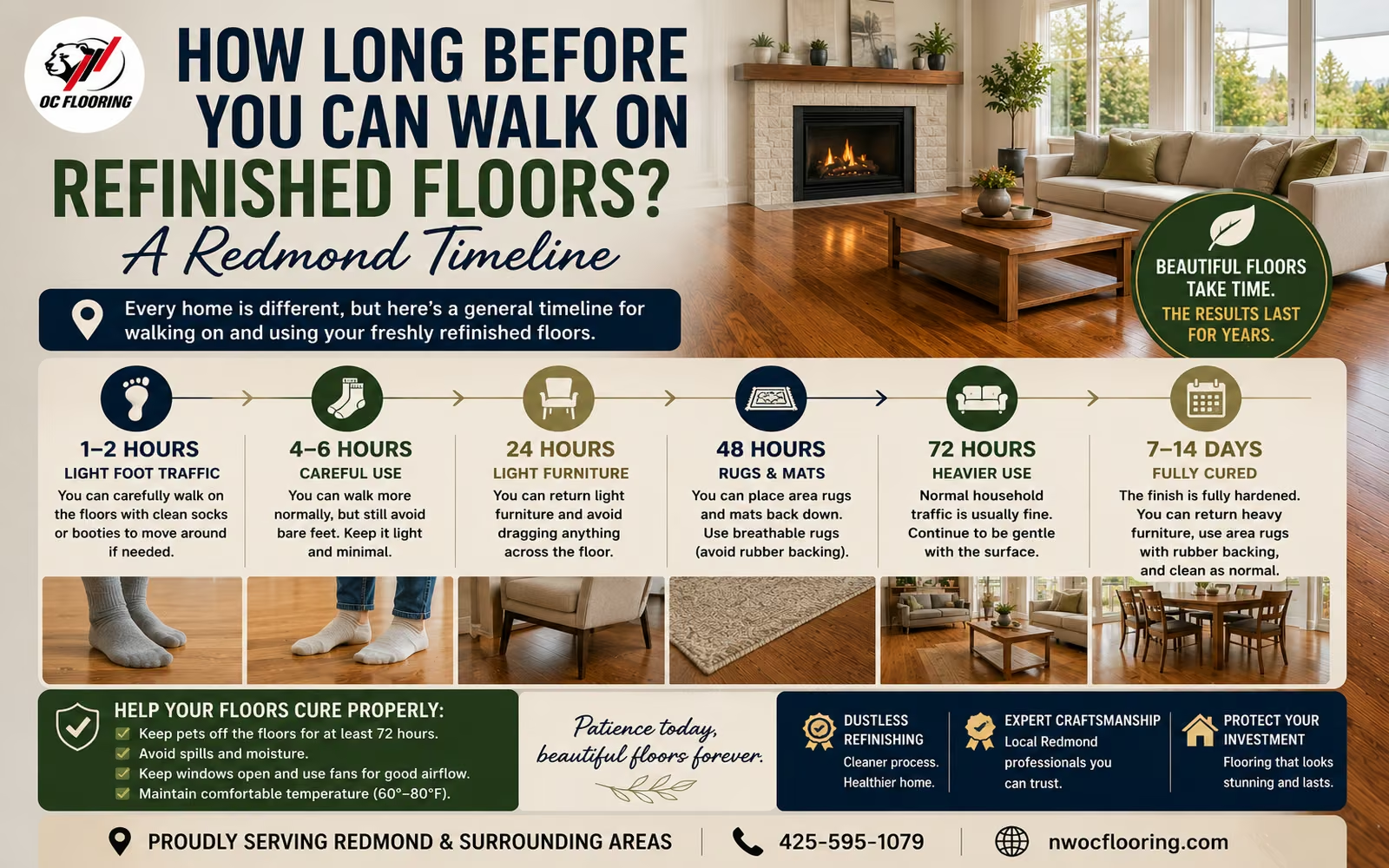
Every gym has a natural window, and the job bends to it. For schools that’s summer — long enough for a full resand with slack for the unexpected, which is why our school-gym calendar fills months ahead. Churches usually give us a six-day week and a hard Sunday deadline, which suits recoat work well. Community centers and clubs negotiate around league seasons and rental commitments. Two properties of modern waterborne systems make all of this workable. The finishes are low-VOC, so the rest of the building — classrooms, offices, the sanctuary upstairs — stays occupied while we work; nobody relocates a school for a floor anymore. And they cure on a known clock: walkable quickly, equipment-ready in days, full-intensity play at about a week — the same dry-versus-cure logic we laid out in our walk-on timeline, with higher stakes, because a tournament date doesn’t move. We build the cure week into the schedule explicitly rather than letting it surprise anyone.
The Seattle Gyms We See
Seattle keeps its gyms busy and keeps them old, which is our favorite combination. The city is full of mid-century maple: parochial school gyms and parish halls from Ballard to Beacon Hill, church basketball courts that have hosted sixty years of youth leagues, community and athletic club floors that predate everyone currently playing on them. Maple that age is usually a treasure — old, tight-grained stock with plenty of thickness left — buried under decades of finish layers and line paint that a resand clears away in a week. We handle this work as part of our broader commercial sanding and installation practice around the city, alongside the residential refinishing in Seattle that keeps our crews on hardwood every single day. For facilities planning bigger work than a refinish, our commercial flooring page covers the installation side.
What It Costs, Honestly
Gym work is quoted per project, not per square foot off a rate card — the honest reason being that two gyms of identical size can differ by days of labor depending on line complexity, coating history, floor system, and how hard the schedule constraints squeeze the work. What we can tell you before the walkthrough: a recoat year costs a fraction of a resand year, budgeting for the cycle beats budgeting for the emergency, and the walkthrough itself is free. We’ll measure, inspect the coating stack and the maple, talk through your calendar, and put a fixed number and a day-by-day schedule in writing — the same way we’ve run flooring projects since 2013, licensed and insured, with the workmanship warranty in the contract.
It’s a recoat year when…
- The finish is dulling in the key and center court but intact everywhere else
- Lines are crisp and the layout still fits your leagues
- The floor just needs its annual wear layer back before the season
- Your window is a school break or a slow rental month, not a whole summer
- The last full resand was less than a decade ago
It’s a resand year when…
- Finish has worn through to gray maple in traffic zones
- The coating stack is heavy, uneven, or peeling anywhere
- You need new line layouts, added courts, or a new logo
- Board repairs, water damage, or dead spots need addressing first
- Recoats have been skipped so long there’s nothing left to recoat
Gym Floor Refinishing: What Seattle Facility Managers Ask
How often should a gym floor be recoated?
How long is the court out of commission?
Can the rest of the building stay open during the work?
What happens to our game lines and center logo?
How soon after finishing can we host a tournament?
Our gym floor is from the 1960s. Is it worth refinishing?
Do you handle school summer schedules?
What does gym floor refinishing cost?
Planning Next Season’s Floor Work?
Book a free walkthrough — we’ll inspect the maple and the coating stack, map the work to your school, league, or service calendar, and put a fixed price and day-by-day schedule in writing.
Related reading: Our commercial sanding work in Seattle · The gym-grade finish we use · Why flatness needs the Lägler TRIO · Hardwood floor refinishing in Seattle · Book a free estimate