



The TRIO is a three-disc finishing sander (built by Lägler, the German company behind the classic HUMMEL belt sander) that we run as the final machine pass on our refinishes. Its three discs orbit in overlapping planetary paths, sanding with and across the grain at once — erasing the directional scratches and chatter marks the big machine and edger leave behind. That last pass is the difference between a floor that looks freshly sanded and one that reads dead flat under raking window light, especially under dark stain.
Here’s a trade secret hiding in plain sight: when a refinished floor disappoints, it’s almost never the finish — it’s the sanding underneath. Waves, ripples, edge halos, and mystery cross-grain scratches all get locked under the clear coats, invisible in the showroom-lighting moment of the final walkthrough and glaring three months later when low winter sun rakes across the living room. This post is about the machine we use to prevent exactly that, and why we think the last sanding pass is the most important one a refinisher makes.
The Machine in Three Numbers
counter-orbiting under one housing. Their overlapping planetary paths cut with the grain and across it simultaneously, leaving a random scratch pattern with no direction for light to catch.
machines that run before it on every job — the big machine for the field and the edger for the perimeter. The TRIO is pass three: its job is erasing the evidence the first two leave behind.
the fine grit range of a final TRIO pass. At that fineness the machine is no longer removing wood so much as refining the surface the finish will magnify.
Why the Last Pass Decides How the Floor Looks
Floor finish is a thin, transparent, slightly glossy film — which makes it a magnifier, not a concealer. Whatever scratch pattern the final abrasive leaves, the finish locks in and highlights, the way glass over a photograph shows every flaw in the print. And Puget Sound homes are a brutal gallery: big west-facing windows plus months of low-angle sun mean raking light, the exact condition that reveals sanding directionality. On a natural light floor you might forgive it. Under dark stain, forget it — pigment settles into every scratch and paints the pattern in contrast. This is why we treat the fine pass as the signature of the whole job.
Where Waves and Chatter Marks Come From
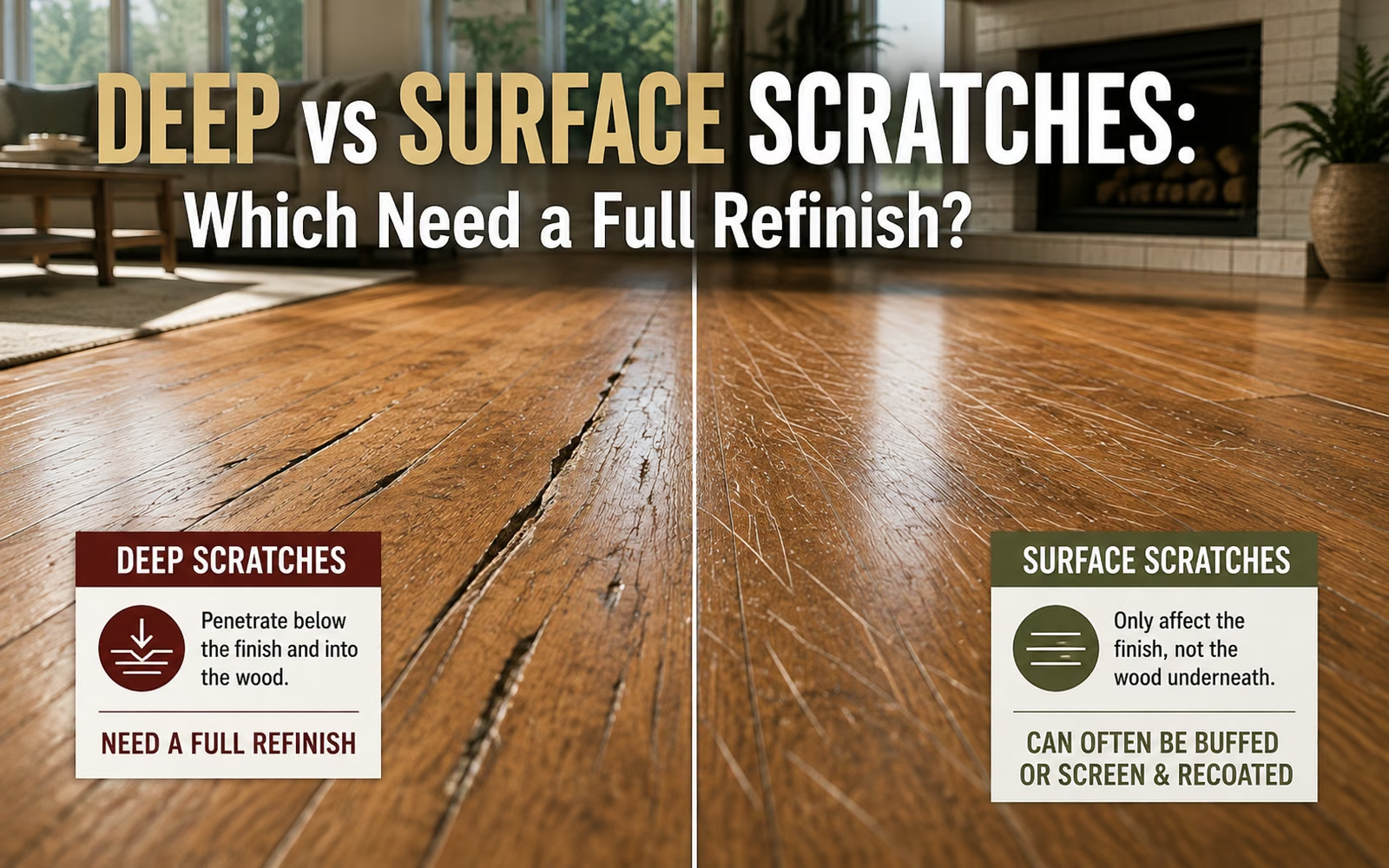
A belt or drum sander is a spinning cylinder cutting a moving line across the floor. It’s the right tool for stock removal — nothing flattens cupped boards or strips a century of finish faster — but physics gives it two signature flaws. Chatter marks: rhythmic, evenly spaced ripples across the grain caused by tiny vibrations in drum, belt, or wheels telegraphing into the cut. Waves and dips: any hesitation, uneven push, or worn wheel translates directly into floor topography. The perimeter has its own failure mode: the edger is a spinning disc cutting in arcs, and where its territory meets the big machine’s, an unblended transition reads as a “picture frame” halo around the room. None of this is visible on raw wood in work lights. All of it is visible under finish in daylight.

How a Planetary Sander Erases All of That
The TRIO’s answer is geometry. Three discs spin on their own axes while orbiting together around a common center — a planetary motion that means no abrasive particle travels in a straight line across the wood. The scratch pattern comes out fine, multidirectional, and random; there is no rhythm for light to catch and no direction for stain to accent. Because the machine rides on a wide, heavy, flat housing rather than a narrow drum, it bridges small height differences between boards and shaves the high spots level instead of following the dips — it flattens rather than amplifies. And it blends: run across the edger’s territory, it unifies field and perimeter into one continuous scratch pattern, deleting the picture-frame effect. The result under finish is what floor people mean by flat — not just level, but optically uninterrupted.
Bonus Points: Dust and Gentleness
Two quieter virtues. The TRIO’s dust pickup is excellent — its housing skirts the discs and feeds our vacuum extraction, part of the dust-contained system we run on every machine. And because a fine-grit planetary pass removes very little wood, it’s the gentlest way to get a spent-looking floor smooth — which matters enormously on the thin-wear-layer cases we see across the region: pre-1950 Seattle and Everett fir on its third or fourth sanding, where every thirty-second of an inch is precious. Aggressive machines spend wear layer; finishing machines conserve it.
What the TRIO Isn’t (Honesty Section)
It is not a magic wand, and it doesn’t replace the machines before it. A planetary fine sander removes wood far too slowly to strip old finish or flatten a badly cupped floor — that remains the belt machine’s job, done coarse and confident. A floor with deep topography problems needs aggressive flattening first; the TRIO refines, it doesn’t rescue. And no machine substitutes for sequence discipline: skipping from coarse grit straight to the TRIO’s fine grit just polishes the tops of coarse scratches. The machine is the final ten percent — but on a surface you’ll stare at for fifteen years, the final ten percent is the part you see.
Flat-Floor Sanding Questions, Answered
What is a TRIO sanding machine?
Why do some refinished floors look wavy in the light?
What are chatter marks on a hardwood floor?
Does the TRIO replace drum or belt sanding?
Why does the final sanding pass matter so much before staining dark?
What is the picture-frame effect on a refinished floor?
Is the TRIO safe for old floors that have been sanded many times?
Do all refinishing companies use a finishing sander like this?
How can I check whether my current floor was sanded flat?
Want a Floor That Reads Flat in Raking Light?
Big machine, edger, TRIO, then coats — the whole sequence, in writing, with dust extraction on every pass. Free in-home estimates across King & Snohomish County.
Related reading: Dark stain: the least forgiving finish · Living through a dust-free refinish · How many sandings your floor has left · Our refinishing service