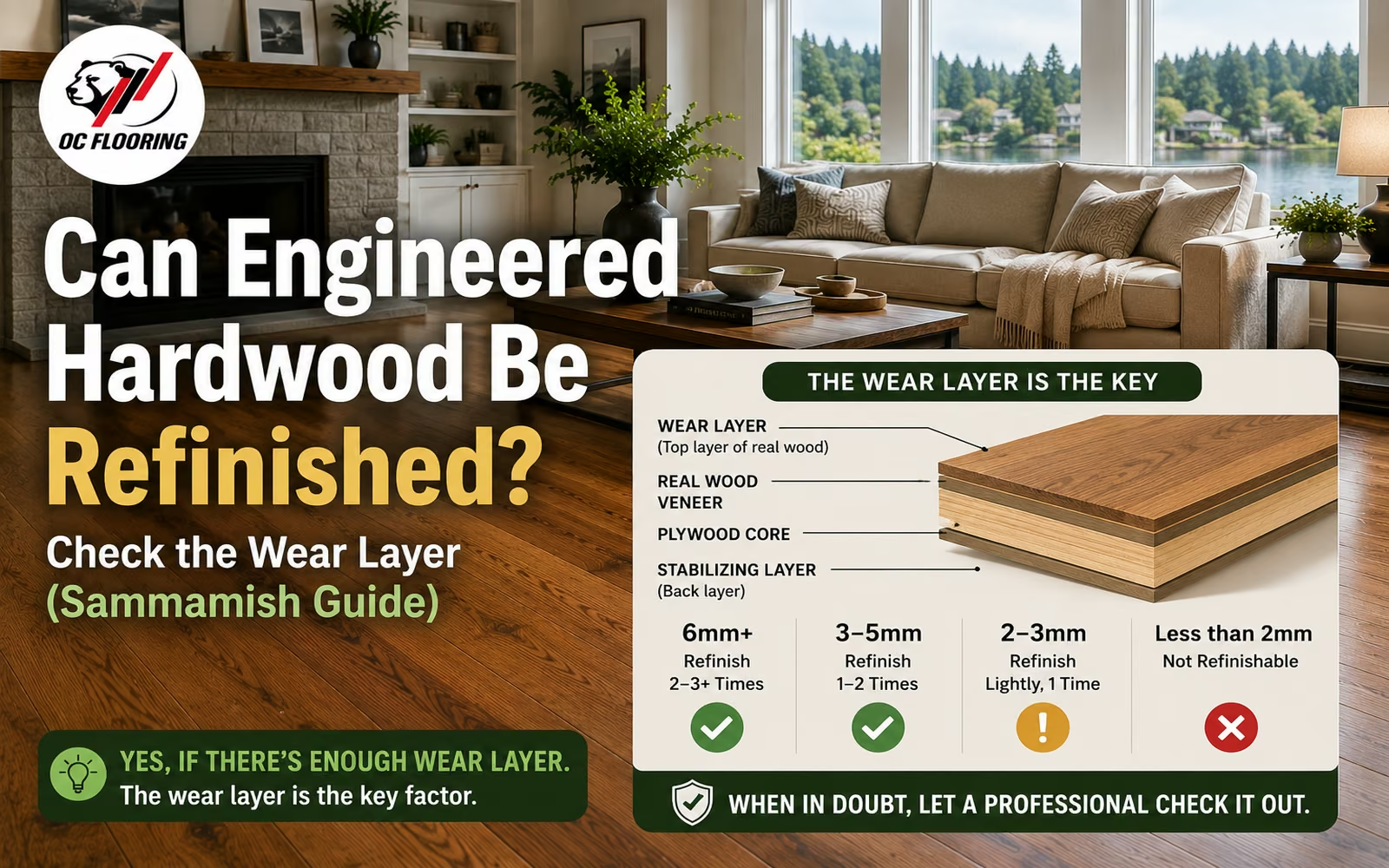




Yes — most engineered hardwood can be refinished at least once, provided the wear layer (the real-wood veneer on top) is about 2 mm or thicker. A full professional sanding removes roughly 1 mm of wood, so a 3–4 mm wear layer can take two refinishes and a premium 4–6 mm layer behaves almost like solid hardwood. Under 2 mm, sanding risks exposing the plywood core — those floors get recoated, not refinished. Here’s how to check what’s under your feet in a Sammamish home before anyone starts a sander.
“Can you refinish engineered hardwood?” is a question we get almost daily from the Sammamish plateau, usually asked in a tone that expects the answer to be no. The internet deserves some blame here — half the articles out there say engineered floors can’t be sanded, and the other half say they always can. Both halves are wrong, because the honest answer lives in a number nobody quotes: the thickness of your wear layer. That single measurement decides whether your floor has one refinish in it, two, or none at all.
This matters more on the plateau than almost anywhere else we work, because the 1990s and 2000s subdivisions that built Sammamish were early, enthusiastic adopters of engineered flooring. Some builders installed premium product with a wear layer thick enough to outlive the mortgage; others installed the thin stuff, and the difference is invisible from above. Below: what a wear layer is, how to measure yours without tearing up a board, and what the math says about your options.
of wood removed by a full professional sanding. That’s the yardstick every wear-layer decision gets measured against — and why a couple of millimeters of veneer decides your floor’s future.
the rough dividing line. At or above it, a careful full refinish is on the table. Below it, sanding risks striping through to plywood, and the safe play is a recoat instead.
per square foot for a natural refinish — same price for engineered as for solid hardwood. The machine doesn’t care what’s under the wear layer; the person running it very much does.
What a Wear Layer Actually Is
Engineered hardwood is a sandwich: a thin slice of genuine hardwood — oak, maple, hickory, whatever you paid for — glued over a core of plywood or similar layered substrate. Everything you see and walk on is that top slice, which the industry calls the wear layer. It ranges from a paper-thin 0.6 mm on bargain product to a 4–6 mm slab on premium lines that costs nearly what solid wood does. The engineering is real engineering, to be fair: the layered core makes these floors more dimensionally stable than solid wood, which is why they tolerate our damp Northwest winters and can go places solid hardwood shouldn’t. We compared the two constructions properly in our solid vs engineered guide.
But when it comes to refinishing, the sandwich is the whole story. Sanding a floor means removing wood from the top, and the top is all the hardwood you have. Sand through it and there’s plywood looking back at you — a mistake with no undo button, because you can’t refinish your way out of a hole in the veneer. This is why the first question we ask about any engineered floor isn’t “what species?” or “how worn?” It’s “how thick is the wear layer?”
How to Check Yours Without Tearing Up a Board
You almost never need to sacrifice a plank to get the answer. The easiest window into your floor is a heating register: lift the vent cover out of the floor and look at the cut edge of the surrounding boards — the layers read like tree rings, and you can measure the top hardwood layer directly against a ruler. No floor vents? Try the exposed edge under a transition strip at a doorway, the cut ends inside a closet, or the gap around a plumbing escutcheon. Builders also famously leave a part-box of flooring in the garage or attic of plateau homes; a spare plank tells you everything, including the manufacturer, and the spec sheet for that product line is a web search away.
While you’re looking, check one more thing: the bevels. Most engineered floors are factory-prefinished with a small groove between boards, and deep bevels put a limit on sanding that exists independently of wear-layer math — flattening them can consume most of a millimeter on its own. We covered that wrinkle in our guide to refinishing prefinished floors. Shallow micro-bevels sand out uneventfully; deep V-grooves deserve a professional opinion before anyone commits.
The Math: Wear Layer vs Refinishes
Here’s the table we sketch at Sammamish kitchen counters. It assumes a full sand takes about a millimeter, that the floor is reasonably flat, and that the person running the machine has done this before — an engineered refinish is an experienced-hands job, not a rental-sander weekend.
| Wear layer | What it usually means | Refinishing verdict |
|---|---|---|
| 0.6–1 mm | Bargain and builder-grade product | Never sand — recoat only |
| 1–2 mm | Common in 90s–2000s tract installs | Risky; screen & recoat is the smart play |
| 2–3 mm | Mid-grade engineered | One careful full refinish |
| 3–4 mm | Quality product | Two refinishes over its life |
| 4–6 mm | Premium lines | Two to three — treat it like solid wood |
| Unknown | No vent, no spare plank, no spec | Measure first; we don’t guess with your floor |
When Not to Sand — and What to Do Instead
A thin wear layer isn’t a death sentence; it just moves your floor into maintenance mode. A screen and recoat — abrading the existing finish and applying a fresh topcoat, no wood removed — restores sheen and adds years of protection for $1.99 per square foot, and can be repeated every few years more or less indefinitely. It’s the same honest logic we walked through in our sandless refinishing reality check: recoats fix finish problems, not wood problems. What a recoat can’t do is erase deep scratches, gray wear-through, or sun fade — on a thin engineered floor, that kind of damage is usually solved with board replacement from spare stock, or eventually a new floor.
One warning we’d rather deliver here than at your house: if a contractor quotes a full sand on an engineered floor without asking about the wear layer — or measuring it — end the conversation. The saddest calls we get are from homeowners whose floor was sanded through by someone who didn’t check. There’s no repair for that beyond replacement, and it was preventable with a vent cover and thirty seconds.
Sammamish: A Plateau Full of Engineered Floors
Sammamish is arguably the engineered-hardwood capital of our service area. The subdivisions that filled the plateau between the early 90s and the late 2000s went up fast, in a damp climate, over slab-on-grade and daylight-basement foundations — precisely the conditions engineered flooring was designed for, and builders used it by the square mile. The spread in quality is enormous, though. We’ve measured generous 4 mm wear layers in custom builds around Pine Lake and Beaver Lake, and sub-1 mm veneer in tract homes of the same vintage two streets over. Same look, same era, completely different refinishing futures.
The encouraging news: plateau floors of that age are often perfect refinish candidates — twenty-some years of wear on a 3 mm wear layer leaves plenty of runway, and a refinish at $3.99 per square foot costs a fraction of the replacement these floors would otherwise be heading toward. If you’re on the fence, our Sammamish refinishing page has the local details, and our guide to how many times a floor can be sanded covers the solid-wood side of the same question.
The Short Version
Good refinish candidate when…
- Wear layer measures 2 mm or more at a vent or transition
- Bevels are shallow micro-bevels or already flat
- Damage is surface wear, scratches, or dullness — not deep gouges
- The floor is glued or nailed down and solidly flat
- You have the manufacturer spec or a spare plank confirming thickness
Stop and recoat (or replace) when…
- Wear layer is under 2 mm, or nobody can verify it
- A previous refinish already spent the veneer once
- Plywood is showing anywhere — at seams, bevels, or worn spots
- Deep V-groove bevels would eat the sanding budget
- A contractor wants to sand without measuring first
Refinishing Engineered Hardwood: What Sammamish Homeowners Ask
Can engineered hardwood floors be refinished at all?
How do I find out my wear layer thickness?
What happens if someone sands through the wear layer?
Does refinishing engineered hardwood cost more than solid?
Can floating engineered floors be refinished?
My engineered floor is prefinished with beveled edges. Does that change things?
Is it worth refinishing engineered hardwood instead of replacing it?
How long does an engineered refinish take?
Not Sure What’s Under Your Feet?
Send us a photo of a vent-edge or book a free estimate — we’ll measure your wear layer, tell you honestly whether your Sammamish floor should be sanded, recoated, or left alone, and put the numbers in writing.
Related reading: Solid vs engineered hardwood · Refinishing prefinished floors · How many times can a floor be sanded? · Hardwood floor refinishing in Sammamish · Book a free estimate