


Sandless refinishing works — for exactly one kind of floor: hardwood whose finish is dull and lightly scuffed but still intact, with no scratches into the wood itself. It’s a clean-etch-and-recoat, and because it removes zero wood it cannot fix gray worn-through patches, sun fade, water marks, stains, or anything you can feel with a fingernail. For Renton homes weighing the options: a legitimate recoat is a great product, and half the floors we’re asked to “sandlessly refinish” need the real sand.
“Refinish my floors without sanding” might be the most-searched flooring promise on the internet, and we understand why: sanding sounds loud, dusty, and expensive, and a one-day spray-and-coat service sounds like none of those things. Here’s the part the ads skip — sandless refinishing isn’t refinishing. It’s recoating: cleaning the existing finish, dulling it chemically so a new coat will stick, and applying that coat. Nothing touches the wood. That’s not a scam; it’s a genuinely useful maintenance service with an oversold name.
We say this as a company that sells the boring version of the same thing — we call it a screen and recoat, we use abrasive pads instead of chemicals, and it costs $1.99 per square foot. So take our bias into account: we make money either way, on the recoat or the full refinish. What we don’t want is what we keep seeing in Renton — homeowners paying for a coat of finish over damage that was always going to need sanding, then paying again a year later.
wood removed by any “sandless” process — which is the entire point, and the entire limitation. Damage that lives in the wood, rather than on the finish, stays exactly where it is under the new coat.
per square foot for our screen and recoat — the mechanical cousin of sandless refinishing. It’s a one-day job, and on the right floor it buys years before a full refinish is needed.
per square foot for a full sand and natural refinish — the real thing, typically 3–5 days, which resets the floor to bare wood and erases the damage a recoat can only seal in.
What “Sandless Refinishing” Actually Is
Every no-sand service on the market — the franchises, the one-day wonder ads, our own screen and recoat — is a variation on the same three steps: deep-clean the floor, abrade or chemically etch the existing finish so it will bond, and lay down a fresh topcoat. The differences are in step two. Franchise “sandless” outfits typically use a liquid etching solution; we run a buffer with a fine abrasive screen, which is where the name screen and recoat comes from. Either way, the new finish is only as good as its grip on the old one, and the old finish stays part of your floor forever — along with everything trapped in and under it.
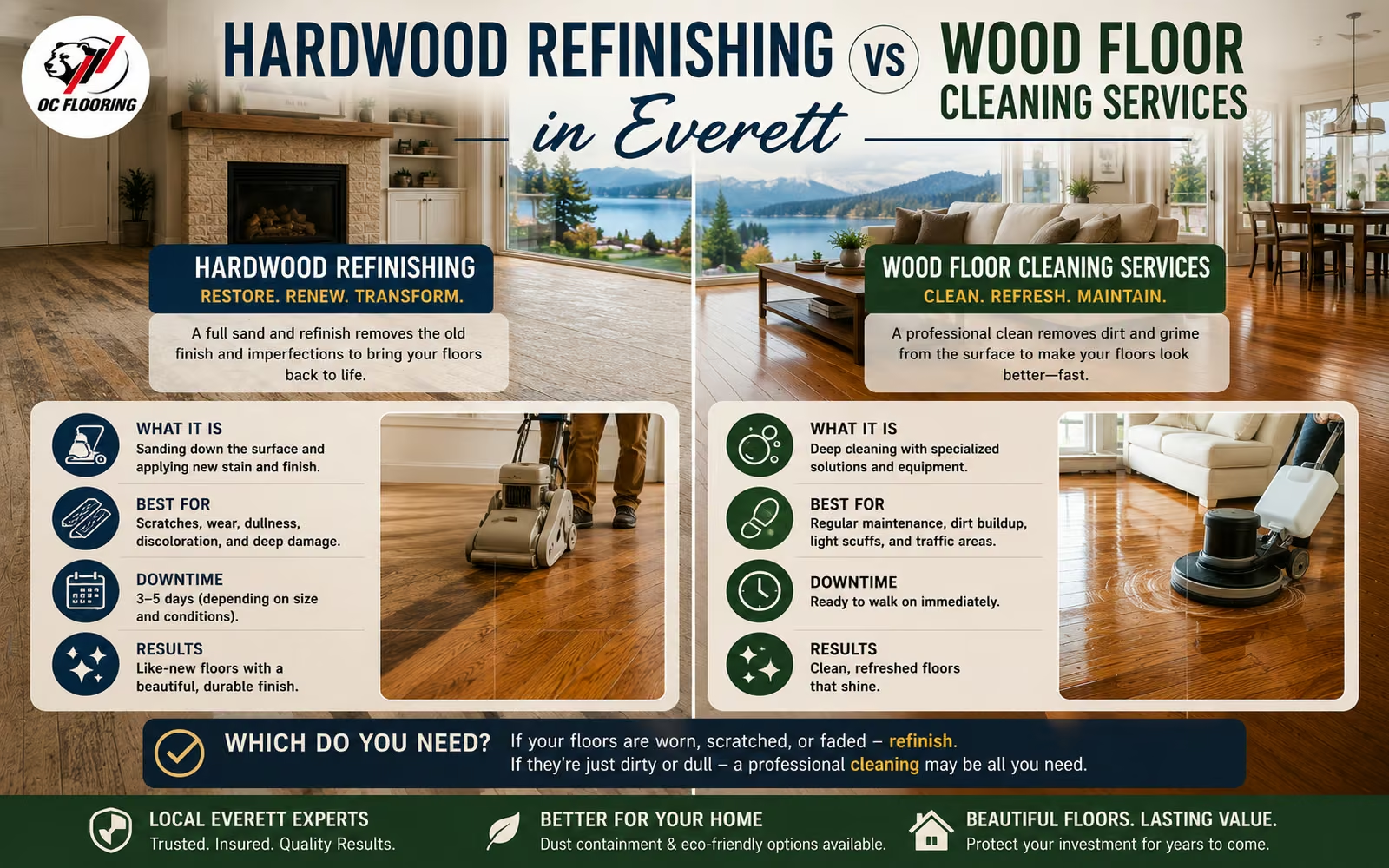
Done on the right floor, this is a legitimately great service. It’s the flooring equivalent of an oil change: cheap, fast, and the single best way to make hardwood last decades. Our screen-and-recoat vs full-refinish guide covers when we recommend it. The problem isn’t the service — it’s the word “refinishing” in the marketing, which quietly promises results only sanding can deliver.
What It Genuinely Fixes — Credit Where It’s Due
A recoat, chemical or mechanical, solves surface-level problems well: overall dullness from years of foot traffic, fine scratches that live entirely in the finish layer, a scuffed sheen in hallways and kitchens, and the general tired look that makes a ten-year-old floor read as thirty. It also adds a fresh wear layer, which is the part with long-term value — you’re spending down the new coat instead of the finish that protects your wood. One honest day of work, walkable in socks that evening with the waterborne products we use, furniture back in 48–72 hours. For a busy Renton household that just wants the floor to look cared-for again, that’s a lot of result for $1.99 a foot.
And to be fair to the franchise operators: fast, low-odor, low-dust, and inexpensive are real virtues. On a floor that qualifies, we have no quarrel with the category. The quarrel starts with what happens at floors that don’t qualify.
What It Can’t Fix, and Why
The dividing line is simple: finish damage recoats; wood damage sands. If a scratch catches your fingernail, it’s through the finish and into wood — a new topcoat will seal it under clear plastic, permanently, like a leaf in resin. Gray or black patches in traffic paths mean the finish wore through and the exposed wood oxidized; coating over gray wood gets you shiny gray wood. The same goes for sun fade, water marks, pet stains, and any color change you’re hoping for — a recoat cannot lighten, darken, or re-stain a floor, because color work happens on bare wood. Cupped or damaged boards? Still cupped, now glossier.
There’s also a failure mode nobody’s ad mentions: adhesion. New finish over a floor that was ever waxed, polished, or cleaned with the wrong products can peel in sheets — and residues like that are exactly what a quick chemical etch can miss. It’s one reason we test and screen mechanically rather than trusting a solvent wipe. When a floor is too far gone even for sanding, that’s a different conversation — our guide to when floors can’t be refinished covers those edge cases.
Sandless vs Screen & Recoat vs Full Refinish
Three services, frequently confused, priced very differently. Here’s the whole landscape on one card:
| “Sandless” (chemical etch) | Screen & recoat (ours) | Full sand & refinish | |
|---|---|---|---|
| What happens | Clean, liquid etch, new topcoat | Clean, mechanical abrasion, new topcoat | Sand to bare wood, 2–3 coats |
| Wood removed | None | None — finish only | ~1 mm; damage sands away |
| Fixes | Dullness, light finish scuffs | Dullness, light finish scuffs | Scratches, gray wood, fade, stains |
| Color change possible | No | No | Yes — stain or natural |
| Downtime | About a day | One day; socks that evening | 3–5 days typical |
| Our price | — | $1.99/sq ft | $3.99/sq ft natural, $6.50 stained |
| Right floor | Intact finish, no wood damage | Intact finish, no wood damage | Everything else |
The Renton Floors We Actually Get Called About
Renton’s housing stock is tailor-made for this conversation. The Boeing-era ramblers that fill the plateau and the Highlands — built by the thousands in the 50s and 60s — very often have solid red oak under their carpet, and red oak that’s spent fifty years under carpet has usually never been refinished at all.
Original 1960s finish with half a century of grit worked into it is not a recoat candidate under any brand name; it needs the full sand, and the good news is that the same oak takes a modern refinish beautifully and has thickness to spare for several more. Meanwhile the newer Renton subdivisions from the 90s onward often have floors that are genuinely just dull — and those are the recoat success stories. If dust is your worry about the real thing, that’s a solved problem too: our dust-containment refinishing captures sanding dust at the machine. Details and local specifics are on our Renton refinishing page, and the complete pricing picture is in the refinishing cost guide.
How to Tell Which One Your Floor Needs
A recoat-level fix works when…
- Scratches disappear when you wet the floor with a damp cloth — they’re in the finish
- No gray or dark patches in the traffic paths
- You’re happy with the current color and just want the life back
- The floor has never been waxed or oil-soap cleaned
- You’re maintaining a floor we (or anyone) refinished in the last decade
You need the full sand when…
- Any scratch catches a fingernail, or boards show bare or gray wood
- There are water marks, pet stains, or sun-fade lines under the rugs
- You want a different color — stain work needs bare wood
- The finish is peeling or flaking anywhere
- It’s a 50s–60s rambler floor that’s never been refinished — it’s earned it
Sandless Refinishing: What Renton Homeowners Ask Us
Does sandless refinishing actually work?
Is a screen and recoat the same thing as sandless refinishing?
How much does each option cost?
Will a recoat remove scratches from my floor?
Can sandless refinishing change my floor's color?
Why did my neighbor's no-sand finish peel?
How long does a recoat last compared to a refinish?
Is the dust from a real refinish as bad as people say?
My floor was refinished before I bought the house. Recoat or refinish?
Not Sure Which Side of the Line Your Floor Is On?
Send us a photo or book a free in-home estimate — we’ll tell you straight whether your Renton floor is a $1.99 recoat or a real refinish, and put the price in writing either way.
Related reading: Screen & recoat vs full refinish · Dust-free refinishing explained · 2026 refinishing cost guide · Hardwood floor refinishing in Renton · Book a free estimate