



For most homes we refinish in Bellevue and across King and Snohomish County, water-based wins: it dries in hours instead of days, keeps the wood’s true color instead of turning amber, carries a fraction of the fumes, and — with a commercial two-component product like Bona Traffic HD — now outlasts oil-based poly in wear tests. Oil-based still earns its place when you want a warm amber tone on red oak and nobody’s living in the house during the work. Below: the honest trade-offs, line by line.
Ask three flooring contractors whether water-based or oil-based finish is better and you’ll get three confident, contradictory answers — usually matching whatever that contractor happens to spray. So let’s put the bias on the table first: we run waterborne systems (Bona and Pallmann) on nearly every floor we refinish, and we’ll explain exactly why.
But we’ve also put down plenty of oil-modified polyurethane over the years, and there are floors — and homeowners — that oil genuinely suits better. This is the comparison we walk through at kitchen tables during estimates, minus the kitchen table.
One vocabulary note before the scorecard: “oil-based finish” in this article means oil-modified polyurethane, the amber-colored film finish sold in every hardware store — not penetrating hardwax oils like Rubio or WOCA, which are a different animal we’ll cover another week.
Both waterborne and oil-modified poly build a protective plastic film on top of the wood; the argument is about what that film costs you in time, smell, and color.
between coats with a waterborne finish — a full system goes down in one day. Oil-modified poly needs 8–24 hours per coat, so the same job stretches across three or four days.
VOC content of Bona Traffic HD, versus roughly 450–550 g/L for solvent-borne oil poly. That gap is the difference between sleeping at home during a refinish and booking a hotel.
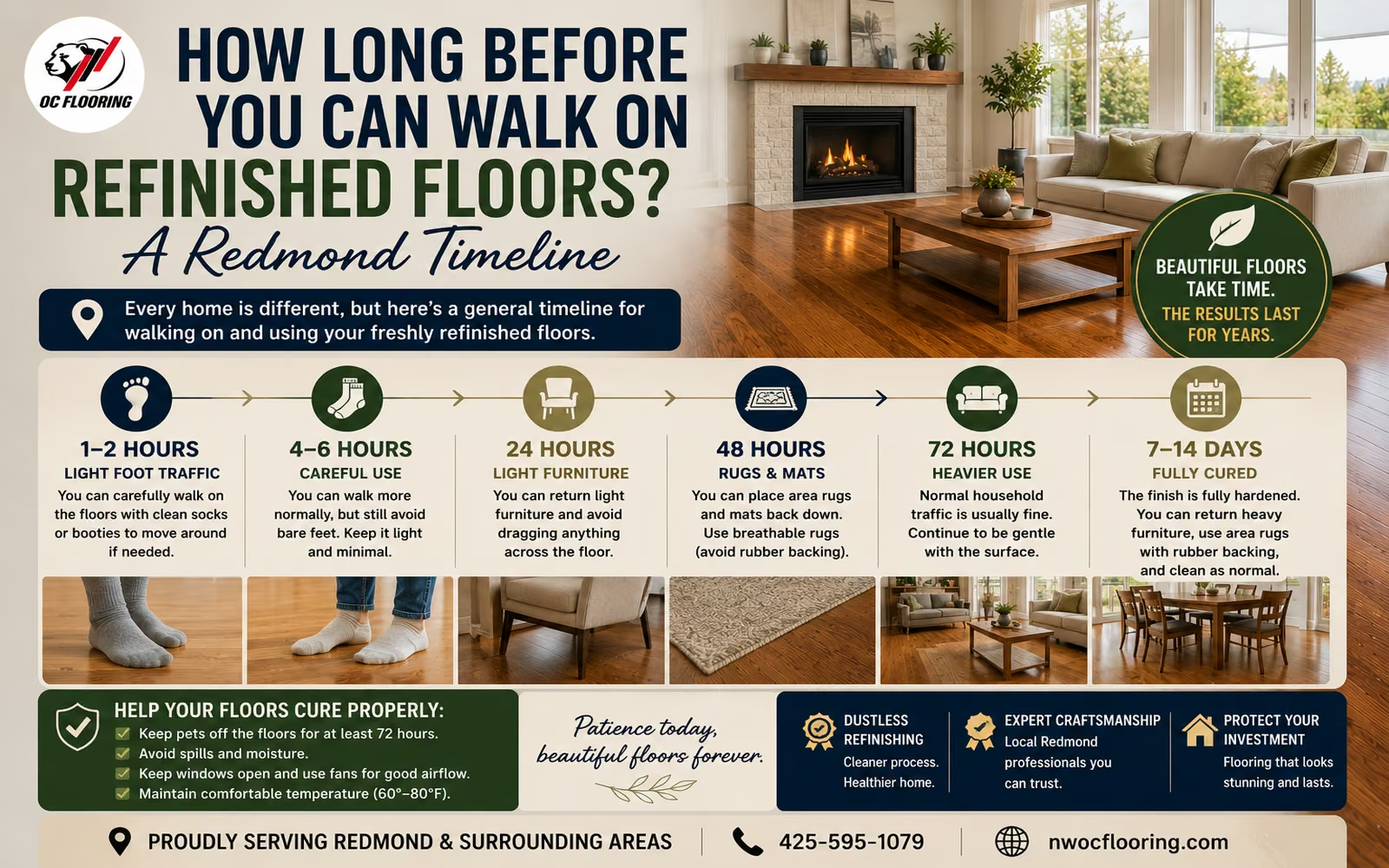
to full cure for a commercial waterborne — rugs and normal life resume in about a week. Oil-based keeps curing (and off-gassing) for 30 days.
The Scorecard: Water-Based vs Oil-Based, Line by Line
| Water-based (waterborne) | Oil-modified poly | |
|---|---|---|
| Dry / recoat | 2–3 hours; walk in socks same evening | 8–24 hours per coat; days of drying |
| Full cure | About 7 days | About 30 days |
| Smell & VOCs | Low odor, ~65–150 g/L; occupied homes OK | Strong solvent fumes, ~450–550 g/L |
| Color day one | Clear — wood stays its true color | Warm amber cast immediately |
| Color in 5 years | Still clear, non-yellowing | Progressively deeper amber/orange |
| Durability | Two-component commercial grades lead current wear tests | Very good; the old ‘tougher’ reputation is outdated |
| Coats per day | 2–3 — job finishes in 2–3 days total | 1 — same floor takes most of a week |
| Material cost | Higher per gallon (premium grades $100+) | Cheaper per gallon ($40–60) |
| Best on | White oak, maple, fir, gray/neutral stains, natural looks | Red oak, traditional amber looks, unoccupied projects |
What Water-Based Finish Actually Is (and Isn’t)
Waterborne finish is polyurethane too — the urethane solids just hitch a ride on water instead of mineral spirits. When the water evaporates, what’s left on your floor is a hard, clear plastic film. Twenty years ago that film was genuinely softer than oil poly, and the “water-based doesn’t last” reputation was earned.
It is no longer true, and it hasn’t been for a while: the commercial two-component waterbornes we use — Bona Traffic HD and Pallmann’s pro systems — cross-link with a hardener and are what gets specified for restaurant floors and gym floors, which see more traffic in a month than your hallway sees in a year.
The honest downsides: premium waterborne costs real money per gallon (one reason quotes differ — a $2/sq ft quote is not buying Traffic HD), it’s less forgiving to apply in bad conditions, and on red oak some people miss the amber warmth — clear finish on red oak reads slightly pink to certain eyes. That last one is fixable with a toning sealer, which is exactly the conversation to have at the estimate.
What Oil-Based Gets Right
Oil-modified poly builds a beautiful, slightly flexible film with a warmth that flatters traditional red oak floors — the classic honey-colored “hardwood floor” look most Americans grew up on is red oak under ambered oil poly. It’s cheaper per gallon, it levels forgivingly, and small touch-ups blend a little easier into an already-amber floor.
If you’re refinishing a 1970s Bellevue colonial with red oak throughout, nobody’s living there during the work, and you want that traditional glow, oil-based is a legitimate choice — this is the scenario where we’ll say so at the estimate.
What you accept in exchange: each coat needs 8–24 hours before the next, so a three-coat system stretches most of a week; solvent fumes strong enough that we tell families to stay elsewhere; a film that keeps yellowing for years, which fights every gray, white, or Scandinavian-pale look in existence; and a 30-day cure you have to baby with no rugs and careful furniture moves.
On old Seattle fir, oil poly’s amber can shove the floor all the way to orange — one of the most common “can you fix what the last guy did” calls we get.
The Color Question Is the Real Question
Durability arguments between modern finishes are mostly settled; color is where homeowners actually live with the decision for fifteen years. Here’s the short version by floor: white oak — waterborne, nearly always, because ambering turns white oak yellow-green over time and ruins gray or neutral stains. Red oak — genuine taste call; oil’s amber reads traditional and hides red oak’s pink, while waterborne keeps it lighter and more modern.
Douglas fir — waterborne; fir is already warm-toned and oil pushes it to pumpkin. Maple — waterborne; maple under oil goes unmistakably yellow. If you’re staining, the stain color you fell in love with on the sample board only survives under a non-yellowing finish — our guide to choosing a stain color goes deeper on this.
What Each Choice Does to Your Week
The schedule difference is bigger than most homeowners expect, and it compounds with our refinishing timeline basics. With waterborne: sanding day one, finish system complete by day two or three, socks that evening, furniture at 48–72 hours, rugs in a week. You’re inconvenienced, not displaced. With oil-based: one coat per day at best — and in a Puget Sound November, “at best” is optimistic, because oil dry times stretch badly in cool, damp air.
Same floor, most of a week of coats, then a month of tiptoeing while it cures, with the house smelling like a paint store for the first stretch. If you’re living in the home during the work — most of our clients are — that difference usually makes the decision by itself. For households with kids, pregnancy, asthma, or pets, it’s not close, and we wrote a whole guide to low-VOC refinishing with kids and pets in the house.
The Decision, Compressed
Choose water-based when…
- You’re living in the house during the refinish (kids, pets, lungs)
- The floor is white oak, maple, or old Seattle fir
- You’ve chosen a gray, white, natural, or any cool-toned stain
- You want the job — sanding to final coat — done in 2–3 days
- You want the color you see on day one to be the color in year ten
Oil-based earns it when…
- Traditional amber warmth on red oak is exactly the look you want
- The house is empty — between tenants, pre-move-in, or a flip
- Schedule is loose: coats across a week, a month of gentle cure
- You’re matching existing ambered oil-finished floors elsewhere in the house
- Budget favors material cost over downtime (and you’ve priced the hotel nights honestly)
The Pacific Northwest Footnote That Isn’t a Footnote
Finish chemistry cares about weather, and ours is famously damp. Oil-modified poly dries by solvent evaporation plus oxidation, and both slow to a crawl in cool, humid air — an oil job that turns around in three days in Phoenix can drag past a week here between October and May. Waterborne cures more predictably indoors year-round with normal heat, which is a big part of why it’s become the default for hardwood floor refinishing in Seattle and across the Eastside — we see the same pattern on projects from Bellevue and Kirkland to Everett.
Nowhere is the choice more one-sided than in Bellevue’s 1980s–2000s red oak homes: Eastside buyers expect the lighter, non-yellowed look, and a clear waterborne is how a floor keeps it. Our pricing doesn’t change with the finish debate, either: a full sand with natural finish runs $3.99/sq ft with our waterborne system — the complete numbers are in the 2026 refinishing cost guide.
Water-Based vs Oil-Based: What Homeowners Ask Us
Is water-based floor finish as durable as oil-based?
How long before we can walk on each finish?
Does water-based finish change the color of the wood?
Can we stay in the house during refinishing?
Why is oil-based finish cheaper?
Which finish is better for refinishing over a stain color?
What do you actually use on most floors?
Does the sheen choice change any of this?
Still Torn? Bring Us the Question
We’ll look at your species, your stain plans, and your household, and tell you which finish we’d put in our own house — with the schedule and price in writing. Free in-home estimates across King & Snohomish County.
Related reading: Why we run Bona Traffic HD · Low-VOC refinishing with kids and pets · 2026 refinishing cost guide · Hardwood floor refinishing in Seattle · Book a free estimate