




Dust-free refinishing means every sanding machine works connected to a HEPA-filtered vacuum system, so wood dust is captured the instant it leaves the floor instead of settling over your whole house. For you, that changes the experience completely: no fog of fine dust, no weeks of wiping shelves, and — in most projects — no need to move out. This guide is about living through the project: what we seal off, what each day looks like, and what “dust-free” honestly does and does not mean.
Most articles about dust-free refinishing talk about the equipment. This one is about your house and your week — because when we refinish floors across King and Snohomish County, the questions we get are rarely about vacuum systems. They are: Can we stay home? What about the kids’ asthma? Do I need to bag up the pantry? How bad is the cleanup, really? Here are the honest answers, from a crew that has done this in more than a thousand occupied homes since 2013.
What You’re Actually Avoiding
of wood comes off an average 500 sq ft floor during a full sanding — removed as fine dust. With containment it goes into sealed vacuum systems, not into your air and heating ducts.
the particle-capture standard a true HEPA filter must meet at 0.3 microns — the particle size that matters for lungs, and the reason the filtration grade on the vacuum matters more than the word “dustless.”
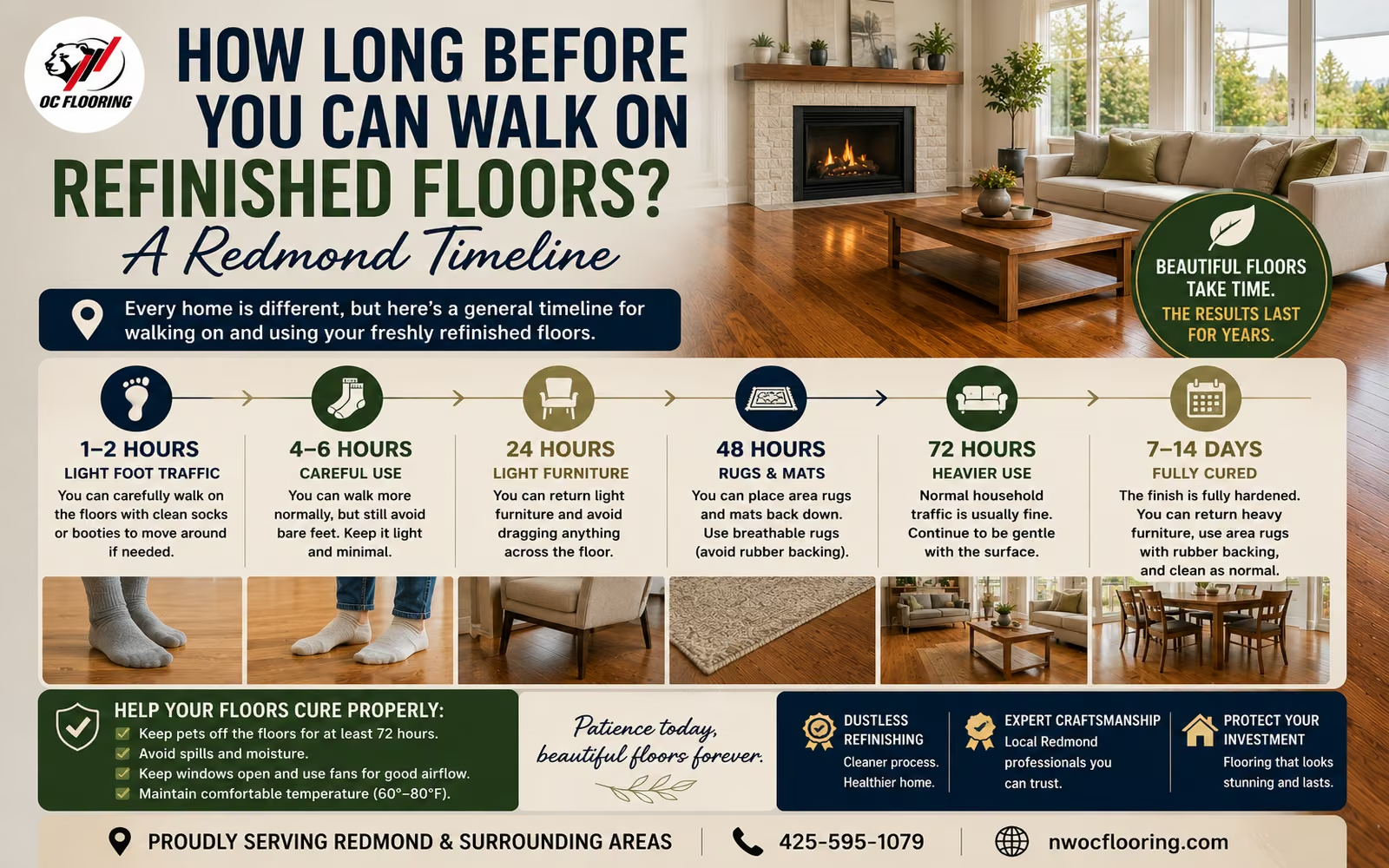
until you can walk on Bona waterborne finish in socks. Low odor and fast cure times are half the reason staying in your home is realistic at all.
Old-school sanding sent a meaningful share of that hundred pounds airborne, where it drifted for days and settled into bookshelves, closets, electronics and duct systems — homeowners reported finding sanding dust for months. Dust containment captures the overwhelming majority at the source. If you want the machine-by-machine comparison, we’ve written a separate piece on dustless vs. traditional sanding; this post stays focused on your side of the project.
Before We Sand: What Gets Sealed, Covered, and Moved
- HVAC gets protected. Supply and return vents in the work area are sealed so nothing enters the duct system, and we ask you to keep the furnace fan off during sanding hours.
- Kitchens and built-ins get sheeted. Plastic over cabinet faces, open shelving, and anything with louvers or electronics near the work zone.
- Doorways to untouched rooms get masked so bedrooms and offices stay usable and clean.
- Your part: furniture out of the work area (we can help — appliance and washer/dryer moves are add-ons at $80 and $160), small items, wall art and curtains packed away, and pets planned for sanding days.

Living Through It, Day by Day
| Day | What’s happening | What it’s like for you |
|---|---|---|
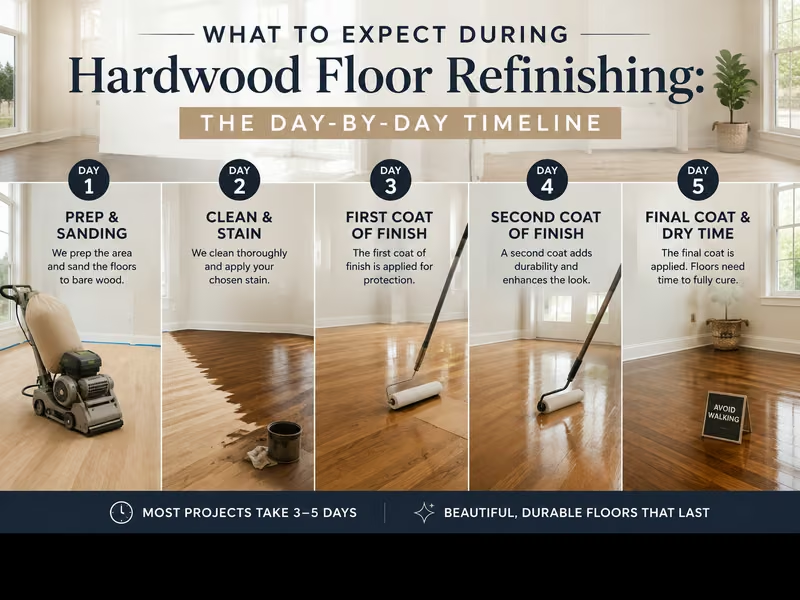
| Day 1 | Prep, sealing, main sanding passes | Loud during work hours (think vacuum-cleaner-plus). Floor off-limits. House air stays clear. |
| Day 2 | Final sanding, optional stain | Quieter. If staining, this is the day to sleep elsewhere if you’re odor-sensitive — stain smells more than waterborne finish. |
| Days 2–3 | Finish coats (2–3, with dry time between) | Work area sealed off. Low odor with waterborne finish; ventilation running. |
| +24 hrs | Finish sets | Walk in socks. No shoes, no pets’ nails yet. |
| +48–72 hrs | Finish hardens | Furniture back — lifted, not dragged, with felt pads on. |
| +1–2 weeks | Full cure | Area rugs go back down. Now it’s just your floor again. |
The Allergy and Air-Quality Question
This is where dust containment earns its keep. Fine sanding dust is exactly the particle range that irritates airways — and on older floors, you are not just sanding wood: decades of settled grime and old finish come off with it. Capturing that at the source, with the HVAC sealed, is the difference between a construction project and a respiratory event. For households with asthma, allergies, infants, or elderly family members, we also suggest simple layering: keep bedroom doors masked shut, run a room air purifier in the sleeping area, and schedule stain day (if any) for a night away. Bona waterborne finishes are low-VOC and low-odor — a large part of why we standardized on them for occupied homes — but “low” is not “zero,” and sensitive noses will notice coat days.
Can You Stay in the House?
Staying home works well when…
- The work area is one floor or one zone, and bedrooms plus a bathroom stay outside it
- You’re getting a natural (no-stain) refinish with waterborne finish
- Kids and pets can be routed around the work zone for a few days
- You can live without the kitchen for a day or two if it’s in the work area
Plan nights away when…
- The entire house including all bedrooms is being refinished at once
- Anyone in the home has serious respiratory sensitivity — caution beats regret
- You’ve chosen an oil-based stain or sealer and odor bothers you
- You simply don’t want to hear sanders — they are loud, containment or not
Most of our occupied-home projects fall in the first column. The honest exception we always flag: noise. Dust containment does nothing for decibels, and sanding day sounds like a very determined shop vacuum. Plan calls and naps accordingly.
What “Dust-Free” Honestly Means (and Doesn’t)
We’ll say plainly what the industry fine print says quietly: no sanding process on earth is 100.000% dust-free. “Dust-free” (or more precisely, dust-contained) means the visible-mess problem is solved: no haze in the air, no film on the piano, no dust migrating upstairs. Expect to run one light wipe of horizontal surfaces near the work area when we’re done — not the top-to-bottom, inside-the-cabinets deep clean that traditional sanding used to force. We include dust containment on our dustless sanding projects as a $250 line item, and it is the best money in the whole quote for anyone living in the house during the work.
Living Through a Dust-Free Refinish: Your Questions
Can we stay in our house while the floors are refinished?
Is dust-free refinishing really 100 percent free of dust?
Is sanding dust dangerous for people with allergies or asthma?
Do I need to cover my furniture and empty the closets?
Should the heat or air conditioning be off during sanding?
What about our dog and cat during the project?
How soon can we walk on the new finish?
Does the house smell during refinishing?
How much cleanup should we expect when the crew leaves?
See a Dust-Free Refinish in Your Own Home
We’ll walk your rooms, explain exactly what gets sealed and when you can walk on the floor, and leave you an itemized quote. Free in-home estimates across King & Snohomish County.
Related reading: Dustless vs. traditional sanding: the equipment side · How many sandings does your floor have left? · What refinishing costs in 2026 · Dustless floor sanding