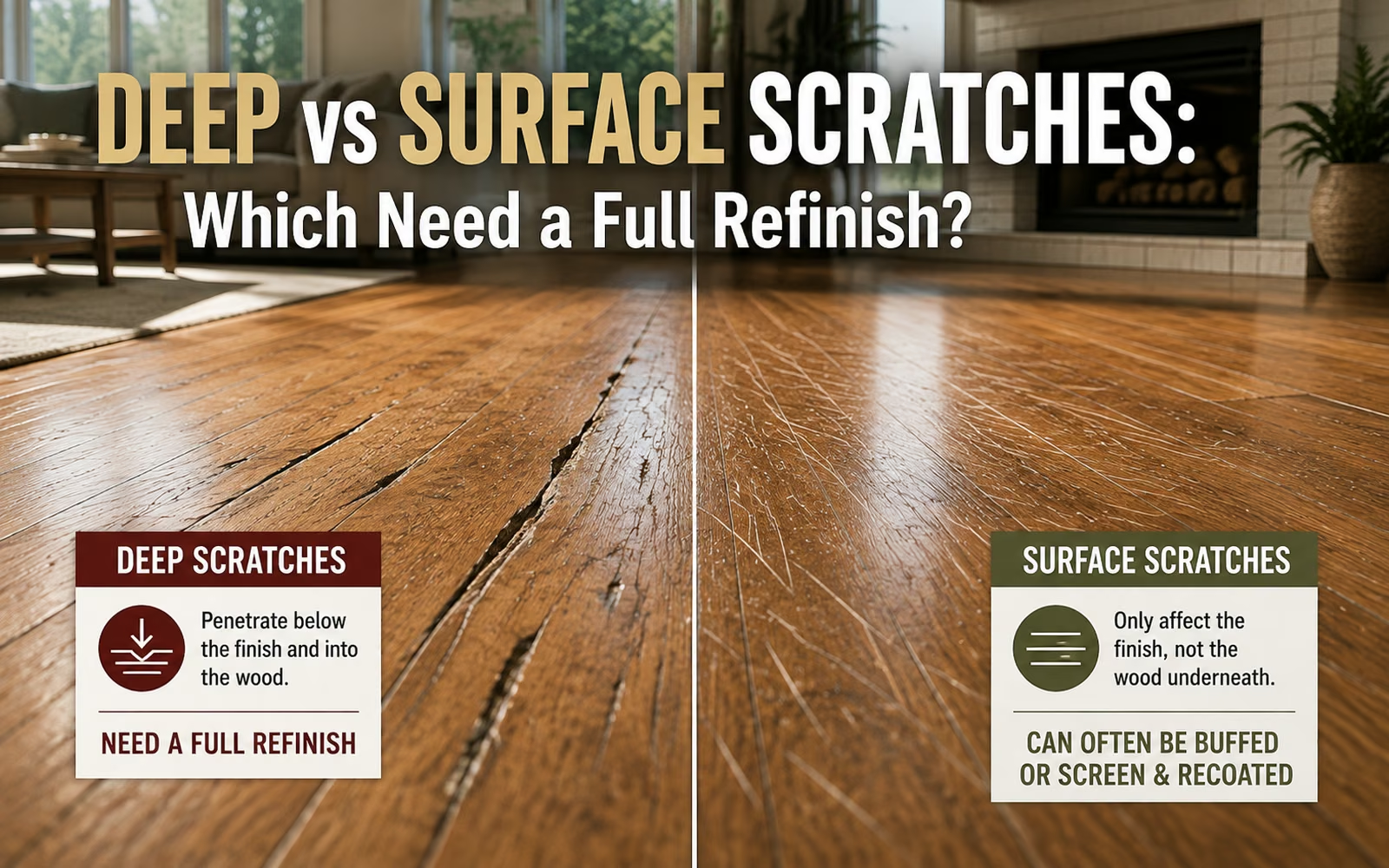



Most pet scratches live in the finish, not the wood — which means a $1.99/sq ft screen & recoat erases them in a day, and a full refinish is only necessary when claws have cut through to raw wood or urine has stained boards dark. The triage is simple: scratches your fingernail glides over will recoat away; grooves that catch your nail, gray patches, and black spots need the $3.99/sq ft sand — or, for black urine stains, board replacement. For Renton households planning to keep both the dog and the hardwood, the real answer is a maintenance rhythm, and we’ll lay that out too.
We like dogs. We also refinish what dogs do to floors, week in and week out, so this is a subject where we can skip the theory. The good news first: in the hundreds of pet-scratched floors we’ve looked at across Renton and the rest of King County, the large majority needed far less work than their owners feared. Claws are hard on finish and surprisingly gentle on wood — most of the damage that looks like “ruined floors” is a scratched-up topcoat doing exactly what a topcoat is for.
The bad news is concentrated in one category — urine — and we’ll be straight about it, because it’s the difference between a one-day fix and replacing boards. Here’s the full picture: which damage gets which repair, what it costs, and how households that keep hardwood and pets for decades actually manage it.
screen & recoat — erases claw scratching that lives in the finish, which is most of it. One day of work, and the dog is back on the floor that evening.
full sand and refinish when scratches reach the wood — 3–5 days, and it also removes shallow urine marks that haven’t gone black.
Janka hardness of red oak vs Douglas fir. Renton’s postwar oak takes a dog’s claws far better than the region’s older fir floors — species decides how fast damage accumulates.
First, Sort the Damage: Finish, Wood, or Stain
Pet damage comes in exactly three flavors, and the repair follows the flavor. Finish scratching — the fine white webs and dull lanes where the dog corners by the back door — sits entirely in the polyurethane. Your fingernail glides over it. Wood damage — deeper gouges from big dogs, dents in soft boards — catches your fingernail and often shows pale raw wood. Urine staining — from spots that yellowed to boards gone gray-black — is chemical, not mechanical, and behaves differently from both.
The fingernail-and-water-drop routine from our scratch triage guide applies unchanged: nail glides and water beads means the finish is intact and a recoat handles it; nail catches or water soaks in means the film is breached. The only pet-specific addition is your nose and your eyes on color — any spot that’s darker than the surrounding wood has had liquid in it, and dark spots are the one category where waiting actively destroys boards.
The Recoat: Where Most Pet Floors Land
If the damage inventory is scratched finish — and for households with trimmed-claw dogs on oak, it almost always is — the fix is a screen & recoat: abrade off the scratched topcoat, lay down a fresh coat of commercial waterborne. $1.99/sq ft, one day, socks that evening, and the scratch field is gone. For pet households specifically, waterborne chemistry earns its keep twice over — the roughly 65 g/L VOC finishes we use mean nobody has to board the dog at a kennel for a week, and the details are in our guide to low-VOC refinishing with kids and pets.
Here’s the part that matters more than any single repair: for a home with active dogs, the recoat isn’t a one-time fix, it’s the maintenance rhythm. Scratching is going to continue — claws don’t negotiate — so the winning strategy is treating the topcoat as a sacrificial layer and renewing it every 2–4 years, before wear ever reaches wood. Households on that rhythm essentially never face a forced full sand; households that skip it are the ones calling us about gray traffic lanes five years later.
Urine Stains: The Honest Bad News
Urine is alkaline, and it doesn’t scratch wood — it reacts with it. Caught the same day, it wipes up consequence-free. Left to soak in repeatedly, it works down into the wood fiber and reacts with the tannins, and the wood itself changes color: first a darkened halo, eventually gray-black. That color change is the whole problem. A light, recent mark often sands out with the rest of the floor during a $3.99/sq ft refinish. A black stain usually doesn’t — the discoloration runs deeper than any sane sanding depth, and bleaching is a lottery we don’t recommend on floors people have to live with. Black boards get cut out and replaced with matching stock, woven in during the refinish and quoted per repair. Our urine-stain refinishing guide goes board-by-board on this.
Two things follow from that chemistry. First, speed matters more than product choice — enzymatic cleaners are fine, but the variable that decides a board’s fate is hours-to-cleanup, not brand. Second, if you’re refinishing a floor with a history of accidents, budget for the possibility of a few board replacements: we can predict a lot from the surface, but some stains only show their true depth once sanding starts, and an honest contractor tells you that before the machines are running rather than after.
Species, Sheen, and the Floors That Fight Back
How fast a dog damages a floor is mostly decided before the dog arrives, by what the floor is made of and how it’s finished. On the Janka scale, the red oak in most of Renton’s postwar housing sits at 1,290 — hard enough that claws scratch finish rather than denting wood. White oak (~1,360), maple (1,450), and hickory (1,820) do even better; hickory in particular shrugs off big dogs. Douglas fir, at 660, is the regional exception: in older fir-floored homes, claws leave genuine dents and grooves, and pet owners with fir should set expectations — and recoat cadence — accordingly.
Finish choices move the visibility needle almost as much as species moves the damage needle. Lower sheens hide scratching dramatically — the light scatter that makes a scratch flash white on a semi-gloss floor disappears into a matte or satin surface — and clear waterborne over natural wood hides wear better than any dark stain, which shows every pale scratch line like chalk on a blackboard. If you’re choosing a floor for a dog household from scratch, our rundown of durable hardwood for dog owners ranks the options; the two-word summary is “hard, matte.”
Pet damage, matched to its repair
| What you’re seeing | What it is | The fix | Cost |
|---|---|---|---|
| Fine white scratch webs, dull traffic lanes | Finish-level claw wear | Screen & recoat | $1.99/sq ft, 1 day |
| Grooves that catch a fingernail; pale lines | Claws through to wood | Full sand & refinish | $3.99/sq ft, 3–5 days |
| Dents and crushed grain (fir, pine) | Soft-species impact damage | Full sand; expectations reset | $3.99/sq ft, 3–5 days |
| Yellowed or lightly darkened spots | Early urine marks | Full sand & refinish, soon | $3.99/sq ft, 3–5 days |
| Gray-black boards | Deep urine reaction | Board replacement + refinish | Refinish + per-board repair |
Renton Floors, Renton Dogs
Renton’s housing stock is kind to pet owners, mostly by accident. The Boeing-era ramblers that fill the Highlands, Kennydale, and the plateau neighborhoods were floored almost universally in red oak strip — a hard, forgiving, deeply sandable floor that takes decades of claws in stride and recoats beautifully. A large share of it has spent fifty years protected under carpet, and we regularly pull carpet in these houses to find oak that needs one refinish to outshine anything at the flooring store. If you’re weighing new pet-proof flooring against refinishing what’s under the carpet, check under the carpet first.
The exceptions run older and newer. Renton’s early-1900s homes near downtown can carry fir, with the soft-species caveats above. And the newer townhouse stock toward the Landing often has engineered floors, where the question becomes wear-layer thickness rather than species. All three cases start the same way — with an honest look at what the damage actually is. Details for the area are on our Renton refinishing page.
Pet Scratches on Hardwood: What Owners Ask Us
Can dog scratches be buffed out of hardwood floors?
Do we need to refinish the whole floor for pet scratches?
Can pet urine stains be sanded out?
What's the most scratch-resistant finish for dogs?
Will a recoat get rid of the pet smell?
Does the dog have to leave the house during the work?
How often should a pet household recoat their floors?
Are trimmed nails really enough to protect the floor?
Dog 1, Floor 0? Let’s Get a Rematch
Send photos of the damage or book a walkthrough — we’ll tell you honestly what’s a recoat, what needs sanding, and which boards are past saving. Free estimates across King & Snohomish County.
Related reading: Durable hardwood for dog owners · Refinishing floors with urine stains · Deep vs surface scratches · Hardwood floor refinishing in Renton · Book a free estimate