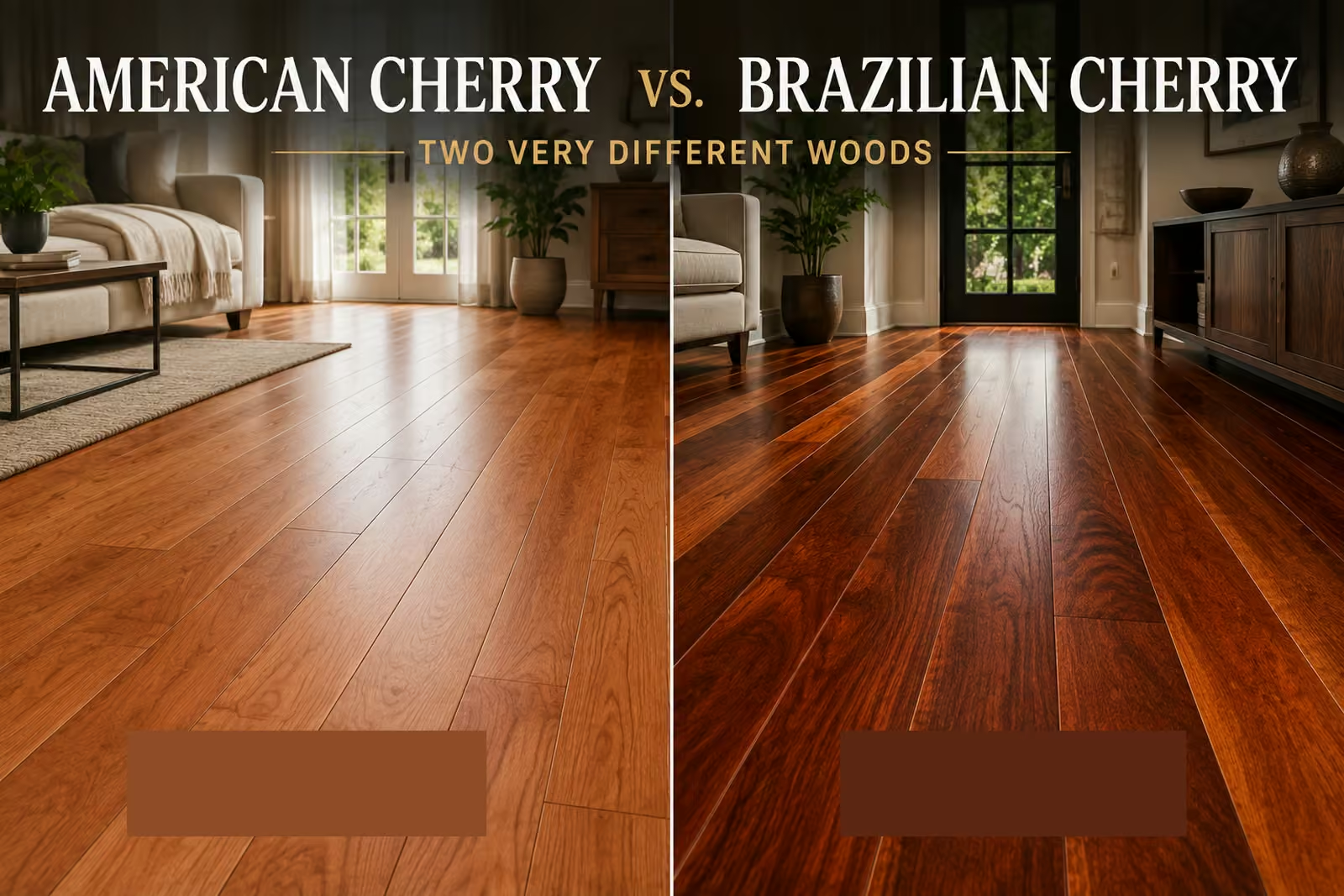





We sand and finish floors on the Eastside every week, and this is the question that stops homeowners cold. Here is how we actually walk a client through it — species first, then light, then lifestyle. Color comes last.
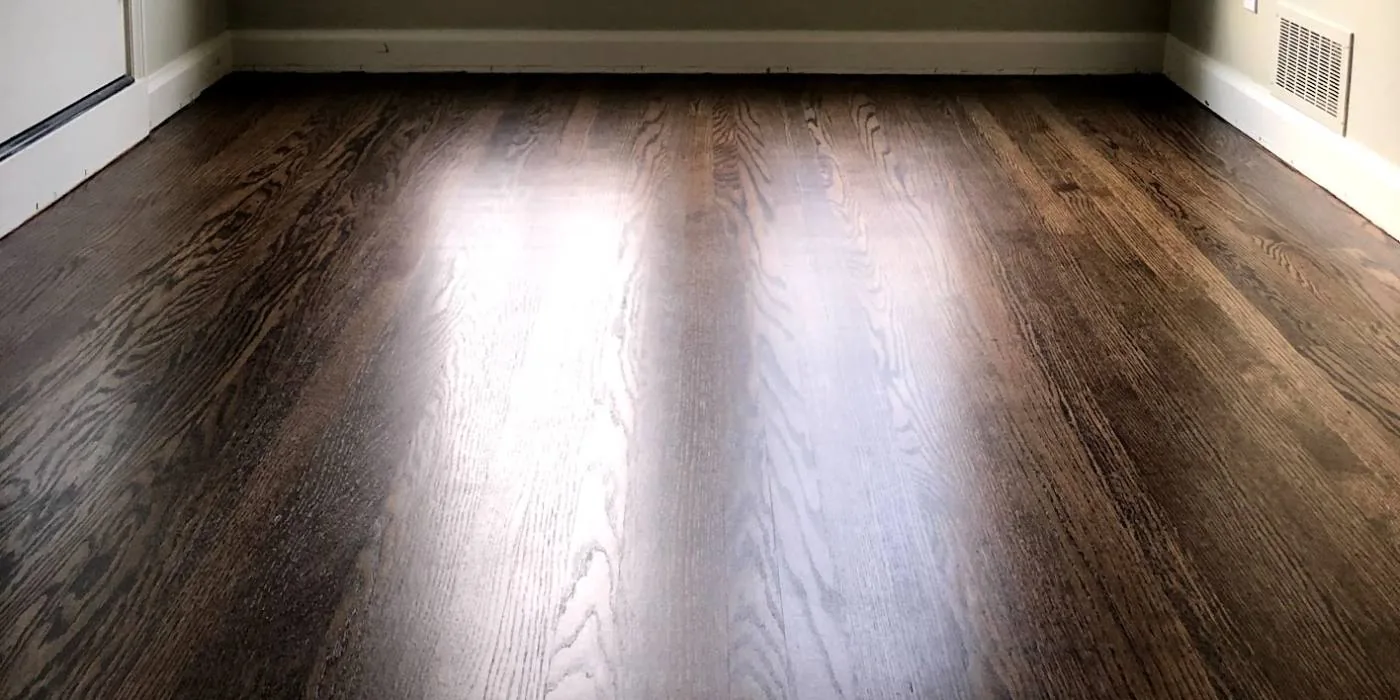
For most Pacific Northwest homes, a mid-tone neutral brown on red oak or a light natural or blonde finish on white oak is the safest beautiful choice. Mid-tones hide dust, pet hair and scratches better than anything else, and they do not date the way gray and near-black do.
If you want the color nobody regrets: stay within two shades of your existing trim and cabinets, and pick the sample that looks best on an overcast Bellevue afternoon — not under a showroom light.
Step 1: Your wood already picked half the color
Stain is a tint, not paint. It sinks into the grain and mixes with the color that is already in your boards. Two houses can use the exact same can and get floors that do not look related.
Red oak
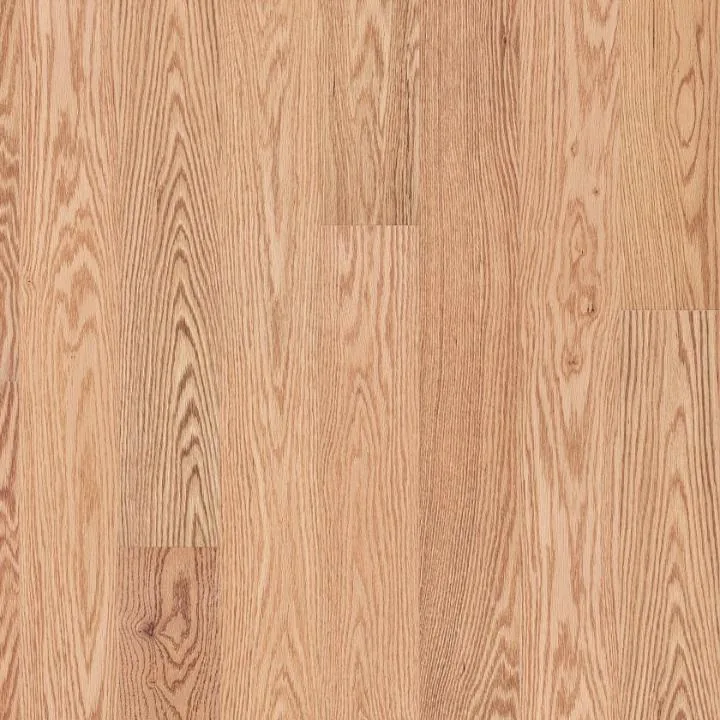
The default in Bellevue homes built before 2005. Pink-to-salmon undertone, wide open grain that drinks stain fast and shows strong figure.
Goes beautifully: warm mid browns, deep espresso, near-black.
Fights you: true gray and cool greige — the pink pushes through.
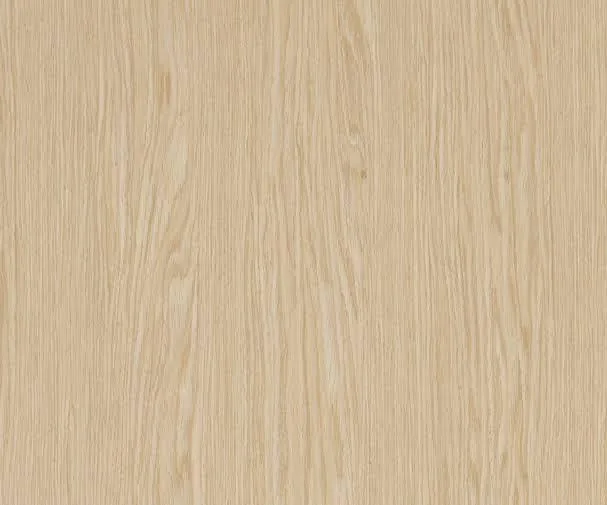
White oak
What most new Eastside builds and engineered planks use. Neutral brown-to-wheat undertone, tighter grain, denser — it takes color evenly and calmly.
Goes beautifully: natural, blonde, greige, weathered, soft taupe.
Fights you: nothing much — it is the forgiving one.
How to tell in ten seconds: find a closet or a spot under a floor vent where the finish is thin. Red oak looks rosy in raw wood; white oak looks like a paper bag. If the grain has long straight rays with tiny dashes between them, it is white oak.
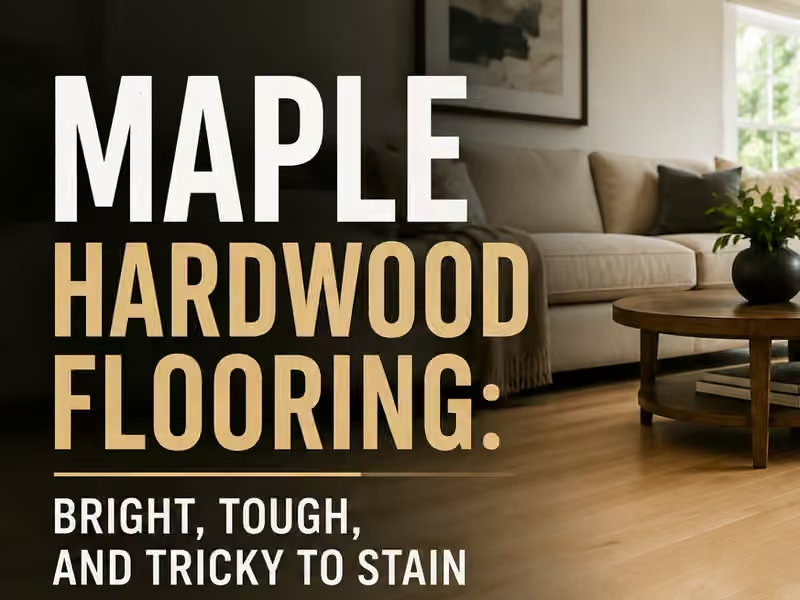
Maple and hickory show up in Eastside stairs and bonus rooms too. Both are dense and blotch easily — they need a conditioner or a water-popped surface, and they rarely take dark color cleanly. If your floors are maple, plan on natural or very light, or budget for a skilled hand.
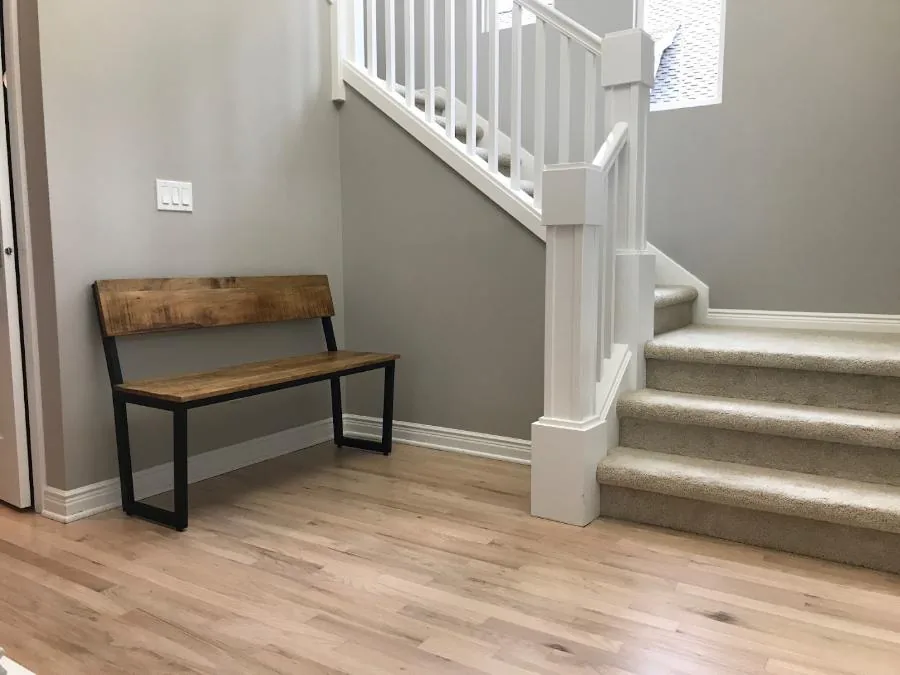
The six color families that actually matter
There are hundreds of stain names and about six real decisions. Pick the family first; the exact can is a detail we sort out on your floor.
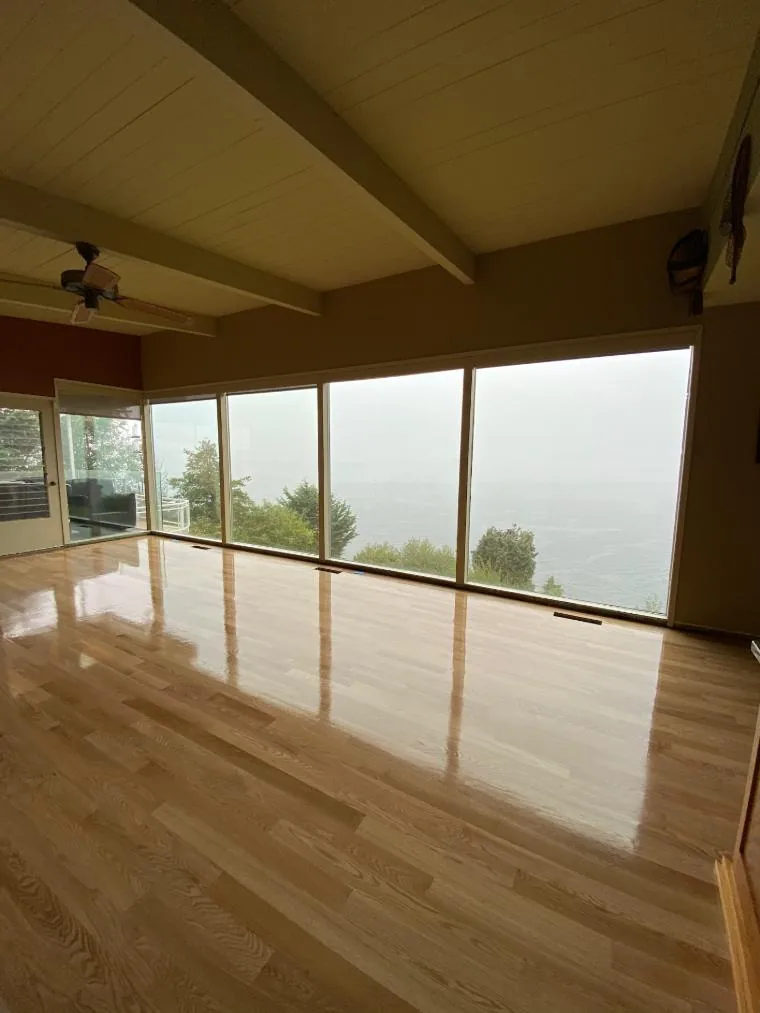
Natural & clear
No stain — just finish over raw sanded wood. Cheapest, fastest, and the most timeless option there is. Waterborne finish keeps it pale and true; oil-based adds a honey glow that deepens for years.
Best for: white oak, maple, tight budgets, rentals, anyone who wants the room to feel bigger.
Watch out: on red oak it reads distinctly pink. Some people love it. Look at a sample before you assume you do.
Blonde, whitewash & Nordic
A white-pigmented sealer or lye-and-white system that pushes the floor paler than the raw wood. This is the Scandinavian look showing up all over new Bellevue and Kirkland construction.
Best for: white oak, north-facing rooms, dark winters, small condos, white and cool-gray palettes.
Watch out: shows crumbs and dark pet hair. Needs a skilled applicator — lap marks are unforgiving. Not a red oak color.
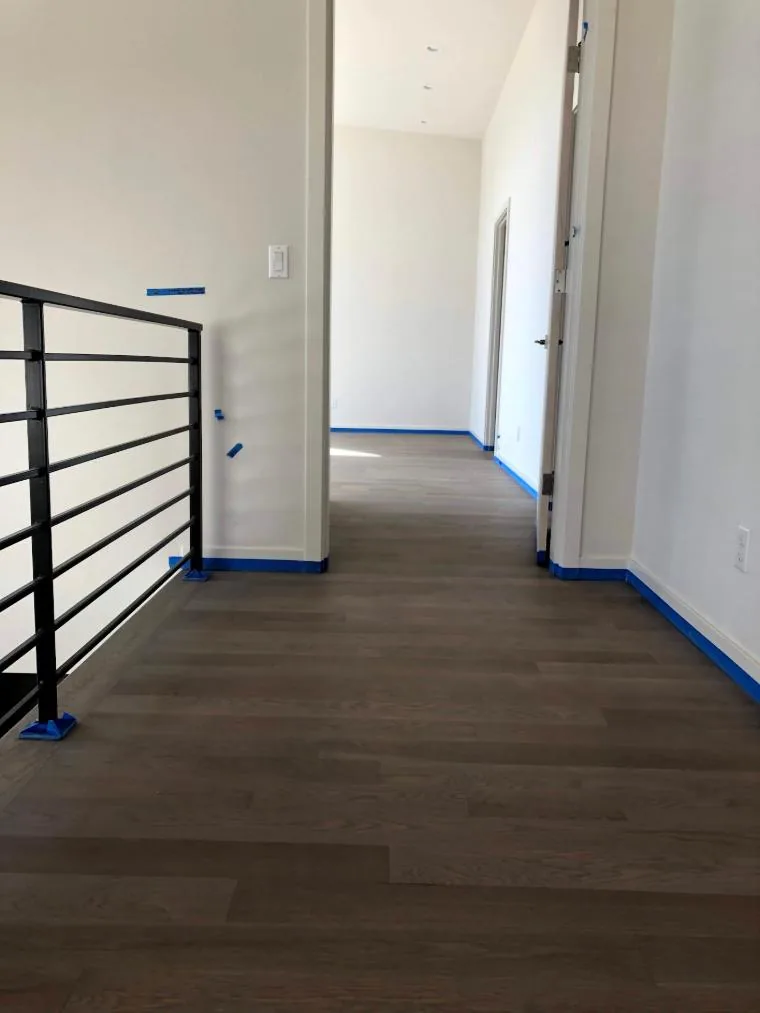
Greige & weathered
Gray-brown, driftwood, coastal. Usually a two-step: a neutralizing or reactive base to kill the warmth, then a gray-brown topcoat. The hardest family to execute and the most satisfying when it lands.
Best for: white oak, modern and transitional homes, cool white trim, water views.
Watch out: the trend peaked around 2019. Straight cold gray already looks dated; a gray-brown with some depth does not. On red oak, expect drift toward purple.
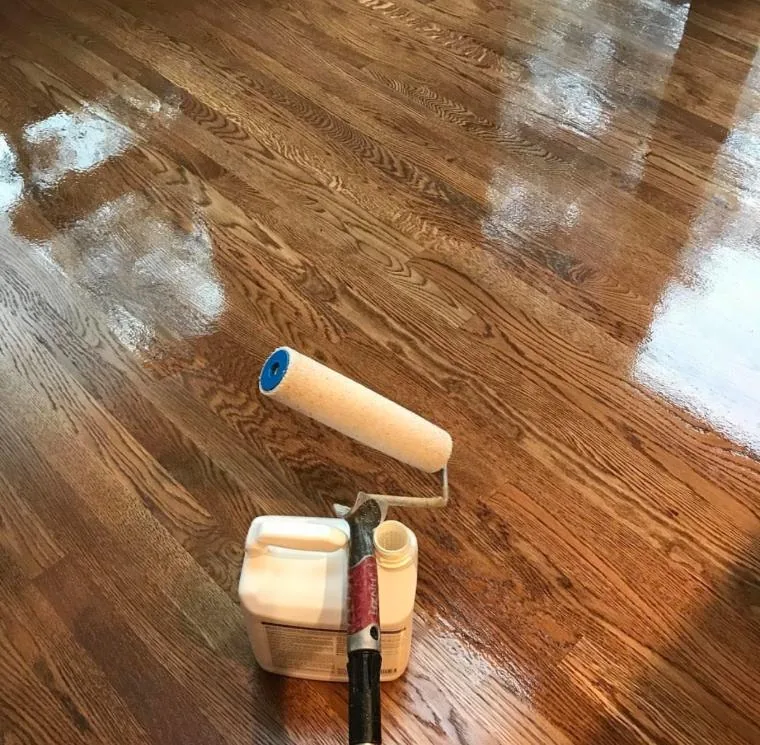
Warm mid brown
Special Walnut, Provincial, Chestnut, Golden Pecan. The workhorse. Dark enough to feel finished, light enough to hide life. If you have kids, dogs and one shot at this, start here.
Best for: red oak especially, family homes, craftsman and traditional, resale.
Watch out: going too orange. Ask for a sample cut with a drop of a cooler brown if your trim is white.
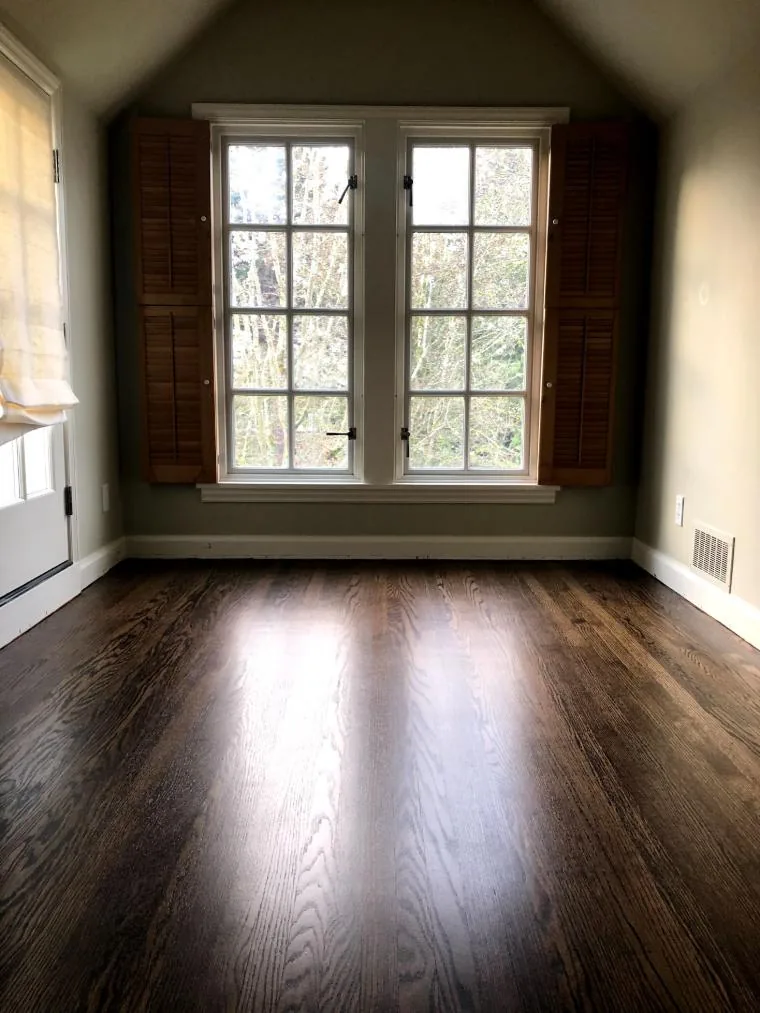
Deep cool brown & espresso
Antique Brown, Dark Walnut, Coffee Brown. Rich and quiet, with enough gray in it to stay modern. This is where we send most clients who ask for "dark but not black."
Best for: red oak, larger rooms with real daylight, warm white or greige walls.
Watch out: dust reads light against it, so you will see it. Satin sheen cuts that in half.
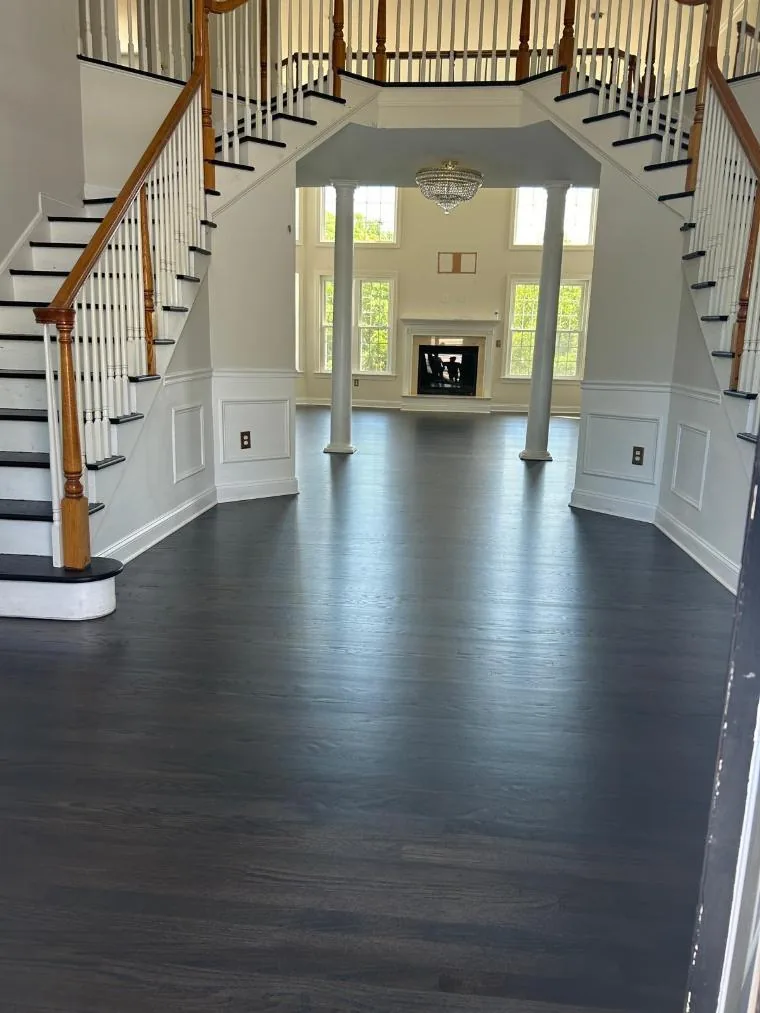
Near-black & ebony
Jacobean, True Black, Ebony. Gorgeous in photos, demanding in life. On open red oak grain it can be spectacular — a graphic, gallery-floor look nothing else gives you.
Best for: formal spaces, high ceilings, homes without dogs, owners who like to sweep.
Watch out: every footprint, every crumb, every scratch. Also the hardest color to change later — you cannot go lighter without a full re-sand.
DuraSeal stain colors chart: all 36 Quick Coat colors, sorted by tone
Nearly every stained floor we refinish gets DuraSeal Quick Coat — the professional penetrating stain from Sherwin-Williams that is ready for finish in about two hours and takes every topcoat we use. The official DuraSeal stain chart lists its 36 pre-mixed colors alphabetically, which tells you nothing about how they look on a floor. Below is the same lineup sorted the way we walk clients through it, lightest to darkest, with notes on how each behaves on red oak and white oak. Swatches are approximate — on red oak everything reads pinker and warmer, on white oak cleaner and cooler.
Naturals & whitewashed
- Neutral — clear, colorless sealer coat: the "no stain" look with a touch of depth. The most popular choice for white oak in Seattle right now.
- Country White — translucent white that lightens oak without hiding the grain; needs white oak to avoid going pink.
- Rustic Beige — pale greige, the quiet modern floor. Beautiful on ash and white oak, muddy on red oak.
Golden & honey tones
- Golden Oak — the classic 1990s honey floor; still right for craftsman homes with oak trim.
- Golden Pecan — a shade lighter and softer than Golden Oak.
- Fruitwood — light warm amber, gentle on both oaks.
- Nutmeg — soft caramel; hides dust well.
- Colonial Maple — light, slightly orange; best kept to maple-toned trim.
- Golden Brown — warmer and deeper than Golden Oak without going red.
- Early American — medium honey-brown, the safe traditional pick.
- Gunstock — rich orange-amber; gorgeous on white oak, very orange on red oak.
- Cherry — reddish amber that leans strongly red on red oak.
Mid-tone browns · the colors we apply most
- Provincial — reliable medium brown with a hint of warmth; works in almost any home.
- Special Walnut — neutral medium brown, no orange, no gray. Our most-requested "just brown" on white oak.
- Chestnut — warm mid-brown; our #1 farmhouse and transitional color. On red oak it tames the pink better than most warm browns — sample it first.
- English Chestnut — deeper and slightly redder than Chestnut.
- Medium Brown — exactly what it says; flat, even, low-drama.
- Antique Brown — mid-dark with a soft gray cast; great with white cabinets.
- Spice Brown — warm mid-dark brown with red undertones.
- Heritage Brown — one of the newer colors: neutral, modern mid-dark brown that neutralizes red oak beautifully.
Dark browns & blacks
- Coffee Brown — deep, classic brown that erases red oak's pink completely; the dark floor that still reads as wood.
- Dark Walnut — cooler and slightly grayer than Coffee Brown.
- Jacobean — very dark brown-black with a warm edge; the traditional "espresso floor."
- Espresso — near-black brown, smoother than Jacobean.
- Aged Barrel — our favorite dark: rich, slightly cool espresso that shows grain in good light.
- Ebony — black with the grain still visible.
- True Black — solid black; dramatic, and it shows every speck of dust.
Reds & mahoganies
- Sedona Red — bright terracotta red; rare in Seattle homes today.
- Red Mahogany — deep red-brown, traditional and formal.
- Royal Mahogany — darker and browner than Red Mahogany.
- Rosewood — dark reddish-purple brown; a bold, old-world look.
Grays & weathered
- Classic Gray — light, true gray. On white oak it is the modern gray floor; on red oak it turns lavender — the single most common stain mistake we're asked to fix.
- Silvered Gray — lighter, silvery driftwood tone.
- Warm Gray — gray with enough brown to live with warm furniture and trim.
- Dark Gray — charcoal; striking on rift-and-quartered white oak.
- Weathered Oak — gray-beige driftwood, the beach-house floor. Often mixed 50/50 with a brown to keep it from looking flat.
Most popular DuraSeal stain colors in Seattle-area homes right now: Neutral and Special Walnut on white oak; Chestnut, Coffee Brown and Aged Barrel on red oak; Weathered Oak or Classic Gray only on white oak. Don't see your color? DuraSeal also publishes an intermix book with 50-plus custom blends — a 50/50 Special Walnut and Classic Gray mix is one we're asked for constantly — and we mix it on site.
DuraSeal vs. Minwax: both are Sherwin-Williams brands and share many color names (Golden Oak, Provincial, Special Walnut, Jacobean, Ebony), so the shades land close. The difference is that Minwax is the retail stain sold for furniture and trim, while DuraSeal Quick Coat is formulated for floors: it penetrates deeper, levels more evenly across a big sanded surface, and is ready for finish in about two hours instead of overnight. That is why you will rarely see a professional refinisher open a can of Minwax on a floor.
Find your stain in three questions
The same three things we ask on every walkthrough. No email required.
What are your floors made of?
How much daylight does the room get?
What walks across this floor?
A quiz is a starting point. Wood is wood — we still cut samples on your actual boards before anyone commits.
Three things change your color more than the stain does
Clients agonize over two nearly identical browns and then ignore the decisions that actually move the needle.
Which finish goes on top
Oil-modified polyurethane adds a warm amber cast the day it goes on, and keeps ambering for years. Waterborne finish dries clear and stays true. The same stain under those two finishes is genuinely two different floors — one reads golden, one reads neutral. Tell us which way you lean before we cut samples.
Sheen
Gloss makes color look deeper and dirt look worse — every scratch catches light. Matte flattens color slightly and hides almost everything. Satin sits in the middle and is what we install in roughly nine of ten Bellevue homes. If you want one free upgrade to how your floor ages, drop a half step in sheen.
Pacific Northwest light
We live under eight months of soft gray sky. That light cools everything down — the cheerful mid brown you picked in June can read muddy in November, and a cool greige can go flat and lifeless. This is the single most common regret we hear on the Eastside, and the fix is free: judge your samples on an overcast day with the lamps off.
The five sealers we choose between
We finish with Bona's waterborne sealers. Same stain, five different personalities — this is the lever most homeowners never hear about, and it changes the floor as much as the color does. Actual result varies by species and floor condition, so we always coat an on-site sample for your approval first.
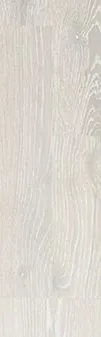
Their strongest white pigment, for a bright Scandinavian whitewash. Best for cool, modern interiors that want an airy floor.
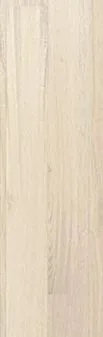
A hint of white pigment that holds the raw, just-sanded look. Best when you want the floor to read unfinished.
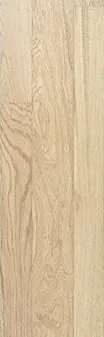
The standard clear sealer, with a slight natural warming. Best for everyday warmth on natural wood.
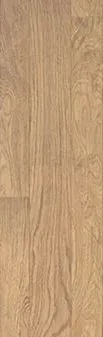
No pigment, but it deepens and enriches whatever is underneath. Best for stained floors you want to look deeper and more vibrant.
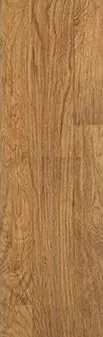
Amber pigment for a warm, oil-rubbed glow — the traditional oil-modified look without oil's downsides.
More on color work: our hardwood staining service and the finished floors in our gallery.
What each color costs you — in dollars and in upkeep
Our published pricing across King and Snohomish County is simple: $1.99 per sq ft for a screen and recoat (same color, fresh finish), $3.99 for a full sand and refinish with a natural finish, and $6.50 for a full refinish with a stain color, 500 sq ft minimum. Here is how color moves you between those tiers — and what each one asks of you afterward.
| Color family | Cost / sq ft | Hides wear | Cleaning load | Resale |
|---|---|---|---|---|
| Natural / clear | $3.99 | Good | Low | Strong |
| Blonde / whitewash | $6.50 (tinted sealer) | Fair — shows crumbs | Medium | Strong in new builds |
| Greige / weathered | $6.50, two-step quoted | Good | Low | Mixed — trend-tied |
| Warm mid brown | $6.50 | Best in class | Lowest | Strongest |
| Deep cool brown | $6.50 | Good | Medium — dust shows | Strong |
| Near-black / ebony | $6.50 | Poor | Highest | Polarizing |
A screen and recoat cannot change your color — stain lives under the finish, so a new color means a full sand. Stairs ($55–$75 per tread), board repairs and custom two-step colors are quoted separately at your free in-home estimate. Refinishing still runs 50–70% less than replacing sound hardwood, and every OC Flooring estimate is walked in person and written flat, with a 1-year workmanship warranty.
How to test samples so you actually get it right
Free, takes one afternoon, and it is the only part of this process that removes real risk. Never choose from a store chip or a photo online — including the photos on this page. Your wood, your light, your call.
- Sample on your own floor, in the actual room. Not a loose board, not the garage. We sand a few two-foot squares in the space where the floor lives.
- Put candidates side by side. Three at most. Color only exists in comparison — a single patch tells you nothing.
- Look at them four times: morning, midday, overcast, and at night with your lamps on. Most people change their mind at least once.
- Bring the room to the sample. Set a kitchen cabinet door, a trim piece, and a rug corner on the patch. Floors do not exist alone.
- Ask for a topcoat on half of each patch. Stain looks different raw than it does under finish, and that difference is exactly where regret comes from.
One more honest note: if two samples both look good to you, pick the lighter one. Lighter floors stay easier to live with, easier to sell, and easier to change later — going darker in five years is a light re-sand, while going lighter is a full one.
Five regrets we hear on the second visit
We have refinished floors for people who chose color twice. This is what they say the first time did not go right.
"We matched a Pinterest photo"
That photo is a different species under different light, edited. The stain name on it will not reproduce it in your house.
"We went gray in 2019"
Cold gray dated faster than any floor color in decades. If you love the family, choose a gray-brown with warmth underneath.
"We forgot the dog"
Near-black and nails do not coexist quietly. Mid-tone brown plus satin sheen is the pet-owner answer.
"The stairs don't match"
Treads are often a different species than the floor and take stain differently. They have to be sampled separately, up front.
"It fights the cabinets"
Two woods in one sightline should either match closely or contrast clearly. Slightly-off is the only result that looks like a mistake.
Choosing a stain color — what homeowners ask us
How many stain samples should I test before deciding?+
Two or three finalists, applied to your sanded floor in at least two spots with different light. More than three invites paralysis; fewer skips the comparison that catches undertone clashes. Judge them in both morning and evening light before you commit.
Do light stain colors hide dust and pet hair better?+
Dramatically better. Dust, pet hair, footprints, and fine scratches all read as light marks, which vanish on pale floors and glow on dark ones. Households with shedding dogs or lower appetite for daily sweeping are consistently happier one or two shades lighter.
Can red oak take a gray or whitewashed stain?+
It resists the look — red oak's pink undertone bleeds through cool grays and pales, turning them muddy or salmon. Suppressing it takes special sealers and toners, at extra cost and some risk. White oak delivers those cool, pale looks cleanly, which is why the trend grew up on it.
What stain colors are Seattle-area homeowners choosing right now?+
Two camps dominate our schedule: clean naturals (Bona Natural Seal on either oak) for modern interiors, and mid-tone browns — DuraSeal Chestnut, Coffee Brown — for nearly everyone else. Deep darks like Aged Barrel appear mostly in large, well-lit rooms. Gray floors have faded from requests.
What is Bona Natural Seal and when do you use it?+
It's a sealer engineered to keep freshly sanded wood looking freshly sanded — preserving the raw, light tone that ordinary clear finishes would deepen. We use it when clients want the natural Scandinavian look on white oak, or a light modern floor on red oak without gray undertones.
Does choosing a natural finish instead of stain save money?+
Yes — natural finish runs $3.99/sq ft versus $6.50/sq ft with stain in our pricing, since staining adds water-popping, application, and dry-time labor. Plenty of floors, especially white oak and maple, genuinely look their best in the cheaper option — we'll say so when that's true.
Why does the same stain color look different in every photo online?+
Because you're seeing different species, different sanding preparation, different finishes over the stain, and different camera lighting — each shifts the result. Photos are for shortlisting ideas only; the color that matters is the sample on your own boards in your own light.
Should floor stain match my cabinets or contrast with them?+
Contrast in depth, agree in undertone. Floors that exactly match cabinets merge into a single woody mass; floors that fight the cabinets' undertone (warm vs cool) look accidental. A floor a few shades lighter or darker than cabinetry, on the same warm-or-cool team, is the reliable formula.
What is water-popping and do I need it?+
Water-popping is lightly dampening sanded wood to raise the grain and open its pores before staining, so the wood accepts more pigment, evenly. It's how professionals get rich, uniform darks without blotch. For mid and dark stains it's standard practice in our process; for naturals it's unnecessary.
★★★★★"I was worried our hardwoods could not be revived after years of big dogs, kids and sun fading. The OC guys did a beautiful job refinishing the floors before we put our home on the market. They look like new!"
Diane D. — refinish before sale, via Google
Let us cut samples on your floor. Free.
We will sand a few patches in your room, lay down your top color candidates side by side, and leave you to live with them for a day. No pressure, no charge, and a written flat-rate estimate before anything starts.
Serving Bellevue, Seattle, Kirkland, Redmond, Sammamish, Mercer Island, Issaquah, Everett and 30+ cities across King and Snohomish Counties.

Licensed, insured and bonded, NWFA member and Bona Certified Craftsman, WA reg #OCFLOFL852KQ. Bohdan personally oversees every floor we refinish, from the first sanding pass to the final coat. Everything in this guide comes off our own job sites since 2013. More reading on our blog.