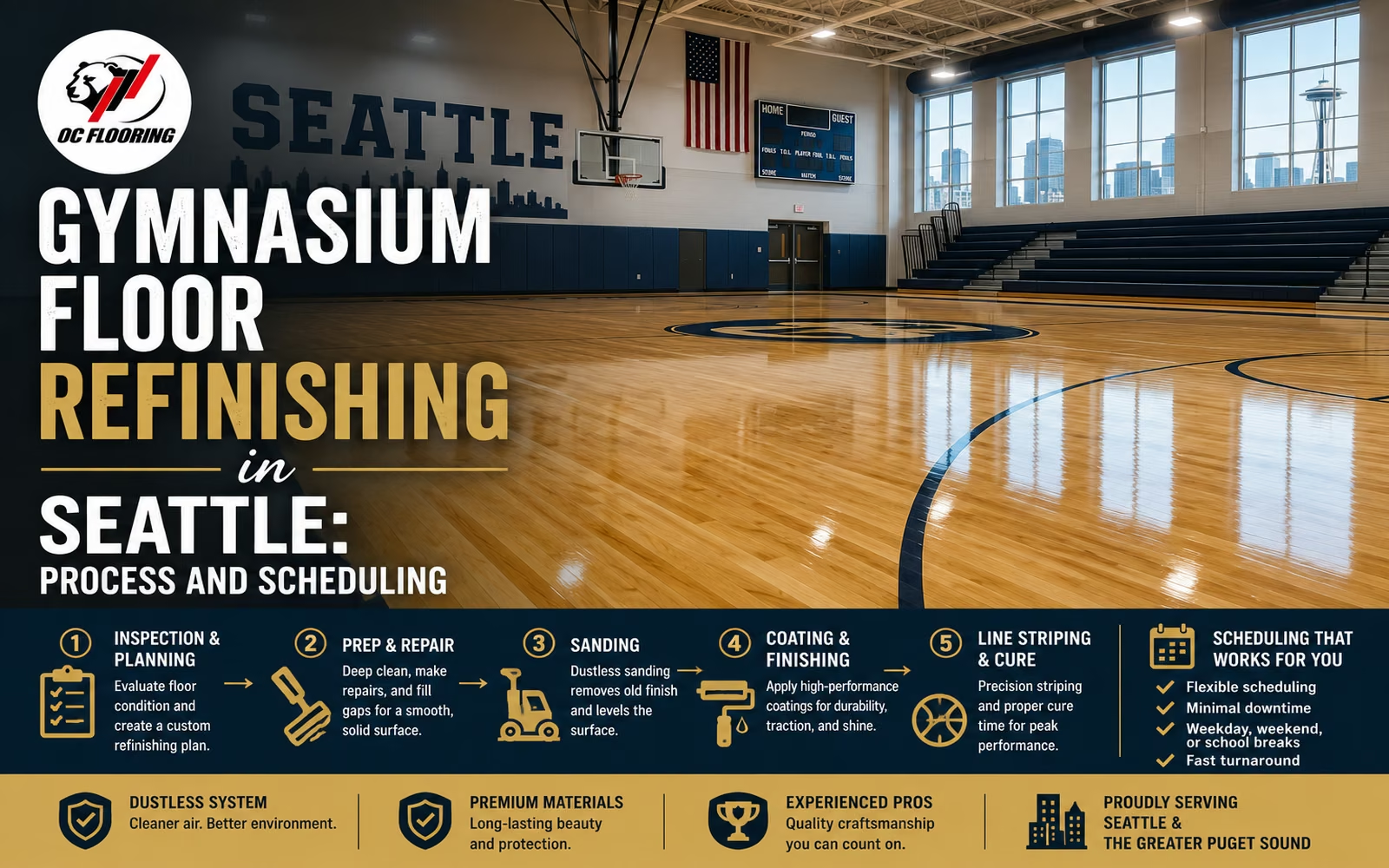





From free in-home estimate to final walkthrough, a typical OC Flooring refinish takes 3–5 working days: assessment and moisture check, prep and dust containment, three-pass sanding, stain sampled on your actual floor (if you want color), and 2–3 coats of Bona waterborne finish — backed by a 1-year workmanship warranty. We’ve refinished floors this way across King and Snohomish County since 2013. Here’s the whole process, step by step, so nothing about hiring us is a mystery.
Most company pages tell you a firm is experienced, detail-oriented, and passionate about quality. Fine — but none of that tells you what actually happens after you call. So this page is simply our process, in order, with the details we’d want if we were the ones hiring: what gets measured, what each day sounds like, when the furniture comes back, and what the warranty covers. If you read it and still have questions, that’s literally what the free estimate is for.
The Short Version, in Numbers
the year we started refinishing floors around Puget Sound. Same trade, same region, thirteen years of local floors — fir, oak, maple, and everything the 90s glued down.
cities we serve across King and Snohomish County — from Lake Stevens, Everett, and Marysville down through Seattle, Bellevue, and Sammamish.
our written workmanship warranty on refinishing. If the finish fails because of how we applied it, we come back and make it right.
Step 1: The Free In-Home Estimate (What We Actually Check)
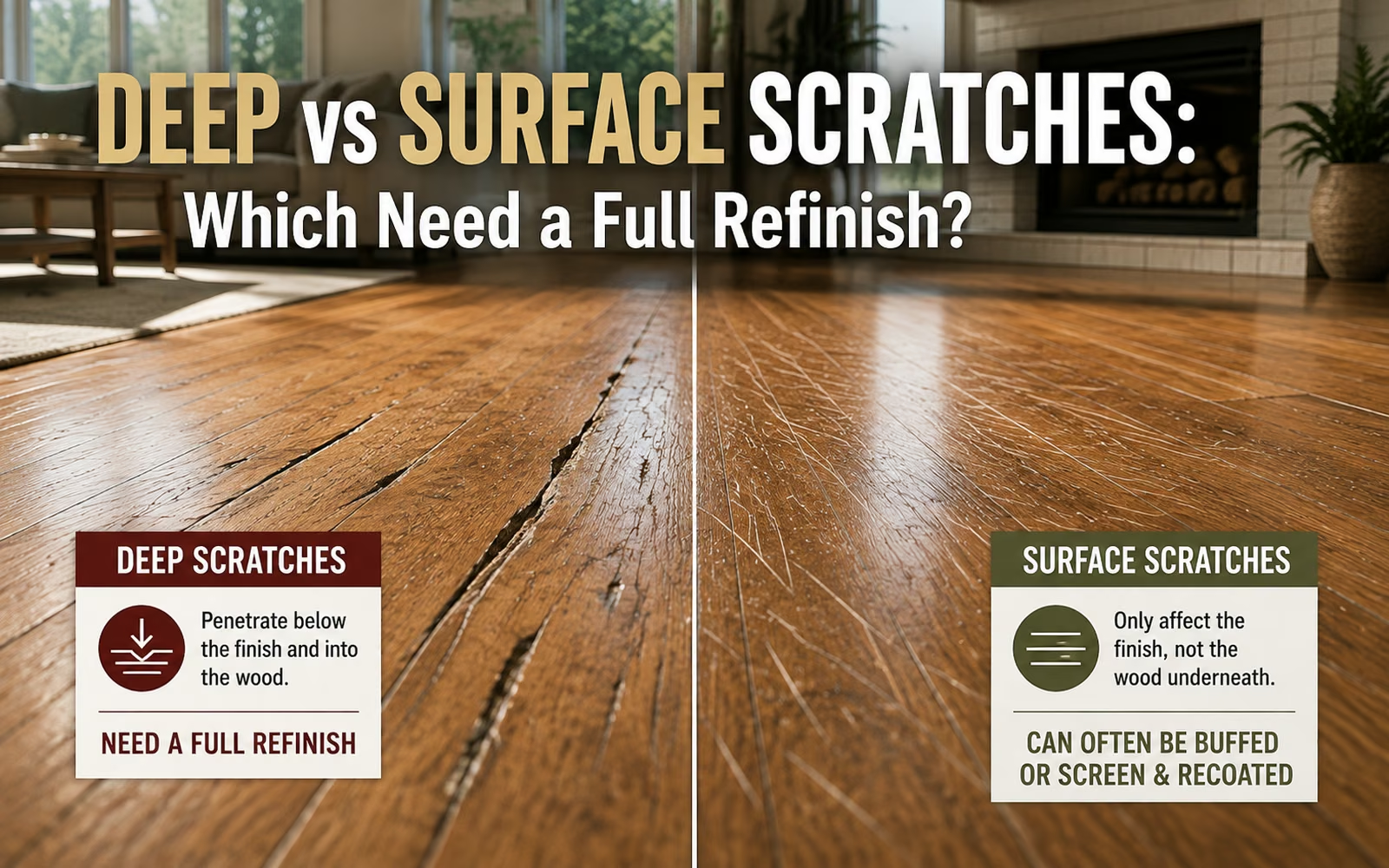
An estimate visit is a floor inspection, not a sales pitch. We measure the true square footage, identify the species (what looks like oak is sometimes birch or fir in older homes), check remaining wear layer at a floor vent, run a moisture meter — important in our crawlspace-heavy region — and inventory repairs: cracked boards, pet stains, squeaks, gaps. You get an itemized quote: sanding and finish at $3.99/sq ft natural or $6.50/sq ft with stain, stairs per tread at $55–$75, and any add-ons (dust containment $250, washer/dryer move $160, appliance move $80) listed so nothing appears later. If your floor only needs a $1.99/sq ft screen and recoat, we say so — it’s less money for us and the right call for you.
Step 2: Prep Day — Protecting the House
Furniture comes out of the work area (we handle appliances by arrangement), HVAC vents in the zone get sealed, doorways to untouched rooms get masked, and cabinet faces get sheeted. If you’re living in the home during the work — most of our clients do — we walk the containment plan with you so bedrooms and a bathroom stay clean and usable throughout.
Step 3: Sanding Days
Three machines, in sequence, all running vacuum extraction: the big machine takes the field down to clean wood through a coarse-medium-fine grit progression; the edger handles walls, corners, and closets; and a three-disc finishing sander — the TRIO, which we’ve written about separately — erases the directional scratches and blends field to edge so the floor reads as one flat plane under window light. Honest expectations: sanding day is loud during working hours, and the floor is off-limits. What it is not, with containment running, is the dust storm your neighbor remembers from 1998.
Step 4: Color and Coats
If you’re staining, we sample colors on your sanded floor, not from a brochure — the same stain reads differently on 60-year-old fir than on new oak, and daylight in your room is the only light that matters. Dark colors get the floor water-popped first so pigment absorbs evenly. Then finish: two to three coats of Bona waterborne, abraded and vacuumed between coats. We use waterborne systems because they stay clear instead of yellowing, carry low odor and low VOCs (which is why families can stay home), and their commercial grades outlast anything on a box-store shelf.
Step 5: Walkthrough, Care Sheet, and the Warranty
- Cure milestones: socks after 24 hours, furniture lifted (never dragged) back at 48–72 hours with felt pads on, area rugs after 1–2 weeks.
- Care basics: no steam mops ever, no vinegar or oil soaps — a hardwood-specific cleaner and a microfiber mop are the whole regimen. Keep indoor humidity roughly 35–50% and seasonal movement stays boring.
- The long game: a screen and recoat every 3–5 years keeps wear inside the finish so you may never need another full sanding.
- The paper: one-year workmanship warranty, in writing, from a licensed and insured company — with financing available and 120+ Google reviews if you want to hear how past projects actually went.
A Note on Our Home Turf
We work everywhere from Marysville to Renton, but Snohomish County — Lake Stevens, Everett, Mill Creek, Snohomish — is home ground. The housing stock here splits neatly: 1990s–2000s builds around Lake Stevens and Mill Creek carry red oak that has never been sanded and has its entire life ahead of it, while older Everett and Snohomish homes hide pre-war fir that deserves careful, conservative machines. Both are floors worth keeping — and knowing which one you own is, again, what the free estimate is for.
Working With OC Flooring: The Practical Questions
How long does a whole-home floor refinishing project take?
Do I need to be home while the crew works?
What areas does OC Flooring serve?
What happens during the free estimate visit?
Is there a minimum project size?
Does OC Flooring offer financing?
How should we prepare the house before the crew arrives?
What finish brand does OC Flooring use, and why?
How far ahead should I book a refinishing project?
Ready to See the Process in Person?
Start where every project starts: a free in-home estimate with a wear-layer check, moisture reading, and an itemized quote — no pressure, no mystery. Serving Lake Stevens and 17 more cities across King & Snohomish County.
Related reading: What living through a refinish is like · 5 questions to ask any refinisher · 2026 refinishing cost guide · Refinishing service details