



Satin is the right sheen for most hardwood floors — enough glow to look finished, low enough to hide dust, footprints, and fine scratches — and it’s what the majority of our clients choose. Matte wins in modern homes and on floors that take hard use; semi-gloss survives mostly in formal, traditional rooms because it broadcasts every speck and scuff. And the fact that settles half the argument: sheen has nothing to do with durability. It’s the same finish, reflecting different amounts of light.
Sheen is the last decision of a refinish and the one people sweat the least — right up until the floor is done and it looks shinier, or flatter, than they pictured. Species, stain, and finish chemistry all get careful deliberation; then someone says “satin, I guess?” in the final five minutes of the estimate. This post is the deliberation that decision deserves, because you’ll look at the answer every day for the next decade.
The good news: it’s a genuinely low-risk choice, for a reason most homeowners don’t know — the sheen lives only in the final coat. Which also means it’s the one part of a refinish you can change later without sanding to bare wood. We’ll come back to that.
difference in durability between sheens. Matte, satin, and semi-gloss are the same finish with different amounts of flattening agent — the protection is identical.
the approximate gloss rating of satin — the middle of the scale, and the sheen most of the floors we refinish leave with. Matte sits near 20, semi-gloss around 55–60.
coat determines your sheen: the final one. That’s why a $1.99/sq ft screen & recoat can change a floor from glossy to matte without a full refinish.
First, Kill the Myth: Sheen Is Not Durability
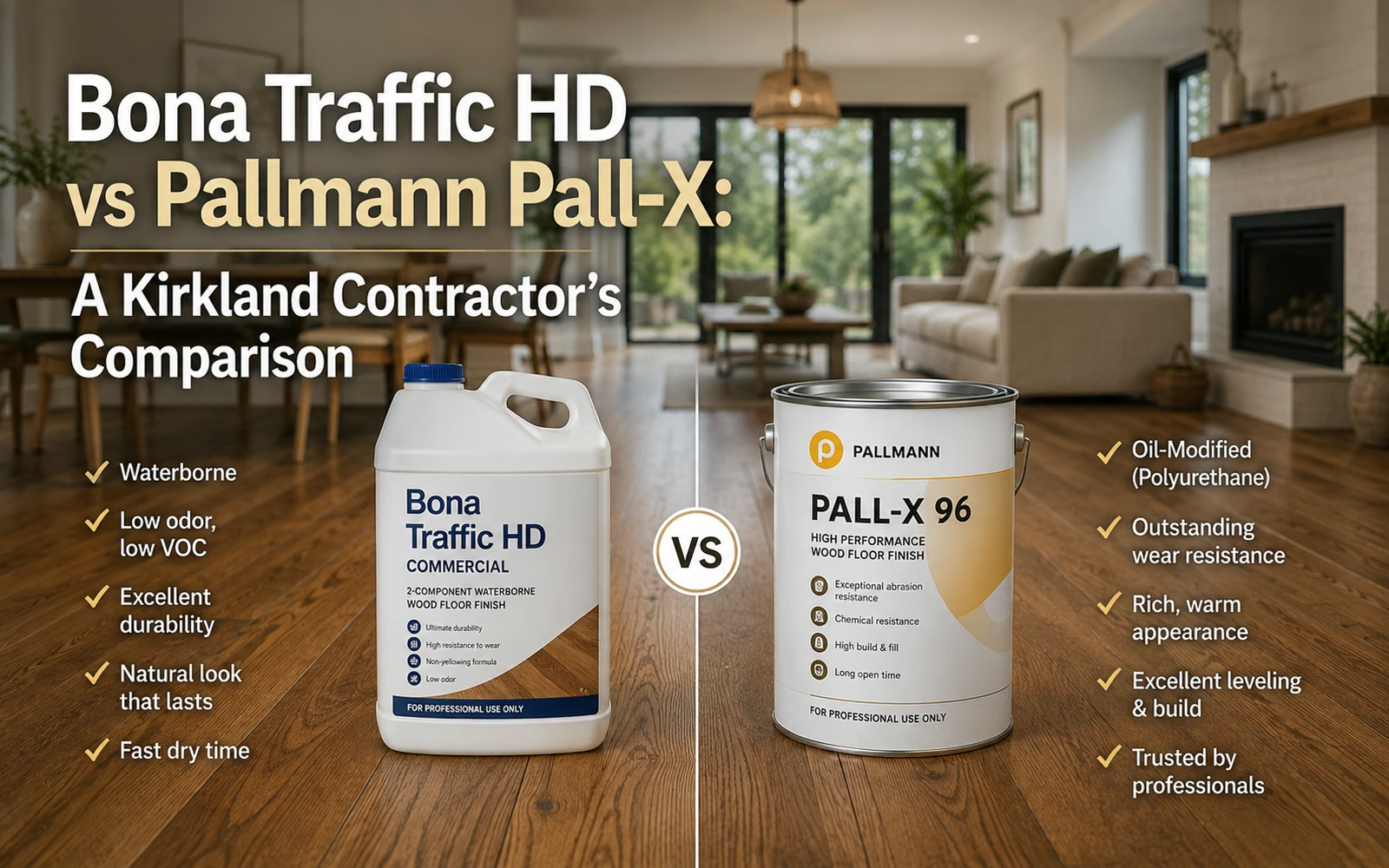
The most common thing we hear at estimates is some version of “we want the tough one.” There isn’t one. A gallon of matte and a gallon of semi-gloss from the same product line — say, Bona Traffic HD, which comes in the full range — are the same polyurethane with different doses of flattening agent, a fine additive that scatters light instead of reflecting it. Wear resistance, chemistry, thickness: identical. What actually determines toughness is the finish grade and the number of coats, which is a different conversation — the water-based vs oil-based comparison covers it properly.
What sheen does control is how honestly the floor reports on your life. Light bouncing off a glossy surface highlights everything sitting on it or scratched into it; a matte surface scatters that same light and keeps the floor’s secrets. That single principle decides almost everything below.
Matte: The Sheen That Hides Everything
Matte (roughly 20 on the gloss scale, with “extra matte” below 10) reads as raw, natural wood — as if the floor were unfinished but somehow always clean. It’s the look of every Scandinavian interior photo you’ve saved, and it pairs beautifully with white oak, pale stains, and the natural (no stain) finishes most of our clients now choose. Its practical superpower is concealment: dust, paw prints, fine scratches, and the wear path from the door to the kitchen all show dramatically less than on shinier floors.
The honest downsides: in some light matte can read slightly flat or gray, particularly on dark stains — a dark floor wants a little reflectivity to show its depth, and dead-matte over espresso brown can look dusty even when it’s spotless. And people who grew up with traditional glossy hardwood sometimes see matte as “not done yet.” Neither is a defect; both are taste. If your reference picture is a warm, glowing floor, matte will disappoint you, and satin is one step away.
Satin: Why It Wins Most Floors
Satin (around 35) is the compromise that doesn’t feel like one, which is why it’s the default answer in our sheen conversations and has been for years. It has enough sheen to give wood depth and make stain colors read rich — the thing matte can struggle with — while still scattering enough light to keep dust and small scratches quiet. It flatters nearly every species and every stain from natural to dark, and it photographs well, which matters more than it should when a house eventually sells.
If you can’t decide, or the household can’t agree, satin is the sheen you pick and never think about again. That is its entire argument, and it’s a good one.
Semi-Gloss and Gloss: Where Shine Still Belongs
Semi-gloss (around 55–60) is the traditional hardwood look — the piano-adjacent glow of formal dining rooms and older colonials. It makes wood grain pop and dark stains luminous. It also reports everything: dust an hour after you vacuum, every footprint in sock feet, each fine scratch lit up like an exhibit. In a formal room that sees light traffic, that trade can be worth it. In a hallway with a dog, it’s a daily disappointment, and “our semi-gloss floor always looks dirty” is one of the more common calls we get from homes we didn’t finish.
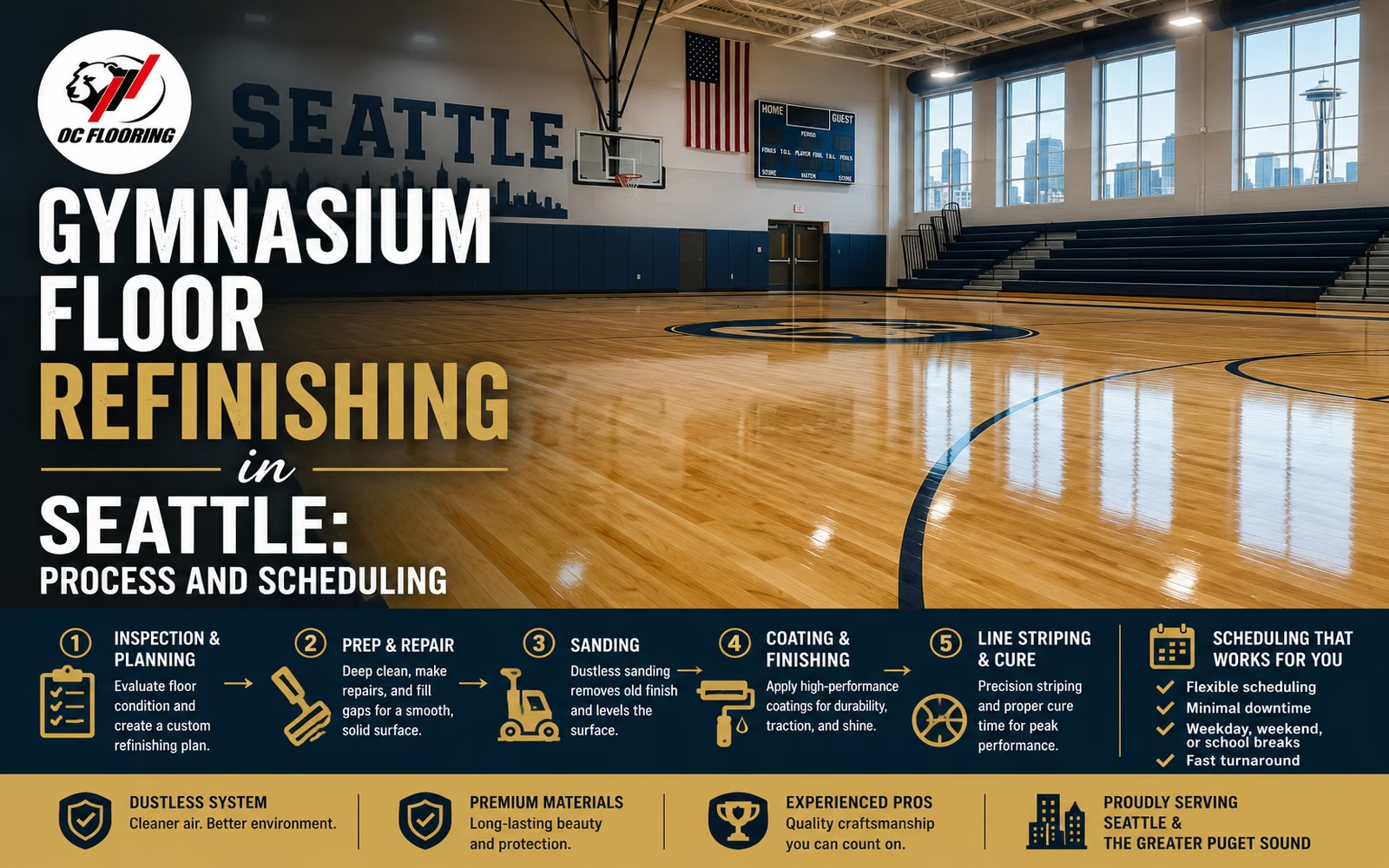
Full gloss on residential floors is nearly extinct, but shine has one arena where it still rules: sport floors. Gymnasiums run high-sheen systems partly for tradition and partly so the ball and the lines read fast — we walked through that world in our gymnasium refinishing guide. If you love that look at home, we’ll do it — after making sure you’ve seen it next to satin in your own light.
The Three Sheens, Side by Side
| Matte (~20) | Satin (~35) | Semi-gloss (~55–60) | |
|---|---|---|---|
| The look | Raw, natural, modern | Soft glow, classic-neutral | Traditional shine, formal |
| Hides scratches | Best | Well | Poorly |
| Hides dust & footprints | Best | Well | Shows everything |
| Depth on dark stains | Can read flat | Rich | Richest |
| Durability | Identical | Identical | Identical |
| Price difference | None | None | None |
| Best fit | Modern homes, pets, busy floors | Almost everyone | Formal, low-traffic rooms |
How to Actually Choose: Light, Color, Dogs
Three questions sort nearly every household. What’s your light? Big windows and low sun angles — most of Puget Sound, most of the year — rake light across the floor and exaggerate whatever the sheen wants to show. The more glare your floor catches, the further down the scale you should sit. What’s your color? Dark stains push you up a step (matte can flatten them; satin keeps them alive), pale and natural floors happily go all the way matte — and if you’re still choosing that color, our guide to picking a stain color comes first, since sheen decisions follow color decisions. Who lives on the floor? Dogs, kids, and entry hallways all argue for lower sheen, simply because lower sheen hides the evidence longer between refreshes.
One more practical note: sheens can differ room to room — matte in the mudroom, satin in the living room is a perfectly reasonable spec — but keep one sheen within any continuous run of flooring. A sheen change mid-hallway reads like a mistake, because it is one.
The Escape Hatch: Sheen Is the One Thing You Can Change Cheaply
Because sheen lives entirely in the final coat, changing it doesn’t require a refinish. A screen and recoat — abrading the existing finish and laying one new coat — swaps a glossy floor to satin or a satin floor to matte for $1.99/sq ft, done in a day, walkable that evening. A meaningful share of our screen-and-recoat work is exactly this: homes that inherited semi-gloss from a previous owner and want it quieted down. So while you should choose thoughtfully, you’re not choosing forever — which takes most of the anxiety out of the decision.
On the floors we refinish across Seattle and the Eastside, the running tally is roughly: satin for most, matte for most of the rest, semi-gloss for a deliberate few. We put finish samples on your actual floor at the estimate — sheen off a brochure and sheen in your afternoon light are different animals, and the second one is the only vote that counts.
The Decision, Compressed
Go lower sheen (matte) when…
- Dogs, kids, or a busy entry live on this floor
- The look you’re copying is modern, pale, or Scandinavian
- Big windows throw raking light across the boards
- You never want to think about footprints again
- The floor is natural or lightly stained white oak or fir
Go higher sheen when…
- The room is formal and lightly trafficked
- You’ve chosen a dark stain and want maximum depth
- You love the traditional glow and accept the dusting
- You’re matching original finish elsewhere in an older home
- It’s a showpiece room, not a thoroughfare
Floor Sheen: What Homeowners Ask Us
Is matte finish less durable than semi-gloss?
Which sheen hides scratches and dog nails best?
Can I change the sheen without refinishing the whole floor?
What sheen do most people choose?
Does a higher sheen cost more?
Can different rooms have different sheens?
Does matte finish look dirty or flat?
How do we preview sheens before deciding?
Does sheen affect how I clean the floor?
Undecided? Bring Us the Argument
We’ll put matte, satin, and semi-gloss samples on your actual floor in your actual light and let the floor settle it. Free in-home estimates across King & Snohomish County.
Related reading: Water-based vs oil-based finish · Choosing a stain color · Full refinish vs screen & recoat · Hardwood floor refinishing in Seattle · Book a free estimate