


Honest answer: you can’t go wrong with either — Bona Traffic HD and Pallmann’s Pall-X line are both commercial-grade waterborne finishes, we run both every week on Kirkland floors, and the prep work under the finish matters more than the logo on the bucket. The real differences are certification paperwork, how each one handles during application, and material cost. Below is the comparison we give homeowners who ask — including which bucket we’d open in our own house.
Most flooring contractors are a “Bona shop” or a “Pallmann shop” — usually because of whichever distributor they set up an account with fifteen years ago — and the sales pitch gets written backwards from there. We carry both systems, which makes this comparison less exciting than the internet wants it to be: these are two excellent commercial waterborne finishes that have been trading blows in Europe and North America for decades, and on ninety-plus percent of the floors we refinish, either one would make the owner perfectly happy for years.
But “both are great” is not useful at an estimate, so let’s do the version with actual differences. If you haven’t already settled the bigger question — waterborne versus oil-modified poly — start with our water-based vs oil-based comparison; everything below assumes you’ve landed on waterborne, which for occupied Kirkland homes you almost certainly should.
VOC content of Bona Traffic HD — low enough to carry GREENGUARD Gold certification, and low enough that most families sleep at home the same night a coat goes down.
coats in every system we spec, Bona or Pallmann, with abrasion between coats. Both recoat in hours, not days, so a full finish system typically goes down in a single day.
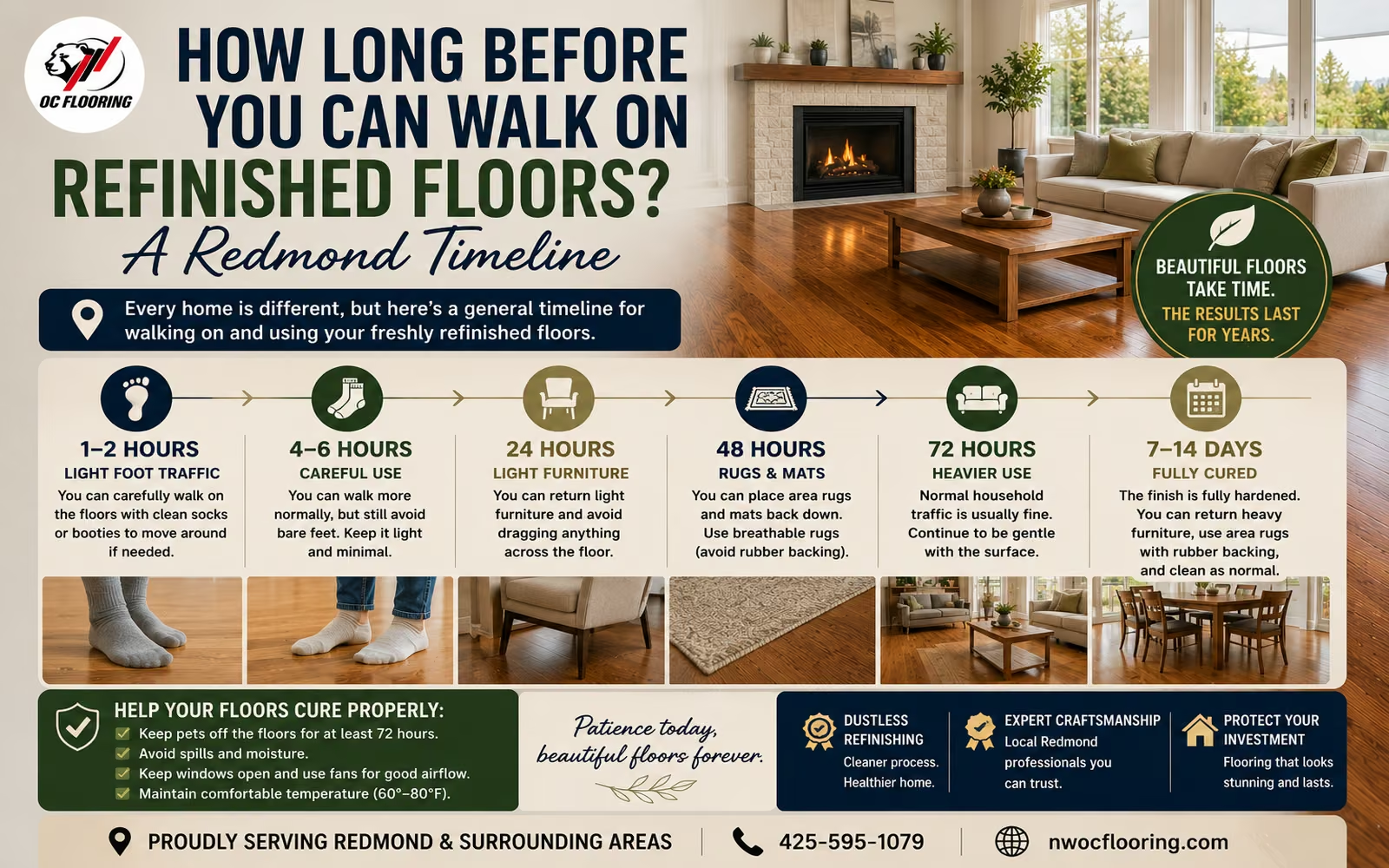
to full cure for either brand: socks the same evening, furniture back at 48–72 hours, rugs after about a week. On the schedule that actually affects your life, the two are identical.
Same Chemistry Family, Different Accents
Strip the branding and you’re looking at close cousins. Both flagship products — Bona Traffic HD and Pallmann’s two-component Pall-X — are waterborne polyurethanes that get mixed with a hardener on site. That crosslinking step is what separates commercial-grade finishes from the single-component products sold at hardware stores: the film that forms is dramatically tougher, chemical-resistant, and stable enough to be specified for restaurants and retail floors. Both dry clear and stay clear — no ambering, ever — which is why either one protects a gray or natural stain the way you chose it. Both come in the usual sheens, and satin remains the crowd favorite on the floors we do.
Pallmann’s catalog runs deeper than one product, which confuses homeowners comparing quotes: Pall-X 96 is the one-component workhorse we might use in a low-traffic bedroom-only job, while the two-component versions are what we put head-to-head against Traffic HD. When a competitor’s quote just says “Pallmann,” it’s fair — and smart — to ask which one.
The Case for Bona Traffic HD
Traffic HD is the benchmark. When architects spec a waterborne finish for a commercial floor, this is usually the name on the drawing, and its reputation is earned: in abrasion testing it leads the category, which is why we called it out in our Traffic HD deep-dive as the finish we default to on the hardest-working floors — kitchens, entries, homes with big dogs. It also carries the GREENGUARD Gold indoor-air certification at roughly 65 g/L VOC, which matters to families who want the paperwork and not just our word that the house is livable during the job.
The honest downsides: it’s one of the most expensive waterborne finishes you can buy, and it is — we say this with affection — boring. It doesn’t level with quite the silky, self-forgiving flow of some competitors; it just goes down, cures hard, and never calls you back. There are worse traits in a floor finish. One more soft factor: name recognition. When you sell the house and the listing says “floors refinished in Bona Traffic HD,” Eastside buyers’ agents know what that means. Pallmann deserves the same nod and doesn’t always get it.
The Case for Pallmann Pall-X
Pallmann is the German engineering answer to the same problem, and finishers who use it tend to love it for how it behaves during application: it flows out and levels beautifully, which shows up in the final floor as fewer visible lap marks and a very even sheen — something you notice most on big open Kirkland great rooms with low afternoon light coming off the lake. Durability on the two-component Pall-X products is genuinely comparable to Traffic HD; we have both out in the field on busy family floors and we are not seeing a difference in how they’re wearing. Our Pallmann overview covers the system in more detail.
Material cost typically runs a bit below Bona’s flagship, which matters to us more than to you — our refinishing price doesn’t change with the brand. The honest downsides: less name recognition with homeowners and agents, and a product line deep enough that “we use Pallmann” can mean the premium two-component system or the budget one-component, depending on who’s quoting. Ask. A contractor who answers precisely is telling you something about the rest of their work too.
Side by Side at the Kitchen Table
This is the version of the comparison we sketch at estimates. Notice how many rows are ties — that’s the honest headline. The rows that aren’t ties are where your decision actually lives.
| Bona Traffic HD | Pallmann Pall-X (2-component) | |
|---|---|---|
| Chemistry | Two-component waterborne polyurethane | Two-component waterborne polyurethane |
| VOC / certification | ~65 g/L, GREENGUARD Gold certified | Low-VOC waterborne; fewer headline certifications |
| Ambering over time | None — stays clear | None — stays clear |
| Durability | Category benchmark in wear testing | Comparable in our field experience |
| Application feel | Reliable, unglamorous | Levels and flows out beautifully |
| Walk / furniture / rugs | Socks same evening / 48–72 h / 7 days | Socks same evening / 48–72 h / 7 days |
| Material cost | Top of the market | Slightly friendlier |
| Name recognition at resale | Strong — buyers’ agents know it | Respected in the trade, less known to buyers |
| Our price to you | $3.99/sq ft natural refinish either way | $3.99/sq ft natural refinish either way |
What We See on Kirkland Floors
Kirkland is one of our busiest cities, and its housing stock splits neatly into two refinishing personalities. The 1960s–80s ramblers up through Juanita and North Rose Hill usually hide red oak under decades of carpet — solid, forgiving wood that either finish system flatters. The older lake cottages closer to the water are a different story: softer fir, more sun exposure off the lake, and entryways that eat finish because half of summer walks in with sand on its feet.
On those floors the finish grade matters more than the finish brand — a two-component system from either maker will outlast a builder-grade product several times over, which is most of what you’re paying for in a professional refinish. Both systems get the same substrate treatment from us: a full sand finished with the Lägler TRIO for flatness, then 2–3 coats with abrasion between. If you’re weighing a project, our Kirkland refinishing page has the local specifics, and the full numbers live in our refinishing cost guide — natural finish runs $3.99/sq ft with either brand on the truck.
The Decision, Compressed
We reach for Bona Traffic HD when…
- The floor takes real abuse — big dogs, four kids, a busy kitchen
- The homeowner wants GREENGUARD Gold certification on paper
- The house is heading to market and the listing will name the finish
- A commercial-grade spec is written into the project
- You want the category benchmark and the cost difference doesn’t move you
Pallmann earns the nod when…
- A big open floor plan will show every lap mark under low light
- The finisher on your job knows and loves the system — that’s worth a lot
- Normal residential traffic, where both wear identically in our experience
- Material budget matters and you’d rather not pay for the logo
- You’re matching a floor we previously finished in Pallmann
Bona vs Pallmann: What Kirkland Homeowners Ask Us
Is Bona Traffic HD more durable than Pallmann?
Do you charge more for one brand than the other?
Which finish dries faster?
Can you put Bona finish over a Pallmann sealer, or mix the systems?
Which is safer for kids and pets in the house?
Does either brand yellow over time?
How many coats do you apply?
Which one would you put in your own house?
Want to See Both Finishes in Person?
We’ll bring samples of Bona and Pallmann on real wood to your estimate, look at your floor and your household, and tell you which system we’d run — with the price in writing. Free in-home estimates across King & Snohomish County.
Related reading: Our Bona Traffic HD deep-dive · The Pallmann system overview · Water-based vs oil-based finish · Hardwood floor refinishing in Kirkland · Book a free estimate